Digital Logbook for Indonesia Commercial Vessels Maritime Compliance Guide
Indonesia's 2,300+ nationally flagged commercial vessels generate thousands of logbook entries every day — bridge logs, engine room records, Oil Record Books, garbage logs — across an archipelago of 17,000 islands. Yet the overwhelming majority of these cargo operators still record everything by hand. The result: 8-12 crew hours per week lost to manual logging, handwriting errors in 15-20% of entries, and the kind of documentation gaps that get vessels detained during port state control inspections. In 2024, inspectors across the Tokyo MOU region recorded 77,526 deficiencies and detained 1,189 ships at a 3.71% detention rate — with fire safety, navigation records, and documentation among the top deficiency categories. Indonesia's own DJPL is tightening the screws through DGST Decree 365/2025, which mandates digitally monitored surveys, stricter certificate timelines, and CONFIRM system reporting for all outstanding recommendations. Marine Inspection's inspection and maintenance management software replaces paper logbooks with a digital system purpose-built for Indonesian cargo operations — start with a free account to automate log entries and connect maintenance records to inspections.
Indonesia Digital Logbook Compliance at a Glance
Tokyo MOU Deficiencies (2024)
77,526
Total deficiencies recorded across Asia-Pacific PSC inspections
Detention Rate
3.71%
Of inspected vessels detained for serious deficiencies in 2024
Ships Detained
1,189
Vessels held across 67 flags due to documentation and safety failures
What Indonesian Cargo Vessels Must Log — And Where Paper Systems Fail
Every Indonesian commercial vessel operating under DJPL oversight must maintain multiple logbook types simultaneously. Under the Shipping Law (Law No. 17 of 2008, amended by Law No. 66 of 2024), SOLAS, and MARPOL conventions, gaps in any single record type can lead to vessel detention during harbormaster or Tokyo MOU port state control inspections. Marine Inspection's software consolidates every required log into one integrated digital platform — request a demo to see how each logbook module works in practice.
Bridge / Deck Logbook
Records all navigation activities, position reports, course and speed changes, weather observations, and watch handovers. Required for every Indonesian-flagged commercial vessel.
GPS-integrated position logging at set intervals
Weather, sea state, and visibility conditions
Course alterations with documented reasons
Watch officer handover with digital sign-off
Safety drills, emergency events, and incident records
Marine Inspection Feature: GPS auto-populates vessel position. Digital watch handover forms enforce completion before shift close. Noon reports generate automatically.
Engine Room Logbook
Documents machinery performance parameters, fuel and lube oil consumption, maintenance actions, and equipment malfunctions. Directly tied to DJPL safety certification and ISM Code compliance.
Main engine RPM, load, and temperature readings
Fuel oil and lube oil consumption with ROB tracking
Auxiliary engine and generator running hours
Maintenance performed, parts replaced, defects noted
Equipment malfunctions with corrective action logs
Marine Inspection Feature: Abnormal readings auto-generate inspection tasks and maintenance work orders. Engine log entries link directly to planned maintenance schedules.
Oil Record Book (ORB)
Tracks every oily waste operation under MARPOL Annex I Regulation 17. Mandatory for all vessels above 400 GT, and Part II required for tankers above 150 GT. The single highest-scrutiny document during PSC inspections.
Ballast water operations and tank cleaning records
Oily bilge water discharge, transfer, and disposal
Bunkering operations with fuel grade and quantity
Shore reception facility delivery receipts
Accidental or emergency oil discharge reporting
Marine Inspection Feature: Automated cross-checks validate ORB entries against fuel consumption, engine hours, and bilge tank soundings — flagging discrepancies before an inspector does.
Garbage Record Book
Documents every garbage disposal, discharge, and incineration event per MARPOL Annex V Regulation 10. Inspectors cross-reference logged quantities against operational patterns and shore disposal receipts.
Garbage category classification per MARPOL
Discharge location, method, and estimated volume
Shore disposal receipts and facility records
Incineration dates, volumes, and residue disposal
Accidental loss or exceptional discharge events
Marine Inspection Feature: Pre-configured MARPOL waste categories with cubic meter validation prevent the vague or misclassified entries that trigger inspector flags.
Paper Logbooks vs. Marine Inspection Software: Side-by-Side Comparison
Indonesia's inspection framework under DGST Decree 365/2025 demands digital monitoring, strict timelines, and enhanced transparency. Paper logbooks can't deliver any of that. Here's exactly where Marine Inspection's software closes the gap — and why operators managing fleets across Indonesian waters are making the switch. create a free account to explore how the platform handles each compliance factor.
Compliance Factor
Paper Logbook
Marine Inspection Software
Entry Accuracy
Handwriting errors in 15-20% of entries; inspectors reject illegible records
Structured digital forms with field validation; near-zero transcription errors
Inspection Readiness
Hours organizing physical books before PSC arrival; missing pages common
Instant search by date, log type, or event; all records available in seconds
Shore Fleet Visibility
Zero real-time access; superintendents wait for port calls to review logs
Real-time sync; monitor every vessel from a single shore-based dashboard
Maintenance Integration
No link between log entries and maintenance work orders; separate systems
Abnormal readings auto-trigger inspection tasks and maintenance work orders
MARPOL Cross-Checks
Manual comparison between ORB, engine log, and bunkering records
Automated validation flags discrepancies before inspectors find them
Record Retention (3-5 yrs)
Water damage, deterioration, and physical storage challenges onboard
Encrypted cloud backup with full audit trail; accessible indefinitely
Crew Time per Week
8-12 hours on manual entries, corrections, and countersigning
60-70% reduction through templates, auto-population, and digital sign-off
How Marine Inspection Software Powers the DJPL Inspection Workflow
Under Indonesia's harmonized certification framework, harbormaster offices and port authorities conduct structured vessel surveys — initial, annual, intermediate, and renewal — that always include logbook and documentation review. Outstanding recommendations must be tracked in the CONFIRM system until resolved. Marine Inspection's software maps directly to this workflow, connecting digital log entries to maintenance management, inspection checklists, and certificate tracking in one integrated system.
Integrated Digital Inspection and Logbook Workflow
1
Structured Digital Log Capture
Watch officers record bridge, engine room, and environmental data through Marine Inspection's validated digital forms. GPS auto-populates positions. Auto-timestamps ensure chronological integrity. Master and Chief Engineer countersign digitally — creating the tamper-evident audit trail inspectors trust.
2
Automated Cross-Checks and Maintenance Triggers
The platform cross-references fuel consumption against engine hours, ORB discharge entries against bilge tank levels, and garbage logs against operational patterns. Out-of-range equipment readings automatically generate inspection tasks and maintenance work orders — no manual follow-up needed.
3
Shore-Based Fleet Monitoring
Superintendents and DPA review logs remotely across every vessel in real-time. Pre-inspection audit reports generate automatically ahead of scheduled DJPL surveys, highlighting compliance gaps that need resolution before the surveyor arrives at the gangway.
4
Inspection-Ready Record Presentation
When PSC or DJPL inspectors board, all records are retrievable instantly by date range, log type, or event. Correction history displays transparently through digital audit trails — no crossed-out entries, missing pages, or illegible handwriting. Inspectors see clean, professional documentation.
5
Post-Survey Corrective Action Tracking
Recommendations and non-conformities log directly into Marine Inspection, linked to corrective maintenance work orders and tracked to closure. This aligns with the CONFIRM module reporting requirements that DGST Decree 365/2025 mandates for all outstanding survey findings on Indonesian-flagged vessels.
See How the Digital Inspection Workflow Runs on Your Fleet
Marine Inspection connects digital logbook entries to maintenance work orders, inspection checklists, and certificate tracking in one platform — purpose-built for Indonesian commercial vessel operations across the archipelago.
Logbook Compliance Risks That Get Indonesian Vessels Detained
The 2024 Tokyo MOU annual report confirms that documentation deficiencies, navigation safety records, and MARPOL compliance remain among the top reasons vessels get detained across the Asia-Pacific region. For Indonesian cargo operators hauling coal from Kalimantan, palm oil from Sumatra, or nickel ore from Sulawesi, these specific risk areas cause the most inspection failures. Marine Inspection's software addresses each one systematically — schedule a demo to see how the platform prevents these detention triggers.
HIGH RISK
Oil Record Book Discrepancies
PSC inspectors systematically cross-reference ORB entries against engine room logs, bunkering delivery notes, and bilge tank soundings. Paper systems create mismatches between fuel received, consumed, and waste generated — the single most common environmental detention trigger. Marine Inspection's software validates these relationships automatically as entries are made, catching inconsistencies in real-time rather than during inspection.
HIGH RISK
Missing, Damaged, or Illegible Records
Paper logbooks in engine rooms face heat, oil spray, and tropical humidity — entries become unreadable within months. Missing pages or illegible sections discovered during a DJPL annual survey can result in conditional certificates that restrict your vessel to domestic-only voyages. Every entry in Marine Inspection stays permanently legible, timestamped, and protected by tamper-evident digital audit trails.
MEDIUM RISK
Watch Handover Gaps
Bridge and engine room logs must show continuous, unbroken watch coverage. Paper systems frequently produce timing inconsistencies between outgoing and incoming officer entries — a red flag suggesting retroactive log completion or inadequate handover procedures. Marine Inspection enforces sequential digital handover sign-off, making gaps physically impossible.
MEDIUM RISK
Garbage Record Misclassification
MARPOL Annex V requires garbage quantities in cubic meters, sorted by specific waste categories. Indonesian vessels frequently record vague amounts or misclassify waste types. When inspectors compare shore disposal receipts against onboard log entries, any mismatch triggers a potential environmental violation finding. Marine Inspection's pre-configured categories and quantity validation prevent these errors at entry.
Expert Review: Indonesia's Digital Maritime Compliance Trajectory
Industry Expert Insight
The regulatory signals coming from Indonesia's DJPL are unambiguous. MOT Regulation 7/2024 and the implementing guidelines in DGST Decree 365/2025 establish a framework where digitally monitored inspections, CONFIRM-based recommendation tracking, and strict certificate anniversary timelines become the new baseline — not an optional upgrade. Simultaneously, the 2024 Tokyo MOU data shows detention rates remaining stubbornly above pre-pandemic levels, with under-performing ships nearly doubling year-over-year. For Indonesian cargo fleet operators — particularly those in the coal, palm oil, and nickel ore trades running high-frequency inter-island voyages — the convergence of tighter domestic regulation and intensified regional PSC scrutiny makes integrated inspection and maintenance management software a strategic necessity. Platforms like Marine Inspection that unify logbook data, maintenance workflows, and inspection readiness into a single system provide the operational foundation these fleets need to stay ahead of both DJPL surveyors and Tokyo MOU port state control officers.
— Maritime Compliance Analysis, Southeast Asian Commercial Shipping Operations
Deploying Marine Inspection Across Your Indonesian Fleet
Switching from paper to Marine Inspection's digital inspection and logbook platform follows a proven phased approach. No fleet-wide disruption required — the rollout builds crew confidence while delivering immediate compliance and maintenance management benefits from week one. sign up free and configure a deployment plan for your fleet.
Fleet Deployment Roadmap
Weeks 1-2
Platform Configuration
Configure digital logbook templates, inspection checklists, and maintenance categories matched to your vessel types. Map ORB operation codes, engine room parameters, and bridge log fields to your fleet's operational profile. Import vessel particulars, crew rosters, and certification schedules.
Outcome: System configured and ready for pilot deployment
Weeks 3-4
Pilot Vessel Launch
Deploy on 1-3 vessels. Train watch officers, engineers, and Masters on digital entry, inspection reporting, and maintenance workflows. Run parallel paper and digital logging for two weeks to validate accuracy and build crew confidence with the system.
Outcome: Crew proficiency confirmed; data accuracy validated
Weeks 5-8
Fleet-Wide Expansion
Roll out to remaining vessels in waves of 5-10 ships. Pilot vessel crew serve as onboard trainers. Shore teams activate real-time dashboards for fleet-wide compliance monitoring, pre-inspection audits, and maintenance tracking across all deployed vessels.
Outcome: Full fleet coverage with real-time shore visibility
Month 3+
Full Integration and Predictive Insights
Logbook data, maintenance work orders, inspection checklists, and certificate management operate as one connected ecosystem. Automated compliance reports replace manual survey preparation. Historical trends across the fleet begin driving predictive maintenance decisions and proactive inspection readiness.
Outcome: Fully integrated inspection, maintenance, and compliance platform
Replace Paper Logbooks with Inspection-Ready Digital Records
Marine Inspection's software is purpose-built for Indonesian commercial vessel operations — from bulk carriers and tankers to barges navigating domestic and international routes. Connect logbooks, maintenance, and inspections in one platform your crew can adopt in days.
Does Marine Inspection's digital logbook meet DJPL and Tokyo MOU inspector requirements?
Indonesia's DJPL framework is actively migrating toward digital monitoring, as demonstrated by the CONFIRM reporting system and the digitally monitored survey processes mandated in DGST Decree 365/2025. Marine Inspection's platform maintains tamper-evident audit trails, digital countersigning, and structured entry forms aligned with what DJPL surveyors and Tokyo MOU PSC officers expect. The software generates both digital and printable record formats, allowing crews to present logs in whichever format a specific inspector prefers. Most operators maintain a brief parallel paper period during initial deployment for additional assurance.
How does the platform link Oil Record Book entries to maintenance management?
Marine Inspection's ORB module captures all MARPOL Annex I entries through structured digital forms that enforce completion of every mandatory field. The system automatically cross-references fuel consumption against engine running hours and flags discrepancies the moment they occur. Beyond compliance, abnormal readings from ORB-related equipment — oily water separators, bilge pumps, fuel purifiers — automatically generate inspection tasks and maintenance work orders within the same platform. This creates a direct, auditable link between environmental compliance records and equipment maintenance history.
Can the software work offline on vessels operating between Indonesian islands with limited connectivity?
Absolutely — this is a core design requirement for Indonesian archipelago operations where satellite and cellular connectivity varies dramatically between routes. Marine Inspection's software operates fully offline on shipboard devices. Crew enter all log data locally, and entries sync automatically when connectivity returns. No data is lost during offline periods, and all entries retain their original timestamps. Shore-based teams see records appear progressively as connectivity allows, with zero gaps in chronological coverage.
What does Marine Inspection cover beyond digital logbooks?
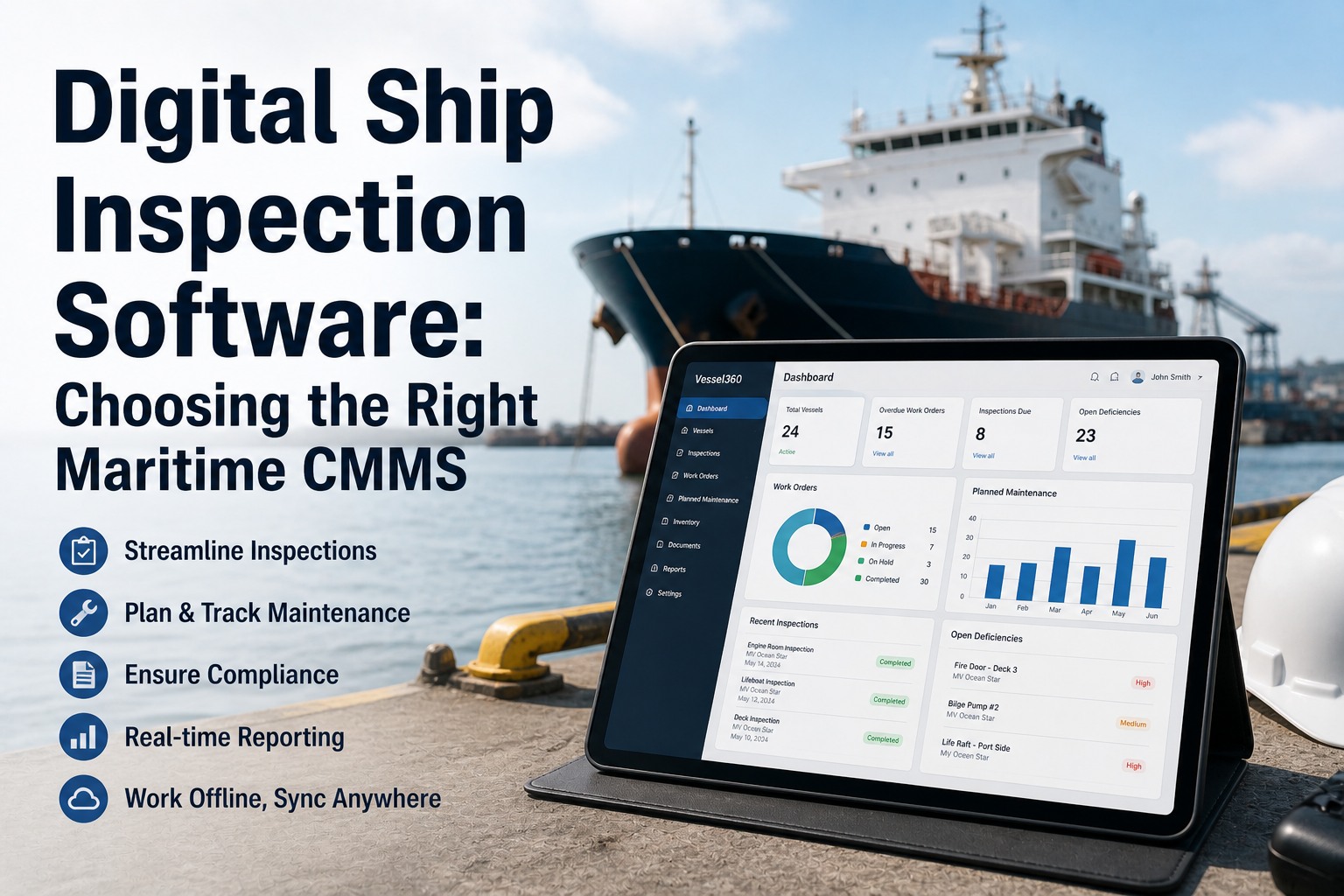
Marine Inspection is a complete inspection and maintenance management platform. Beyond digital logbooks (Bridge/Deck, Engine Room, ORB Parts I and II, Garbage Record Book, Ballast Water Record Book, Official Log Book), the software provides digital inspection checklists for equipment surveys, planned maintenance scheduling with automated task generation, spare parts inventory management, certificate and document tracking with expiry alerts, deficiency and non-conformity workflows with corrective action tracking, and fleet-wide compliance dashboards. Every module integrates — a logbook entry documenting an equipment malfunction automatically flows into a maintenance work order linked to the vessel's full inspection history.
How long does it take for crew to learn the system?
Most watch officers and engineers reach full proficiency within 3-5 days of active use. Marine Inspection mirrors the structure of paper logbooks — same fields, same entry sequence — but adds structured validation that prevents common errors. Indonesian operators typically run a two-week parallel period (paper and digital simultaneously) to validate completeness and build crew trust. After that, digital-only operation requires less time per watch than paper logging did, and the integrated maintenance features eliminate the separate spreadsheets and tracking notebooks that crews previously maintained alongside logbooks.