Enclosed space entry is the shipboard activity where the gap between knowing the procedure and following it is most often fatal. The regulations have existed for decades, the hazards are well understood, and yet the deaths have not fallen: safety statistics show that the number of enclosed space accidents and fatalities did not decrease between the introduction of the main international recommendations in 2011 and 2025, and investigations keep finding the same causes. Research indicates that at least 1,010 crew and shore workers lost their lives in enclosed spaces on ships between 2000 and 2024. The pattern behind those losses is grimly consistent, and its most tragic feature is that a large share of the victims are would-be rescuers who entered to save a colleague and were overcome themselves. This is why enclosed space entry is treated not as a routine task but as one of the most tightly controlled operations on any vessel — and why, in December 2025, the IMO adopted a significantly revised set of recommendations to address exactly this persistent problem. This guide sets out safe enclosed space entry for the masters, safety officers and chief officers who carry the responsibility for it: the signature fatal pattern and why it recurs, what the new IMO resolution changed, the permit-to-work system that controls entry, and the atmosphere testing and rescue preparation that keep people alive. To digitalise enclosed space entry permits, atmosphere testing records, the enclosed space register and rescue-drill documentation across your fleet, start a free trial or book a demo.
INDUSTRY GUIDE · LIFE SAFETY
Enclosed Space Entry: Preventing the Maritime Industry's Deadliest Routine
Enclosed space entry keeps causing fatalities despite decades of regulation, because the gap between knowing the procedure and following it is where people die. Here is the fatal pattern, what the revised 2025 IMO resolution changed, and the permit-to-work, atmosphere testing and rescue discipline that prevents loss of life.
1,010+
Lives lost in enclosed spaces on ships, 2000–2024
~60%
Of first victims are would-be rescuers
Below 16%
Oxygen level at which judgement is already impaired
The Signature Fatal Pattern
Understanding why enclosed space incidents keep happening starts with recognising that they follow a signature pattern, repeated in case after case. Seeing the pattern clearly is the first step to breaking it.
A crew member enters an unventilated space — a ballast tank, a chain locker, a cargo hold, a pump room — and is overcome, often with no visible warning, because the dangerous atmosphere looks entirely normal. A colleague, seeing the first person collapse, instinctively rushes in to help without breathing apparatus, breathes the same atmosphere, and is overcome in turn. In many documented cases a third person enters and is also lost. The human impulse to rescue a fallen colleague is powerful and entirely natural, but in an oxygen-depleted atmosphere that impulse itself becomes lethal, which is why a large share of enclosed space deaths are rescuers rather than the original entrant. The underlying killer is usually the air: oxygen depletion accounts for the majority of these deaths, and oxygen is invisible and odourless, giving no sensory warning at all. Toxic gases such as hydrogen sulphide can be present too, and certain cargoes — including coal, wood products, wood pellets, metal sulphide concentrates, seed cake and scrap metal — are known to deplete oxygen or generate toxic gas in the spaces around them. The regulation to prevent all of this exists; the failure is almost always in applying it under real conditions, frequently with time pressure as a contributing factor. To make the controls that break this pattern part of a disciplined, recorded routine, start a free trial or book a demo.
What the 2025 IMO Resolution Changed
Because the fatalities did not fall under the previous recommendations, the IMO acted. At its 34th Assembly in December 2025, it adopted Resolution MSC.581(110), which revokes and replaces the earlier Resolution A.1050(27) and represents the most significant update to enclosed space entry guidance in over a decade. Several of its changes target the fatal pattern directly.
Single-person entry prohibited
For the first time, the resolution explicitly prohibits single-person entry into enclosed spaces, ensuring no one enters without support present.
Breathing apparatus mandatory before any rescue entry
It mandates self-contained breathing apparatus before any rescue entry and prohibits improvised rescue, directly targeting the rescuer-fatality pattern that drives so many deaths.
Ship-specific enclosed space register required
It mandates a ship-specific register recording and assessing the hazards of every enclosed space on board, accounting for how each space's atmosphere may change with its contents or cargo.
Emergency response plans, signage and time allowance
It requires ship-specific emergency response plans and clear safe-to-enter and unsafe-to-enter signage, and it acknowledges that adequate time must be allowed, since time pressure has been a recurring causal factor.
These changes sit on top of mandatory SOLAS requirements already in force: Regulation III/19.3.6, which since 2015 has required enclosed space entry and rescue drills to be conducted every two months, and Regulation XI-1/7, which since 2016 has required ships to carry portable atmosphere-testing instruments capable of measuring oxygen, flammable gases and vapours, hydrogen sulphide and carbon monoxide. The revised resolution strengthens the operational guidance around these existing obligations. It is also worth noting that a joint Paris and Tokyo MoU Concentrated Inspection Campaign on enclosed space entry is planned for 2027, so the regulatory focus on this area is set to intensify further.
The enclosed space register and drills, kept current per vessel
The revised resolution mandates a ship-specific hazard register and regular rescue drills. Marine Inspection maintains the enclosed space register, logs atmosphere tests, and documents every drill and permit per vessel — so the new requirements are a living record an inspector can verify, not a document assembled after an incident.
The Permit-to-Work System
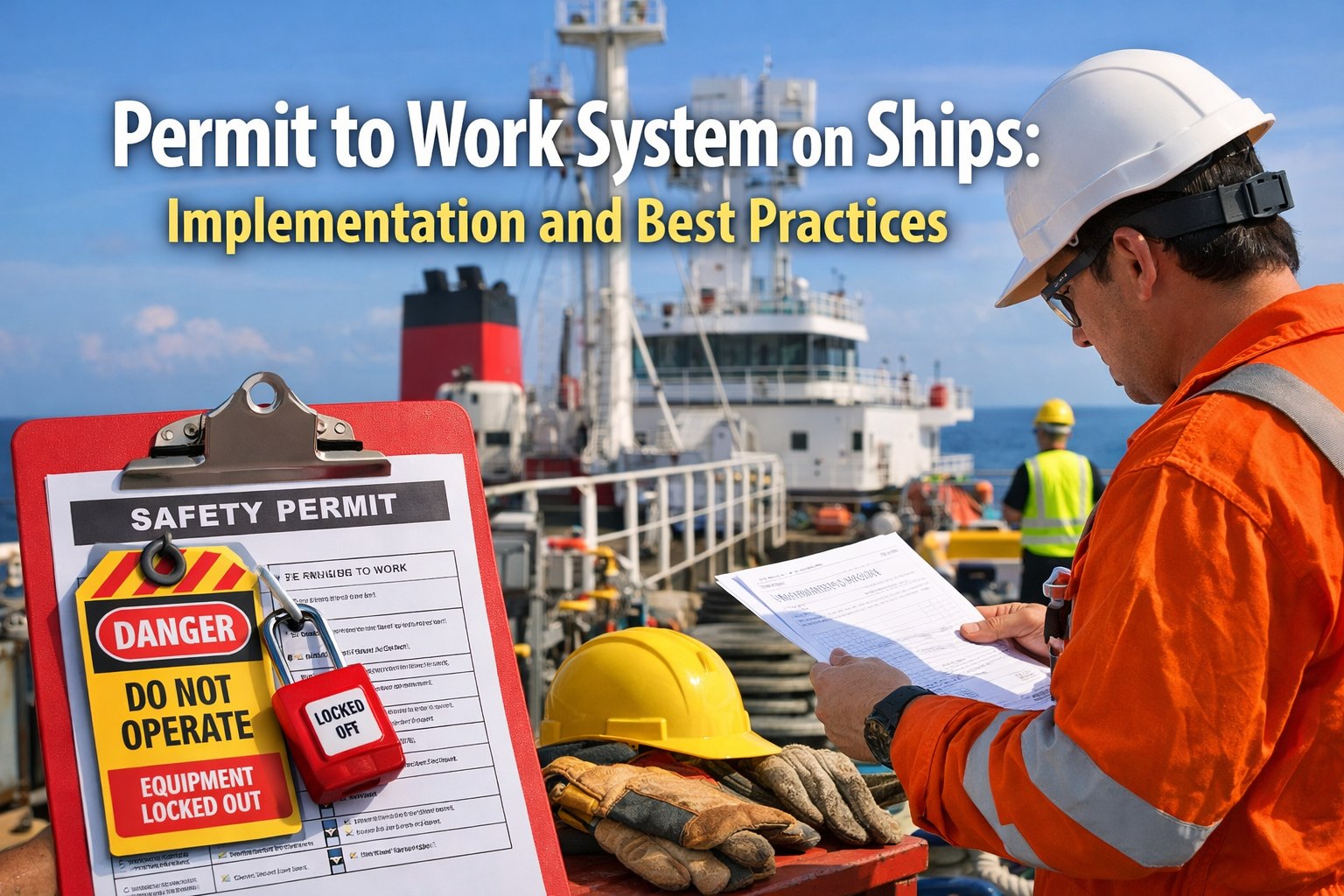
The core control that prevents enclosed space fatalities is the permit-to-work system — a formal authorisation that no entry may proceed until every safeguard is confirmed in place. It exists precisely to stop a key step being skipped under pressure, which is how most incidents begin. A complete permit turns a series of vital checks into a required, recorded sequence.
01
Risk assessment and authorisation
Before anything else, the specific entry is risk-assessed and formally authorised by a competent responsible person, drawing on the enclosed space register's hazard information for that space. Entry doors and hatches remain secured against entry until the space is declared safe.
02
Ventilation before and during entry
The space is thoroughly ventilated before entry and ventilation is maintained throughout, since a space made safe can become dangerous again if ventilation stops or conditions change.
03
Atmosphere testing before and during entry
The atmosphere is tested with calibrated equipment before entry and monitored during it, confirming safe oxygen, and the absence of flammable and toxic gases, from outside the space first. Testing is the only reliable warning, because the hazards give no sensory sign.
04
Standby attendant and communication
A trained standby person remains at the entrance throughout, maintaining continuous communication with those inside and never entering themselves in an emergency without proper apparatus and backup. This attendant is the single most important safeguard against the cascading-rescue pattern.
05
Rescue plan and equipment ready before entry
A rescue plan and the necessary breathing apparatus and recovery equipment are in place and ready before anyone enters, so a rescue is executed correctly and never improvised. No rescue entry is made without breathing apparatus.
06
Permit closed on completion
When the work is done, the permit is formally closed, the space secured, and the record retained. The permit's validity is time-limited, so a lapsed permit requires re-testing and re-authorisation rather than continued reliance on an earlier check.
i
Oxygen gives no warning — only testing does
A normal atmosphere contains about 20.9 per cent oxygen. Below roughly 16 per cent, judgement and coordination are already impaired, and in severely depleted atmospheres loss of consciousness can occur very quickly, with no smell, colour change or other sensory warning to signal the danger. This is the entire reason atmosphere testing is non-negotiable: a space can look, sound and feel completely normal while being immediately life-threatening. It is also why the standby attendant and the pre-positioned rescue equipment matter so much, because someone who enters an unsafe atmosphere may have very little time and no ability to save themselves. The controls are not bureaucratic caution; they are the only things standing between a routine task and the signature fatal pattern.
Register, Drills and Training
Beyond the individual entry, three standing disciplines keep a vessel genuinely prepared rather than merely compliant on paper. These are where preparation lives between entries.
The enclosed space register
A ship-specific register identifying every enclosed space on board, recording and assessing its hazards, and accounting for how each space's atmosphere may change depending on its contents or the cargo carried. Now mandated by the revised resolution, it is the reference the risk assessment and permit draw on, and it must be kept current as the vessel and its cargoes change.
Regular entry and rescue drills
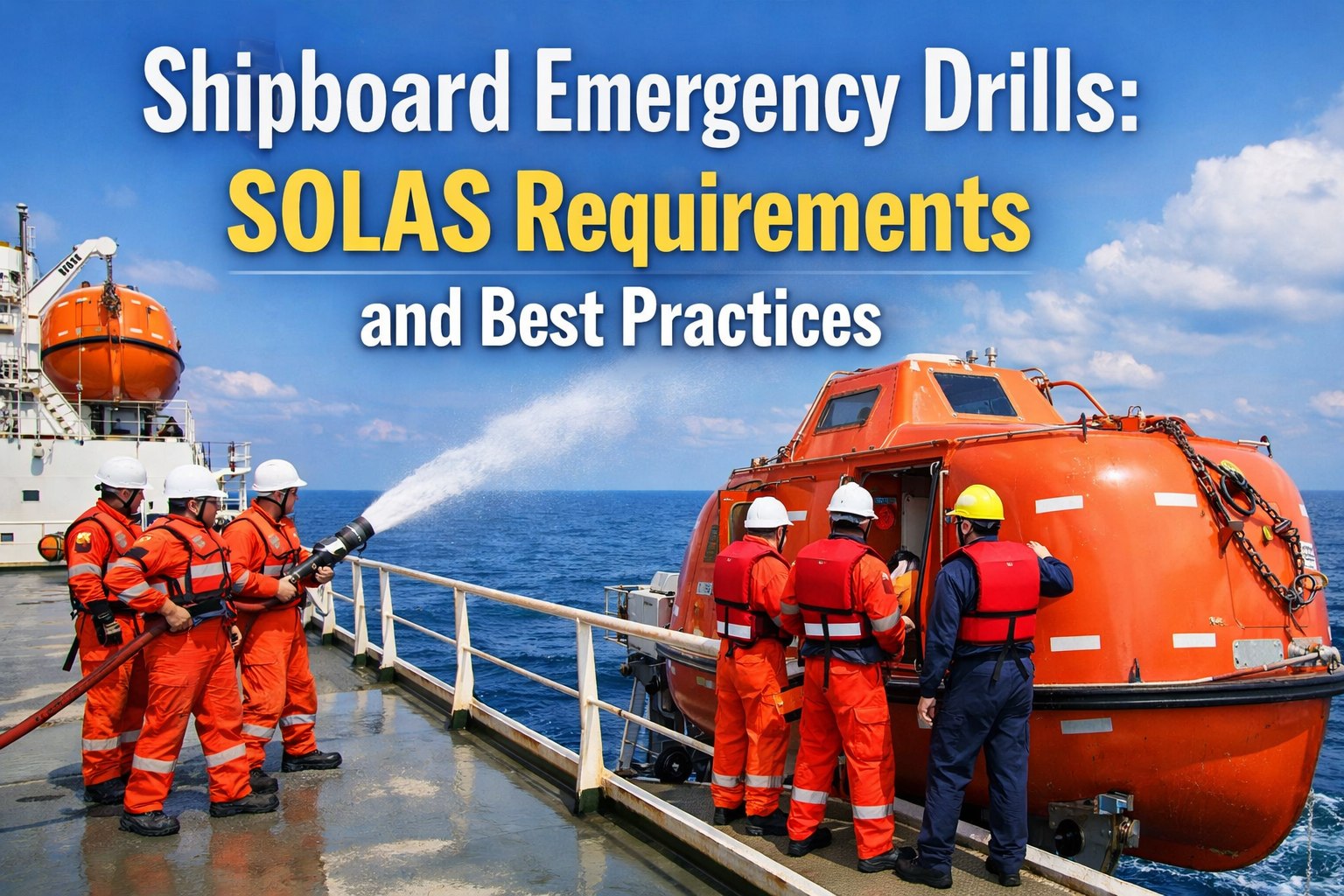
Enclosed space entry and rescue drills conducted every two months under SOLAS, planned and carried out safely, so the crew practise the correct sequence and, crucially, train to override the instinct to rush in unprotected. A well-drilled crew responds to a collapse with the rescue plan rather than with the fatal impulse.
Training in equipment and rescue
Crew trained in the operation, calibration and maintenance of atmosphere-testing equipment, and in rescue techniques, first aid, resuscitation and the use of recovery apparatus. The knowledge to implement the procedure correctly must actually reach the people who need it, since the failure is so often in application rather than in the rules.
Handled with this discipline, enclosed space entry can be made safe, and the persistent tragedy of these incidents is that they are preventable with controls that are already well established. The vessel whose enclosed space register is current, whose permits are properly issued and never short-cut, whose atmosphere is always tested, whose standby attendant and rescue equipment are always in place, and whose crew have drilled the response until it overrides instinct, is a vessel that breaks the fatal pattern. The revised 2025 resolution, with its prohibition on single-person entry, its mandatory breathing apparatus before rescue and its required hazard register, reinforces exactly these controls, and the planned 2027 inspection campaign will bring further scrutiny. But the deepest protection is cultural: treating every enclosed space as potentially lethal until proven safe, allowing the time the job needs, and never letting the urge to help send a second person into an unsafe space. To keep the enclosed space register, entry permits, atmosphere testing records and rescue-drill documentation organised and always current across your fleet, start a free trial or book a demo.
Frequently Asked Questions
Why are so many enclosed space victims would-be rescuers?
Because enclosed space incidents follow a cascading pattern driven by a natural human impulse. When a crew member collapses in an enclosed space, often with no visible warning because the dangerous atmosphere looks normal, a colleague instinctively rushes in to help without breathing apparatus. That rescuer breathes the same oxygen-depleted or toxic atmosphere and is overcome in turn, and in many documented cases a third person also enters and is lost. Around sixty per cent of first victims in fatal incidents are would-be rescuers. The instinct to save a colleague is powerful and natural, but in an unsafe atmosphere it is lethal, which is why the revised IMO resolution now mandates breathing apparatus before any rescue entry and prohibits improvised rescue, and why regular drills train crew to override the impulse to rush in unprotected.
What is Resolution MSC.581(110)?
Resolution MSC.581(110) is the IMO's revised Recommendations for Entering Enclosed Spaces Aboard Ships, adopted at the 34th Assembly in December 2025. It revokes and replaces the earlier Resolution A.1050(27) and is the most significant update to enclosed space entry guidance in over a decade. Its key changes include, for the first time, an explicit prohibition on single-person entry; a requirement for self-contained breathing apparatus before any rescue entry, with improvised rescue prohibited; a mandatory ship-specific enclosed space register recording and assessing the hazards of every enclosed space; ship-specific emergency response plans; clear safe-to-enter and unsafe-to-enter signage; and acknowledgement that adequate time must be allowed for these operations, since time pressure has been a recurring causal factor in past incidents. It reinforces existing mandatory SOLAS requirements rather than replacing them.
What does a permit-to-work system require for enclosed space entry?
A permit-to-work system requires that no entry proceeds until every safeguard is confirmed in place, turning vital checks into a required, recorded sequence. It covers a risk assessment and formal authorisation by a competent responsible person drawing on the enclosed space register; thorough ventilation before and maintained during entry; atmosphere testing with calibrated equipment before entry and monitoring during it, confirming safe oxygen and the absence of flammable and toxic gases; a trained standby attendant at the entrance in continuous communication with those inside; a rescue plan with breathing apparatus and recovery equipment ready before anyone enters; and formal closure of the permit on completion. The permit is time-limited, so if it lapses the space must be re-tested and re-authorised. The system exists specifically to prevent a critical step being skipped under time pressure, which is how most incidents begin.
How often must enclosed space drills be conducted?
Under SOLAS Regulation III/19.3.6, enclosed space entry and rescue drills must be conducted every two months, planned and carried out in a safe manner and taking into account the guidance in the IMO recommendations. These drills are essential because they train the crew in the correct entry and rescue sequence and, crucially, condition them to respond to a collapse with the rescue plan rather than the fatal impulse to rush in unprotected. Regular drilling is what turns knowledge of the procedure into an ingrained response under the stress of a real emergency. Alongside the drills, crew must be trained in the operation, calibration and maintenance of atmosphere-testing equipment and in rescue techniques, first aid, resuscitation and the use of recovery apparatus, so that both the routine entry and the emergency response are handled competently.
Why is atmosphere testing so critical?
Because the hazards in an enclosed space give no sensory warning. A normal atmosphere contains about 20.9 per cent oxygen, but below roughly 16 per cent judgement and coordination are already impaired, and severely depleted atmospheres can cause loss of consciousness very quickly — all with no smell, colour or other sign to signal the danger. Toxic gases such as hydrogen sulphide can also be present, and can be odourless at lethal concentrations. This means a space can look, sound and feel completely normal while being immediately life-threatening, so testing with calibrated equipment is the only reliable way to know whether a space is safe. The atmosphere must be tested before entry, from outside the space, and monitored throughout, because conditions can change. Testing is not a formality; it is the single measurement that stands between a routine task and a fatality.
Which cargoes and spaces are most dangerous?
Enclosed spaces such as ballast tanks, chain lockers, cargo holds, pump rooms, cofferdams and void spaces are all potentially dangerous, particularly when unventilated. The risk is heightened by certain cargoes known to deplete oxygen or generate toxic gas in surrounding spaces, including coal, wood products such as wood chips and pellets, metal sulphide concentrates, ferrous materials, seed cake and scrap metal, along with certain grain and timber cargoes. A key point of the mandatory enclosed space register is that it must account for how each space's atmosphere may change depending on its contents or the cargo carried, because a space that was safe on one voyage may be hazardous on another. This is why the hazards of every space must be assessed specifically rather than assumed, and why testing is always required regardless of a space's previous condition.
Break the Pattern With Discipline and Records
Enclosed space fatalities are preventable with controls that already exist — the failure is almost always in application. Marine Inspection digitalises the enclosed space register, entry permits, atmosphere-testing records and rescue-drill documentation across your fleet, so every safeguard is confirmed, recorded and current, and no vital step is skipped under pressure. Give the crew the discipline that breaks the fatal pattern.