Keep up-to-date with all our latest company news and business content. The latest news, tips and advice to help you run your business with less fuss.
Every commercial vessel sails under a Minimum Safe Manning Document issued by its flag state administration under IMO Resolution A.1047(27) Principles of Minimum Safe Manning, with the MSMD valid for a maximum...
The first three things a Port State Control officer asks for when boarding a vessel in 2026 are the crew list, the certificate file, and the rest hour records for the last month. In under ten minutes she knows...
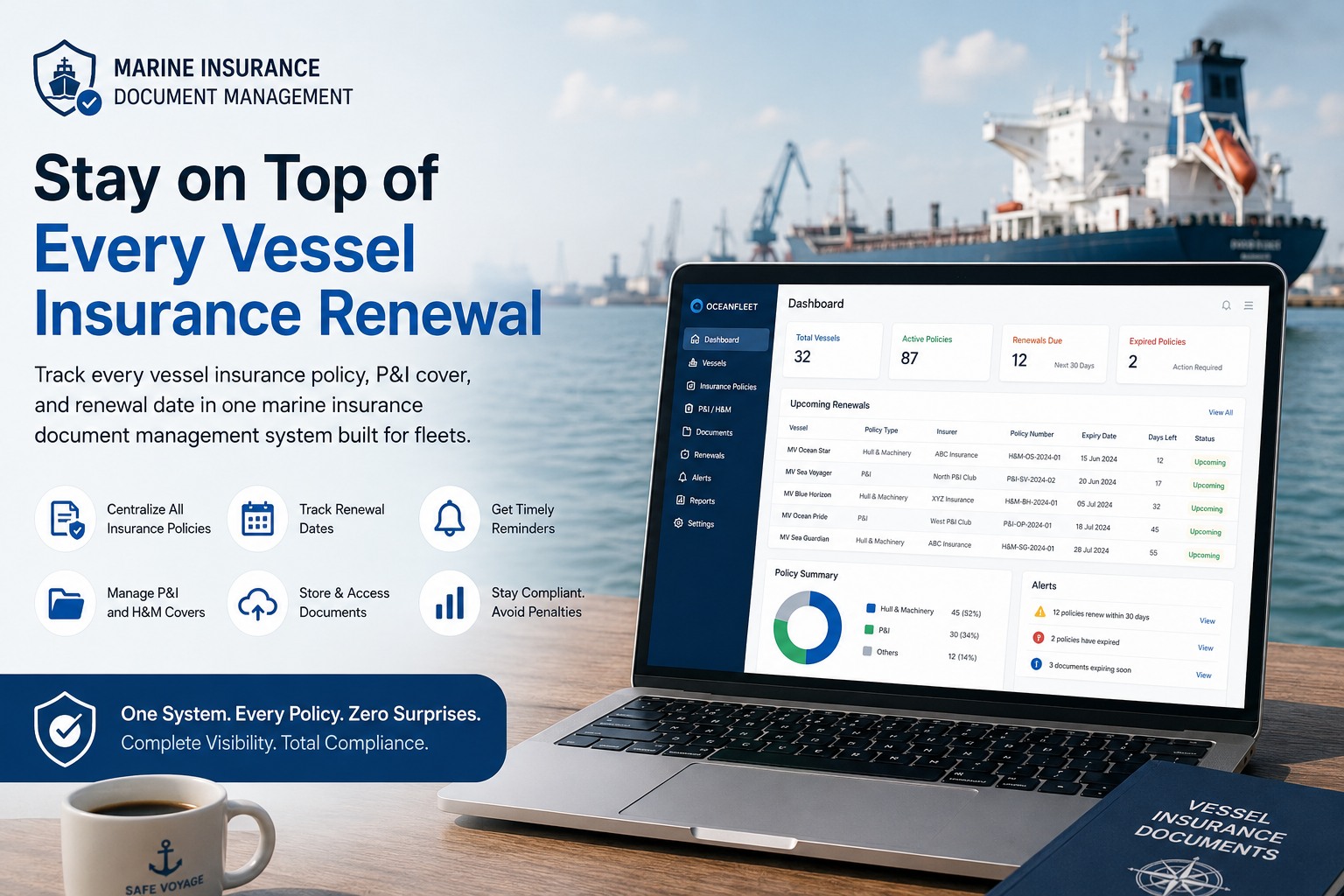
The marine insurance landscape that closes the 2026 fiscal year is structurally different from the one that opened it. February 20, 2026 saw the International Group P&I renewal conclude in the 5% range with...
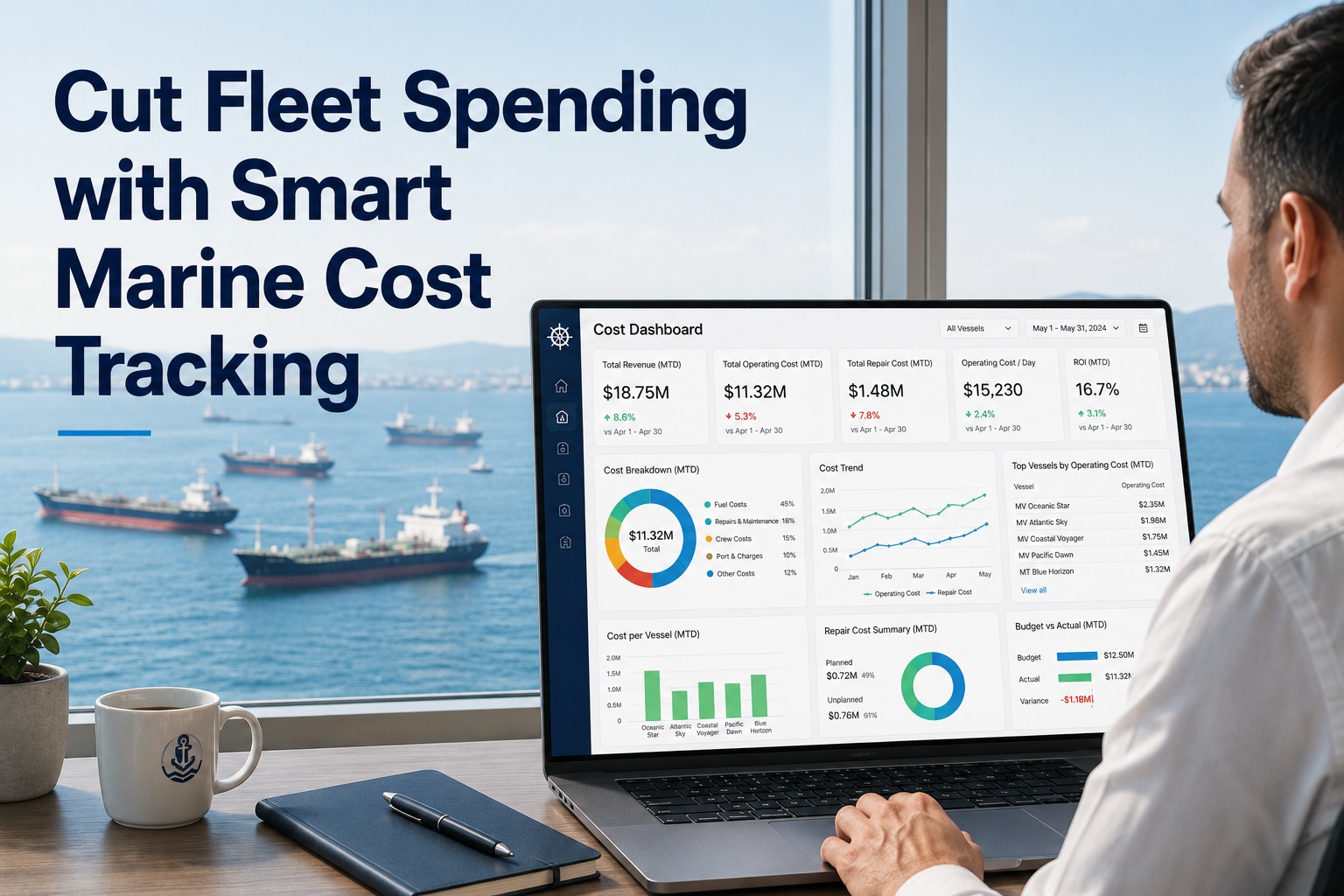
The financial truth of running a commercial vessel in 2026 is that the bill arrives daily — whether or not the ship moves, whether or not it carries cargo, whether or not the charterer pays on time. Drewry's...
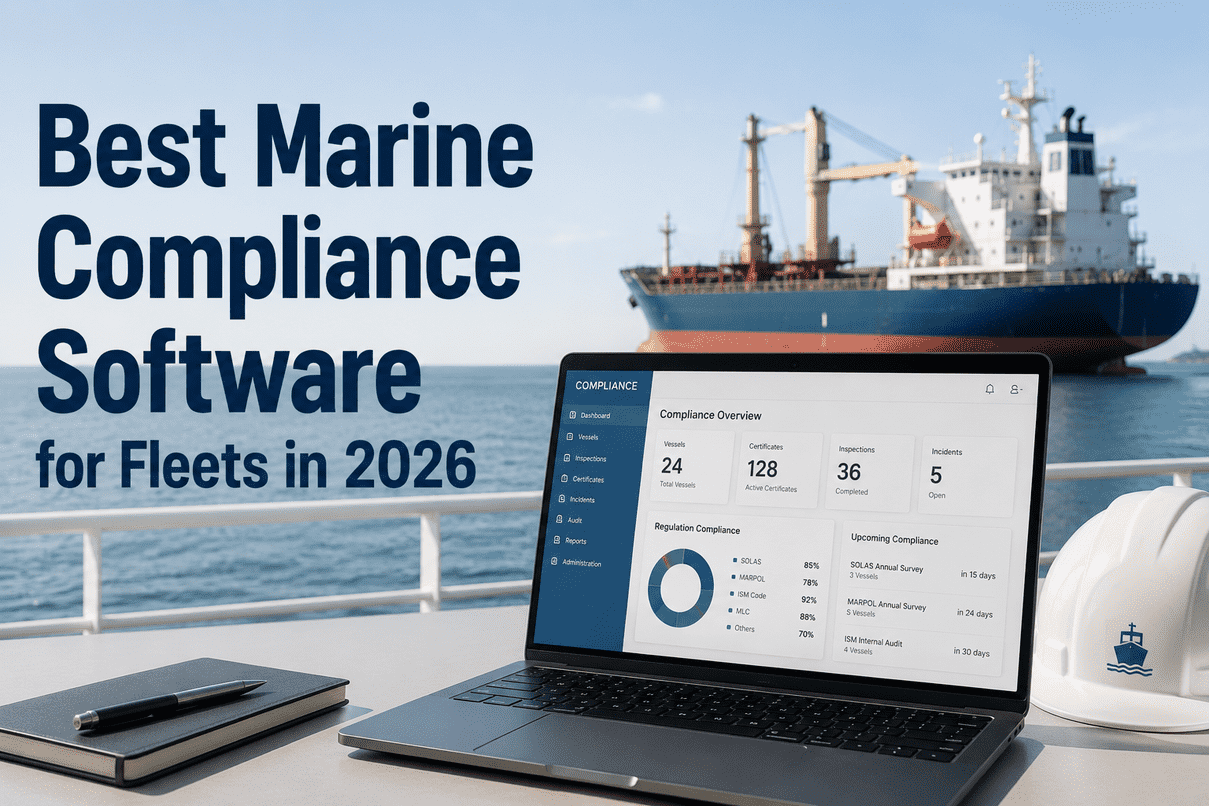
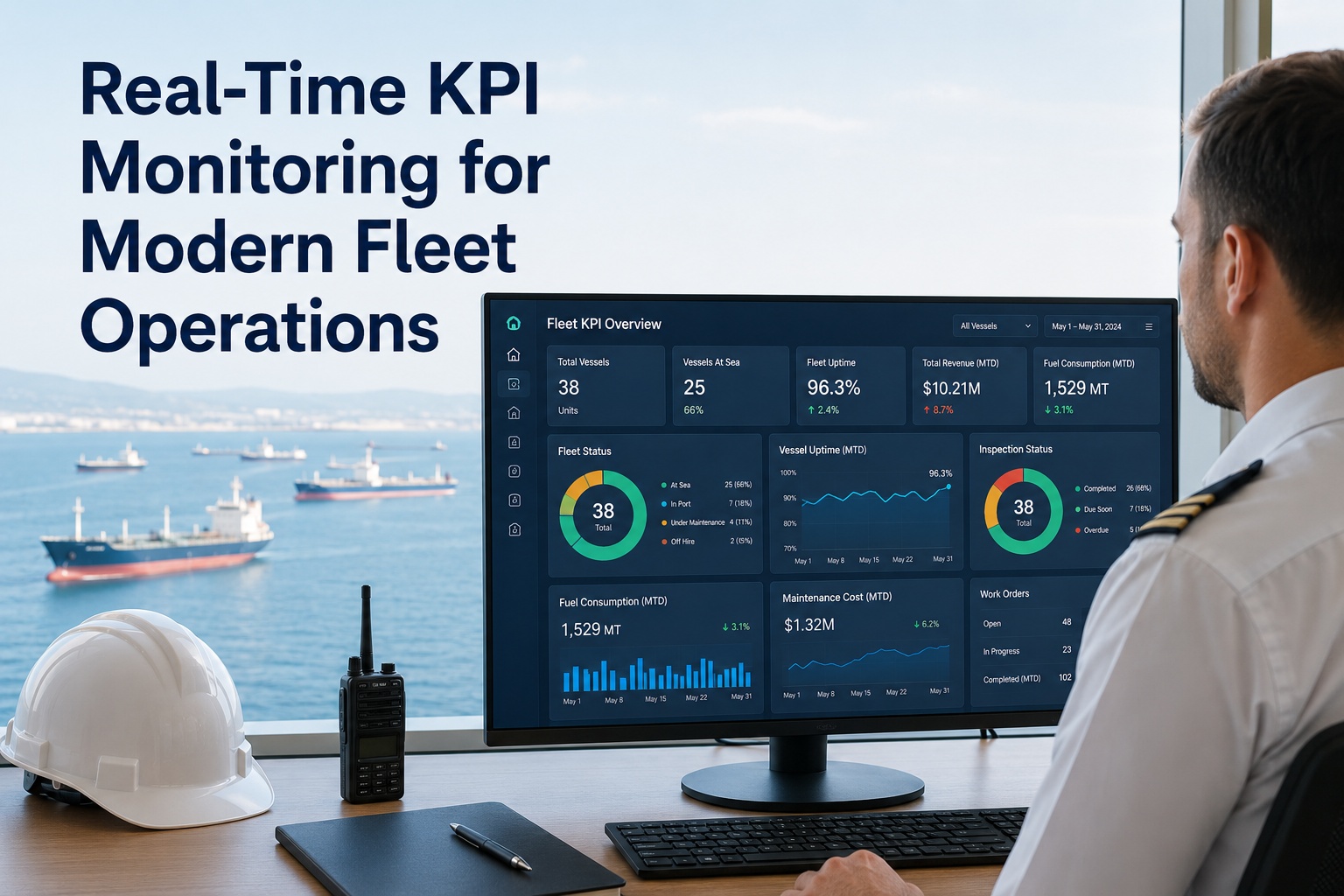
Modern fleet operators are converging on a question that did not exist as a unified metric a decade ago: what is the health of every vessel in my fleet, right now, on a single screen? The answer used to live in...
The fleet operator who walks into 2026 without real-time KPI monitoring is walking into a year where EU ETS now covers 100% of eligible emissions, FuelEU Maritime begins active enforcement with the first...
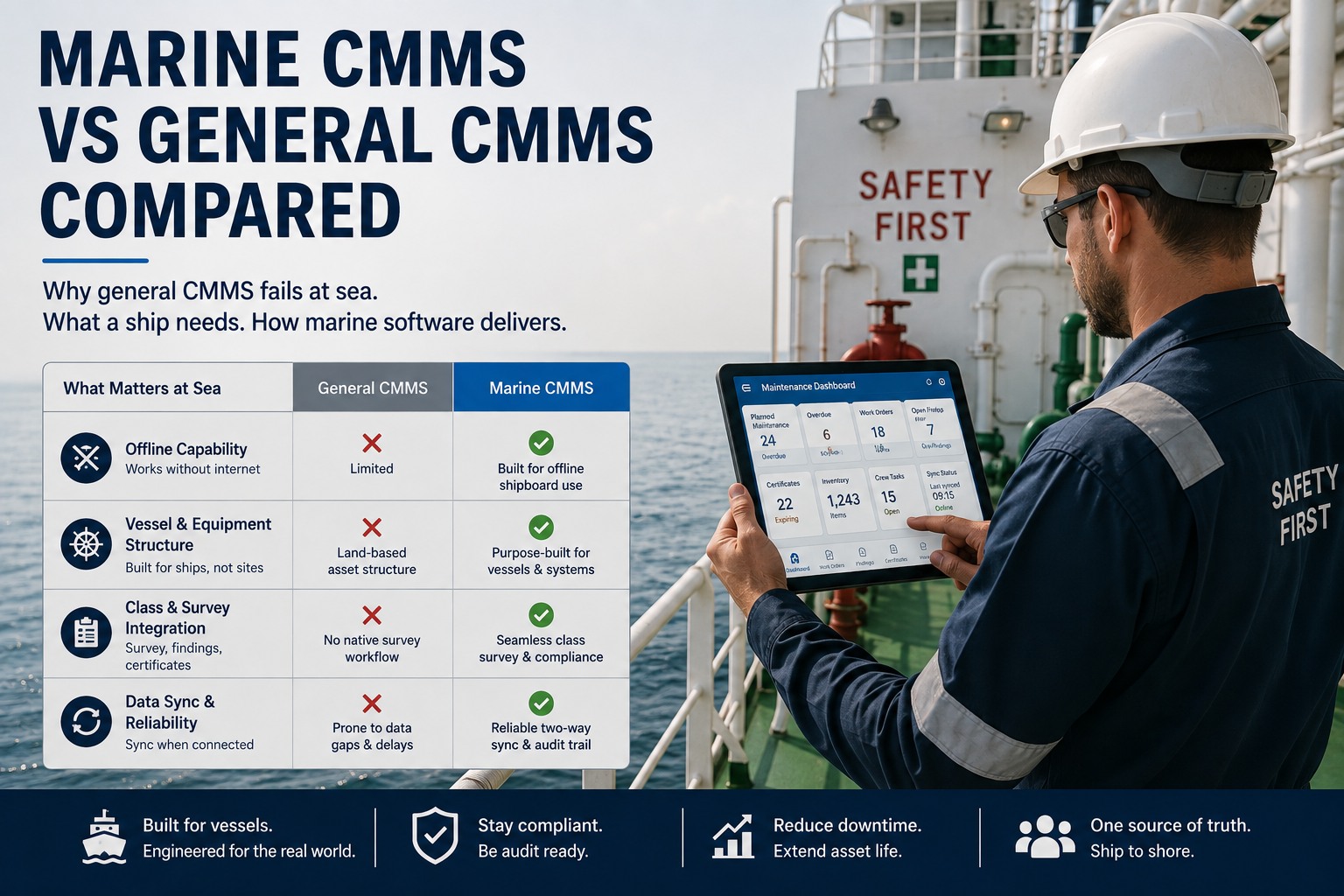
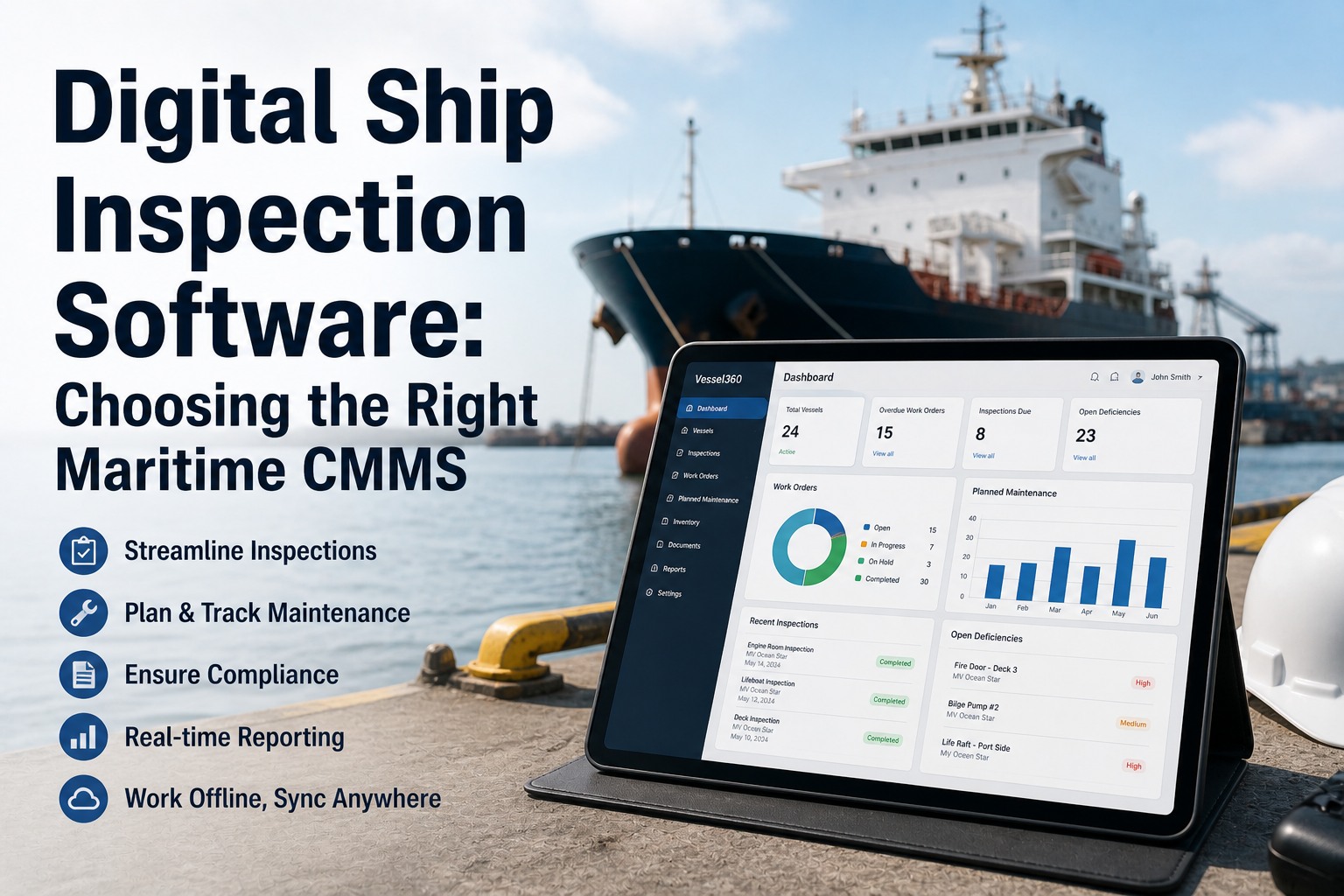
The maritime CMMS landscape entered a new phase in 2026. Verified Market Research's Q1 2026 analysis identifies four converging forces driving rapid transformation: regulatory compliance pressure (SOLAS...
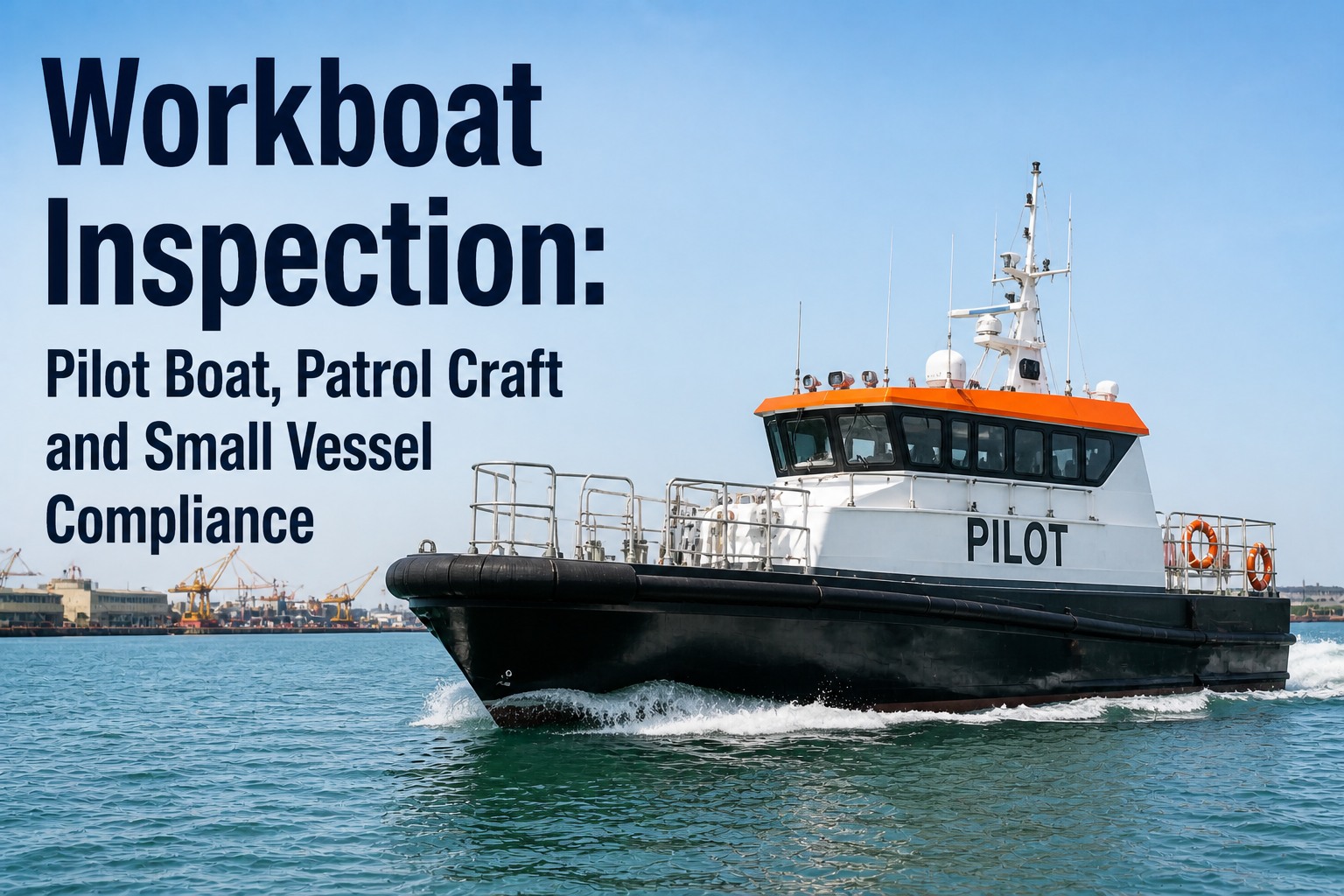
For the UK workboat sector, the most consequential inspection deadline of the decade arrives on 13 December 2026. After three years of phased transition, vessels still certificated under the...
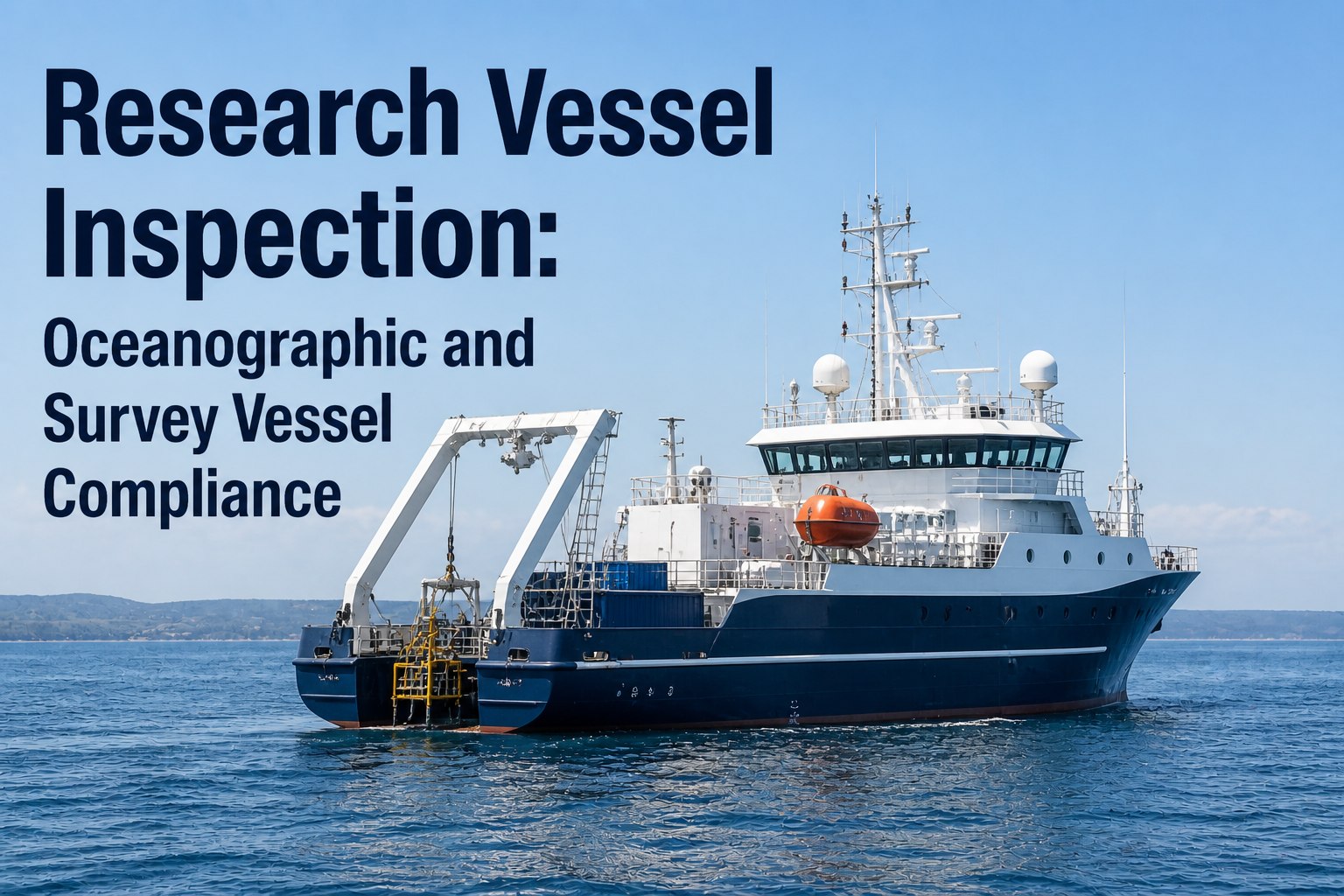
Research vessels occupy a unique seat in commercial shipping inspection. They are neither cargo ships nor passenger ships in the conventional sense — they carry "scientific personnel" who are legally...
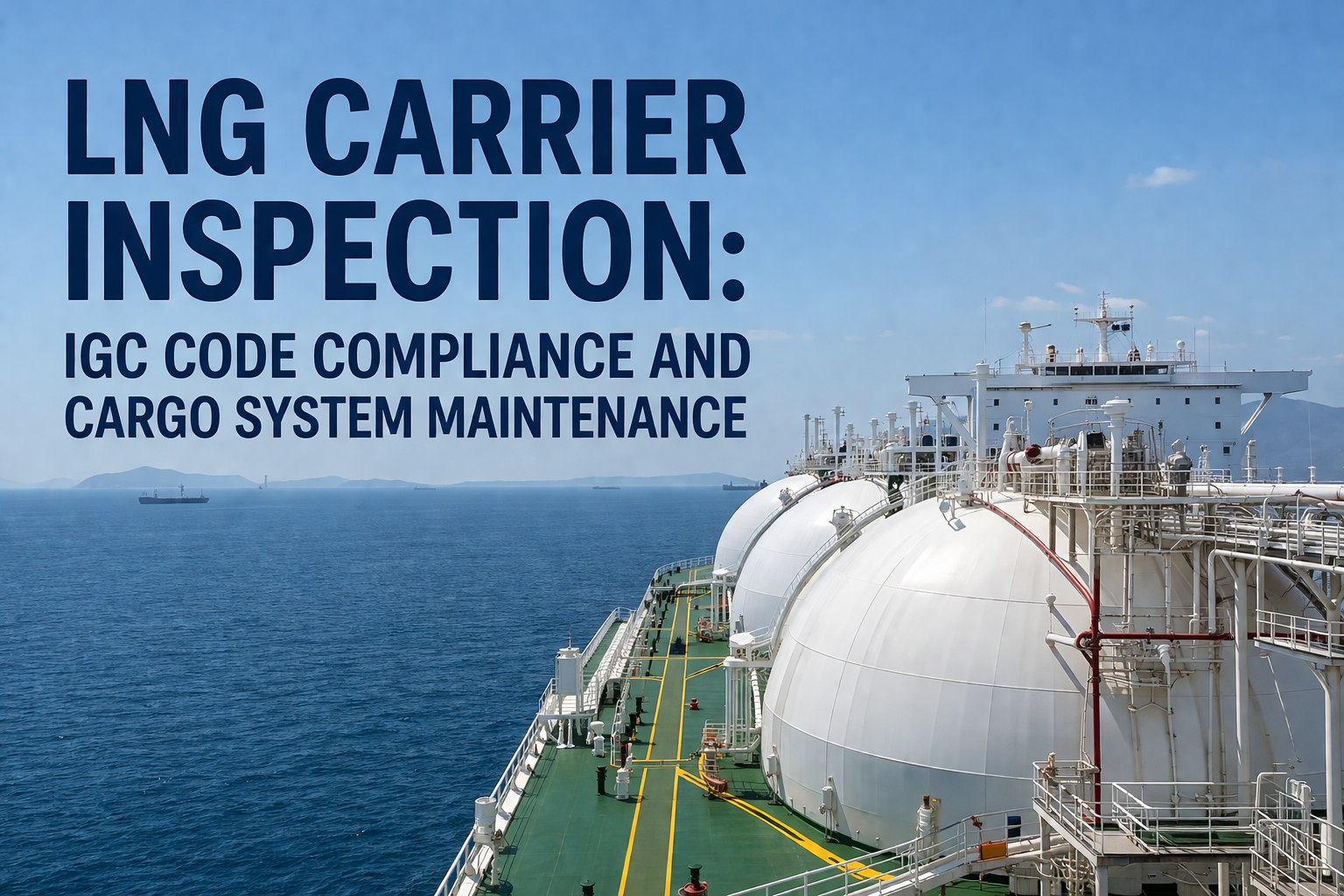
An LNG carrier sits at the apex of merchant ship complexity. A modern 174,000 m³ membrane carrier transports 80 million litres of cargo at minus 163°C, generates and consumes its own boil-off gas, runs...
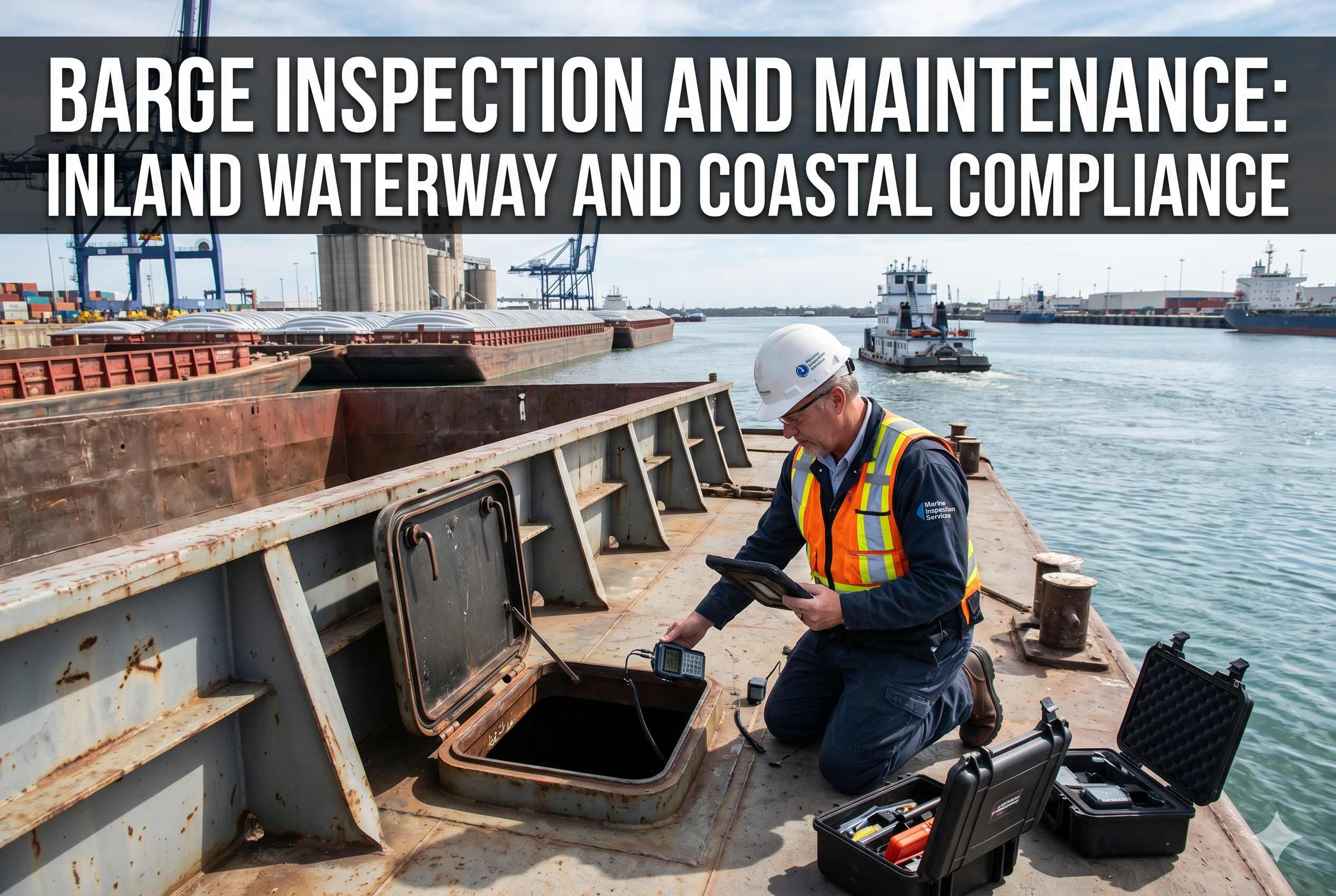
A 15-barge tow on the Lower Mississippi moves 22,500 tons of cargo as a single unit — the equivalent of 225 railroad cars or 870 tractor-trailer trucks. The US inland barge fleet — 22,385 working barges...
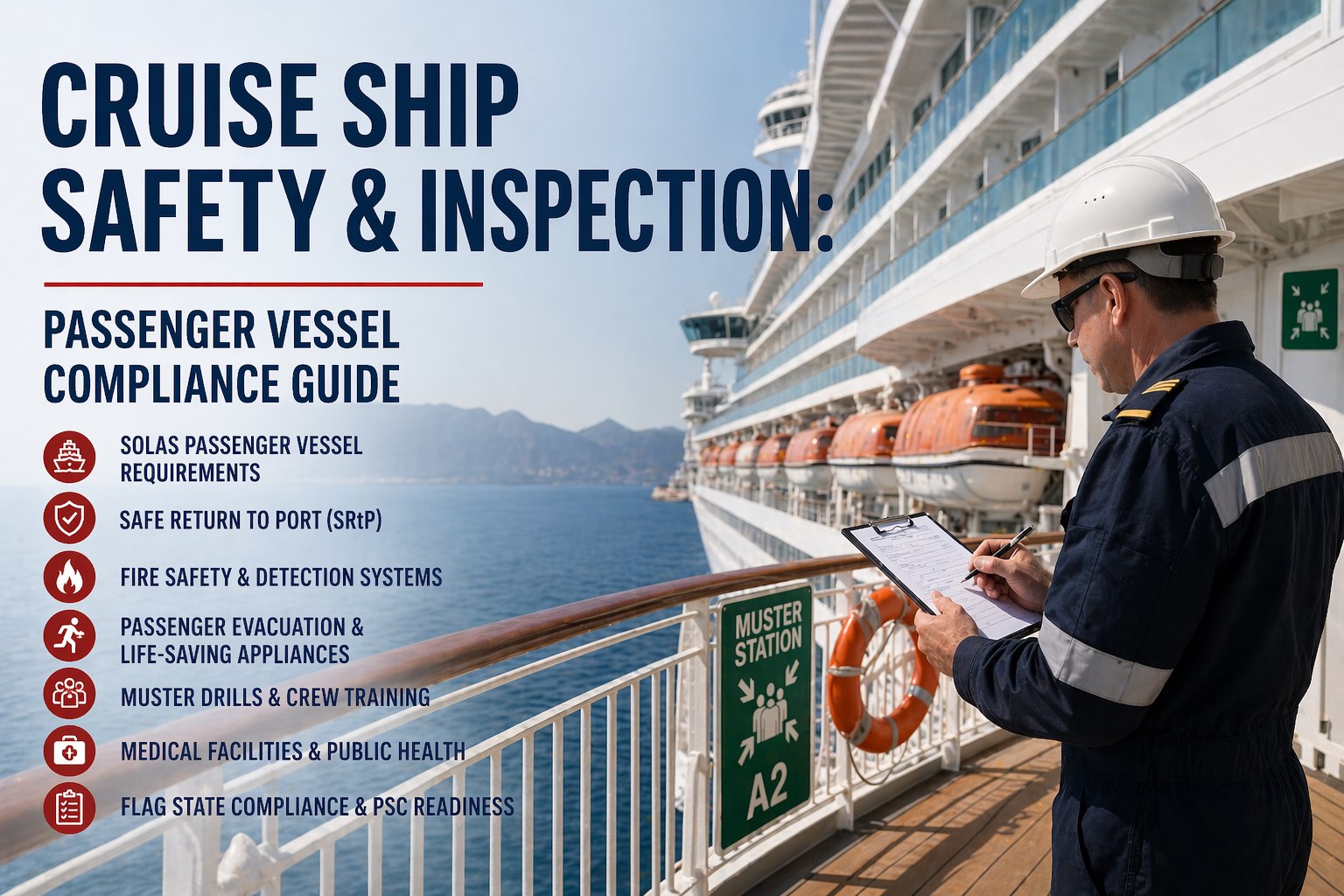
A modern cruise ship is not a vessel in the traditional sense — it's a floating city carrying up to 7,600 passengers plus crew across international waters, complete with hotels, restaurants, hospitals,...
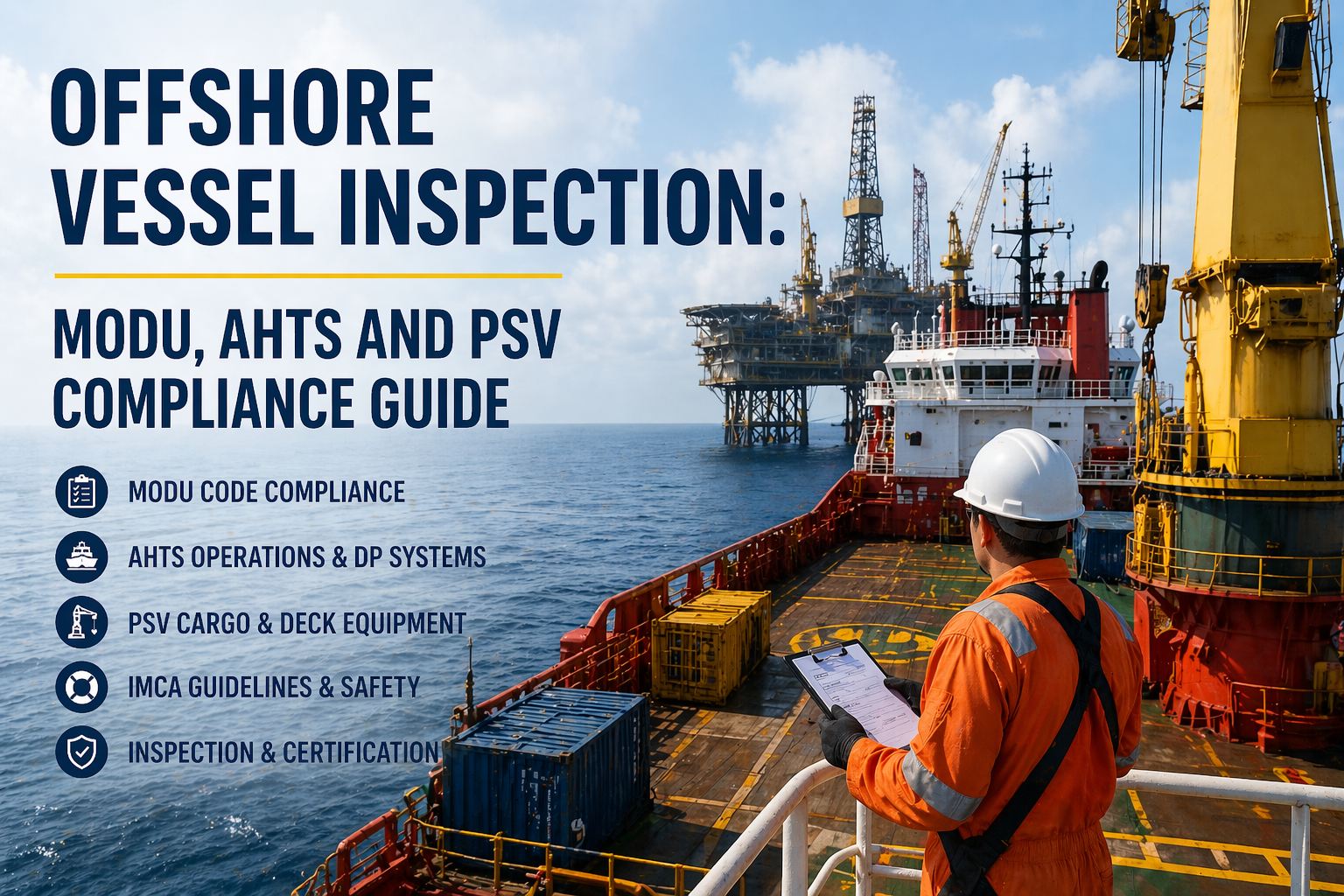
Offshore vessels operate in the most punishing, highest-stakes environment in shipping — from Mobile Offshore Drilling Units (MODUs) anchored over deepwater wells to Anchor Handling Tug Supply (AHTS) vessels...
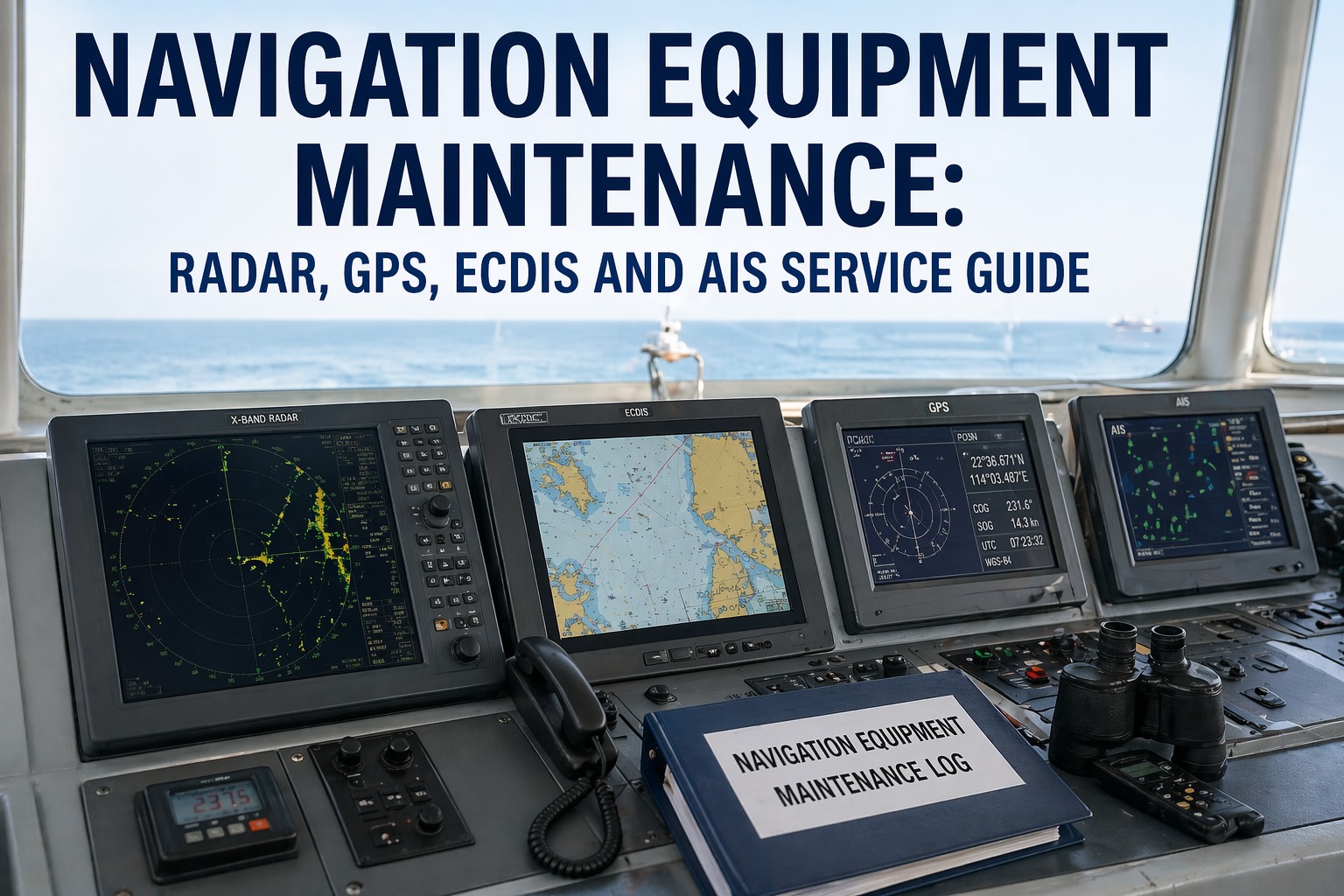
Navigation equipment failure at sea does not announce itself — it degrades quietly until the radar display shows phantom targets, the ECDIS position drifts by 0.3 nautical miles, the gyrocompass develops a...
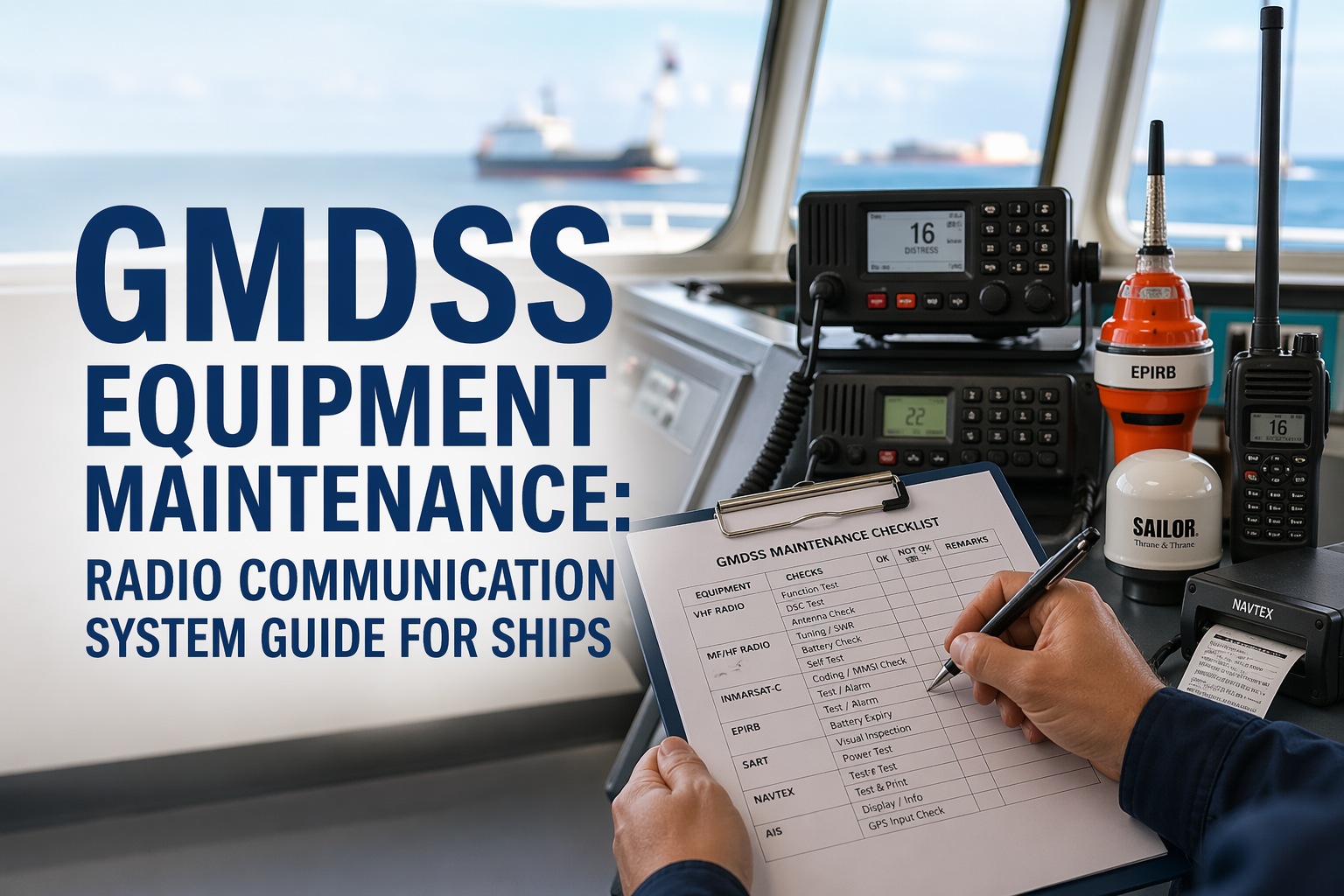
The Global Maritime Distress and Safety System is the communication backbone that connects a vessel in distress to rescue coordination centres worldwide — and it only works if every component is maintained,...
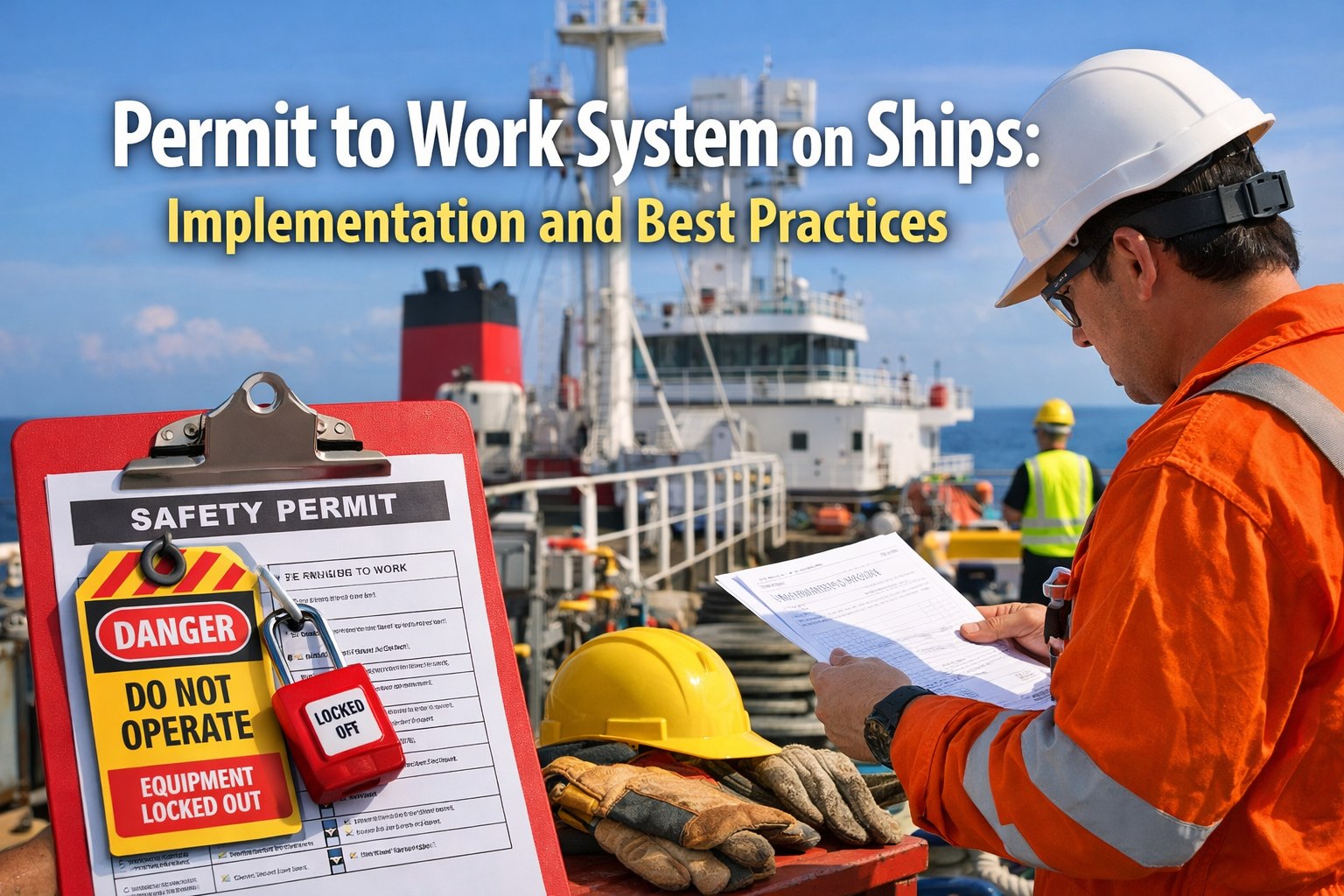
The Permit to Work system is the safety framework that stands between routine maintenance and catastrophic incidents on ships — formalising the assessment, authorisation, and monitoring of every hazardous task...
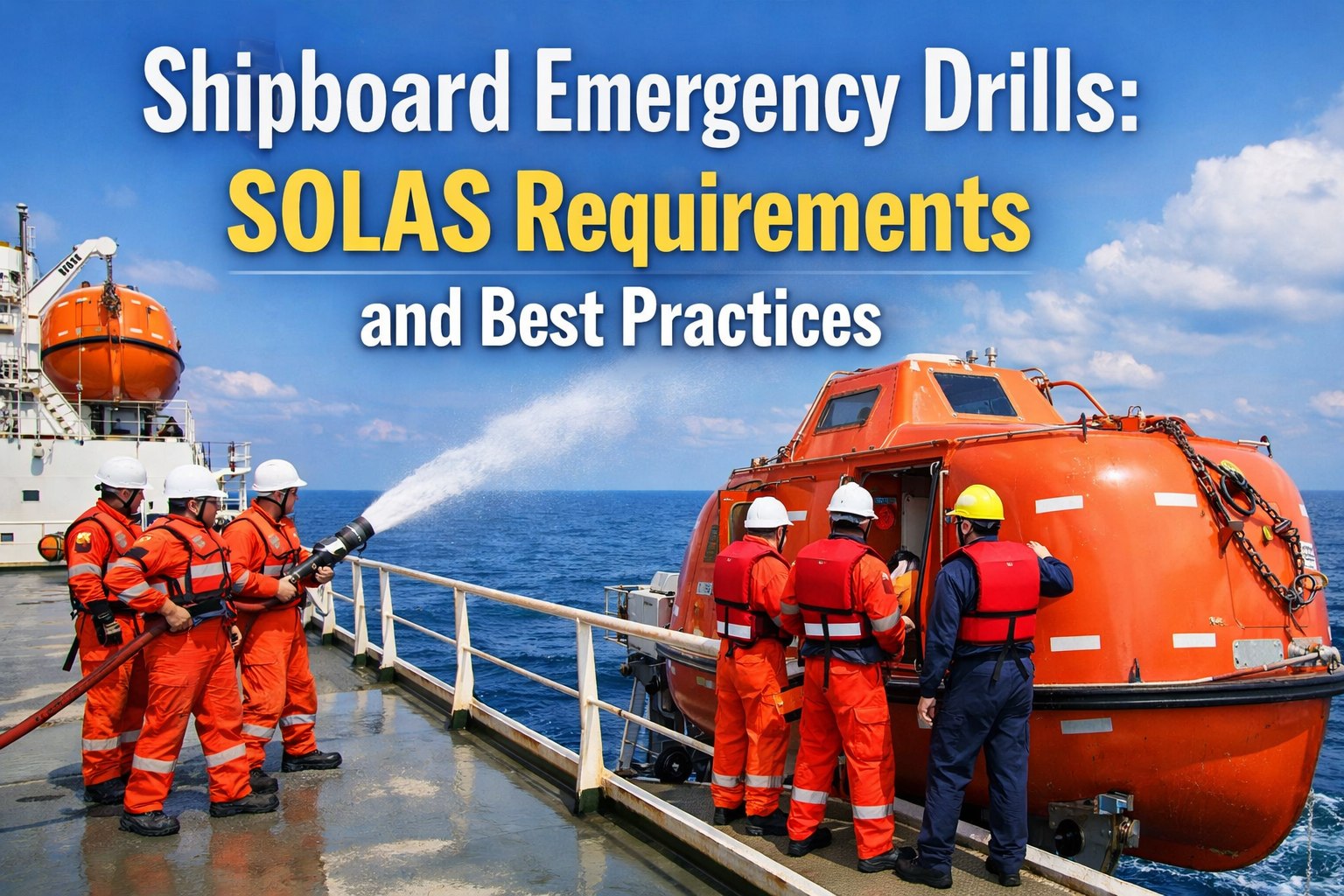
Emergency drills are the single most inspected element of any vessel's safety management system — PSC officers verify drill records at every boarding, ISM auditors review drill schedules and participation...
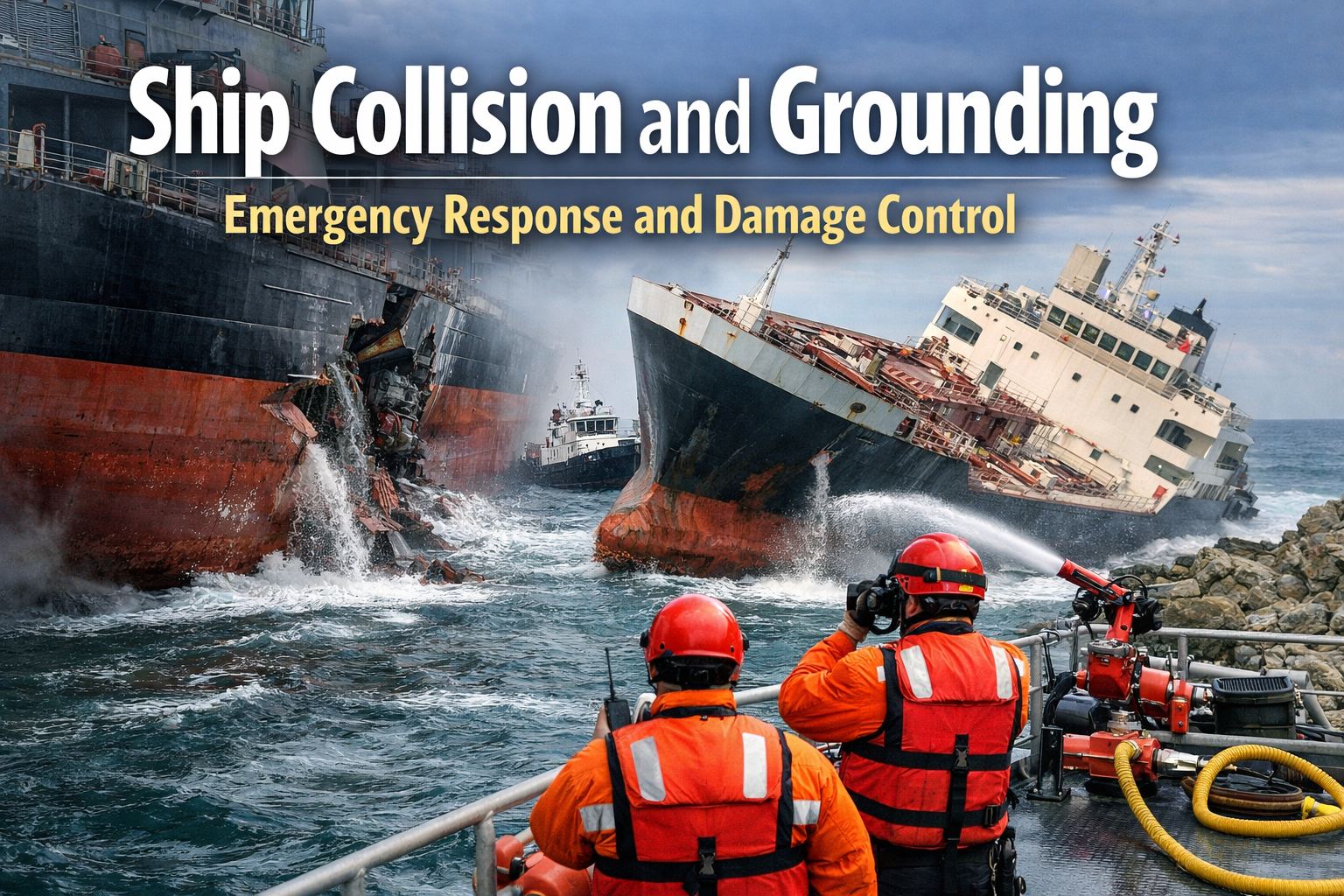
Collision and grounding are the maritime emergencies that test a ship Master's competence most completely — requiring simultaneous management of crew safety, vessel stability, structural integrity,...
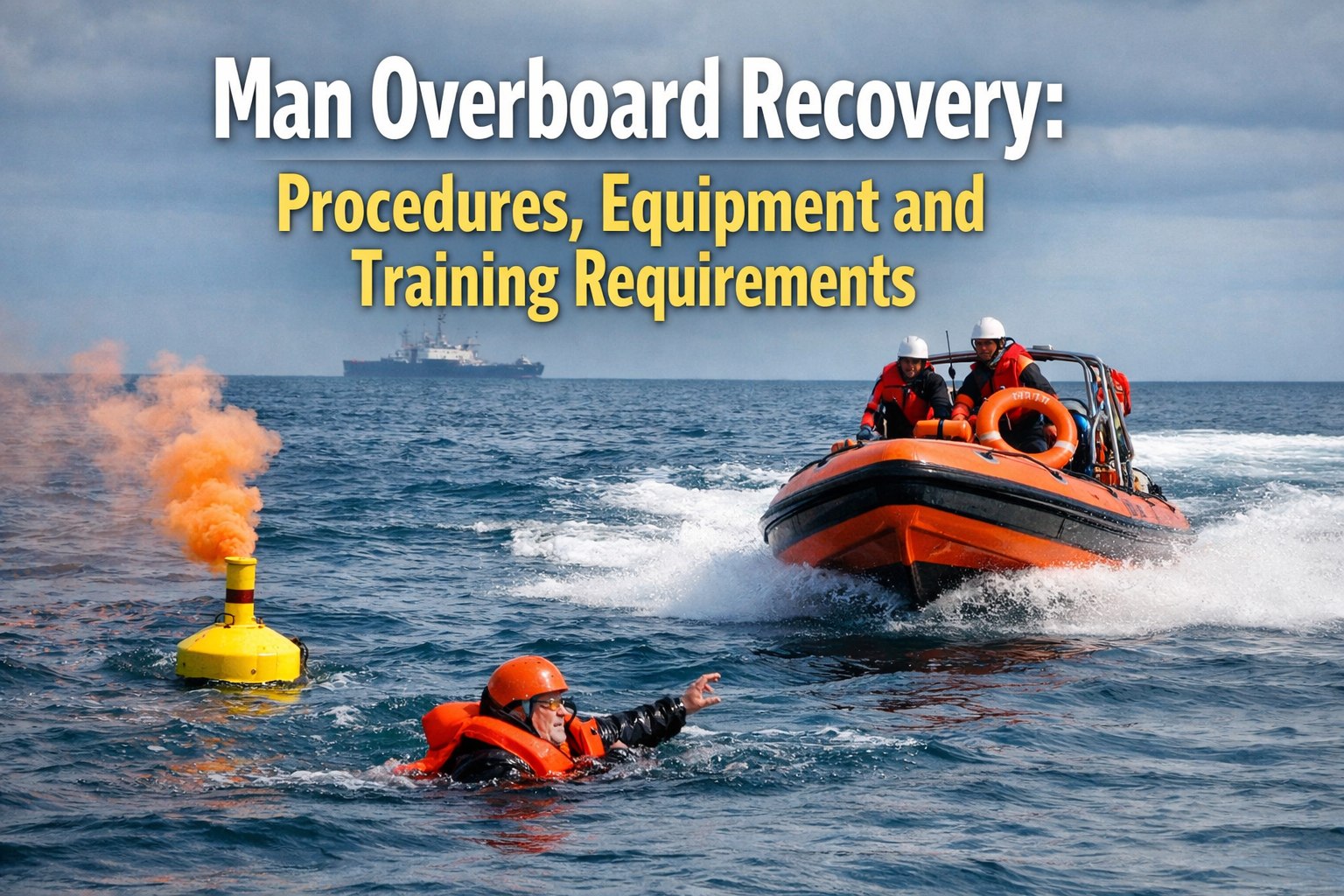
Man overboard is the maritime emergency where seconds determine survival. A person in the water at 15 knots is 450 metres behind the vessel within one minute. In water below 15°C, cold shock response triggers...
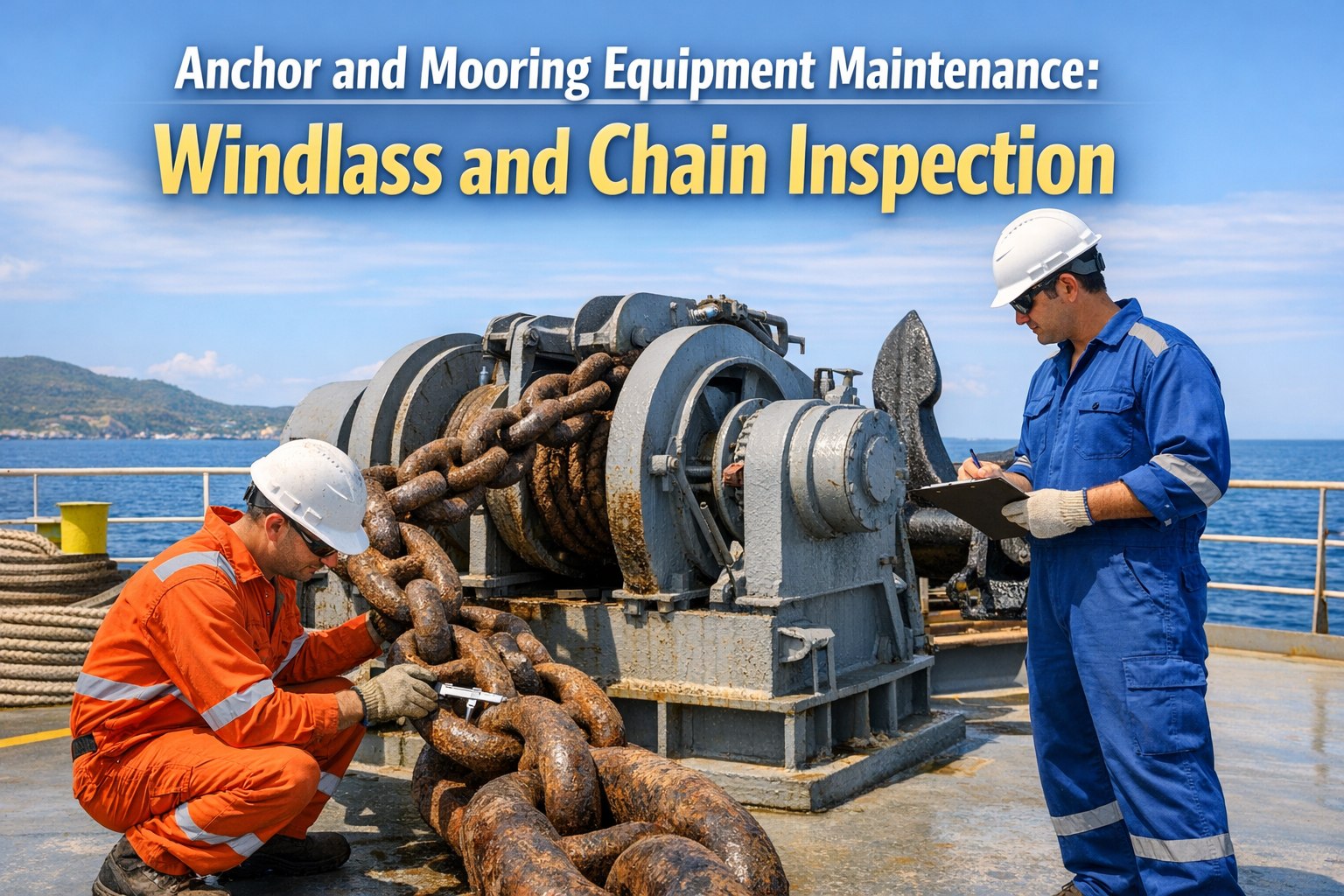
Mooring operations remain among the most dangerous routine activities on any vessel — nearly all mooring injuries result from mooring line failures, and the snap-back zone from a parting high-strength...
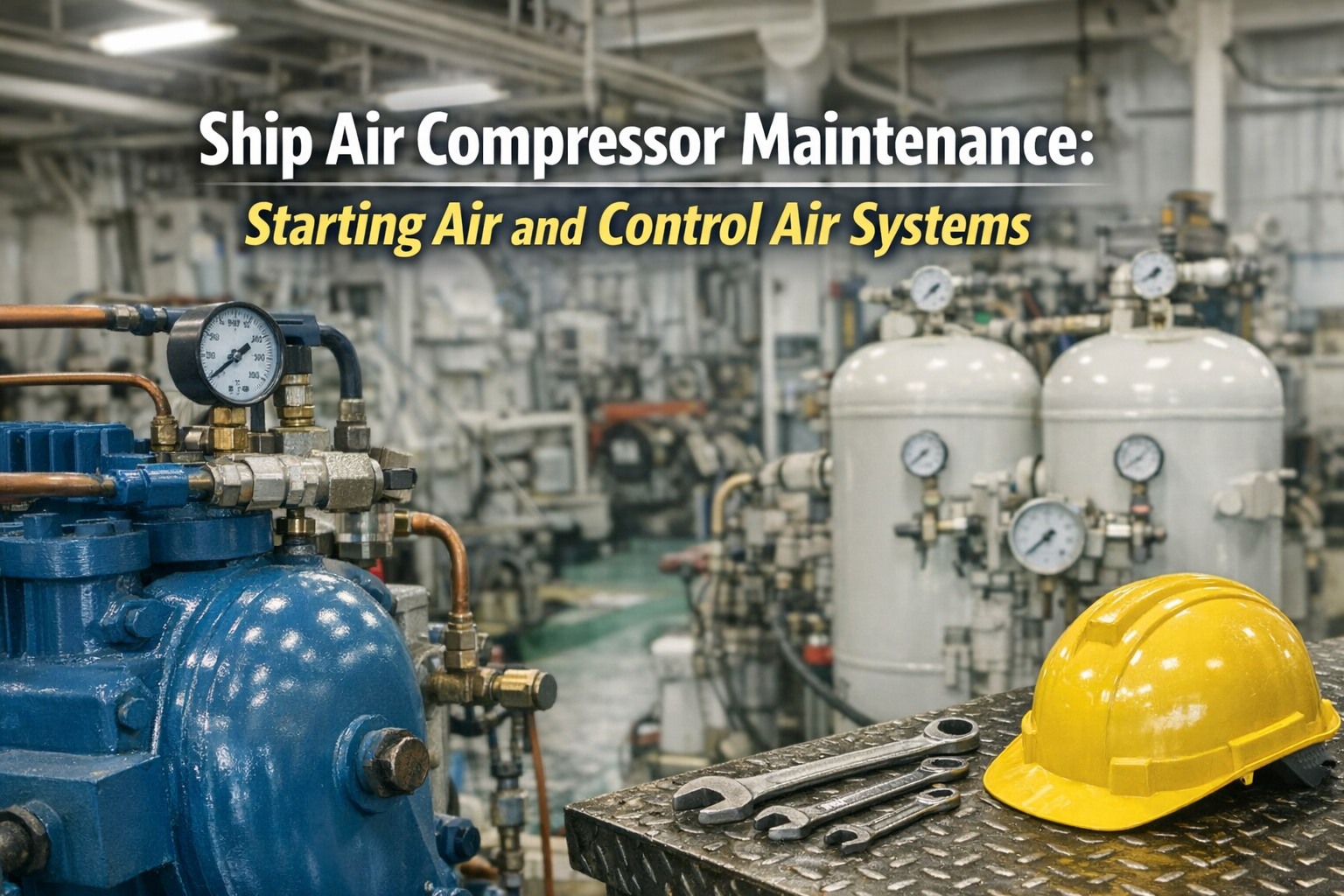
Compressed air is the invisible utility that makes every other engine room system work — you cannot start the main engine without it, you cannot operate pneumatic control valves without it, you cannot sound...
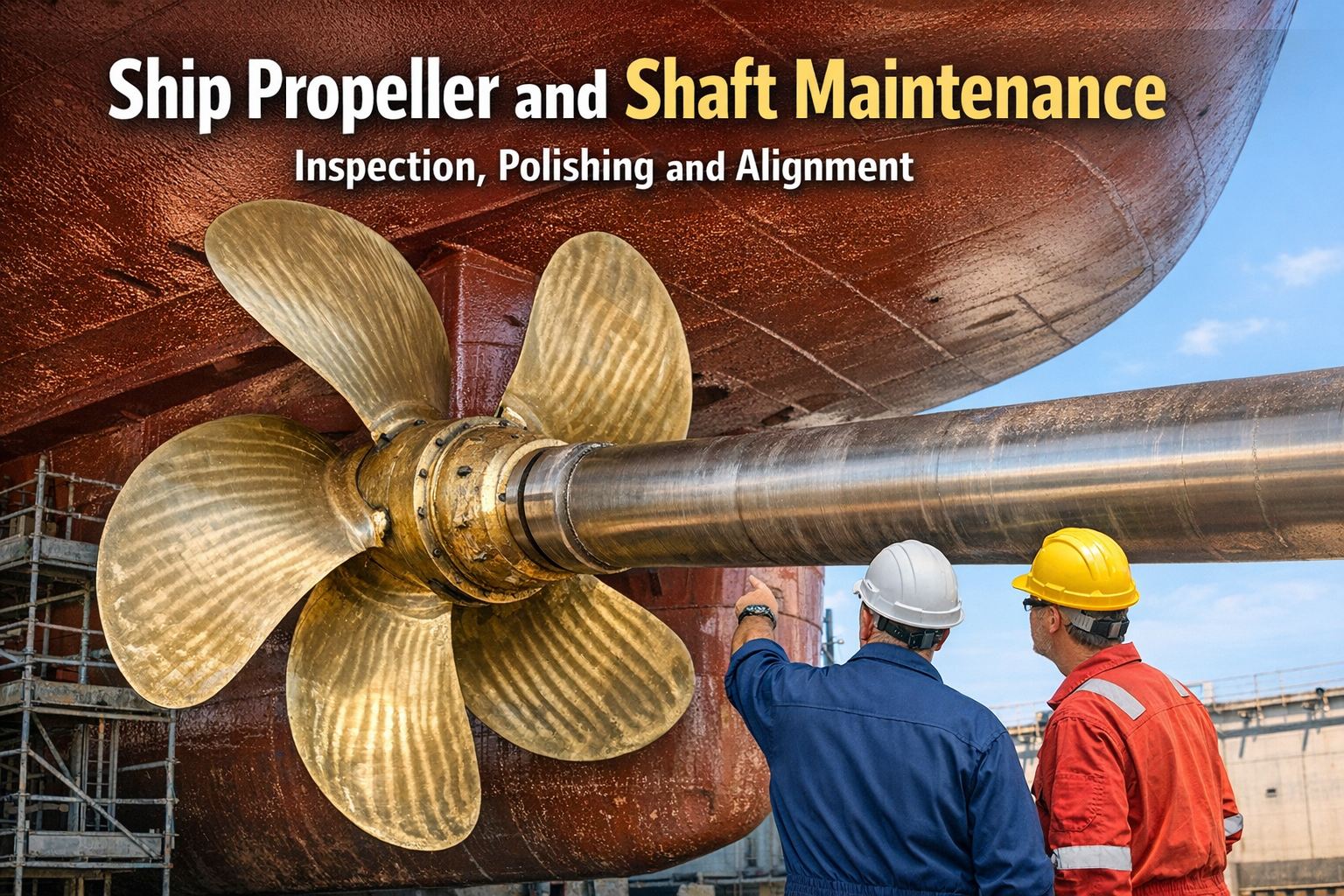
The propeller and shaft line are the mechanical connection between your ship's main engine and the water that propels it — and arguably the hardest-working assembly on any vessel. The tail shaft transmits...
Ship crane and deck machinery management has entered a fundamentally new regulatory era. SOLAS Regulation II-1/3-13, introduced via IMO Resolution MSC.532(107) and effective January 1, 2026, imposes...
Marine pumps are the circulatory system of every commercial vessel — moving seawater through engine cooling circuits, transferring heavy fuel oil from bunker tanks to service tanks, lubricating main engine...
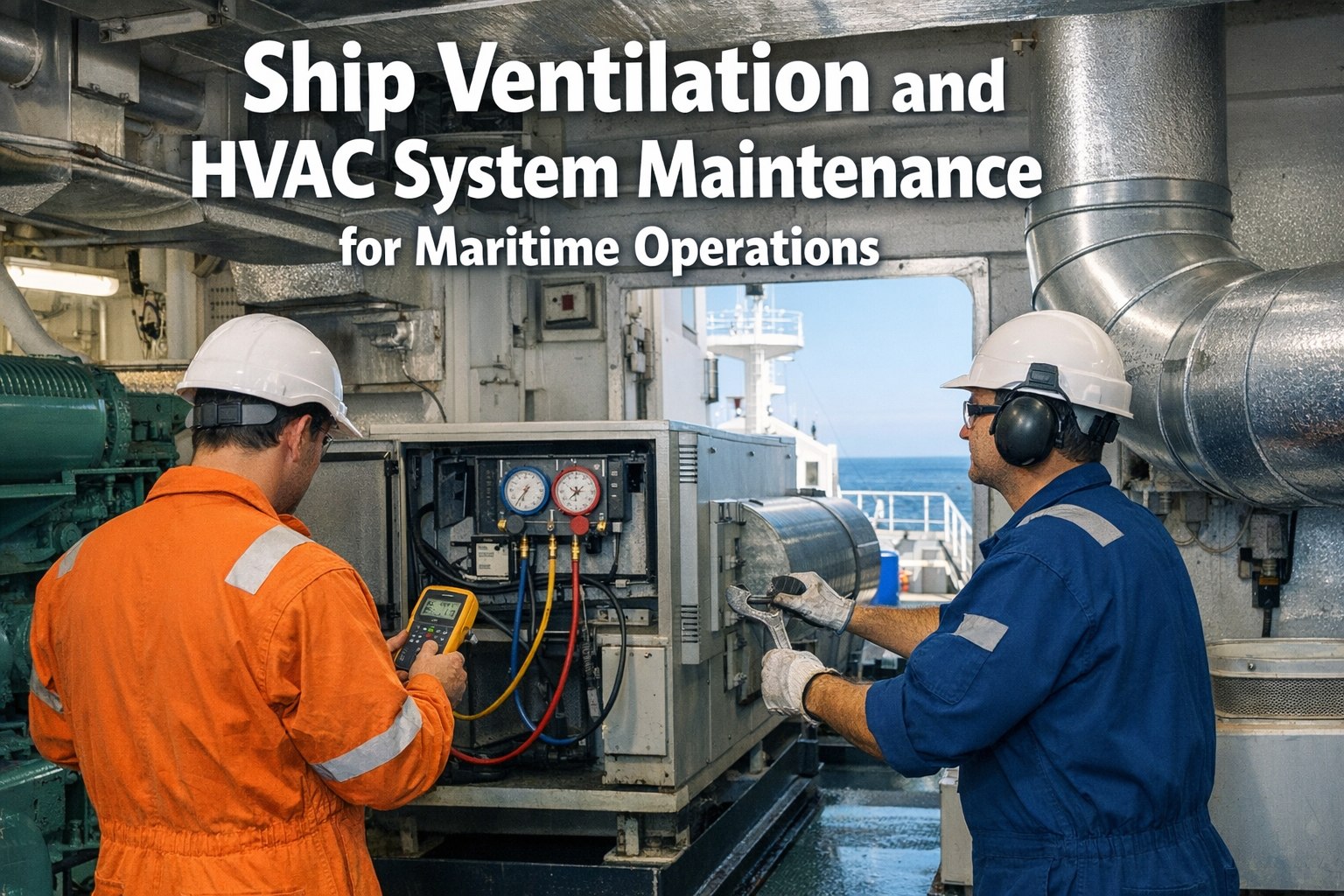
Marine HVAC and ventilation systems are often treated as the crew comfort systems — but for marine engineers, they are safety-critical infrastructure that protects sensitive electronics from overheating,...
Steering gear failure is among the most catastrophic equipment failures a vessel can experience — the loss of directional control in open water can lead to grounding, collision, environmental disaster, and...
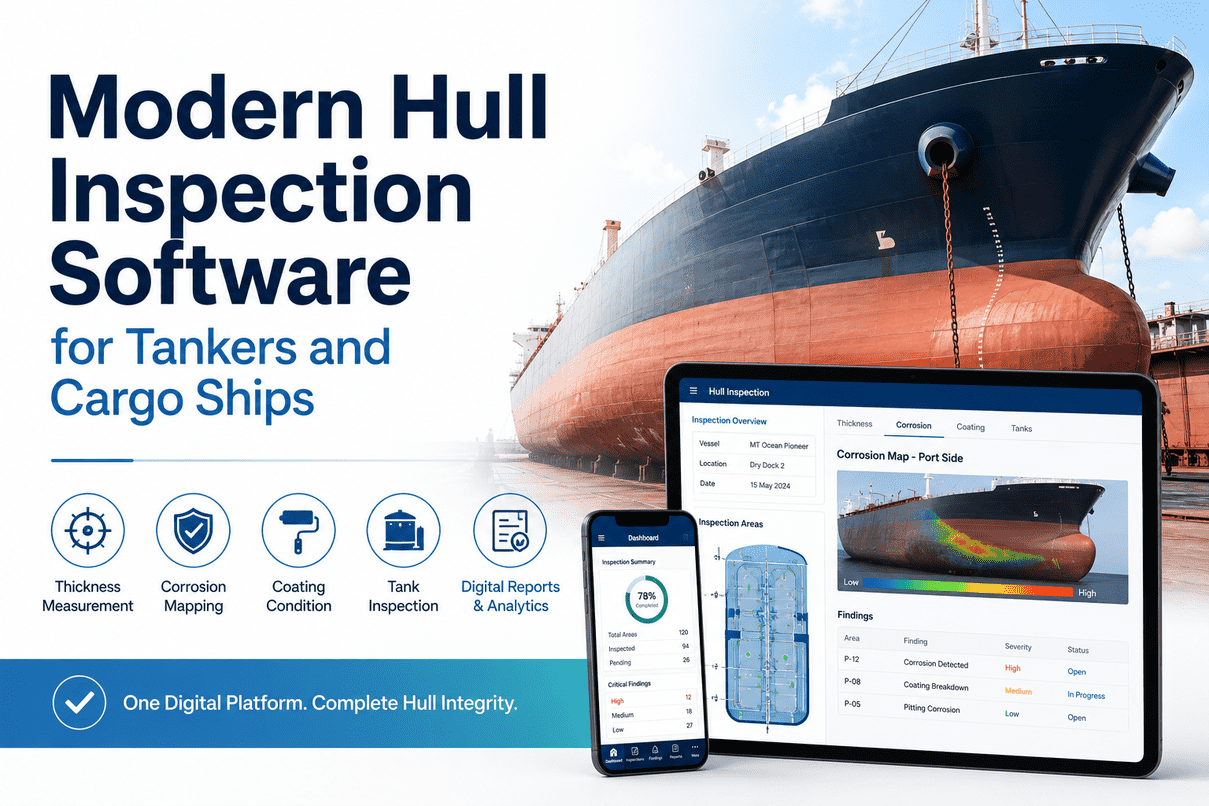
A vessel's hull is its largest single asset — and its most financially consequential maintenance challenge. Industry data shows that even light biofouling can increase fuel consumption by 25%, while heavy...
Classification society surveys are the backbone of maritime safety — the periodic verification process that confirms a vessel's hull structure, machinery, safety equipment, and systems comply with the...
The maritime inspection landscape is undergoing its most significant technological transformation since classification societies first standardised vessel surveys in the 18th century. AI-powered corrosion...
On September 2, 2024, OCIMF permanently retired VIQ7 and launched SIRE 2.0 as the tanker industry's sole commercial inspection regime. This is not an incremental update — it is a fundamental transformation of...
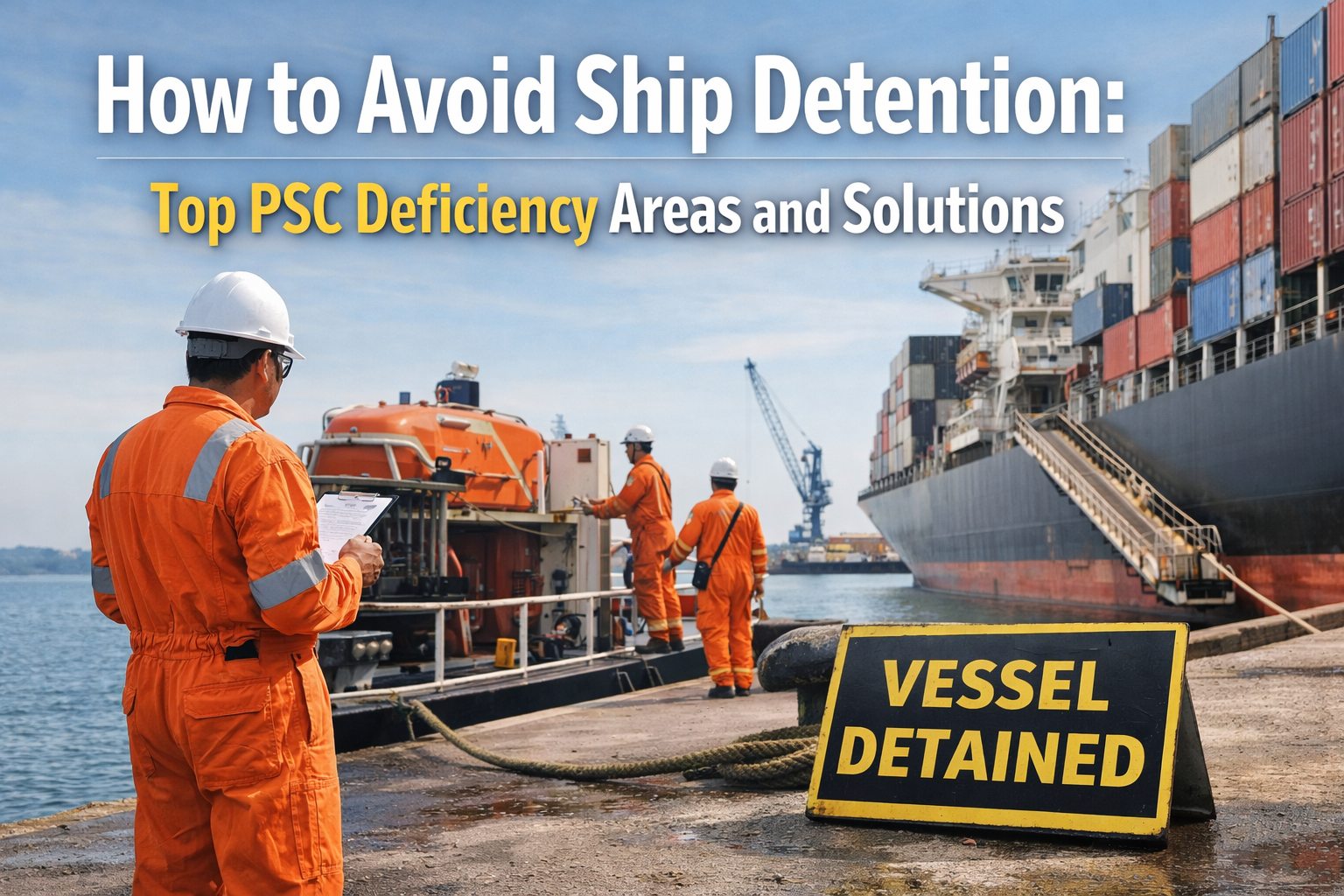
In 2024, port state control authorities across the Tokyo MOU detained 1,189 ships, the Paris MOU detained over 500, and the Indian Ocean MOU detained 225 — with fire safety, life-saving appliances, ISM Code...
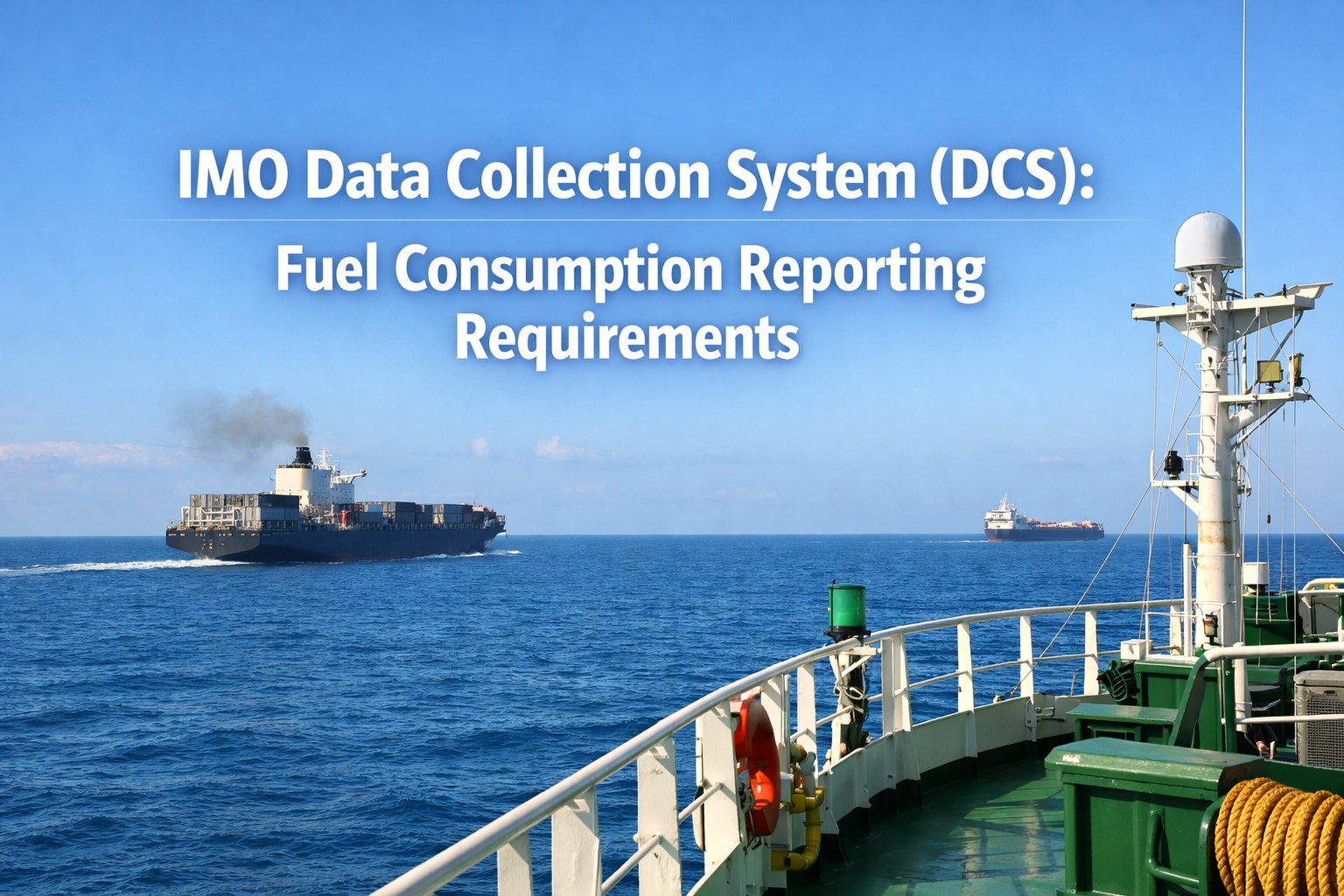
The IMO Data Collection System (DCS) is the global mandatory framework for monitoring fuel oil consumption and related operational data from ships of 5,000 gross tonnage and above. Introduced under MARPOL Annex...
Managing ship statutory certificates correctly is critical for avoiding Port State Control detentions and ensuring smooth operations. With over 18 major mandatory certificates required under SOLAS, MARPOL, Load...
The new SOLAS electronic inclinometer requirements under Regulation V/19.2.12, effective 1 January 2026, mandate that all new container ships and bulk carriers of 3,000 gross tonnage and above must be fitted...
The US Coast Guard operates the most intensive vessel inspection programme in the world — and it's fundamentally different from how other PSC regimes work. Unlike Paris or Tokyo MOU members who inspect only...
The STCW Convention is the international framework that determines whether a seafarer is qualified to step aboard a ship — and whether that ship can legally sail. Adopted in 1978 and comprehensively revised...
Ballast water is the invisible environmental threat of global shipping — every year, ships transfer approximately 3-5 billion tonnes of ballast water across the world's oceans, carrying with it thousands of...
MARPOL Annex VI is the most actively amended regulation in international shipping — and the one that affects the largest operational cost line on every vessel's P&L. Since the landmark "IMO 2020" global...
MARPOL — the International Convention for the Prevention of Pollution from Ships — is the single most comprehensive environmental treaty governing maritime operations. With six technical annexes covering...
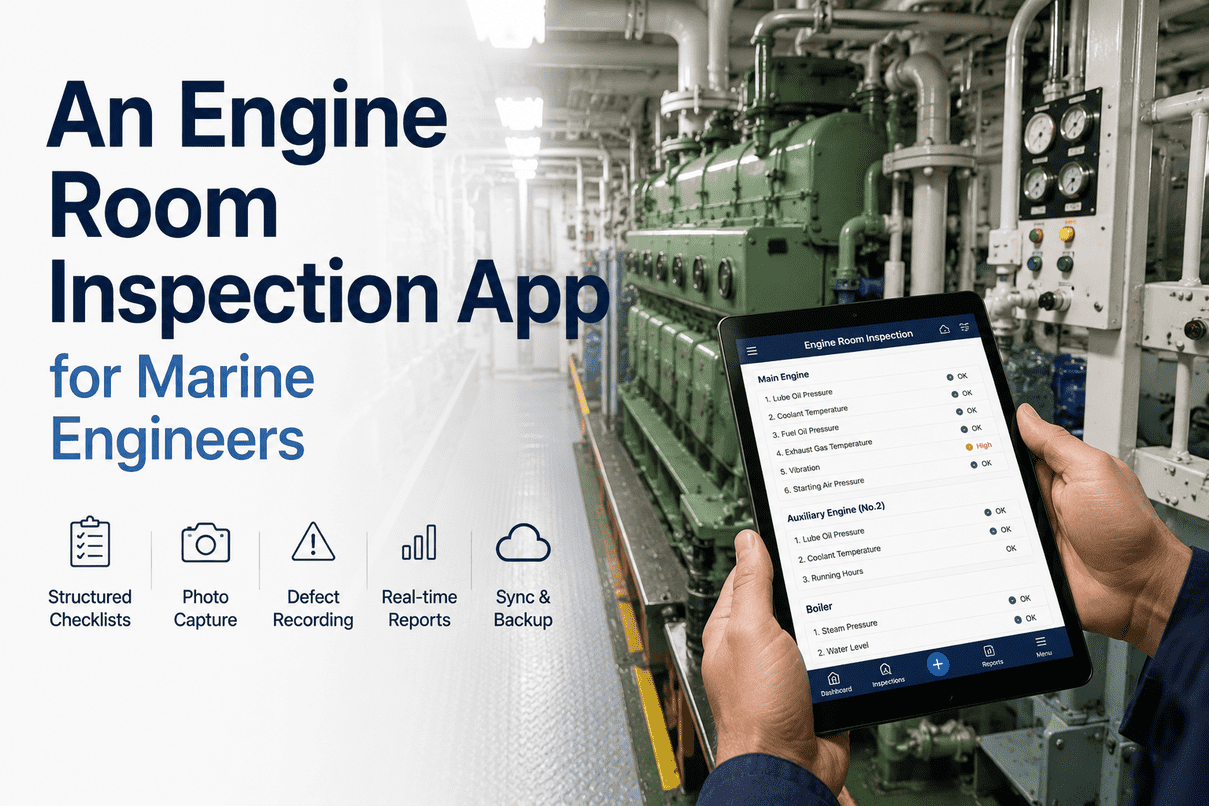
A class surveyor boards your vessel in Busan and asks for one thing before entering the engine room: the planned maintenance system records. In ten minutes she knows whether your critical equipment has been...
A PSC inspector steps aboard at Rotterdam. Before asking to see the ECDIS, the fire plan, or the oil record book, she asks for three things: the crew list, the certificate file, and the rest hour records for the...
Electrical fires are the leading cause of boat fires — and nearly every one is preventable. The marine environment is uniquely hostile to electrical systems: saltwater corrodes connections, constant vibration...
The ISPS Code is the global framework that protects ships, ports, and the people within them from security threats — and as of the IMO's revised Procedures for Port State Control adopted in December 2025,...
The ISM Code is the backbone of every vessel's safety and environmental compliance — and it's also the mechanism that turns multiple minor deficiencies into a detention. During PSC inspections, a pattern of...
Sludge oil management is where marine environmental compliance becomes physically measurable — inspectors can take a sounding of your sludge tank, compare it to your Oil Record Book, calculate whether the...
BN 40 cylinder oil has become the standard lubricant for modern two-stroke marine diesel engines running on low-sulphur fuels — and inspectors know it. Since the 2020 global sulphur cap pushed the fleet onto...
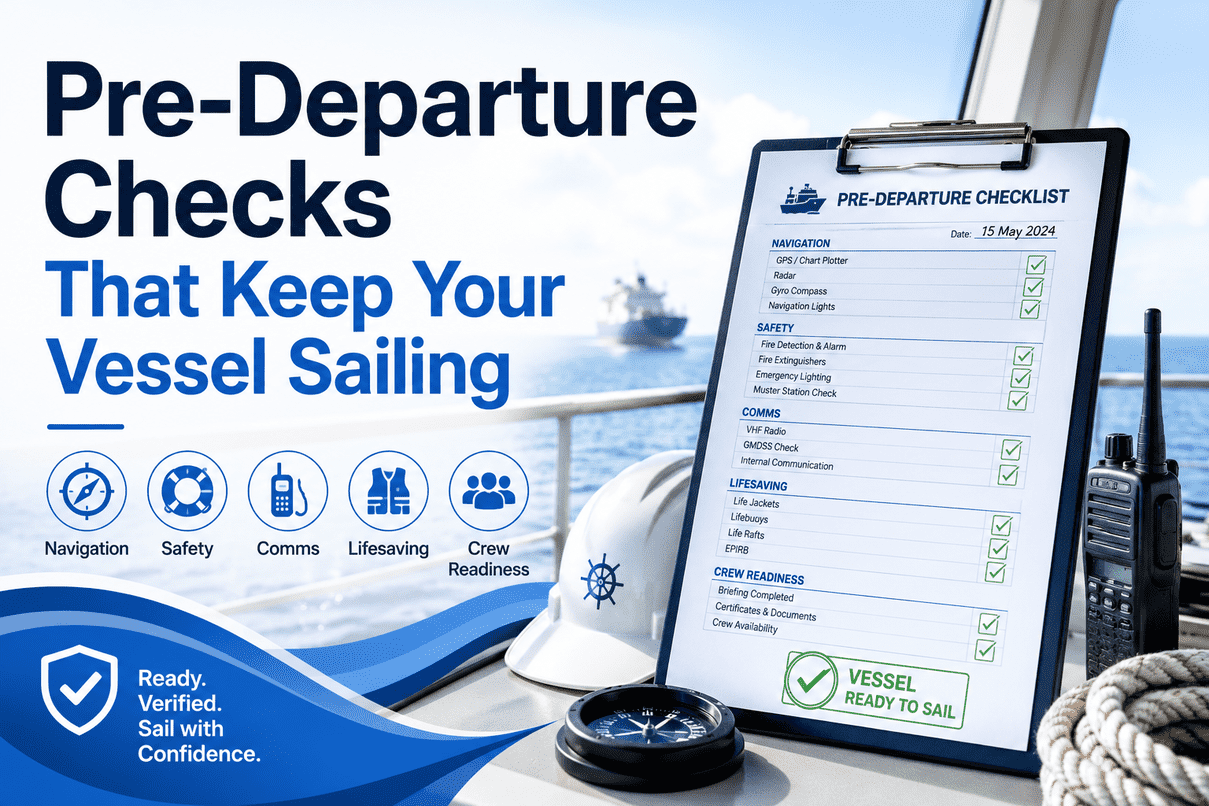
A Port State Control inspection can happen at any port call — and you often get little advance notice. The PSCO boards, reviews your certificates, walks the vessel, interviews crew, and within hours either...
Port State Control inspections are the last line of defence against substandard ships — and two regional regimes dominate global maritime enforcement: the Paris MOU (covering European coastal states and the...
Whether you're insuring a yacht, financing a boat purchase, settling an estate, or preparing to sell, you need to know what your vessel is actually worth — and a professional marine valuation survey is how you...
Every used boat has a story — and the most expensive chapters are the ones the seller doesn't mention. Hidden defects lurk below waterlines, behind engine covers, inside wire runs, and under layers of cosmetic...
On September 2, 2024, OCIMF permanently retired VIQ7 and launched SIRE 2.0 as the sole tanker inspection framework. This wasn't a version update — it was a complete overhaul. The standardized checklist that...
Indonesia operates hundreds of offshore platforms across the Java Sea, East Kalimantan, and the Natuna Sea — many running 25-40 years beyond their original design life. MIGAS requires third-party certification...
Every cargo vessel in Indonesia's 2,300+ nationally flagged fleet runs on a maintenance clock. Main engines need crankcase inspections at 1,000 running hours. Cylinder heads require full decarbonization at 4,000...
Indonesia's 2,300+ nationally flagged commercial vessels generate thousands of logbook entries every day — bridge logs, engine room records, Oil Record Books, garbage logs — across an archipelago of 17,000...
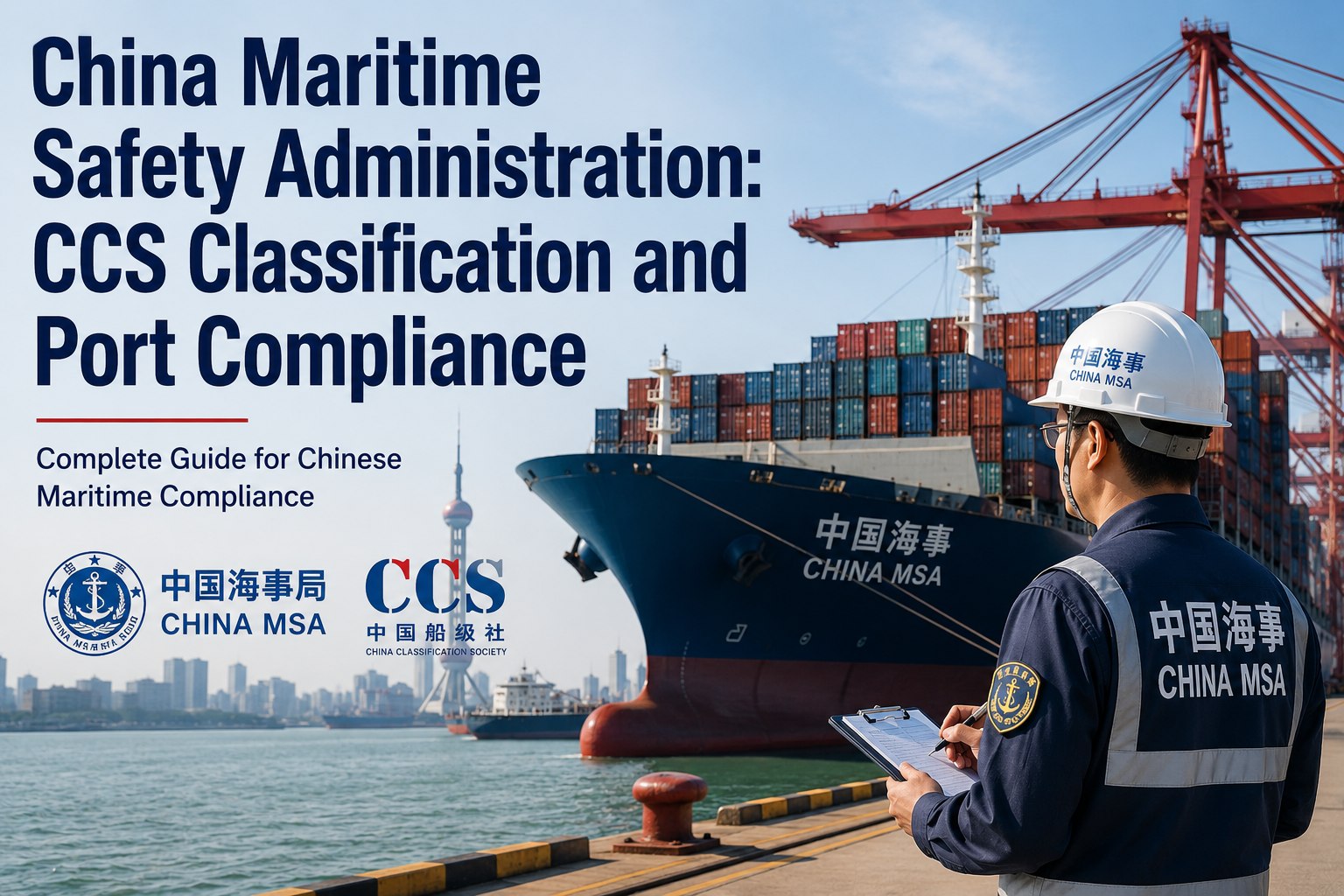
Chinese ports represent the most intensive PSC inspection environment in the AsiaPacific region. The China Maritime Safety Administration operates 11 regional branches with over 70 local offices, and its PSC...
Your container vessel arrives Ningbo-Zhoushan Port following uneventful Pacific crossing with clean PSC history. But China MSA inspection at Beilun terminal identifies 14 deficiencies including incomplete Oil...
More than 130,000 vessels call at the Port of Singapore each year, making it one of the world's busiest and most intensively inspected maritime hubs. The Maritime and Port Authority of Singapore operates a dual...
Ships entering US waters face the world's most layered emission compliance framework. Within the North American Emission Control Area — extending 200 nautical miles from every US coastline — fuel sulfur must...
Since September 2, 2024, every OCIMF tanker inspection runs under SIRE 2.0 — a tablet-driven, risk-based system where a single deficiency can cascade into six separate observations across hardware, process,...
Your US-flagged container vessel operates with systematic planned maintenance across main propulsion, auxiliary systems, and cargo handling equipment. But last month, USCG inspection in Los Angeles detained the...
In 2024, the U.S. Coast Guard conducted 8,710 port state control examinations across 84,034 port calls by 11,273 individual vessels from 79 flag administrations. Eighty-two vessels were detained for safety,...
Your Greek-owned Aframax tanker operates under major oil company vetting with clean inspection history—zero SIRE observations over 18 months. Then last week, charterer's pre-fixture inspection identified 12...
Your Greek-flagged bulk carrier operates 340 days annually with systematic maintenance scheduling across main engine, auxiliary systems, deck equipment, and safety installations. But last month, PSC inspection...
Greek shipowners control approximately 30% of the global oil tanker fleet, with 910 tankers and 507 chemical and product carriers operating across every major trade route. Since September 2, 2024, every one of...
A vessel calling at Shanghai or Tianjin carries 50+ statutory certificates that must be valid, endorsed, and available on demand. One expired certificate or missed survey endorsement triggers detention by China...
China's maritime fleet now exceeds 5,500 commercial vessels with a combined value surpassing $255 billion, making it the world's largest shipowner by tonnage. With the revised Maritime Code taking effect on May...
The central waters of Bohai Bay serve as the critical gateway for vessels accessing Tianjin, Huanghua, and Caofeidian — three of China's busiest cargo ports handling hundreds of millions of tonnes annually....
Whether you're buying a $200,000 cruiser, chartering a 90-foot motor yacht in South Florida, or renewing insurance on a 15-year-old sailboat, a marine survey is the document that determines whether the deal...
Greek shipowners control 5,691 vessels representing 20% of global deadweight tonnage and 61% of the EU fleet — making Greece the world's undisputed shipping leader. But 2026 brings a convergence of regulatory...
Since 1 January 2026, reporting containers lost at sea is a binding obligation under SOLAS Chapter V. IMO Resolution MSC.550(108) amended Regulations 31 and 32 to require the master of any ship involved in a...
SAE 50 is one of the most widely specified monograde engine oils in commercial marine operations, particularly for medium-speed trunk piston diesel engines operating in tropical and warm-water routes where...
The Gulf workboat sector supports over 1,800 active offshore support vessels across the Gulf of Mexico alone, servicing more than 1,200 offshore rigs with daily operational costs averaging $20,000 to $30,000 per...
Australia's domestic commercial fleet comprises around 32,000 vessels operating across 60,000 kilometres of coastline. Every one of those vessels is required to maintain logbooks, maintenance records, and safety...
Lifesaving appliances are the equipment your crew depends on when everything else has failed—and port state control officers know it. LSA deficiencies consistently rank among the top three detention categories...
Your offshore supply vessel passed quarterly safety audit three weeks ago with full compliance. Then yesterday, port state control detained the vessel for expired lifeboat davit certification—a requirement...
Fire safety is the single largest category of port state control deficiencies worldwide—the Paris MOU 2024 Annual Report confirms SOLAS Chapter II-2 accounts for 17.2% of all recorded deficiencies. The Tokyo...
Commercial fishing is the deadliest occupation in the United States—fatality rates exceed 100 deaths per 100,000 workers, over 28 times the national average. NIOSH data from 2000-2019 documents 878 fishermen...
Your drydock project scheduled 23 days vessel turnaround with clear critical path: hull cleaning days 1-3, inspection days 4-5, steel work days 6-15, coating days 16-21, sea trials day 22. But on day 8, steel...
Singapore shipyards handle over 130,000 vessel calls annually, with Keppel, Sembcorp Marine, and a network of specialized repair yards servicing fleets from around the world. Drydock projects here are...
In March 2025, the Cefor Technical Forum issued Memo 11/2025 directly to Nordic marine insurers warning that ship blackout incidents are rising—and the industry is not managing the risk effectively. ABS data...
Your vessel's firefighting system passed annual inspection three months ago with zero deficiencies. Emergency fire pump tested successfully, pressure valves verified operational, CO2 suppression system confirmed...
A hybrid ferry operating a short-sea route loses propulsion mid-crossing. The battery management system logged rising cell temperatures for three weeks, but the data sat in a local BMS dashboard nobody checked...
Your tanker transits the Strait of Malacca, calls at Singapore for bunkering, loads cargo at a Thai terminal, and delivers to a Chinese port—all within a single voyage. Each stop means a potential PSC...
An offshore crane fails its annual thorough examination. The wire rope shows 14 broken wires in one lay length—two more than the discard threshold. The cargo gear book hasn't been updated since the last...
Two days before arriving at port, the scramble begins. The chief engineer runs through overdue maintenance items. The captain reviews logbooks for gaps. Crew members stage drills they haven't practiced in...
Your fleet passed 47 port state control inspections over 18 months with zero detentions. Then three vessels received detentions within six weeks for seemingly unrelated issues: oil system violations on one...
When a PSC officer finds a deficiency on your vessel, the first question isn't "what went wrong?" It's "who was responsible for making sure this didn't happen?" If nobody can answer clearly—or if the answer is...
A Port State Control officer boards your vessel and requests the Oil Record Book. It's available. Then they ask for the maintenance log entry matching an overboard discharge from three weeks ago. Your chief...
Your vessel's Oil Record Book shows 847 liters of oily bilge water processed through the 15 ppm separator last month. But the separator's hour meter indicates only 14.3 operating hours—which at the equipment's...
Your fleet's Oil Record Books passed every inspection in 2024. But starting January 2026, new International Maritime Organization digital reporting requirements fundamentally change how inspectors verify logbook...
Your vessel's engine room passed recent port state control inspection with zero deficiencies. But three sister ships in your fleet received detentions for oil system violations, inadequate housekeeping, and...
A Port State Control inspector approaching a container vessel applies completely different inspection priorities than when boarding an offshore support vessel, fishing trawler, or passenger ferry. The assumption...
Your chief engineer tells you the vessel is "inspection ready" but cannot produce a single metric to support that claim. When Port State Control arrives, they'll evaluate your vessel using 15+ quantifiable...
The vessel inspection your grandfather performed in 1995 with paper checklists looks nothing like the inspection you'll conduct in 2026. Today's inspectors arrive with tablets connected to centralized databases,...