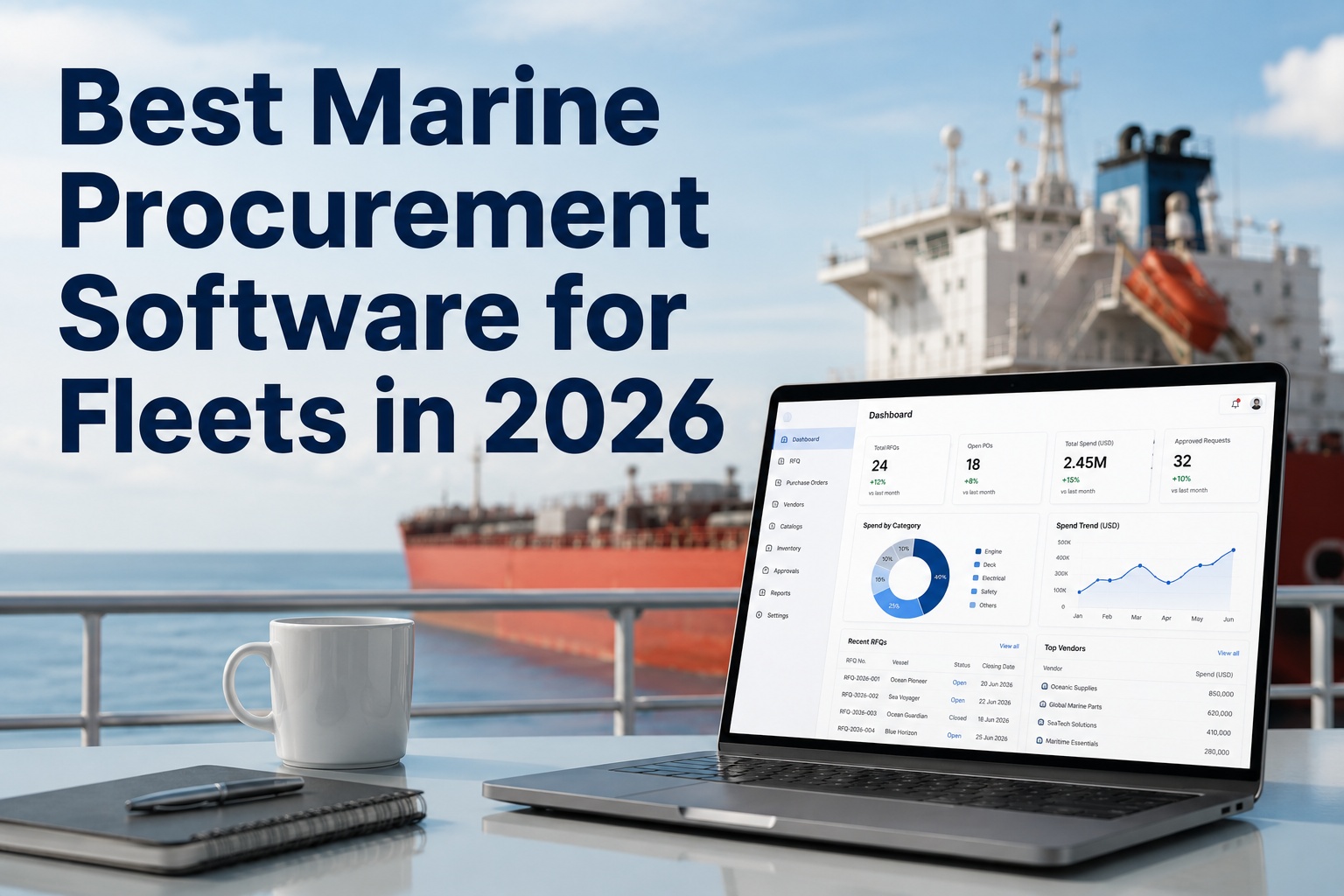
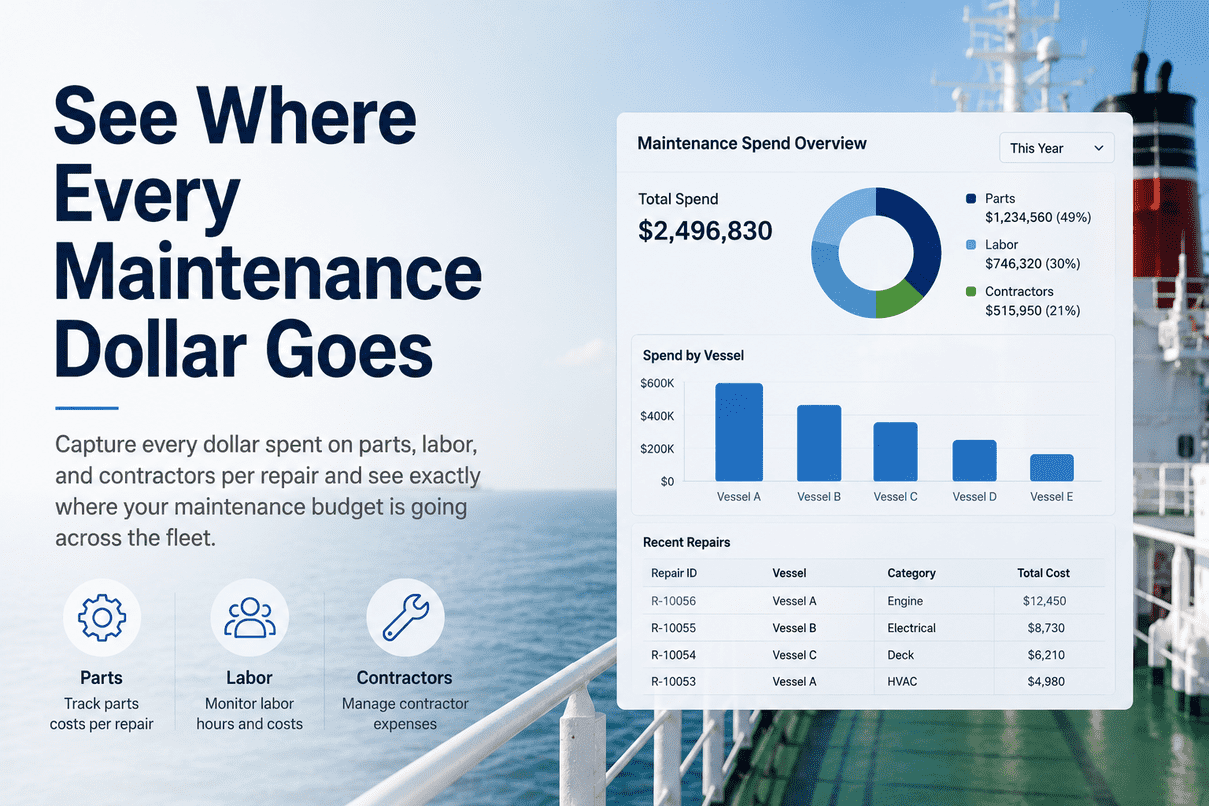
A fleet's procurement function is where millions of dollars and the availability of every vessel meet — and in 2026 the software running it has become the deciding factor in whether that spend is controlled or leaking. Marine procurement is not ordinary purchasing: requisitions are raised onboard ships scattered across the globe, quotes are gathered from suppliers in different countries and currencies, approvals must route through superintendents and finance, and a single late delivery can idle a vessel earning tens of thousands a day. The best platforms turn that complexity into one connected procure-to-pay flow and can cut procurement cost by up to twenty percent while keeping a clean audit trail. But "best" is not one answer — a global operator with a dedicated procurement team needs something very different from a mid-sized fleet that wants fast onboarding. This guide compares the best marine procurement software for 2026 the way a buyer actually decides: by the capability stack that matters, with deep dives on RFQs, vendor catalogs, multi-currency, and approval workflows, and a clear map of which tier of platform fits which kind of fleet. To see a connected procure-to-pay flow on a live vessel, book a Marine Inspection demo.
2026 buyer's guide
Choose Marine Procurement Software That Pays Back
The right platform connects requisition to payment, cuts procurement cost by up to 20 percent, and fits how your fleet actually runs — not the other way around. Here is how to compare the field.
up to 20%procurement cost reduction reported
1,700+vetted suppliers on leading networks
procure-to-payone flow, requisition to invoice
Book a Demo
The Procure-to-Pay Capability Stack
Before comparing named platforms, understand what a complete marine procurement system actually has to do. The procure-to-pay cycle is a stack of capabilities, and the best software covers every layer without forcing you to bolt on separate tools. A platform strong in one layer but weak in another leaves a gap that becomes a daily friction. See the full stack in a demo.
Layer 1
Requisition
Raised onboard via the PMS or by crew, linked to the vessel, job, or component — so the need is captured at the source.
Layer 2
RFQ & sourcing
Requests issued to multiple suppliers at once, quotes returned and compared side by side on price, lead time, quality, and history.
Layer 3
Approval
Routed automatically by cost, item type, or vessel through configurable chains, with budget checks before sign-off.
Layer 4
Purchase order
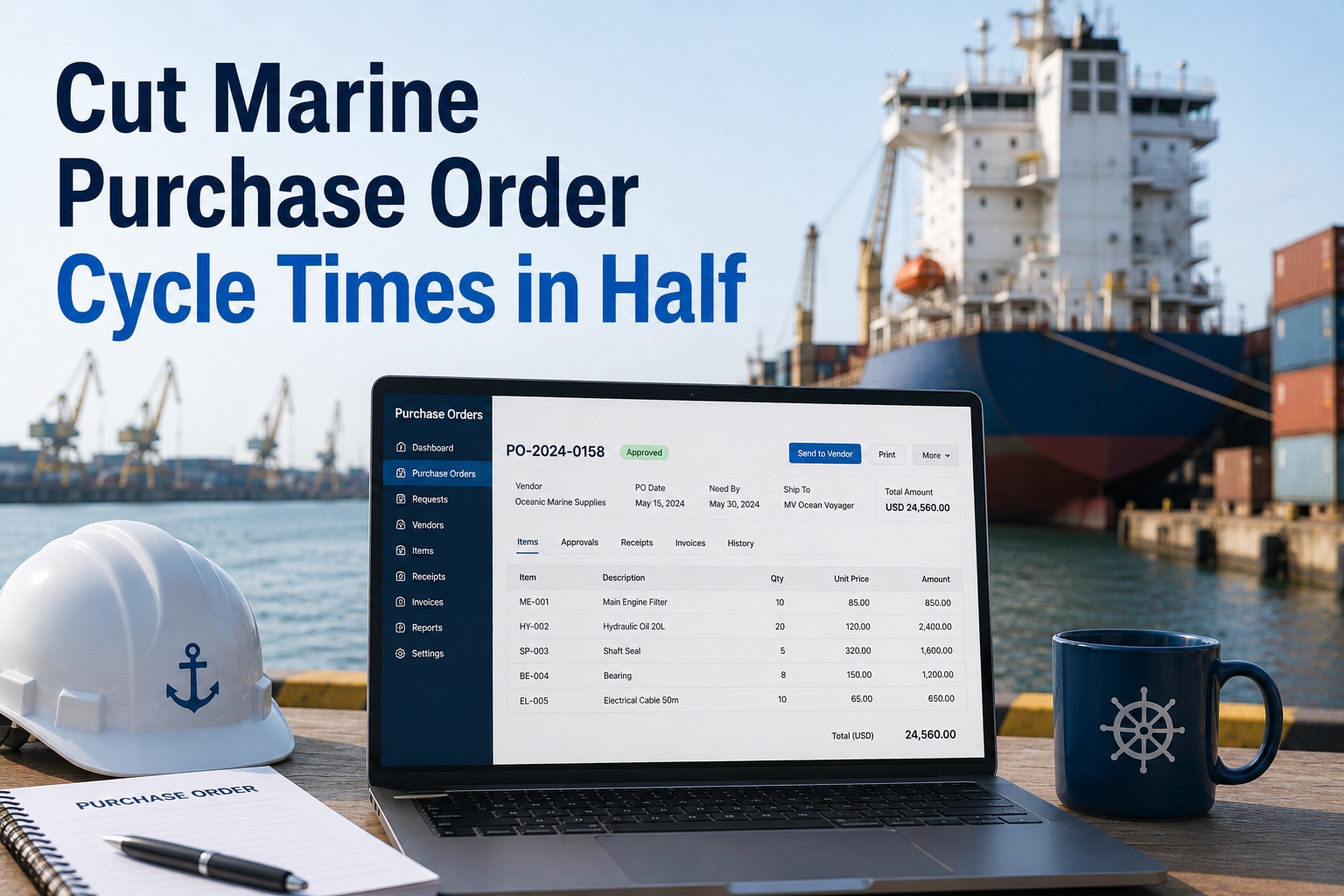
Generated from the approved request, sent to the supplier with acknowledgment tracked, in the right currency and terms.
Layer 5
Receipt & match
Goods received at port or vessel, then three-way matched against PO and invoice before finance releases payment.
Layer 6
Analytics & audit
Spend, cycle time, and supplier performance tracked, with every step logged as a tamper-proof audit trail.
Deep Dive 1 — RFQ & Competitive Bidding
The RFQ is where procurement either captures savings or leaves them on the table, so it is the first capability to scrutinise. The strongest platforms turn what used to be a round of separate emails into a single, structured, comparable process — and the best maritime networks connect you to over 1,700 vetted suppliers for competitive bidding.
One-click multi-supplier RFQ
Dispatch the same request to multiple vendors simultaneously from one dashboard, instead of composing separate emails.
Side-by-side comparison
Quotes laid out together to evaluate not just price but lead time, quality, and supplier history in one view.
Competitive bidding networks
Access to large vetted supplier networks and marketplaces widens the field and sharpens pricing on every request.
In-platform negotiation
Negotiate with vendors and capture the exchange in the system, with automatic reminders keeping quotes on track.
Deep Dive 2 — Vendor Catalogs & Supplier Data
A procurement platform is only as good as the supplier intelligence behind it. The vendor catalog is what lets a buyer choose the right supplier on evidence — and what turns a one-off order into a managed relationship. See the vendor catalog in a demo.
Approved vendor lists
Pre-vetted suppliers categorised by region, product type, reliability, and price, so sourcing stays compliant.
Performance scorecards
On-time delivery, price accuracy, and quality ratings built from real history, surfaced at the moment of selection.
Pricing history & catalogs
Past prices and supplier catalogs held per item, so buyers compare value and spot creeping costs.
Item-code mapping
Multiple supplier codes mapped to your internal catalogue for consistent, error-free purchasing across vendors.
See it on your fleet
Compare Marine Inspection Against Your Shortlist
RFQs to multiple suppliers, vendor catalogs with performance scorecards, multi-currency POs, configurable approval chains, and three-way matching — linked to your PMS and inventory. Book a 30-minute demo to see the procure-to-pay flow on a vessel like yours, or start a free trial and set it up today.
Deep Dive 3 — Multi-Currency & Global Spend
A fleet buys in dollars from one port, euros from another, and yen from a third — and procurement software that cannot handle this cleanly forces manual conversion, hides true cost, and breaks budget tracking. Multi-currency support is not a nice-to-have for international fleets; it is foundational.
Why Multi-Currency Matters for Fleet Procurement
Deep Dive 4 — Approval Workflows
Approval is where procurement most often stalls — and where control is either enforced or lost. The best platforms make approval automatic, fast, and policy-driven, so compliance does not depend on someone remembering to forward an email.
Configurable chains
Approval routes built on cost, item type, or vessel, matching your real organisational policy without custom development.
Automatic routing
Requisitions reach the right people — superintendent to finance — automatically, with escalation when one sits idle.
Budget enforcement
Spend checked against vessel and department budgets before sign-off, preventing maverick and out-of-policy purchases.
Any-device access
Approvals actioned from anywhere, so a vessel at sea or a manager travelling never becomes the bottleneck.
The 2026 Marine Procurement Landscape
The market splits into recognisable tiers. Rather than crown one platform "best" in the abstract, match the tier to your fleet size, IT capacity, and how fast you need to be live. Scroll the table on mobile to compare.
Marine Procurement Platform Tiers
A consistent 2026 lesson: the most feature-complete enterprise suite is worthless if it takes a year to deploy and the crew never adopts it. For most commercial fleets, a modular platform that links procurement to the PMS and inventory and goes live in weeks beats a heavyweight system that stalls in implementation.
The Buyer's Scorecard
Bring these questions to every demo. The answers separate a vessel-ready procurement platform from a generic tool, and they map to where procurement actually fails.
Can it issue RFQs to multiple suppliers at once?
One-click multi-vendor RFQ with side-by-side quote comparison is the baseline for capturing savings.
Does it hold vendor performance scorecards?
Sourcing on data, not habit, depends on on-time, price, and quality history per supplier.
Is multi-currency native?
International fleets need quote, PO, and reporting currencies handled without manual conversion.
Are approval chains configurable?
Routing by cost, item, and vessel with budget enforcement is what keeps spend controlled.
Does it link to PMS and inventory?
A requisition from a maintenance job avoids the stockout that delays a repair.
Is there a tamper-proof audit trail?
Every requisition, RFQ, approval, and PO logged for internal and external audits.
How fast is it to roll out?
Time-to-value belongs on the scorecard alongside features — adoption decides ROI.
Where Marine Inspection Fits
Marine Inspection sits in the modular SaaS tier built for how most commercial fleets run. It connects requisition, RFQ, approval, PO, receipt, and matching in one flow, with vendor profiles carrying pricing history, lead times, and performance ratings, configurable approval chains, multi-currency handling, and budget controls — all linked to the PMS and inventory so a requisition can be raised straight from a maintenance job and matched to a part on receipt. Every step is logged for audit, and the platform works offline at sea and syncs to shore. Sign up free to set up your procurement flow, or book a demo to see it end to end.
Frequently Asked Questions
What is marine procurement software?
It is software that manages the full procure-to-pay cycle for a fleet — requisitions raised onboard, RFQs to suppliers, approval routing, purchase orders, goods receipt, and invoice matching — in one connected, auditable flow. Purpose-built platforms add marine-specific features like multi-currency, vendor performance tracking, and integration with the PMS and inventory.
What features matter most when comparing platforms in 2026?
Four deep capabilities define the field: multi-supplier RFQ with side-by-side comparison, vendor catalogs with performance scorecards, native multi-currency handling, and configurable approval workflows with budget enforcement. Beyond these, look for PMS and inventory integration, a tamper-proof audit trail, and fast rollout — since adoption decides whether the software ever delivers ROI.
Why does multi-currency matter so much?
International fleets buy in many currencies, and software that cannot handle this forces manual conversion, hides true cost, and breaks budget tracking. Strong platforms capture quotes in the supplier's currency, normalise for comparison, issue POs in the agreed currency, and roll spend up to one base currency for finance — with exchange rates recorded per transaction.
How much does marine procurement software cost?
It varies widely by tier. Enterprise maritime ERP suites and large supplier networks often run from several thousand to ten thousand-plus euros annually per user or module, while modular SaaS platforms charge a per-vessel base fee. The lowest sticker price is rarely the lowest total cost once implementation time and adoption are counted.
How much can procurement software save a fleet?
Leading platforms report procurement cost reductions of up to twenty percent, driven by competitive RFQ bidding, vendor consolidation, price-trend visibility, and the elimination of emergency purchasing. The exact figure depends on starting maturity — the further from email-and-spreadsheet purchasing a fleet is, the larger the gain.
Should I choose enterprise ERP or a modular platform?
It depends on fleet size and IT capacity. Large global fleets with dedicated procurement teams may justify a full enterprise suite, but most commercial and mid-sized fleets are better served by a modular platform that links procurement to the PMS and inventory and goes live in weeks, since a feature-rich system that stalls in a year-long rollout delivers nothing.
Built for marine procurement
Run Procurement That Controls Every Dollar
Multi-supplier RFQs, vendor scorecards, multi-currency POs, configurable approvals, three-way matching, and a tamper-proof audit trail — linked to your PMS and inventory, offline-capable across ship and shore. Marine Inspection turns scattered purchasing into one controlled procure-to-pay flow. Book a tailored walkthrough or start a free trial today.