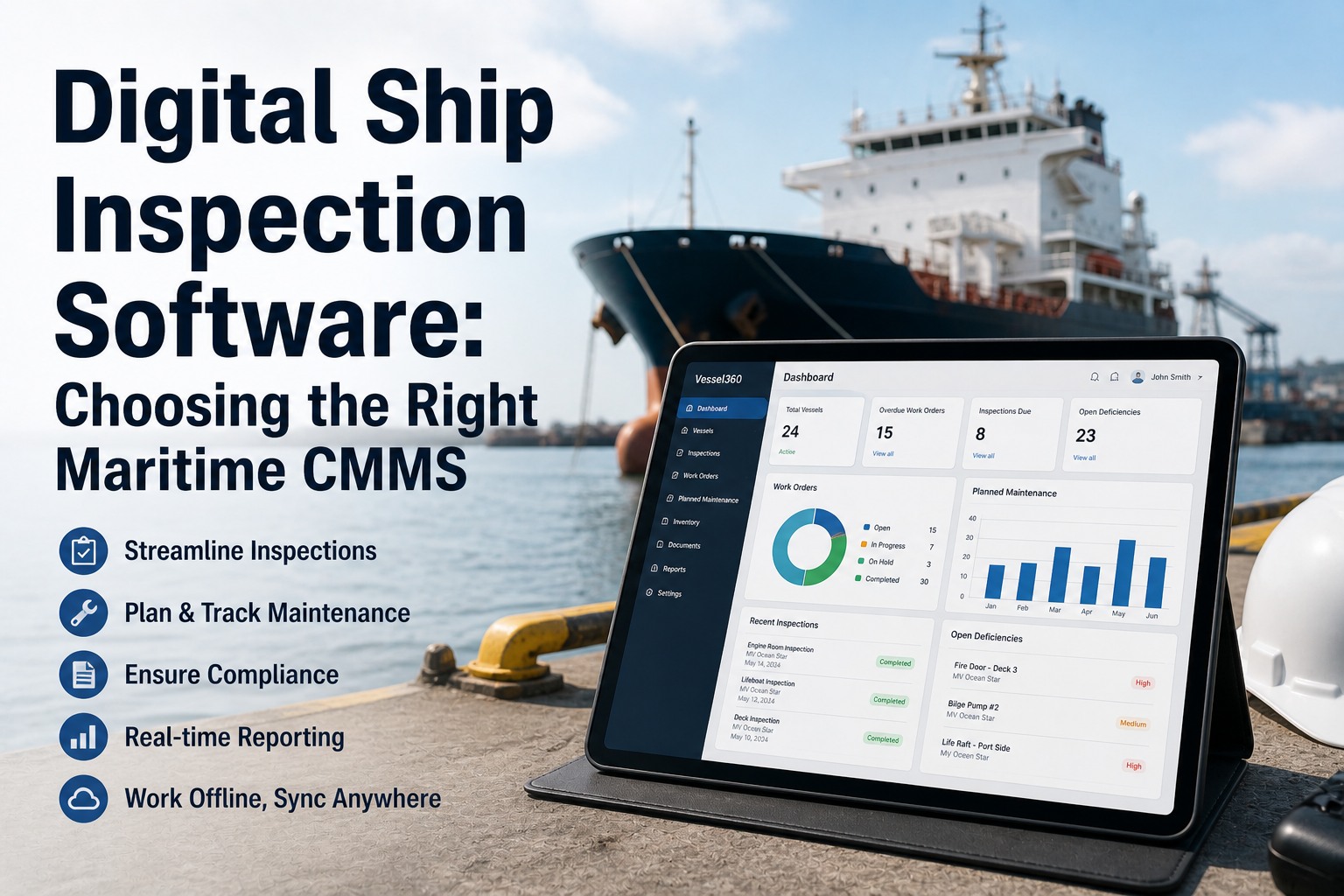
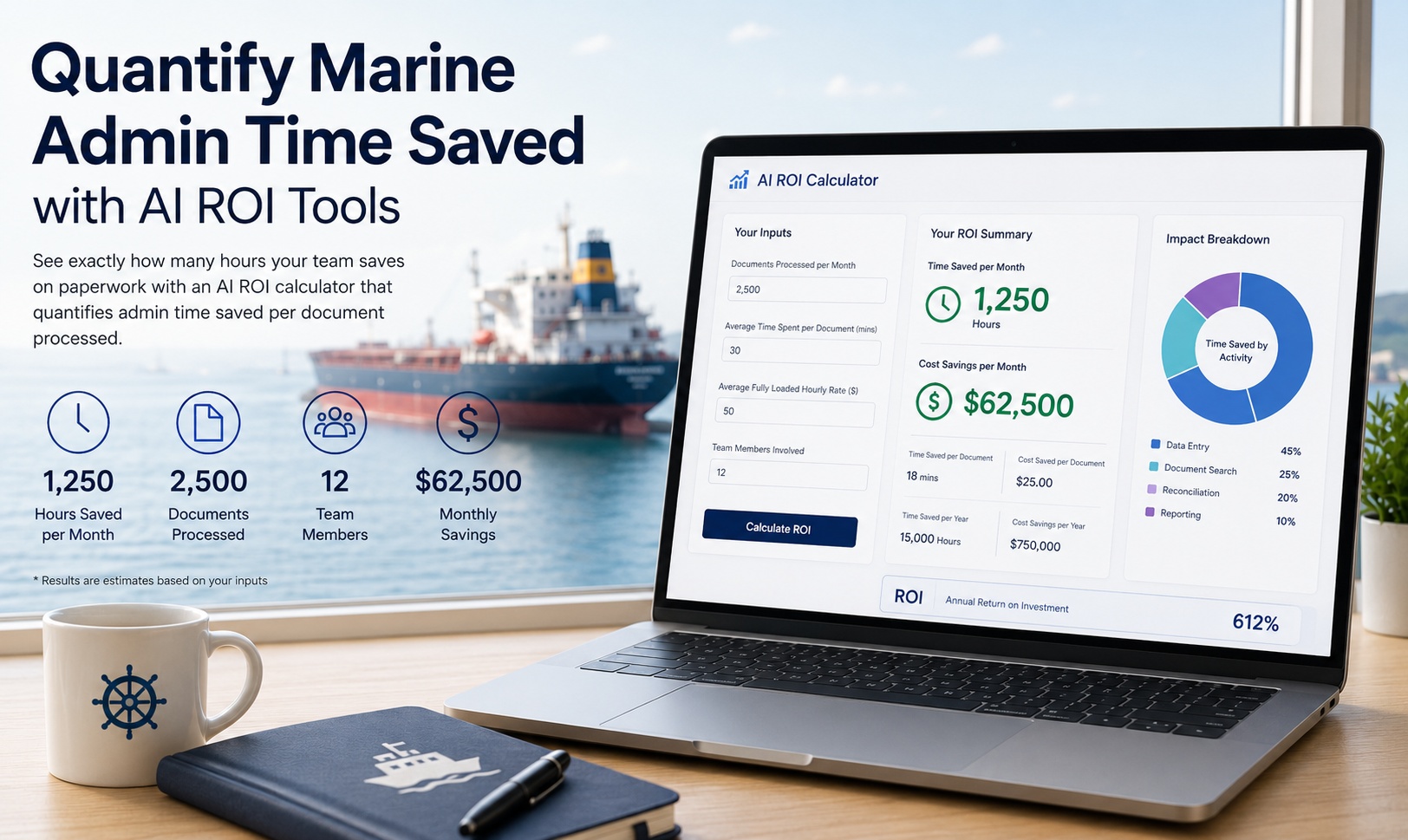
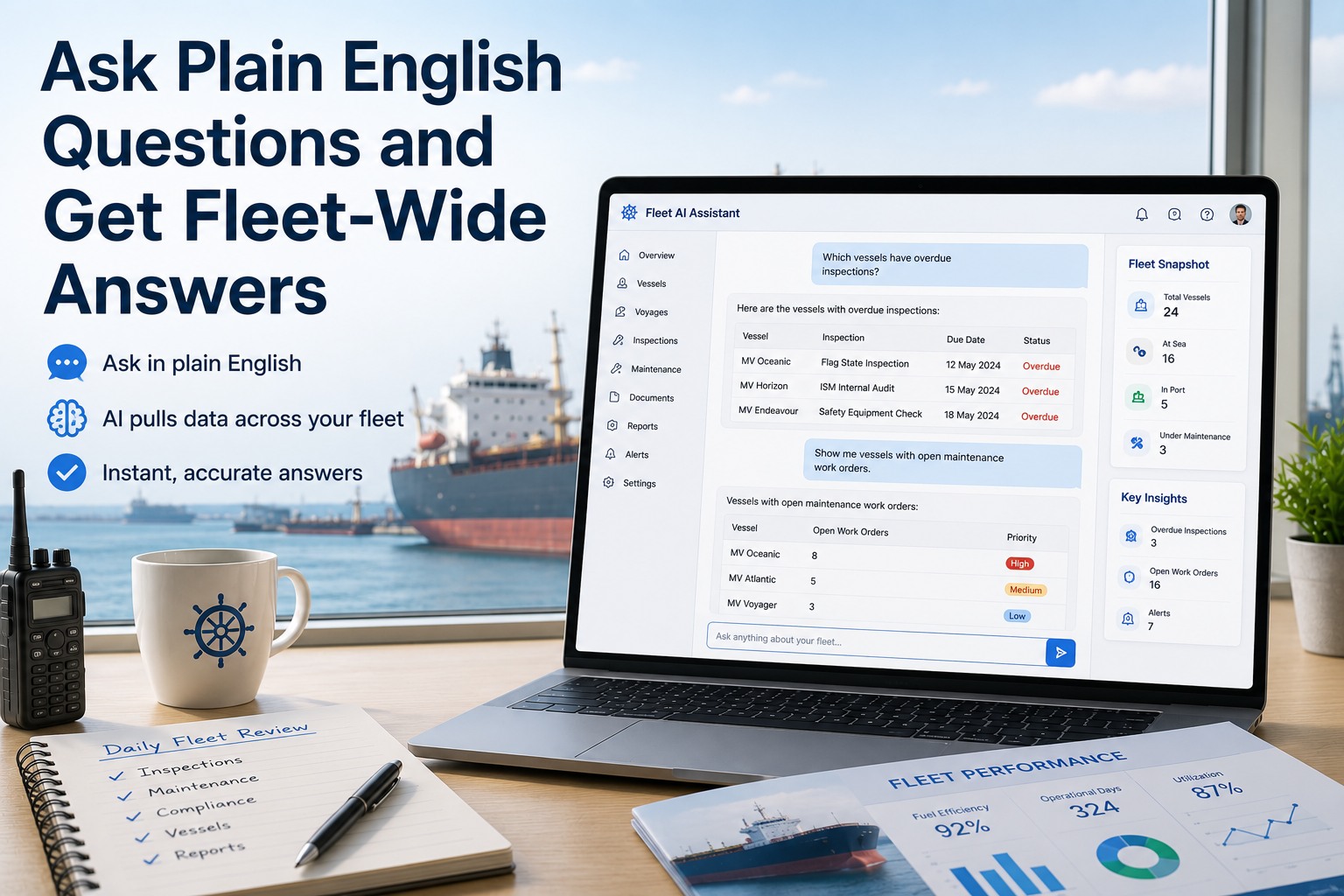
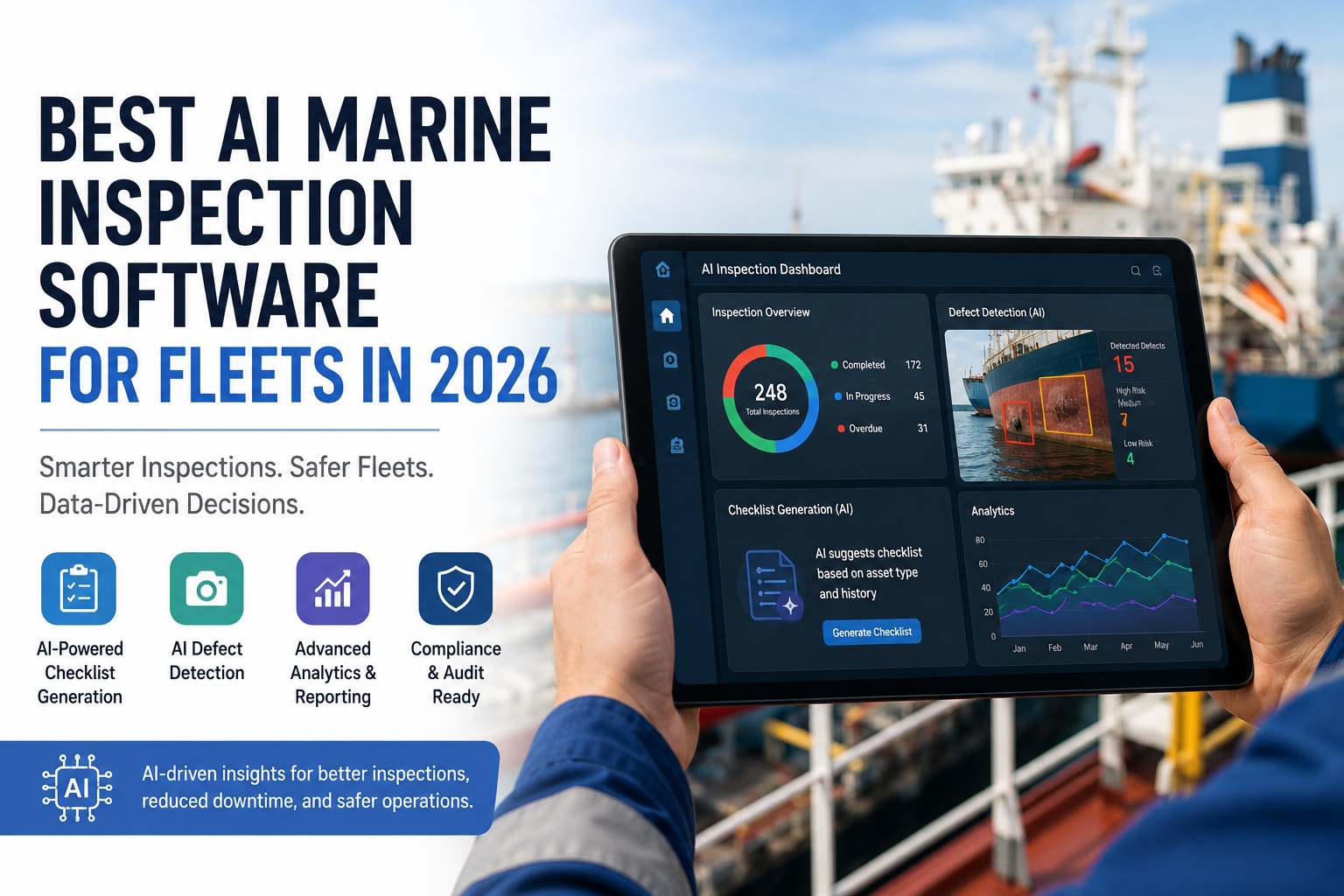
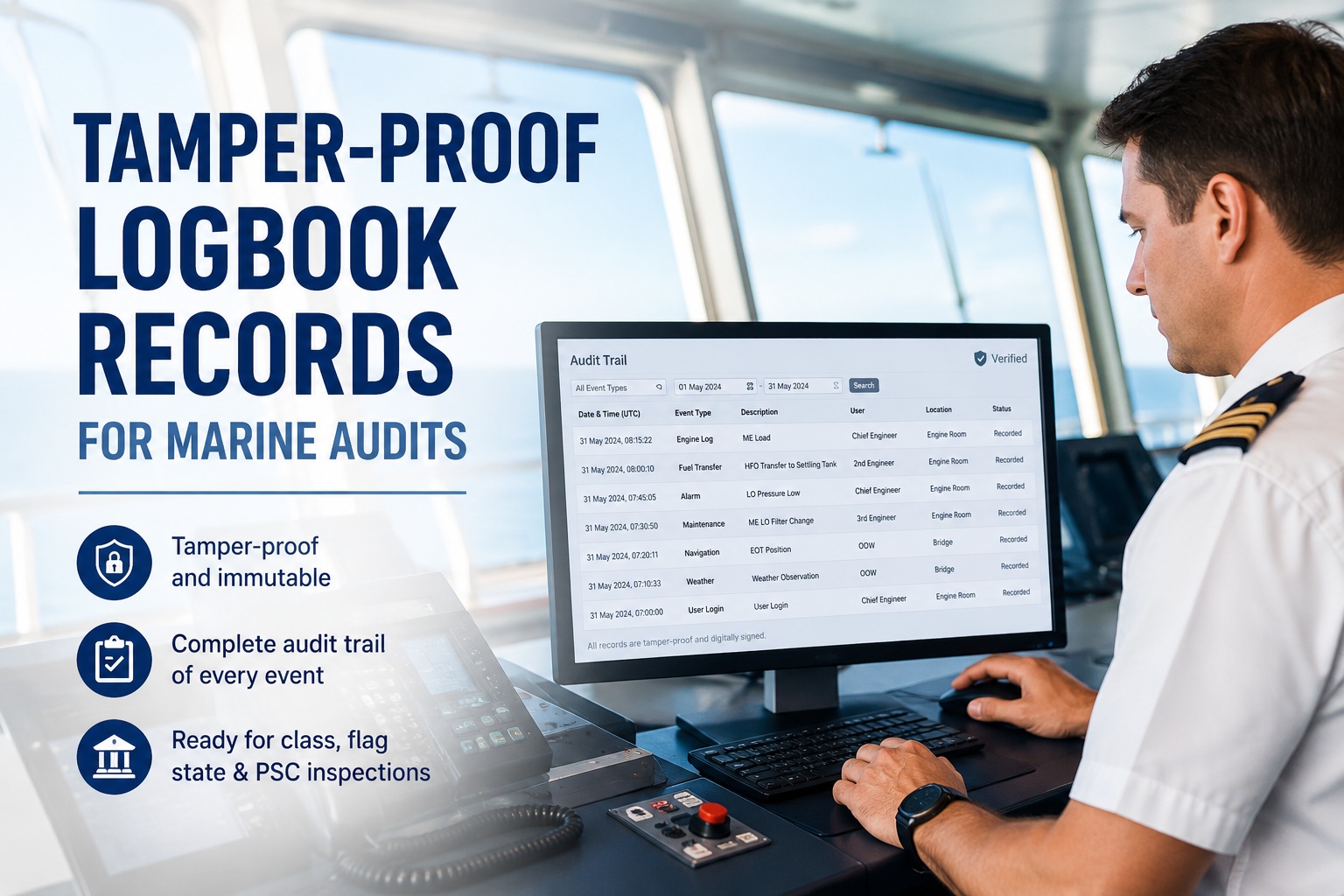
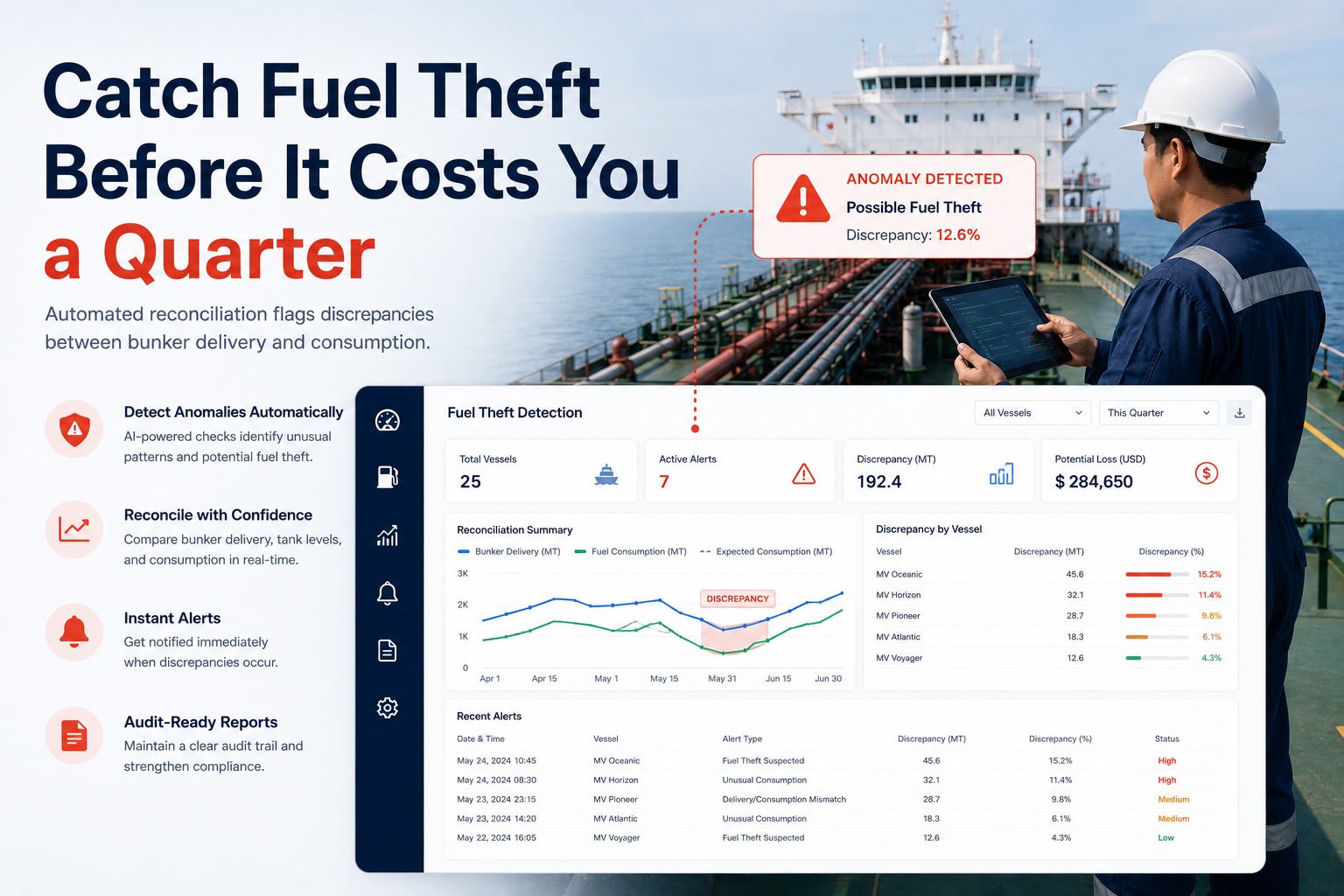
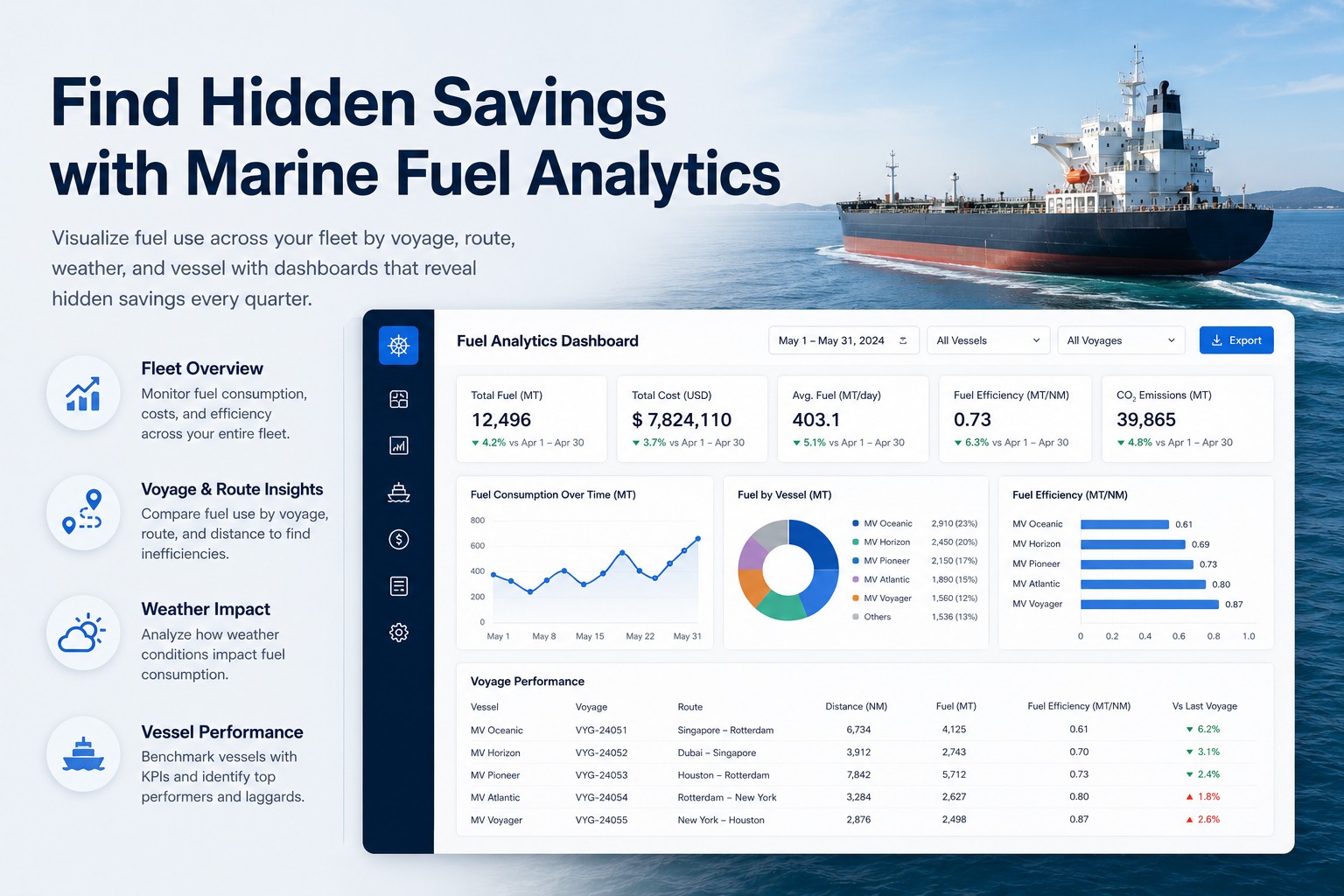
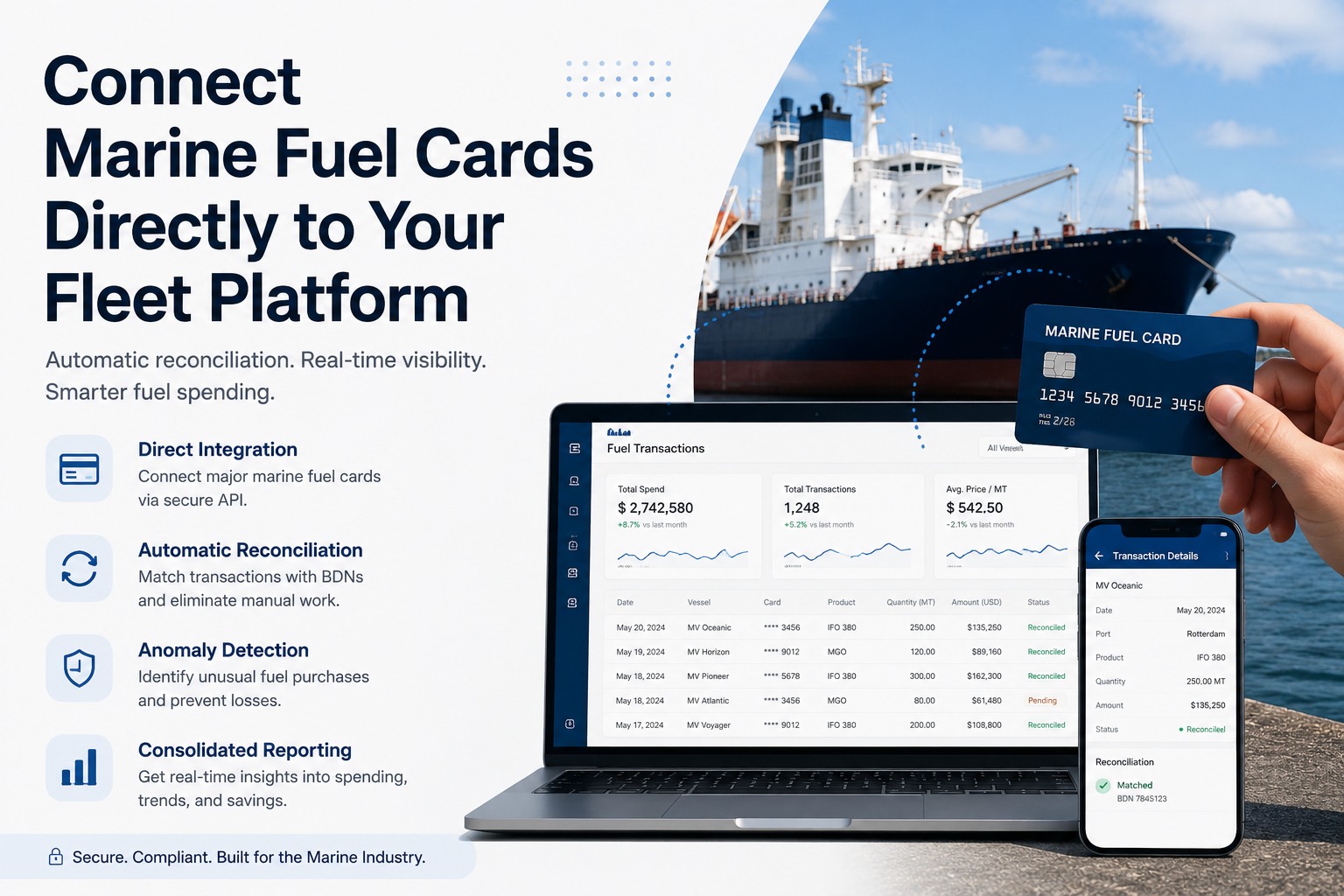
The maritime CMMS landscape entered a new phase in 2026. Verified Market Research's Q1 2026 analysis identifies four converging forces driving rapid transformation: regulatory compliance pressure (SOLAS amendments effective 1 January 2026, IP Code mandatory since July 2024, Polar Code expansion), cost optimization mandates, sustainability and emissions reporting requirements, and operational complexity as fleets expand. Modern ships now carry more than 300 distinct pieces of machinery all requiring regular maintenance surveys, and the industry is shifting from spreadsheet-based and on-premises legacy systems to cloud-based maritime CMMS platforms that integrate planned maintenance, certificate management, regulatory compliance, audit documentation, and increasingly AI-powered predictive analytics. Operators implementing well-planned digital maintenance programs report 20–30% reductions in vessel maintenance expenses, 14–19% fuel efficiency improvements through optimized maintenance cycles, 70–80% faster regulatory reporting, and 45–55% better capital planning through lifecycle analytics. Choosing the right ship inspection software has become one of the highest-leverage technology decisions in the sector. Start a free trial of Marine Inspection to see what a purpose-built maritime CMMS looks like in operation.
Buyer's Guide 2026
Choose the Maritime CMMS That Will Carry Your Fleet for the Next Decade
Regulatory pressure is rising. Vessels are getting more complex. Manual systems are creating detention-level integration gaps. The right ship inspection software is now a strategic technology decision — not an IT line item.
300+
Machinery items per ship
20–30%
Maintenance cost reduction
70–80%
Faster regulatory reporting
14–19%
Fuel efficiency improvement
Why Maritime CMMS Selection Is Now a Board-Level Decision
Fleet managers and IT directors making CMMS decisions in 2026 face a different problem set than their predecessors. The system must satisfy class society approval (Bureau Veritas, DNV, Lloyd's Register, ABS approve ship owners' CMMS and conduct initial surveys), align with ISM Code planned maintenance requirements, integrate certificate management with maintenance work orders, accommodate emerging emissions reporting, support remote and offline crew operations, and increasingly support AI-driven predictive maintenance. The wrong choice locks in workflows for 5–10 years. The right choice eliminates integration gaps, reduces detention risk, and frees fleet managers from chasing paperwork. Book a Marine Inspection demo to see what the modern alternative to spreadsheets, paper binders, and disconnected legacy systems looks like.
The Five-Stage Maritime Maintenance Maturity Ladder
Industry maturity in maintenance management has progressed through five distinct stages. Most operators sit somewhere between stages 2 and 4. Knowing where you are — and where you need to be in 5 years — is the foundation of a CMMS selection process.
01
Manual / Spreadsheet
Paper checklists, Excel trackers, email chains, separate certificate folders. Dominated maritime through the 2000s. Still common in smaller fleets and some legacy operators. Detention risk highest.
Pre-CMMS
02
Basic Digital CMMS
Computerized work orders, asset register, planned maintenance schedules, basic reporting. Reduces paperwork but typically lacks certificate integration, mobile field capture, or class society approval features.
Generic CMMS
03
Maritime PMS / CMMS
Class-society-approved Planned Maintenance Survey (PMS) systems integrating maintenance, inventory, procurement, regulatory compliance, certificate management. Mobile-first, offline-capable. Cloud-based architecture standard.
Where most operators need to be
04
Condition-Based Maintenance
Sensor-driven CBM combining vibration analysis, oil sampling, thermal imaging, performance trending. Triggers maintenance when condition data crosses thresholds rather than on time/usage intervals. Class societies actively developing CBM frameworks.
CBM
05
AI-Driven Predictive Maintenance
Machine-learning analysis of historical and real-time machinery data forecasting failures before they occur. Digital twins optimize lifecycle. Emerging mainstream — fleet-wide deployments accelerating in 2026.
PdM / Digital Twin
The 15 Capabilities to Evaluate in Any Maritime CMMS
Capabilities cluster into five pillars. The right CMMS for your fleet depends on which pillars are weakest in your current operation and which are strongest in the platforms under evaluation. Use this as the master capability map for your RFP.
I
Asset & Maintenance Management
Equipment Register & Hierarchy
Tree-based asset structure mirroring vessel architecture; component-level traceability for spare parts, jobs, history, documents.
Planned Maintenance Scheduling
Calendar-based + running-hours + condition-based job triggers. Automatic recurring job generation. Class society PMS approval pathway.
Spare Parts Inventory & Procurement
Linked to maintenance jobs; auto-requisition when stock runs low; consumption tracked during task execution; multi-location stock visibility.
II
Compliance & Certification
Certificate Management
Statutory and class certificate tracking, renewal alerts, work-order linkage so maintenance completion automatically updates certificate database.
Regulatory Library & Updates
SOLAS, MARPOL, MLC, Polar Code, IP Code, regional regulations (USCG Subchapter, MCA Workboat Code) with auto-applied updates as new amendments enter force.
Audit Documentation Vault
One-click evidence packs for class society audits, port state control, charterer audits, internal ISM audits — each authority's expected format.
III
Mobile & Offline Operations
Mobile-First Field Capture
Tablet and smartphone interfaces designed for crew working in engine rooms, on deck, in bad weather. Photo capture, voice notes, barcode scan, signature.
Offline-First Architecture
Full functionality without internet — vessels at sea, polar operations, remote anchorages. Automatic sync when connectivity returns; conflict resolution built-in.
Crew Roster & Role-Based Access
Skipper, chief engineer, deckhand, superintendent, DPA roles with appropriate permissions. Single sign-on, biometric authentication on mobile, audit trail.
IV
Integration & Data Architecture
Class Society Connectors
Direct connectivity to class society systems (Bureau Veritas MMA, DNV Veracity, ABS Eagle, LR Class Direct) for survey scheduling and PMS data submission.
ERP / Finance Integration
SAP, Oracle, Microsoft Dynamics integration for procurement, accounting, fleet financials. Open APIs for in-house systems and bespoke flows.
Telemetry / Sensor Connectivity
Engine running-hours, fuel consumption, vibration, temperature data flows in to trigger condition-based maintenance and feed predictive analytics.
Fleet Dashboards
Configurable KPI dashboards for shore management; vessel-by-vessel comparison; deficiency trends; cost per vessel; planned vs actual maintenance hours.
Predictive & AI Insights
ML models surface failure risk before equipment fails; anomaly detection on telemetry; suggested SOPs; benchmarking against fleet and industry peers.
Sustainability & Emissions Reporting
EU ETS reporting, IMO CII, MRV, CDP — emission data captured alongside maintenance and fuel data with automated regulatory reports.
The Four Integration Gaps That Spreadsheet-Based Operations Create
The cost of NOT having the right CMMS shows up as four predictable integration gaps. Each gap has caused detention-level violations across the global fleet despite operators having proper technical management on paper. Understanding why these gaps exist is the foundation of the buying case.
A
Maintenance <-> Certificate Disconnect
Planned maintenance software tracks equipment servicing. Certificate renewal sits in a different spreadsheet. SOLAS radio survey gets completed but the certificate database is not updated. Port state inspector finds expired certificate; vessel detained despite the work being done.
B
Regulatory Updates Not Reaching Crew
New SOLAS amendments effective 1 January 2026. The shore office has the email; the vessel SMS has not been updated. Crew operates to outdated procedures. Inspection finding triggers ISM non-conformity.
C
Audit Documentation Scattered Across Binders
Charterer audit. Class survey. Port state inspection. Each requires evidence pack in their format. Pulling together work orders, photos, certificates, drill records, training logs from email folders, paper binders and three software systems takes days.
D
Data Locked on Departing Crew Members
Chief engineer leaves. Their personal Excel tracker, their familiarity with workarounds, their judgment on which findings need attention all leave with them. New chief inherits opacity.
Class Society PMS Approval — Often Overlooked, Always Critical
For most commercial vessels under SOLAS, the class society must approve the CMMS as a Planned Maintenance Survey (PMS) system. This approval is granted on the system PLUS the implementation. Operators who select a CMMS without confirming the class society approval pathway can find themselves running unapproved systems — invalidating the PMS notation on their vessels.
CMMS <-> Class Society Approval Pathway
1
CMMS Vendor Holds Class Society Type Approval
Verify vendor product carries DNV-GL, BV, ABS or LR type approval. Some platforms (e.g. AMOS, NS5, ShipManager Technical, BV's MMA, SERTICA) hold multi-class type approval. Generic CMMS without maritime focus typically do not.
2
Initial Approval Survey of Vessel Implementation
For each vessel transitioning to PMS, a class surveyor inspects the system implementation, asset hierarchy, planned job intervals, sample maintenance records. Approval is per-vessel, not just per-platform.
3
Annual / Renewal Confirmatory Surveys
Class verifies the system continues to operate, with PMS records reflecting actual maintenance. Bureau Veritas conducts confirmatory surveys for Continuous Survey vessels; equivalent process for other class societies.
4
Condition-Based Maintenance Pathway
PMS systems can be progressed into Condition-Based Maintenance (CBM) with class approval. Class societies install condition monitoring system surveys. CBM unlocks tailored maintenance optimization beyond fixed intervals.
Choosing a CMMS Without Class Society Approval Wastes Months
Marine Inspection is built for class-society-aligned PMS workflows from day one — equipment hierarchies that mirror class survey scope, audit packs in the format class surveyors expect, automatic synchronization between maintenance work and certificate database.
Pricing Models — Decoding Per-Vessel, Per-User and Hybrid
Maritime CMMS pricing varies by an order of magnitude depending on model, scale and feature scope. Understanding the structure is essential — vendors price differently to compete on TCO at different fleet sizes. This is not the place where you compare sticker prices; this is the place where you compare TCO over a 5-year horizon.
PER USER
$60–$100
/user/month
Common for general-industry CMMS adapted to maritime use. Charges per named user (skipper, chief, deckhand, superintendent). Cost scales with fleet headcount; smallest operators pay the most per vessel.
Best for: Small fleets with low headcount; operators not needing maritime-specific features
PER VESSEL
$500–$1,500
/vessel/month
Standard for purpose-built maritime CMMS / PMS systems. Charges per vessel regardless of crew size. Predictable as fleet expands; favours operators with larger crew complements (multiple users per vessel).
Best for: Mid-size to enterprise commercial fleets; class-approved PMS implementation
ENTERPRISE
Custom
contract pricing
Bundled enterprise contracts for ERP-grade platforms (AMOS, NS5, ShipManager, BASSnet, Maximo). Multi-year, multi-fleet, all-modules pricing with implementation services. Six-figure annual minimum typical.
Best for: Large multi-fleet operators with deep ERP integration requirements
HYBRID
Tiered
per-vessel + add-ons
Modern SaaS approach: base per-vessel platform fee, modular add-ons (predictive AI, sustainability reporting, telemetry connector, advanced compliance). Operators pay only for features they use.
Best for: Operators with varying needs across fleet — some vessels need predictive AI, others need basic PMS
The ROI Math — How Maritime CMMS Pays For Itself
The 20–30% maintenance cost reduction figure cited industry-wide is not abstract. It compounds through five distinct value streams. Run the math against your current fleet and the answer is rarely whether to invest in CMMS but which platform. Book a demo to model these value streams against your specific fleet data.
Annual Value Streams from Mature Maritime CMMS Implementation
Direct Maintenance Cost Reduction
20–30%
Better-planned jobs reduce overtime, emergency parts shipping, premium-rate technician callouts, double-handling. Inventory carrying costs reduced by accurate consumption tracking.
Fuel Efficiency from Optimized Maintenance
14–19%
Properly maintained main engine, hull cleaning intervals, propeller polishing, AC system efficiency — all driven by maintenance discipline. Direct impact on fuel bills and emissions.
Regulatory Reporting Time
70–80% faster
Audit packs auto-generated, certificate updates auto-triggered by maintenance completion, sustainability reporting integrated. Hours saved per audit; days saved per renewal cycle.
Capital Planning Accuracy
45–55% better
Lifecycle analytics show actual maintenance cost trajectory per asset, informing newbuild vs. refurb decisions. Five-year capex plans grounded in real data, not vendor-supplied averages.
Detention & Off-Hire Risk
Drastically reduced
Integration gaps closed, certificate renewals never missed, audit evidence one click away. The cost of ONE detention typically exceeds annual CMMS subscription cost across an entire fleet.
The Implementation Roadmap — 8 Weeks From Decision to Live
Maritime CMMS implementation is not a software install. It is a transition that touches asset hierarchies, planned-job libraries, certificate registers, crew workflows and class society relationships. Done well, mid-size fleets reach productive use in 8 weeks. Enterprise-grade rollouts run 6–12 months for full multi-fleet deployment.
Wk 1–2
Discovery & Asset Hierarchy
Stakeholder alignment, current-state assessment, vessel asset register import, planned-job library configuration. Class society engagement starts.
Wk 3–4
Configuration & Templates
Inspection templates aligned with vessel type and operator standards. Certificate library populated. Crew roles and permissions defined. Test data validation.
Wk 5–6
Pilot Vessel Deployment
First vessel goes live. Crew training onboard and ashore. Real maintenance jobs entered. Mobile/offline workflows validated under operating conditions.
Wk 7–8
Class Approval & Fleet Rollout
Class society initial PMS approval survey. Lessons learned from pilot applied to remaining fleet. Phased rollout begins, typically vessel-by-vessel in dry-dock or scheduled-port windows.
Vendor Selection Scorecard — 12 Evaluation Criteria
For final-stage vendor evaluation, score each candidate against these 12 criteria. Use a 1–5 scale weighted by the importance of each criterion to your fleet. The numerical scorecard removes vendor charisma from the decision.
Criterion
What to Verify
Weight
1. Class Society Type Approval
Multi-class type approval (DNV, BV, ABS, LR); references from class surveyors
High
2. Maritime Specificity
Built for ships, not adapted from generic CMMS; vessel asset hierarchies; SOLAS / MARPOL / ISM templates
High
3. Mobile / Offline Reliability
Engine-room field test under real conditions; offline duration; sync conflict resolution
High
4. Certificate Integration
Maintenance completion triggers certificate update; automated renewal alerts; statutory + class certificates supported
High
5. Implementation Time
Realistic 8–16 week first-vessel timeline; phased fleet rollout option
Medium
6. Pricing Model Fit
Per-vessel vs per-user vs hybrid match to your fleet structure; 5-year TCO
High
7. Integration Capabilities
ERP, finance, telemetry, class society, charterer audit systems; open APIs
Medium
8. AI / Predictive Roadmap
Live AI features (not just promises); predictive analytics references; data architecture for ML
Medium
9. Sustainability Reporting
EU ETS, IMO CII, MRV reporting embedded; emissions data linked to maintenance
Medium
10. Customer References
Vessel-type-matched references; speak to actual chief engineers and superintendents, not vendor-curated names
High
11. Vendor Stability
Years in maritime market; financial position; product roadmap; not on acquisition target list
Medium
12. Support & Training
24/7 support across timezones; onboard and ashore training resources; multi-language
Medium
Where Marine Inspection Fits the 2026 Maritime CMMS Decision
Marine Inspection is purpose-built for the modern maritime operator: cloud-native, mobile-first, offline-capable, designed to close the four integration gaps that detain vessels and consume superintendent time. Sign up for a free trial to test the platform against your existing workflow.
01
Built for Vessels — Not Adapted From Generic CMMS
Asset hierarchies that mirror class society survey scope. Pre-loaded SOLAS, MARPOL, ISM, IP Code, Polar Code, Workboat Code 3, RVSS templates. Vessel-type-aware workflows for tankers, RoRo, OSV, research, workboat, fisheries.
02
Maintenance and Certificate, Always Synchronized
SOLAS radio survey completion automatically updates radio certificate. Class survey closure triggers certificate renewal logging. Pre-arrival audit packs assemble themselves. Integration gaps closed by architecture, not by manual reconciliation.
03
Mobile-First, Offline-First, Built for the Engine Room
Crew capture inspections on phone or tablet during the work. Photos, voice notes, signatures. Functions fully offline at sea or in remote operations. Syncs cleanly when connectivity returns. No back-office translation step needed.
04
Audit-Ready in One Click — For Every Authority
Class society survey, port state inspection, charterer audit, OEM customer audit, internal ISM audit — each authority gets evidence in their expected format. Hours of binder-pulling replaced with one query.
05
Predictive Analytics & Sustainability Reporting
AI-powered failure prediction, anomaly detection, lifecycle analytics on the same data already collected for maintenance. EU ETS, IMO CII, MRV reporting integrated. Run sustainability reporting from the same platform that runs maintenance.
06
Implementation in Weeks — Not Quarters
First vessel live in 6–8 weeks for mid-size operators. Pre-loaded vessel-type templates, asset library imports, class society engagement support. Phased fleet rollout from there. No 6-month enterprise consulting engagement required.
Run Your CMMS Selection With Real Demos — Not Just Slides
Pre-loaded vessel templates, mobile/offline operation, certificate integration, class-society-aligned PMS workflows, audit-ready evidence packs, sustainability reporting — see Marine Inspection running on real fleet data, not a sales-deck demo.
Maritime CMMS Selection Pre-Flight Checklist
Use this checklist before locking in any CMMS contract. Items below combine the 12-criterion scorecard with the practical operational checks that distinguish a successful implementation from a 5-year regret.
CMMS Selection Pre-Flight Checklist
Class Society & Compliance
Multi-class type approval verified (DNV, BV, ABS, LR)
Pre-loaded SOLAS, MARPOL, ISM, MLC templates demonstrated
Regional code support for fleet operating area (Workboat Code 3, RVSS, Subchapter)
Certificate management synchronized with maintenance completion
2026 amendments (SOLAS II-2, Polar Code, IP Code) supported
Operational Reality
Mobile interface tested by actual chief engineer in engine room
Offline operation duration verified for vessel routes
Sync conflict resolution demonstrated
Crew roles and permissions modelled
Photo / voice / signature capture in marine conditions
Commercial & TCO
5-year total cost of ownership modelled
Pricing model (per-vessel / per-user / hybrid) fits fleet structure
Implementation cost included in TCO
Module add-on costs identified (predictive AI, telemetry, sustainability)
Contract exit terms reviewed
References & Vendor
Three vessel-type-matched customer references contacted directly
Conversation with chief engineer / superintendent (not just commercial)
Vendor financial stability verified
Product roadmap reviewed; AI / sustainability features dated
Support coverage across vessel timezones
Frequently Asked Questions
What's the difference between a CMMS and a PMS for ships?
A CMMS (Computerized Maintenance Management System) is the general-industry term for software that manages work orders, planned maintenance, asset registers, and inventory. A PMS (Planned Maintenance Survey) is a class-society-specific concept: a maintenance regime where the class surveyor accepts the operator's CMMS records as evidence of machinery surveys, replacing fixed-interval physical surveys with planned maintenance evidence. Most maritime CMMS platforms support PMS workflows when class-society-approved. PMS is supported by a CMMS — the two terms are related but not interchangeable. PMS systems can be progressed into Condition-Based Maintenance with class society approval.
Why is class society approval important when choosing a maritime CMMS?
For most commercial vessels under SOLAS, the class society must approve the CMMS as a Planned Maintenance Survey (PMS) system. Approval is granted on the platform AND the per-vessel implementation. Operators selecting a CMMS without confirming the class society approval pathway can find themselves running unapproved systems, potentially invalidating the PMS notation on their vessels. Bureau Veritas, DNV, ABS, and Lloyd's Register all approve maritime CMMS platforms and conduct initial and confirmatory surveys of the implementation. Verify multi-class type approval before selecting a vendor, and budget time for the per-vessel approval survey during implementation.
How does maritime CMMS pricing typically work?
Three primary models exist. Per-user pricing ($60–$100 per user per month) is common for general-industry CMMS adapted to maritime use; cost scales with crew headcount. Per-vessel pricing ($500–$1,500 per vessel per month) is standard for purpose-built maritime CMMS, charging regardless of crew size; predictable as the fleet expands. Enterprise contracts use custom pricing for ERP-grade platforms (AMOS, NS5, ShipManager, BASSnet, Maximo) with multi-year, multi-fleet bundles. Modern hybrid models blend a base per-vessel platform fee with modular add-ons (predictive AI, sustainability reporting, telemetry connector). Always model 5-year TCO including implementation; don't compare sticker prices.
How long does implementation take?
For mid-size fleets implementing modern cloud-native maritime CMMS, expect first-vessel live in 6–8 weeks. The phased flow runs Discovery and Asset Hierarchy (Wk 1–2), Configuration and Templates (Wk 3–4), Pilot Vessel Deployment (Wk 5–6), Class Approval and Fleet Rollout (Wk 7–8). Enterprise-grade rollouts on heavy ERP platforms run 6–12 months for full multi-fleet deployment. The class society initial approval survey on each new vessel is typically the longest non-platform-controlled step. Pre-loaded vessel-type templates, asset library imports, and class society engagement support all reduce timelines materially.
What ROI can fleet operators realistically expect?
Five compounding value streams from mature implementation: 20–30% direct maintenance cost reduction through better-planned jobs, reduced overtime, less emergency parts shipping; 14–19% fuel efficiency improvements through optimized maintenance cycles affecting main engine, hull cleaning, propeller polishing; 70–80% faster regulatory reporting via auto-generated audit packs and synchronized certificates; 45–55% better capital planning accuracy through lifecycle analytics; and drastically reduced detention and off-hire risk — the cost of one detention typically exceeds annual CMMS subscription cost across an entire fleet. Run the math against your current operation's specific numbers; the answer is rarely whether to invest, but which platform.
What about AI and predictive maintenance — hype or reality?
Real, but uneven. Some platforms have live AI features delivering value today: anomaly detection on telemetry data, failure prediction from historical maintenance patterns, AI-generated SOPs, and benchmarking against fleet and industry peers. Many vendors market "AI" features that are actually just rule-based alerts. Verify AI claims against actual customer references, not vendor demos. Predictive maintenance becomes most valuable when the platform has 12+ months of operational data and connections to telemetry sources (engine sensors, vibration, oil sampling). Start with the data foundation; AI value compounds from there. Industry analysts forecast fleet-wide predictive maintenance deployments accelerating significantly through 2026–2028.
Can a generic non-maritime CMMS work for ship operations?
Possible for very small fleets or non-SOLAS vessels with limited compliance scope, but rarely advisable. Generic CMMS platforms (eMaint, Fiix, Tractian, Limble) lack native maritime functionalities including class society type approval, IMO compliance tracking, vessel-specific asset hierarchies, statutory certificate management, and offline operation tested for engine-room and at-sea conditions. Some operators try to adapt generic CMMS — and discover during their first port state inspection that the workarounds are not durable. For any vessel under SOLAS, a class-society-approved purpose-built maritime CMMS pays for itself many times over in avoided detentions, reduced compliance overhead, and faster audits.
Run Your Maritime CMMS Decision Like the Strategic Choice It Is
Pre-loaded vessel templates, mobile/offline operation, certificate integration, class-society-aligned PMS, audit-ready evidence packs, AI predictive maintenance, sustainability reporting — Marine Inspection is the platform built for fleet operators in 2026 and beyond.