Ballast water is the invisible environmental threat of global shipping — every year, ships transfer approximately 3-5 billion tonnes of ballast water across the world's oceans, carrying with it thousands of aquatic species far from their native habitats. The IMO's Ballast Water Management Convention, in force since September 8, 2017, established the regulatory framework to stop this biological invasion. The D-2 performance standard — requiring treated ballast water to contain virtually zero viable organisms before discharge — is now mandatory for nearly all vessels, with BWMS installation deadlines completed for existing ships at their first IOPP renewal survey after September 8, 2019. Since June 2022, commissioning testing has been mandatory for all new BWMS installations, requiring independent biological sampling to prove the system actually meets the D-2 discharge standard. The Experience-Building Phase (EBP) concluded in 2025, with a Convention Review Plan underway that may amend D-2 thresholds, testing protocols, and PSC guidelines by 2026. For technical superintendents and marine engineers, BWM compliance means selecting the right treatment technology, managing commissioning testing, maintaining operational performance in challenging water quality, and keeping Ballast Water Record Books that satisfy increasingly stringent PSC inspection. Start a free trial of Marine Inspection to digitize ballast water records, BWMS maintenance tracking, and compliance documentation.

BWM Convention: Protecting Marine Ecosystems
3-5 Bn
Tonnes/Year
Ballast water transferred globally by shipping
D-2
Performance Standard
Mandatory discharge limits for treated ballast water
90%+
Fleet Retrofitted
Most existing ships now have BWMS installed
2026
Convention Review
Package of amendments expected from EBP findings

The D-2 Discharge Standard: What Must Be Achieved

The D-2 standard defines the maximum concentration of viable organisms and indicator microbes permitted in discharged ballast water. Every BWMS installed must demonstrate it can meet these limits — verified through commissioning testing.

Organisms ≥50 μm
<10
viable organisms per m³
Zooplankton, larvae, algae visible under microscopy. Most common commissioning test failure category.
Organisms 10-50 μm
<10
viable organisms per ml
Phytoplankton, small algae. Measured per millilitre (1,000x stricter per volume than large organisms).
Vibrio cholerae (O1/O139)
<1 CFU
per 100 ml
Cholera indicator. Must be non-detectable in 100 ml sample.
E. coli
<250 CFU
per 100 ml
Faecal contamination indicator. Colony Forming Units measured.
Intestinal Enterococci
<100 CFU
per 100 ml
Faecal contamination indicator. Standard microbiological analysis.

BWMS Technologies: How Treatment Systems Work

All BWMS use a combination of physical filtration and a disinfection method to kill or remove organisms. Understanding your system type is essential for maintenance, troubleshooting, and compliance. Book a Marine Inspection demo to see how BWMS maintenance tracking and performance monitoring works.

Table 1: BWMS Treatment Technologies Compared
Technology How It Works Market Share Key Advantages Operational Considerations
UV Treatment Filtration + ultraviolet irradiation damages organism DNA, preventing reproduction ~35% No chemicals, no residual substances, no discharge restrictions in any waters UV lamp replacement schedule, quartz sleeve cleaning, reduced efficacy in turbid water, power consumption
Electrochlorination Filtration + generating sodium hypochlorite from seawater via electrolysis ~40% Effective across wide salinity range, proven at scale, handles high organism loads TRO monitoring, neutralisation before discharge (some ports), electrode replacement, chemical handling
Chemical Injection Filtration + dosing with approved active substances (chlorine dioxide, peracetic acid) ~10% Simple system design, reliable in variable water quality Chemical storage onboard, supply chain, neutralisation requirements, GESAMP approval needed
Hybrid Systems Combines multiple methods (UV + electrochlorination, filtration + ozone) ~15% Redundancy, effective in challenging water quality, future-proofing Higher complexity, more maintenance items, higher CAPEX but better performance reliability

Commissioning Testing: Proving Your BWMS Works

Since June 1, 2022, every new BWMS installation must undergo mandatory commissioning testing — independent biological sampling proving the system meets D-2 standards. Early data shows failure rates dropped from approximately 20% to 6% as installation quality improved. Sign up for Marine Inspection to manage commissioning test documentation and scheduling.

1
Arrange Independent Testing
Contract a class-approved service supplier or flag-state-accepted organisation. Testing must be independent of the BWMS manufacturer. Cannot use crew-operated test kits as a substitute.
2
Collect Samples
Ambient water sample collected before treatment (uptake water in port). Treated water sample collected during discharge. Local ambient water used regardless of organism concentration.
3
Indicative + Detailed Analysis
Indicative analysis (ATP measurement) provides rapid screening. Detailed analysis (microscopy) provides definitive organism count. Self-monitoring equipment verified for correct operation.
4
Validation & Certification
Successful if discharge sample meets D-2 limits and self-monitoring confirms correct BWMS operation. IBWMC for D-2 issued upon successful commissioning. One-time test — not required again unless system replaced.
Manage BWM Compliance From Installation to Operation
BWMS maintenance scheduling, commissioning test records, Ballast Water Record Book digitisation, filter replacement tracking, UV lamp/electrode lifecycle management — Marine Inspection connects all BWM requirements in one platform.

Common BWMS Operational Challenges

Understanding what can go wrong — and how to respond — prevents PSC detentions and environmental non-compliance. These are the issues marine engineers encounter most frequently.

Filter Clogging in Turbid Water
High turbidity causes rapid differential pressure increase across filters. System alarms and may force shutdown. Response: manual backwash per manufacturer procedures, reduce ballast flow rate. Avoid repeated start/stop without proper backwashing — risks filter damage.
UV Intensity Degradation
Quartz sleeves fouled, UV lamps aging, or turbid water reducing UV transmission. System may show low UV dose alarm. Response: clean quartz sleeves, check lamp hours vs replacement schedule, verify water quality within system parameters.
TRO Levels Outside Range
Electrochlorination systems: Total Residual Oxidant too low (insufficient treatment) or too high (exceeds discharge limits). Response: check electrode condition, adjust dosing, verify salinity — low salinity reduces chlorine generation efficiency.
System Malfunction at Sea
BWMS failure during voyage means treated water may not meet D-2. Contingency measures per BWM.2/Circ.62: ballast water exchange (D-1) as backup, discharge to reception facility, or retain untreated ballast until system repaired. Document everything in BWRB.

Survey, Certification & Documentation Requirements

BWM compliance requires specific certificates, approved plans, and record-keeping. PSC officers check these during port inspections — missing or incomplete documentation triggers deficiencies. Schedule a demo to see how Marine Inspection automates BWM record-keeping and certificate tracking.

Table 2: BWM Convention Documentation Requirements
Document Applies To Issued By PSC Verification
International Ballast Water Management Certificate (IBWMC) All ships 400 GT+ to which BWM Convention applies Flag state or RO after survey Valid certificate with endorsements, D-2 compliance confirmed
Ballast Water Management Plan (BWMP) All ships with IBWMC Approved by flag state or RO Ship-specific, includes contingency measures chapter, matches installed BWMS
Ballast Water Record Book (BWRB) All ships with IBWMC Maintained by vessel Every ballast operation recorded — uptake, treatment, discharge, exchange, internal transfer
BWMS Type Approval Certificate Ships with D-2 BWMS BWMS manufacturer's flag state Valid certificate matching installed system model and serial number
Commissioning Test Report BWMS installed on/after 1 June 2022 Independent approved service supplier Test results confirming D-2 compliance, sampling methodology documented
Electronic BWRB (e-BWRB) Ships using electronic record books (mandatory in some flag states) Approved by flag state Automated capture of flow rates, TRO levels, UV data (where applicable)

BWM Compliance Checklist

Use before PSC inspections and flag state surveys. These items cover the most common BWM deficiency findings. Sign up for Marine Inspection to run these checklists digitally with timestamped evidence.
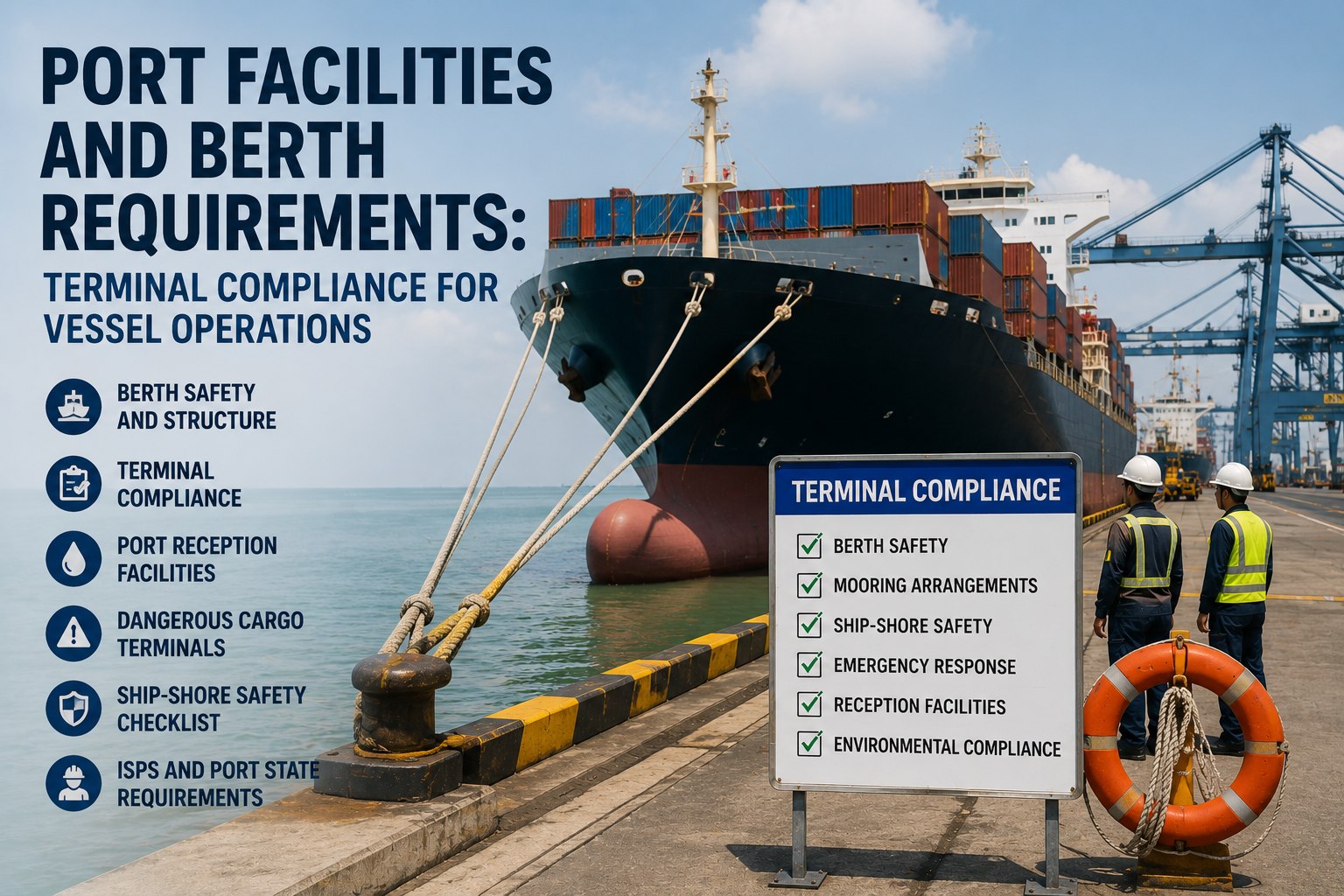
Ballast Water Management — Pre-Inspection Compliance Check
Certification & Documentation
IBWMC valid with survey endorsements current — D-2 compliance confirmed
BWMP approved, ship-specific, includes contingency measures chapter
BWRB current — all ballast operations recorded with dates, positions, volumes, and method
BWMS Type Approval Certificate onboard matching installed system model and serial
System Operational Status
BWMS operational — no outstanding alarms or unresolved malfunctions
Self-monitoring equipment functioning — TRO/UV sensors calibrated per manufacturer schedule
Filters clean with spare elements available — differential pressure within normal range
Consumables stock sufficient — UV lamps, electrodes, chemicals (if applicable) within service life
Crew Competence
Officers and crew trained on BWMS operation — can demonstrate start-up, monitoring, and shutdown
Crew familiar with contingency measures — knows what to do if BWMS malfunctions mid-voyage
Sediment management procedures understood — tanks cleaned per BWMP requirements
Pre-arrival ballast water reporting form completed (if required by destination port state)

Frequently Asked Questions

What is the D-2 ballast water discharge standard?
The D-2 standard sets maximum concentrations of viable organisms permitted in discharged ballast water: fewer than 10 organisms per cubic metre (for organisms 50 micrometres and larger), fewer than 10 per millilitre (for 10-50 micrometre organisms), and specified limits for indicator microbes including Vibrio cholerae, E. coli, and Enterococci. Meeting D-2 requires an approved Ballast Water Management System.
Is commissioning testing mandatory?
Yes, for all BWMS installations where the survey is completed on or after June 1, 2022. Testing must be performed by an independent approved service supplier — not by the crew or BWMS manufacturer. It involves sampling ambient water before treatment and treated water during discharge, with indicative and detailed biological analysis. Commissioning testing is required only once per BWMS installation.
What happens if the BWMS malfunctions?
Follow contingency measures in your BWMP and IMO guidance (BWM.2/Circ.62). Options include ballast water exchange according to D-1 standard as backup, retaining untreated ballast water onboard, discharging to a port reception facility, or not ballasting until the system is repaired. All actions must be recorded in the Ballast Water Record Book with detailed explanations. Notify the flag state and next port of call.
What changes are expected from the 2026 Convention review?
The Experience-Building Phase data analysis has been completed, and a Convention Review Plan is underway. Potential amendments being discussed include revised D-2 thresholds, updated testing protocols (including DNA-based rapid sampling tools), stricter PSC guidelines, enhanced contingency measure requirements, and possible changes to challenging water quality guidance. A package of amendments may be adopted in 2026.
Do US waters have different ballast water requirements?
Yes. Ships operating in US waters must use a BWMS that is USCG type-approved (not just IMO type-approved). The USCG discharge standard is nearly identical to D-2 but with independent type approval testing. Ships with IMO-only type approval can use Alternate Management Systems (AMS) on a temporary basis. Pre-arrival reporting to the USCG Captain of the Port is required, and the USCG is deploying portable DNA analysers for onboard compliance testing.
Complete BWM Compliance in One Platform
IBWMC tracking, BWRB digitisation, BWMS maintenance scheduling, commissioning test records, filter and consumable lifecycle management, contingency documentation — Marine Inspection connects every ballast water requirement into one audit-ready system.