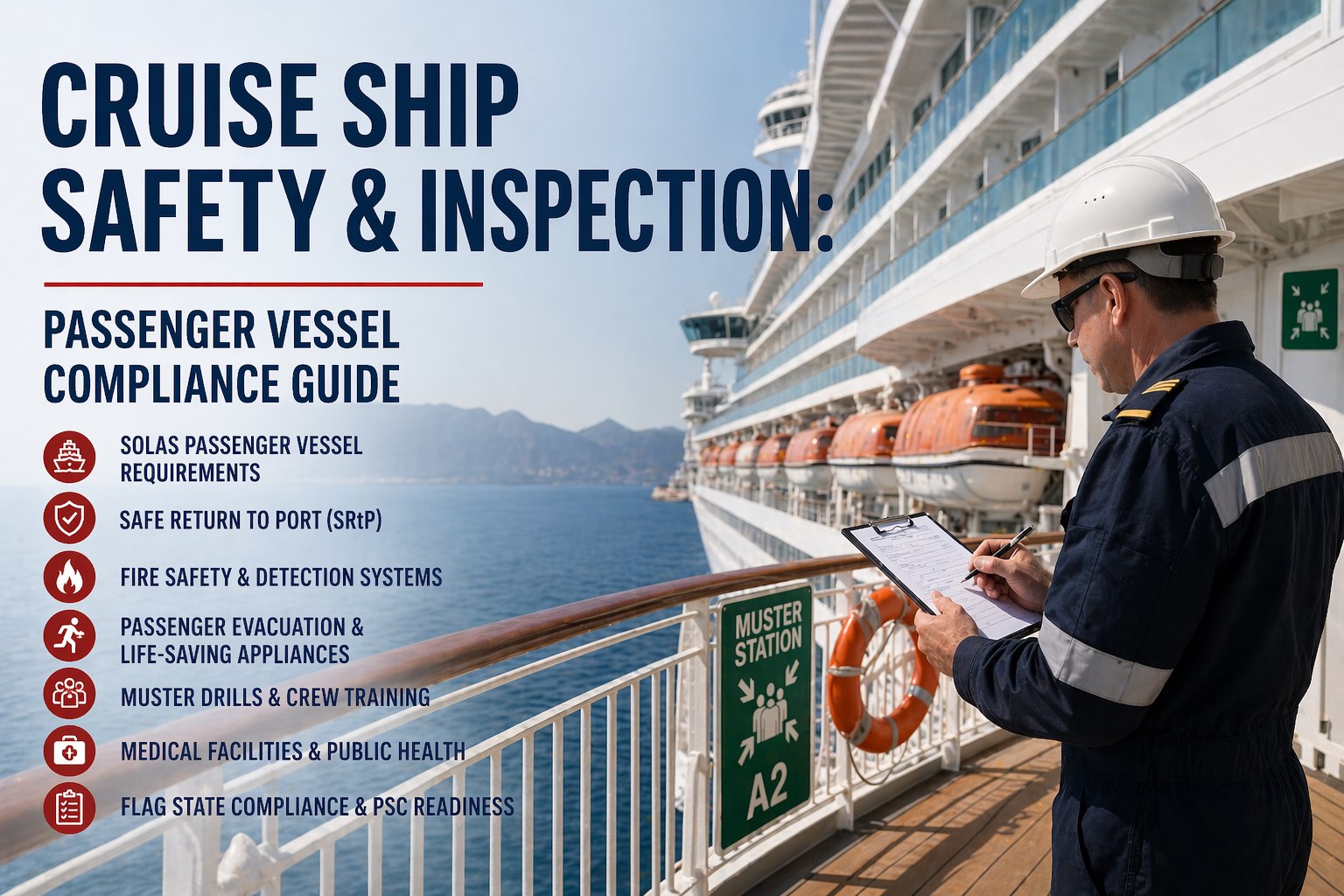
On September 2, 2024, OCIMF permanently retired VIQ7 and launched SIRE 2.0 as the sole tanker inspection framework. This wasn't a version update — it was a complete overhaul. The standardized checklist that operators relied on for 31 years was replaced by a digitalized, algorithm-driven system that evaluates crew competency alongside hardware and procedures. This guide maps every key difference and what each change means for your operations. Operators transitioning their workflows can sign up for Marine Inspection's compliance platform to manage the shift to SIRE 2.0 readiness.
SIRE 2.0 vs VIQ7: The Scale of Change
300 → ~100
Questions per Inspection
Fixed checklist replaced by tailored CVIQ
Yes/No → 4 Grades
Response Format
Binary answers replaced by graded scale
0 → 9 PIFs
Human Factors
Minimal crew checks → structured evaluation
Paper → Tablet
Recording Method
Notebooks replaced by GPS-tracked digital
Why OCIMF Replaced VIQ7
OCIMF launched SIRE in 1993, producing over 180,000 inspection reports by 2024. But VIQ7's limitations became clear: the same ~300 questions for every vessel meant operators could rehearse predictable answers; binary Yes/No responses couldn't capture whether crew actually understood procedures; and paper-based recording introduced errors with no photographic evidence. SIRE 2.0, developed from 2017, addresses all three with bespoke algorithmic questionnaires, graded three-dimensional assessment, and fully digital tablet-based recording.
The Complete Comparison
Every significant change mapped side by side. Book a demo to see how Marine Inspection helps operators transition to SIRE 2.0.
VIQ7 vs SIRE 2.0: Feature Comparison
Feature
VIQ7 (Retired)
SIRE 2.0 (Current)
Questionnaire
Fixed ~300 questions, identical for every tanker
Algorithm-generated CVIQ of ~100 risk-tailored questions
Question Selection
Standardized — operators could predict every question
Core + Rotational + Campaign + Conditional via bow-tie risk ranking
Response Format
Binary Yes/No
Graded: Exceeds / As Expected / Largely / Not as Expected
Assessment Scope
Primarily equipment and documentation
Three dimensions: Hardware + Procedures + Human Factors
Human Element
Minimal — basic certificate checks
9 PIFs evaluate competency, fatigue, team dynamics, safety culture
Recording
Paper notebook, post-inspection transcription
Tablet with real-time recording, GPS, auto-logged times
Photo Evidence
Not part of the process
Operator Photo Repository + inspector photos in final report
Pre-Inspection Data
Basic vessel particulars via HVPQ
HVPQ + PIQ + Photos + Certificates — feeds algorithm
N/A Questions
Many irrelevant questions marked "Not Applicable"
Eliminated — every CVIQ question applies to the vessel
Positive Findings
No mechanism for best practice recognition
"Exceeds Expectations" rating — positive observations in green
Observation Detail
Free-text comments, inconsistent depth
Codified SOC + NOC + PIF tagging — structured and data-minable
5 Changes That Impact Operations Most
These five changes are where VIQ7-era habits will fail under SIRE 2.0 — and where adapting early creates the biggest advantage.
1. Algorithmic Unpredictability
You Can No Longer Predict the Questions
VIQ7's fixed questions meant crews could memorize answers. SIRE 2.0's algorithm selects ~100 questions from Core (~50%), Rotational (R1 every 3rd–4th, R2 every ~6th), Campaign, and Conditional categories — randomized and checked against each vessel's history. Your crew must be ready for any question in the full library.
2. Three-Dimensional Grading
One Question = Up to Three Findings
VIQ7 gave one Yes/No per question. SIRE 2.0 assesses every question across Hardware, Procedures, and Human Factors — each graded on a four-level scale. A single question can produce negative observations in all three dimensions. Equipment in place isn't enough if the crew can't demonstrate competency.
3. Human Element via 9 PIFs
Crew Performance Is Formally Documented
VIQ7 had no structured crew assessment. SIRE 2.0's 9 Performance Influencing Factors evaluate "work as done" vs "work as imagined." Inspectors must tag PIFs whenever performance deviates from expectations. Memorized answers fail — inspectors spot the difference between understanding and recitation.
4. Mandatory Photo Evidence
Photo Repository Is a New Requirement
VIQ7 had no photo requirement. SIRE 2.0 requires operators to maintain a standardized Photo Repository updated every 6 months. Inspectors review photos before boarding and validate them against actual conditions onboard. Photos from both operator and inspector appear in the published report.
5. Codified, Data-Minable Observations
Findings Are Now Structured and Comparable
VIQ7 used inconsistent free-text comments. SIRE 2.0 codes every negative observation with a Subject of Concern (SOC), Nature of Concern (NOC), and mandatory PIF linkage. This structured format makes observations searchable, comparable across vessels, and useful for trend analysis. Reports are significantly more granular — automated vetting systems are increasingly essential.
Still Running VIQ7-Era Workflows?
Marine Inspection's platform is built for SIRE 2.0: CVIQ question tracking, Photo Repository management, corrective action close-out — all in one system.
The 9 PIFs: VIQ7 Had Nothing Like This
The single biggest difference — these nine factors are now documented data in every SIRE 2.0 report.
9 Performance Influencing Factors — New in SIRE 2.0
1
Safety Criticality Recognition — Does the crew understand why the task matters?
2
Custom & Practice — Are procedures followed, or have shortcuts developed?
3
Procedure Quality — Are procedures accessible, understood, and accurate?
4
Team Dynamics — Communication and coordination between crew.
5
Fatigue & Workload — Evidence of excessive hours or inadequate rest.
6
Workplace Environment — Ergonomics, signage, tools, layout, lighting.
7
Competency & Training — Adequacy of training and demonstrated skill.
8
Learning Opportunity — Can crew learn from drills and feedback?
9
Human-Machine Interface — Is equipment designed for safe human operation?
What Stayed the Same
Not everything changed — operational discipline built under VIQ7 still applies.
Same chapter structure retained. Some questions reassigned to more relevant chapters, but the organizational framework is familiar to VIQ7 veterans.
Structure preserved — content transformed
Reports remain active for 12 months from publication and are maintained in the OCIMF database for 2 years. Inspection frequency (~2.4/year) is similar.
Validity period unchanged
Still a physical inspection by an OCIMF-accredited inspector. Remote option from COVID era remains available but isn't the default.
Physical inspection — now digitally recorded
No new registration required. Existing SIRE credentials work for SIRE 2.0. Reports purchased through the same account system.
Same account — new capabilities
Your Transition Checklist
Essential updates if your workflows were designed for VIQ7. Sign up for Marine Inspection to implement this across your fleet.
Establish Photo Repository cycle — Standardized vessel photographs every 6 months covering all safety-critical areas. No VIQ7 equivalent existed.
Maintain PIQ for every vessel — Dynamic operational data reviewed before each inspection. Declarations directly trigger conditional CVIQ questions.
Gap-analyse SMS against the SIRE 2.0 Question Library — Review guidance sections: Objective, Expected Evidence, and Potential Negatives. OCIMF's VIQ7 Comparative Analysis helps map old to new.
Train crew on PIFs and live demonstrations — Crew must explain procedures in their own words and demonstrate tasks in real time. Simplify SMS language — complex manuals create shortcuts PIFs will flag.
Implement corrective action tracking — Codified SOC/NOC observations need tracked tasks with deadlines, evidence, and audit trails. Next inspector verifies remediation.
Make the Transition to SIRE 2.0 Readiness
From CVIQ question tracking to Photo Repository management to corrective action close-out — the digital workflow SIRE 2.0 demands and VIQ7 never required.
Frequently Asked Questions
When did SIRE 2.0 replace VIQ7?
SIRE 2.0 permanently replaced VIQ7 on September 2, 2024. OCIMF developed it from 2017, published the Question Library in January 2022, and completed phased rollout through early 2024. VIQ7 is no longer used in any SIRE inspections.
What is the biggest difference between VIQ7 and SIRE 2.0?
The structured human element assessment through 9 PIFs. VIQ7 had no equivalent — crew assessment was informal. SIRE 2.0 requires inspectors to evaluate how crew actually perform tasks and tag specific human factors whenever performance deviates from expectations.
Can I still use VIQ7 preparation checklists?
Not on their own. OCIMF published a "SIRE 2.0 – VIQ7 Comparative Analysis" to map old elements to the new library. Underlying operational knowledge remains relevant, but the preparation framework must be rebuilt around SIRE 2.0's algorithmic CVIQ and three-dimensional assessment model.
Does SIRE 2.0 apply to barges and offshore vessels?
Currently SIRE 2.0 applies exclusively to tankers (category 1). OCIMF has an ongoing project to extend SIRE 2.0 principles to BIRE (barges) and OVID (offshore vessels) in the future.
How does inspection software help with the transition?
Digital platforms like Marine Inspection address capabilities SIRE 2.0 requires but VIQ7 never demanded: CVIQ question coverage tracking, Photo Repository management at fleet scale, and converting codified SOC/NOC observations into auditable corrective action workflows.