Every engineer knows the temptation, and every chief engineer knows the risk it creates. At the end of a busy watch, with maintenance running over and the relief due, the logbook gets filled in haste — parameters assumed, or simply copied from the previous watch, rather than read fresh from the gauges. It saves ten minutes and quietly destroys the one thing the engine logbook exists to provide: an accurate, trended record of how the machinery is actually behaving. That record is not just paperwork. It is the legal evidence in an insurance or speed claim, the data class surveyors check against trial conditions, and the early-warning system that catches a rising exhaust temperature or a creeping bearing pressure before it becomes a breakdown. A digital engine logbook removes the temptation by making the honest entry the fast one — readings captured at the machine in a few taps or pulled automatically from sensors, alarms logged the moment they sound, watch handovers documented, and the chief engineer's daily review done from anywhere. This page walks through the watch you already run, shows it before and after, lays out who depends on the log, and explains why a digital record protects the engine room better than a paper book. To see an engine logbook on a live watch, book a Marine Inspection demo.
Built for the engine room
An Engine Logbook Your Chief Engineer Can Trust
Capture machinery readings, alarms, and watch handovers in a digital engine logbook built for chief engineers and watch ratings — readings taken at the machine, trended automatically, and signed to the engineer who took them.
Every watchReadings logged fresh, not copied from the last
TrendedRising temps and pressures caught early
SignedEach entry attributed to the duty engineer
OfflineCaptured at the machine, synced to shore
The Problem Every Chief Engineer Worries About
The engine logbook is only as valuable as it is honest, and the conditions of a real watch work against honesty. When the book is filled in at the last minute from memory or copied figures, the record becomes fiction — and fiction is worthless as evidence, useless for trending, and dangerous when it hides a developing fault. See the alternative in a demo.
Filled in haste
Readings taken at the very end of the watch, in a rush, mean parameters get assumed or skipped — and the log no longer reflects the machinery.
Copied from last watch
When figures are carried over rather than read fresh, a developing trend is masked by repetition, and the early warning is lost.
Trends go unseen
A slowly rising exhaust temperature or bearing pressure is only visible across honest, consistent readings — exactly what a rushed log destroys.
Weak as evidence
In an insurance or speed claim, an inconsistent or implausible log undermines the vessel's case rather than supporting it.
Your Engine Watch, Before and After
The same round, the same readings — but the friction that pushes engineers toward shortcuts is gone. The honest entry becomes the fast one.
On Paper Today
Carry a notepad on the round, transcribe later
Copy figures into the book at watch end, in haste
Note alarms from memory after the fact
Re-enter data into the noon report and oil records
Chief reviews and signs only when aboard
With the App
Enter readings at the machine on a mobile device
Sensor feeds pre-fill parameters where connected
Alarms logged the instant they sound, timestamped
Data written once, flowing to every report
Chief reviews and signs from anywhere, anytime
Who Depends on the Log, and What They Get
The engine logbook serves more than the engineer who writes it. Each person who relies on it gains something specific from going digital. See your role's view in a demo.
Watch Engineer
A faster round with readings entered at the machine, alarms captured instantly, and a complete, signed record without the end-of-watch scramble.
Chief Engineer
Confidence that every watch is logged honestly and consistently, with daily review and sign-off possible from anywhere and trends visible at a glance.
Superintendent
A near real-time view of machinery performance across the fleet, with the data to spot a developing problem on one vessel before it becomes a casualty.
Surveyor / Insurer
A consistent, tamper-proof record that holds up against trial conditions and stands as credible evidence in a survey or a claim.
What You Log — Read Fresh, Entered Fast
A digital engine logbook captures every parameter the paper book requires, but each is a tap or a sensor feed taken on the round rather than a figure transcribed later. Here is what an engine watch records.
Main & auxiliary engines
RPM, load, manifold pressure, exhaust gas temperatures, oil pressure, and running hours for main propulsion and auxiliaries.
Temperatures & pressures
Seawater, high- and low-temperature cooling, gland and bearing readings, taken on the round against operating limits.
Fuel & lube oil
Consumption by engine and boiler, remaining-on-board by tank, and internal transfers with quantities and discrepancies.
Alarms & faults
Alarms, abnormal conditions, remedial action taken, and the follow-up plan, so the next watch inherits every outstanding issue.
Machinery events
Start and stop of engines, boilers and compressors, load changes, and maneuvering status — standby, finished with engines, sea passage.
Status & UMS
Watch level and changes, manned or unmanned machinery space periods, bilge and sludge quantities, and maintenance performed.
See it on your fleet
Make the Honest Entry the Fast One
Marine Inspection lets watch engineers log machinery readings at the machine, captures alarms the moment they sound, documents handovers, trends every parameter against limits, and gives the chief engineer review and sign-off from anywhere. Book a 30-minute demo to see the engine logbook on a vessel like yours, or start a free trial and digitise your engine room today.
The Handover That Passes On Every Outstanding Issue
In the engine room, a missed alarm or an unmentioned remedial action at handover can become the next watch's breakdown. A digital log makes the takeover a documented event, so nothing outstanding is lost between engineers. See the handover in a demo.
Outstanding alarms carried
Active and recently cleared alarms, with the action taken and follow-up plan, are visible to the relieving engineer at takeover.
Readings reviewed
The incoming engineer sees the latest parameters against limits before assuming the watch, not after a problem develops.
Work in progress noted
Maintenance under way, equipment tagged out of service, and planned work are handed over on record, not by hurried word of mouth.
Named accountability
Each watch is bounded and signed by the duty engineer, with the chief engineer's review on record, so responsibility is always clear.
Readings That Predict the Breakdown
The greatest value of an honest engine log is trending. A single reading tells you the machinery is fine now; a series of honest readings tells you it is heading for trouble. This is the difference between maintenance you plan and a casualty you react to.
Compare against limits
Every parameter is checked against design and trial conditions, so a reading drifting toward its limit is flagged, not buried in a column of figures.
Spot the slow rise
A gradually rising exhaust temperature or bearing pressure across watches reveals a developing fault long before an alarm would sound.
See repeated patterns
Recurring alarm patterns become visible across watches and vessels, pointing to a root cause rather than a one-off event.
Trigger maintenance
A flagged trend can raise a maintenance job directly, connecting the log to the work that prevents the breakdown it predicted.
A Record That Stands Up in a Claim
The engine logbook is key evidence in accident investigations, insurance claims, and charterer speed claims. A well-built digital log is more defensible than paper, because the qualities that make a record credible are enforced automatically.
Immutable entries
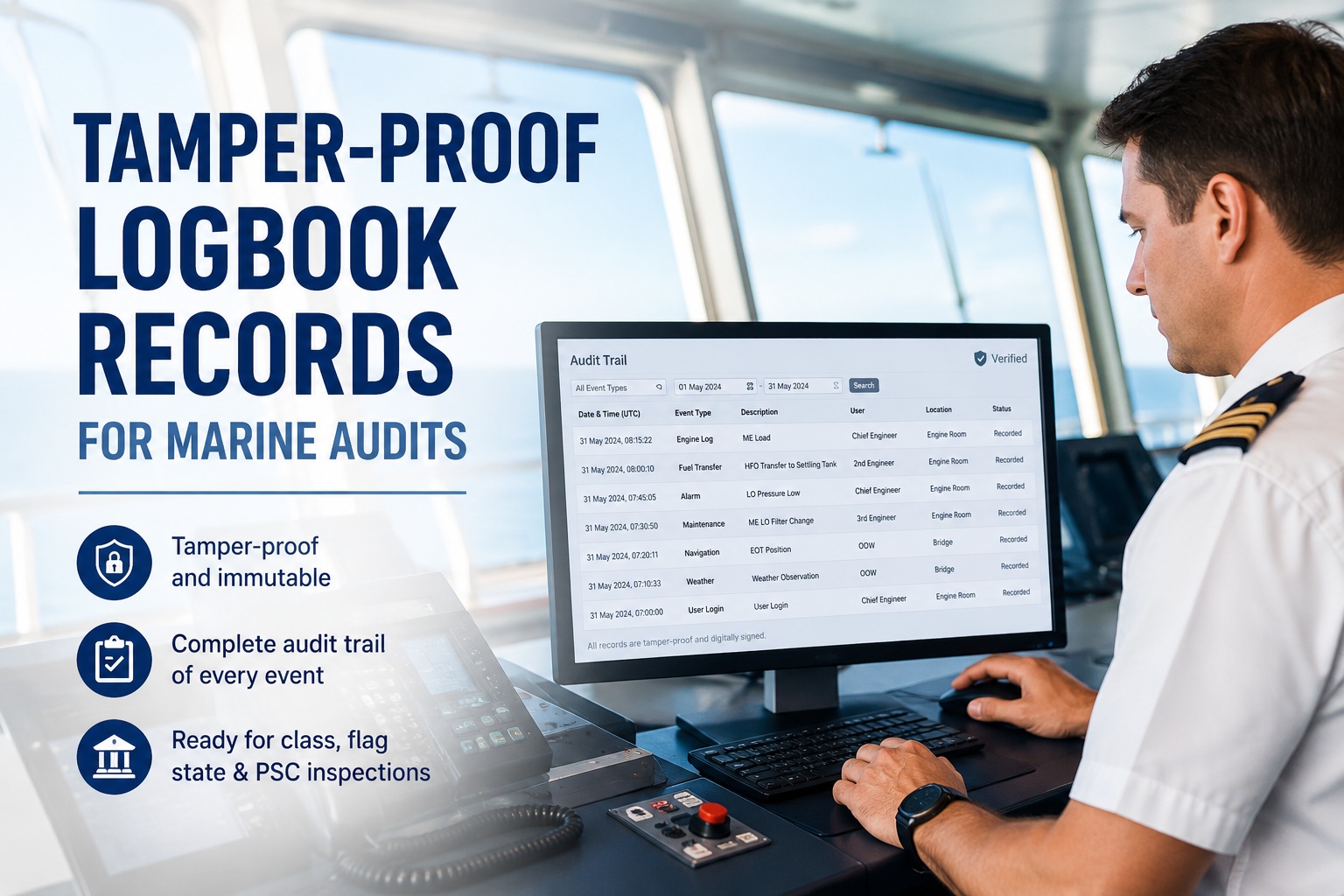
Once saved, an entry cannot be silently altered, so the record carries the weight a paper book only has when it is beyond suspicion.
Corrections stay visible
As with the single-line paper correction signed by the engineer, the app marks changes while keeping the original entry viewable.
Consistent & plausible
Honest, sensor-supported readings produce a consistent record that holds up against trial conditions instead of undermining the claim.
Signed at every level
Duty engineer entries and the chief engineer's review are each attributed and timestamped, preserving the accountability chain.
Why It Holds Up in the Engine Room
An engine logbook app only earns its place if it works in the real conditions of the machinery space — offline, fast, and reliable. Purpose-built marine software is designed for exactly that, where a generic tool or a paper book falls short.
Entry at the machine
Readings are entered on a mobile device during the round, so the log reflects the gauges as read, not figures reconstructed at the desk.
Works fully offline
The machinery space is no place for a reliable signal, so entries are captured offline and sync to shore when connectivity returns.
Sensor feeds where available
Connected instruments can pre-fill parameters, cutting transcription error and making the honest reading the effortless one.
Automatic trending
Parameters are trended against limits automatically, so a developing fault surfaces without anyone plotting figures by hand.
Linked to maintenance
A flagged reading or alarm can raise a maintenance job, connecting the log directly to the planned-maintenance system.
Written once, used everywhere
Logged data feeds noon reports, fuel and oil records, and shore-side visibility, ending the duplicate entry that wastes engineer time.
The deeper reason it matters is that the engine logbook is the engine room's memory and its early-warning system at once — but only if the readings are honest. A paper book taken in haste invites the shortcuts that hollow it out; an app that captures the reading at the machine in seconds, trends it automatically, and never asks for the same data twice makes the accurate entry the easy one. That is what turns the logbook from a chore into the tool that prevents the breakdown. Book a demo to see it on your fleet.
Frequently Asked Questions
What is engine logbook software?
It is a digital replacement for the paper engine room log book, used by watch engineers and the chief engineer to record machinery readings, alarms, fuel and oil data, and watch handovers. It captures readings at the machine, trends them against limits, signs each entry to the duty engineer, and writes data once so it never needs re-entering.
What is recorded in an engine room logbook?
Main and auxiliary engine RPM, load, pressures and temperatures, exhaust gas temperatures, oil pressure and running hours; fuel and lube oil consumption, remaining-on-board, and transfers; alarms and remedial actions; engine start and stop and maneuvering status; bilge and sludge quantities; UMS manned and unmanned periods; and maintenance performed. Each entry is signed by the duty engineer and reviewed by the chief.
How often must engine logbook entries be made?
On a manned ship, entries are made every watch — typically every four hours, with readings taken on a round before the watch ends. On a vessel operating with an unmanned machinery space, the logbook should be completed at least four times a day. Best practice is to take the round about an hour before watch end so the relieving engineer can review the parameters.
How does a digital log improve accuracy?
By making the honest entry the fast one. Readings are entered at the machine rather than transcribed later, sensor feeds can pre-fill parameters, and alarms are logged the instant they sound. This removes the time pressure that leads engineers to assume or copy figures, so the log reflects the machinery as it actually is — which is what makes trending and evidence reliable.
How does the logbook help predict failures?
By trending honest readings against design and trial conditions. A single reading shows the machinery is fine now, but a series reveals a slowly rising temperature or pressure, or a recurring alarm pattern, that signals a developing fault before it becomes a breakdown. A flagged trend can raise a maintenance job directly, linking the log to the work that prevents the failure.
Is the engine logbook a legal document?
Yes. The engine room logbook is official evidence in accident investigations, insurance claims, and charterer speed claims, and it is examined during class surveys and Port State Control inspections against operating limits and trial conditions. A consistent, tamper-proof digital record with attributed signatures strengthens the vessel's position where a rushed or implausible paper log would weaken it.
Built for the engine room
An Engine Log That Earns Its Place on Watch
Readings entered at the machine, alarms captured the instant they sound, documented handovers, automatic trending against limits, chief engineer sign-off from anywhere, and write-once data that feeds your reports — all offline-capable and linked to maintenance. Marine Inspection turns the engine log into the tool that prevents the breakdown. Book a tailored walkthrough or start a free trial today.