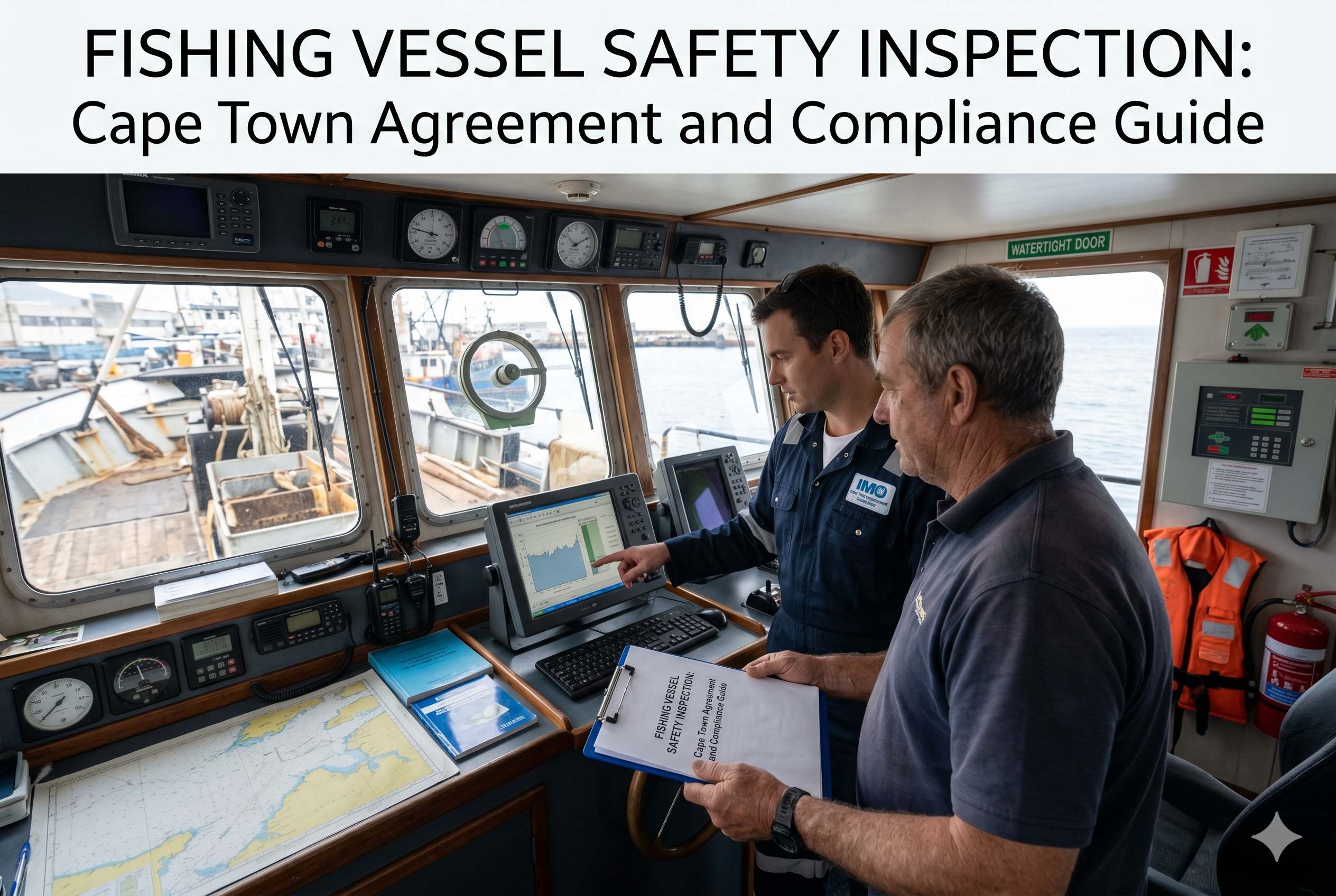
In roughly six months, commercial fishing stops being the only major sector of shipping with no mandatory global safety regime. The 2012 Cape Town Agreement crossed its ratification threshold on 24 February 2026, when Argentina deposited its instrument of accession at IMO headquarters in London, bringing the total to 28 States representing 3,754 fishing vessels of 24 metres and over. Under Article 4, the Agreement enters into force twelve months after not fewer than 22 States whose aggregate fishing vessels of 24 metres and over operating on the high seas number at least 3,600 have consented to be bound. That date is 24 February 2027. Until then, and this is the fact the industry has lived with for decades, there are no globally mandatory requirements for the design, construction and equipment of fishing vessels — including life-saving, fire protection and radio-communications equipment carried on board. Fishing vessels have never been covered by SOLAS, and the two previous attempts at a treaty, the 1977 Torremolinos Convention and its 1993 Protocol, never entered into force. Once the Agreement is in force, States Parties must incorporate its provisions into national law and enforce them as they would any other legislation. Start a free trial of Marine Inspection and start building the record before the requirement arrives.
Entry into force
24 Feb 2027
The first mandatory global safety treaty for fishing vessels, after 45 years of attempts
28
States Parties following Argentina's accession on 24 February 2026
3,754
Declared vessels of 24 metres and over, exceeding the 3,600 threshold
24m
Length threshold, or the equivalent gross tonnage where the Administration elects to use it
Zero
Mandatory global safety regulations for fishing vessels until the Agreement enters into force
Forty-Five Years to a Treaty
Understanding how long this took explains why the industry has developed the habits it has, and why preparation cannot be left until the month before. Book a Marine Inspection demo and see what a structured safety record looks like on a working boat.
1977
Torremolinos Convention
The first International Convention for the Safety of Fishing Vessels, adopted after work that had already been running for years. It never entered into force.
1993
Torremolinos Protocol
A follow-up protocol intended to resolve the obstacles to the 1977 Convention. It too failed to enter into force, leaving fishing vessels outside any binding global framework.
2012
Cape Town Agreement adopted
Adopted on 11 October 2012 in Cape Town, South Africa, giving effect to the provisions of the 1993 Protocol while addressing the technical issues that had prevented the earlier instruments from entering into force.
2019
Torremolinos Declaration
At the Ministerial Conference on Fishing Vessel Safety in Torremolinos, Málaga, organised by the IMO and the Government of Spain in October 2019, nearly fifty States signed a declaration of their determination to bring the Agreement into force.
2022
The twenty-second State
Nicaragua became the 22nd State Party, satisfying the first of the two conditions in Article 4. The second condition — an aggregate of at least 3,600 fishing vessels of 24 metres and over operating on the high seas — remained unmet.
Feb 2026
Threshold crossed
Argentina deposited its instrument of accession on 24 February 2026, declaring 467 vessels and taking the aggregate past 3,600. Both conditions satisfied, the twelve-month clock started, and entry into force is set for 24 February 2027.
Who Is Actually in Scope
The scope test is length, with a gross tonnage alternative available to the Administration, and there is an important nuance about existing vessels that many operators have not yet absorbed. Sign up for Marine Inspection and map your own fleet against the threshold now rather than in the final quarter.
The length test
The Agreement applies to fishing vessels of 24 metres in length and over, or their equivalent in gross tonnage. For the purposes of the Protocol, an Administration may elect to use gross tonnage in place of length as the basis for measurement across all chapters, using the equivalences set out alongside.
300 GTequivalent to 24 m
950 GTequivalent to 45 m
2,000 GTequivalent to 60 m
3,000 GTequivalent to 75 m
New vessels and existing vessels
Many of the technical requirements are directed at new vessels, which is the usual pattern for an instrument of this kind. But some apply to existing ships as well, and that is the part worth establishing early for a fleet built before the Agreement was contemplated.
The exemption route
States may grant certain exemptions for vessels operating solely within their exclusive economic zones. That creates a meaningful distinction between a vessel working inside a national EEZ and one operating on the high seas, and it makes your own flag State's implementing legislation the document that actually determines your obligations.
What that means in practice
National law is where this lands. States Parties must incorporate the provisions into domestic legislation and enforce them as they would any other law, with flag States ensuring vessels under their registries comply. Watch your own administration's implementing instrument rather than the treaty text alone.
Six months out
Build the Record Before the Requirement Arrives
Life-saving appliance inventories with expiry visibility, fire protection equipment tested and evidenced, radio equipment records, machinery maintenance history, structural and watertight integrity findings, and crew certification held against named individuals — captured on a phone with no connectivity, on a working boat, by people who have a job to do besides paperwork.
What Readiness Actually Requires
The Agreement covers design, construction and equipment, including life-saving, fire protection and radio-communications equipment carried on board. Below is that translated into the record a vessel will need to be able to produce, together with the honest assessment of where fishing fleets typically start from. Schedule a walkthrough and test each row against one of your own boats.
Table 1: Readiness Areas and the Records Behind Them
The Other Three Pillars
The Cape Town Agreement is one of four international instruments covering fishing safety, training and labour, and it has been the missing one. Understanding where the others already bind you helps establish what is genuinely new in 2027 and what should already be in place. Start a free trial and hold all four in one evidence base rather than four separate files.
Cape Town Agreement 2012
Vessel safety
Design, construction and equipment standards for fishing vessels of 24 metres and over, including life-saving, fire protection and radio-communications equipment. The pillar that has not yet been in force, and the one arriving on 24 February 2027.
In force 2027
STCW-F Convention
Training and certification
The IMO convention on standards of training, certification and watchkeeping for fishing vessel personnel, which entered into force in 2012. It governs the competence side of the equation rather than the vessel itself.
Already in force
ILO Work in Fishing Convention
Labour conditions
The International Labour Organization's 2007 convention covering conditions of work in the fishing sector, addressing accommodation, food, medical care, hours of rest and terms of engagement for fishers.
Already in force
Port State measures
Enforcement
Once the Cape Town Agreement is in force, port and coastal States gain a clearer basis for controlling fishing vessel safety, which is the mechanism that turns a flag State obligation into something a vessel encounters in a foreign port.
Strengthened 2027
Four instruments, one underlying evidence base. Vessel safety, crew certification, labour conditions and inspection readiness in one record.
Why a Working Boat Is a Different Problem
Any software recommendation that ignores how fishing vessels actually operate will not survive first contact with a crew. The conditions below are not obstacles to be worked around; they are the design constraint. Book a walkthrough and hand the device to a skipper rather than an office manager.
Nobody on board is an administrator
A merchant vessel carries officers whose duties include documentation. A fishing vessel carries people whose entire working day is catching, handling and preserving fish, in weather, at pace. Any process that assumes someone will sit down and complete a form will produce a record that is written from memory in port, or not at all.
The trip is the unit, not the month
Maintenance planning on a calendar makes limited sense when the vessel's rhythm is a trip of days or weeks followed by a short turnaround. The useful question is what can be done at sea, what needs the boat alongside, and what needs her out of the water — not what falls due in March.
Connectivity is genuinely absent
Fishing grounds are frequently outside meaningful coverage, and many operators do not carry the satellite arrangements common on merchant tonnage. Offline capture is not a convenience feature here. It is the only mode in which the system will be used at all.
The crew changes and the knowledge goes
Institutional memory on a small vessel sits with one or two people, and it leaves when they do. A system that holds what was done, when, and what condition was found is the only mechanism by which a boat retains its own history across a change of skipper or engineer.
Repairs happen at sea and go unrecorded
Fishing crews are exceptionally capable at fixing things underway, which is a genuine operational strength and a documentary weakness. The repair that kept the trip going is precisely the event an inspector would want evidence of, and it is the one least likely to have been written down.
Risk has been normalised
Commentary around the Agreement has made the point directly: the industry's long acceptance of danger has shaped a culture in which risk is normalised. Thousands of fishers lose their lives every year. Changing that is what the treaty is for, and a record-keeping system is one small part of a much larger cultural shift.
What to Do in the Next Six Months
Entry into force on 24 February 2027 gives a defined runway, and the work divides into a sensible sequence rather than a scramble. Start a free trial and run stage one on a single vessel this month.
1
Establish scope, vessel by vessel
Which of your boats are 24 metres and over, or above the gross tonnage equivalent your Administration uses. Which operate on the high seas and which work solely within the exclusive economic zone, since exemptions may be available for the latter.
2
Watch your own flag State
The obligations that reach you come through national implementing legislation rather than the treaty text. Identify who in your administration is drafting it and what transitional arrangements are proposed for existing vessels.
3
Inventory what you already have
Life-saving appliances, fire protection equipment, radio equipment and crew certificates, item by item with dates. This is unglamorous and it is the single highest-value thing to do first, because everything downstream depends on knowing what is aboard.
4
Start the record now, not in January
A maintenance and inspection history has value in proportion to its length. Six months of structured records arriving at the entry-into-force date is a materially stronger position than a system switched on the week before with nothing behind it.
5
Fix the capture point
Whatever system you adopt, test it by handing a phone to a skipper mid-trip and asking for a completed inspection with photographs. If it takes longer than a few minutes, it will not be used, and an unused system produces a worse record than an honest paper one.
Evaluating a Platform for a Fishing Fleet
Most maritime software is designed for merchant vessels with officers and connectivity. These questions expose whether a platform will work on a working boat. Schedule a demo and insist on testing with crew rather than shore staff.
Table 2: Buyer Questions Specific to Fishing Operators
2026 FISHING VESSEL COMPLIANCE REALITY
The obligations reach you through national law. Once the Agreement is in force, States Parties must incorporate its provisions into national legislation and enforce them as they would any other law, with flag States ensuring vessels on their registries comply. Your own administration's implementing instrument, including any transitional arrangements for existing vessels, is the document that determines what applies to your boats and when. Exemptions may be available inside an EEZ. States may grant certain exemptions for vessels operating solely within their exclusive economic zones, which creates a real distinction between EEZ-only and high seas operation — establish which category each vessel falls into. Not every requirement reaches existing vessels. Many technical requirements target new vessels, though some apply to existing ships. Do not assume either that everything applies or that nothing does. Accessions continue. The State and vessel counts cited here reflect the position at the point the threshold was crossed in February 2026; further accessions may have followed, so confirm the current status with the IMO.
Frequently Asked Questions
When does the Cape Town Agreement enter into force?
24 February 2027. Under Article 4, the Agreement enters into force twelve months after not fewer than 22 States, whose aggregate fishing vessels of 24 metres and over operating on the high seas number at least 3,600, have expressed their consent to be bound. The first condition was met when Nicaragua became the 22nd State Party. The second was met on 24 February 2026, when Argentina deposited its instrument of accession at IMO headquarters in London, declaring 467 vessels and bringing the total to 28 States representing 3,754 vessels of 24 metres and over. The twelve-month clock ran from that date.
Which vessels does it apply to?
Fishing vessels of 24 metres in length and over, or their equivalent in gross tonnage. An Administration may decide to use gross tonnage in place of length as the basis for measurement across all chapters, applying equivalences under which 300 gross tonnage is treated as 24 metres, 950 as 45 metres, 2,000 as 60 metres and 3,000 as 75 metres. Many of the technical requirements are directed at new vessels, although some apply to existing ships, and States may grant certain exemptions for vessels operating solely within their exclusive economic zones. Establish your own position vessel by vessel rather than fleet-wide.
Are there really no mandatory global safety rules for fishing vessels today?
Correct, and it is the reason the Agreement matters. Fishing vessels have never been covered by SOLAS, and until the Cape Town Agreement enters into force there are no globally mandatory requirements for the design, construction and equipment of fishing vessels, including life-saving, fire protection and radio-communications equipment carried on board. National regimes and classification rules apply in many jurisdictions, and voluntary instruments and guidelines exist, but there has been no binding international framework. Two previous attempts — the 1977 Torremolinos Convention and its 1993 Protocol — were adopted and never entered into force.
What are the other international instruments covering fishing?
Three others form the framework alongside the Cape Town Agreement. The IMO's STCW-F Convention covers standards of training, certification and watchkeeping for fishing vessel personnel and entered into force in 2012. The International Labour Organization's Work in Fishing Convention of 2007 covers conditions of work in the fishing sector. And port State control mechanisms provide the enforcement layer, which the Cape Town Agreement is intended to strengthen by giving flag, port and coastal States a clearer basis for controlling fishing vessel safety. The Agreement has been the missing pillar; the others are already in force.
Should a small operator start preparing now or wait for national rules?
Start now, and watch for the national rules in parallel. Two things argue for it. First, a maintenance and inspection record has value in proportion to its length, so a system running from mid-2026 arrives at entry into force with real history behind it rather than an empty database. Second, the highest-value preparation step is an item-by-item inventory of life-saving appliances, fire protection equipment, radio equipment and crew certificates with their dates, and that work is useful regardless of exactly how the national instrument is drafted. What you should not do is design your compliance approach around the treaty text alone, because implementation happens in domestic law.
Will a system designed for merchant ships work on a fishing vessel?
Usually not without difficulty, and the reasons are structural rather than cosmetic. Merchant platforms assume officers with documentation duties, reasonable connectivity, calendar-based maintenance planning and a shore organisation to support the system. A fishing vessel has none of those: everyone aboard is working the catch, connectivity is often absent for an entire trip, the operating unit is a trip rather than a month, and repairs happen at sea by people who will not stop to fill in a form. The design test is simple — hand the device to a skipper mid-trip, ask for a completed inspection with photographs, and time it.
24 February 2027 — roughly six months away
The First Mandatory Safety Regime Fishing Has Ever Had
Life-saving and fire appliance inventories with expiry alerting, radio and machinery records, structural findings with photographs, crew certificates tracked per person, and repairs captured at sea rather than remembered in port. Built to be used by people whose job is fishing, offline for an entire trip, priced per vessel with no minimum fleet size, and producing records that will already have months of history behind them when the requirement arrives.