Fuel quality failures are surging. In 2025, VPS issued 37 bunker alerts — a 37% increase over 2024 — with VLSFOs producing the highest number of problematic samples and Singapore accounting for nearly half of all alerts. Lloyd's Register reported the highest monthly off-specification cases of the entire year in December 2025 alone. Meanwhile, new contamination types (including cashew nut shell liquid in residual fuels) are emerging alongside tightening ECA regulations and the growing complexity of biofuel blends. Your fuel system is your engine's first line of defence — and inspecting it properly is no longer optional. This guide covers what to check, how contamination happens, and what quality testing catches before your engine pays the price. Operators looking to digitize their fuel system inspection workflow can sign up for Marine Inspection's vessel compliance platform to track every inspection, test, and corrective action.
Marine Fuel System Inspection: The 2026 Landscape
37
Bunker Alerts (2025)
↑ 37% over 2024 — VPS global data
5.2%
VLSFO Off-Spec Rate
The most used marine fuel type globally
ISO 8217
Fuel Quality Standard
7th revision (2024) — industry benchmark
24 hrs
Lab Analysis Turnaround
Full suite testing after sample submission
Why Fuel System Inspection Matters More in 2026
The marine fuel landscape is more complex than ever. VLSFO accounts for nearly half of all fuels consumed globally, but it's also the most problematic — prone to compatibility issues, high catalytic fines (cat-fines), and flash point failures. Biofuel blends are growing rapidly (up 50% in 2025), introducing new water management and microbial contamination challenges. ECA expansions (Mediterranean, Canadian Arctic) and EU-ETS phase-in are tightening emissions compliance. Each of these trends increases the risk that the fuel entering your tanks will damage your engine if your fuel system isn't inspected, maintained, and monitored properly.
The 6 Types of Fuel Contamination
Contamination can enter fuel during production, blending, storage, bunkering, or onboard handling. Understanding each type helps you know where to focus your inspections and testing.
High Risk
Catalytic Fines (Cat-Fines)
Hard aluminum and silicon particles from the refining process. Cat-fines above 60 ppm (the ISO 8217 limit at the engine inlet after treatment) cause abrasive wear to cylinder liners, piston rings, and fuel injection equipment. In 2025, VPS issued 13 cat-fine alerts — the most of any contamination type — with levels reaching 176 ppm in some samples. Your separator and purifier are the primary defence.
High Risk
Water Contamination
Water enters fuel through condensation, tank breathing, leaking heating coils, and contaminated bunkering. Seawater contamination introduces sodium and chlorides that cause corrosion throughout the fuel system. Water in fuel promotes microbial growth ("diesel bug"), accelerates tank corrosion, and reduces combustion efficiency. Water must be drained from tanks and separated from fuel continuously.
Medium Risk
Chemical Contaminants
Non-petroleum substances introduced during blending or cross-contamination in storage/bunkering. In 2025, VPS identified cashew nut shell liquid (CNSL) in residual fuels — a non-volatile organic compound that damages fuel pumps, exhaust systems, and SCR units. Chemical screening beyond standard ISO 8217 testing is increasingly necessary.
Medium Risk
Microbial Contamination (Diesel Bug)
Bacteria, yeast, and fungi that grow at the fuel-water interface inside tanks. Microbes form biofilms and sludge that block filters, corrode tank walls, and degrade fuel quality. Biofuel blends accelerate microbial growth because bio-components are more hygroscopic (attract water). Testing before and after bunkering is essential.
Compliance Risk
Sulphur Non-Compliance
Fuel exceeding the 0.50% global sulphur cap (or 0.10% in ECAs) results in regulatory violations, fines, and port state control detentions. VPS issued multiple sulphur-related alerts in 2025. With the Mediterranean ECA now in force and others approaching, sulphur testing on every bunker stem is non-negotiable.
Compliance Risk
Flash Point Failures
Fuel with a flash point below 60°C creates an explosion risk in storage and during handling. Flash point failures were the second most common alert type in 2025 (8 alerts), affecting distillates, VLSFOs, and HSFOs. Low flash point is a safety and SOLAS compliance issue that cannot be corrected onboard — the fuel must be debunkered or segregated.
Fuel System Inspection Checklist
A thorough fuel system inspection covers the entire fuel path — from storage tanks to the engine inlet. Here's what to inspect, component by component. Sign up for Marine Inspection to digitize this checklist across your fleet.
Tank structural integrity — Inspect for corrosion, pitting, coating degradation, and weld integrity. Aluminum tanks are vulnerable to ethanol-related corrosion. Steel tanks develop rust that contaminates fuel with iron particles.
Water drainage and monitoring — Verify drain valves operate freely. Check for water accumulation at tank bottoms. Test water-finding paste readings. Confirm automatic water sensors are calibrated and functional.
Sludge and sediment levels — Heavy sludge accumulation indicates poor fuel quality history, inadequate settling time, or separator issues. Schedule periodic tank cleaning and inspect sludge composition for unusual contaminants.
Tank venting and heating — Verify vent systems are clear and flame screens intact. Check heating coil integrity (leaking coils introduce seawater). Confirm temperature monitoring is accurate — overheating degrades fuel; underheating impairs separation.
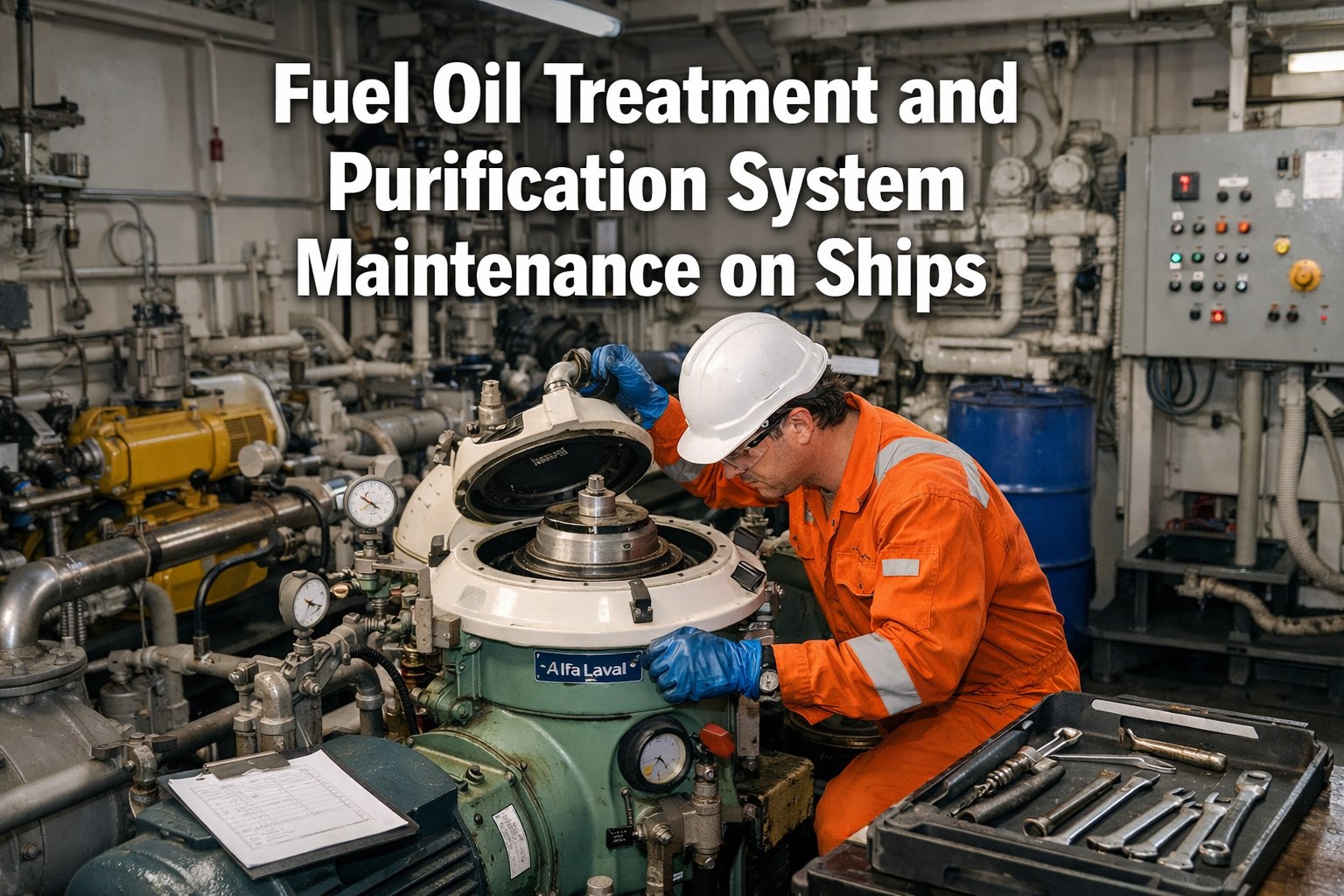
Separator performance verification — Your separator is the primary defence against cat-fines, water, and sediment. Verify throughput rate matches fuel density and viscosity. Confirm gravity disc/paring disc settings are correct for current fuel grade. Test outlet fuel quality after separation.
Discharge and sludge cycles — Verify automatic discharge timing. Inspect sludge volume and consistency — excessive sludge may indicate poor fuel quality or incorrect separator settings. Confirm sludge tank capacity and disposal records.
Filter condition and differential pressure — Check primary and secondary fuel filters for excessive clogging, unusual deposits, or debris. Monitor differential pressure gauges — rising pressure indicates filter loading. Inspect filter elements for damage or bypass. Backflush auto-filters per schedule.
Strainer inspection — Suction strainers before pumps and fine-mesh strainers before injectors catch larger debris. Inspect mesh condition, check for tears or deformation, and log the type of debris found — it tells you where contamination is entering the system.
Fuel Lines, Pumps & Injectors
Fuel line integrity — Inspect all fuel hoses, pipes, and connections for leaks, chafing, corrosion, and age degradation. Flexible hoses in the engine compartment are a fire and explosion hazard if they fail. Check fuel line routing is clear of heat sources.
Pump performance and injector condition — Monitor fuel pump pressures for deviation from baseline. Check injector spray patterns (poor atomization = incomplete combustion, increased emissions, and cylinder damage). Log injector operating hours and replacement cycles.
Fuel Quality Testing: What the Lab Checks
Every bunker stem should be sampled and sent to an accredited laboratory for ISO 8217 testing. Results typically arrive within 24 hours. Here are the critical parameters and what each tells you.
Key ISO 8217 Fuel Quality Test Parameters
S
Sulphur Content — Must not exceed 0.50% globally or 0.10% in ECAs. Non-compliance = fines, PSC detention, and MARPOL violation.
Al+Si
Cat-Fines (Al+Si) — Limit: 60 ppm max at engine inlet. Above this, abrasive particles destroy cylinder liners and piston rings.
°C
Flash Point — Minimum 60°C per SOLAS. Below this, fuel is an explosion hazard. Cannot be corrected onboard — must debunker or segregate.
V
Viscosity — Affects atomization, pumping, and separation. Out-of-spec viscosity impairs combustion efficiency and damages injection equipment.
H₂O
Water Content — Excessive water promotes microbial growth, corrosion, and combustion problems. Seawater presence (sodium/chlorides) is especially damaging.
TSP
Total Sediment — Sludge potential indicates how much deposit the fuel will form during storage and heating. High TSP clogs filters and separators rapidly.
ρ
Density — Affects separator efficiency. Very high-density fuels may exceed the separator's ability to remove water and cat-fines effectively.
Na
Sodium — Indicator of seawater contamination. High sodium combined with vanadium causes severe high-temperature corrosion in exhaust valves and turbochargers.
+
Chemical Screening — Beyond ISO 8217: advanced screening for non-petroleum contaminants (CNSL, polymers, used lubricating oil) increasingly recommended.
Digitize Your Fuel System Inspections
Marine Inspection connects your fuel system checks, lab results, separator logs, and filter change records into one auditable platform — so nothing falls through the cracks between bunkering and combustion.
Sampling Best Practices
Quality testing is only as good as the sample. Poor sampling technique produces misleading lab results — and a false sense of security.
Take continuous drip samples throughout the bunkering operation — not a single grab sample at the beginning or end. This represents the full delivery and captures any quality variation during the transfer.
MARPOL Annex VI requirement
Keep sealed, labelled reference samples for at least 12 months. In the event of a fuel dispute or engine damage claim, the retained sample is your evidence. Store in a cool, dark location away from heat sources.
Essential for dispute resolution
Ship samples to the testing laboratory as soon as possible after bunkering. Full ISO 8217 analysis is typically completed within 24 hours of lab receipt. Delayed testing delays your ability to identify problems before burning the fuel.
24-hour turnaround at leading labs
If results arrive before you need to use the fuel, you can act on any alert — adjusting separator settings, increasing settling time, or segregating problematic fuel. Burning untested fuel is flying blind with your engine's health at stake.
The critical window: bunkering → results
When Things Go Wrong: Warning Signs
Between lab results and the next scheduled inspection, your fuel system gives warning signs if something is going wrong. Recognizing them early prevents engine damage.
Rapid filter clogging — Filters blocking faster than normal indicate contamination, high sediment, or microbial growth. Inspect the filter element — black sludge suggests microbial contamination; metallic debris points to tank or system corrosion.
Separator sludge increase — A sudden rise in sludge volume during automatic discharge cycles signals deteriorating fuel quality or water ingress. Check settling tank drain, verify fuel temperature, and confirm separator throughput rate.
Exhaust gas temperature deviation — Uneven cylinder exhaust temperatures may indicate poor fuel atomization from contaminated or off-spec injectors. Cross-reference with recent fuel quality results.
Visible water in fuel sight glasses — Any visible water in fuel system sight glasses requires immediate investigation — drain, test, and verify the source of contamination before it reaches the engine.
Track Every Fuel Inspection, Test & Alert in One System
Marine Inspection connects bunkering records, lab results, separator logs, filter change schedules, and corrective actions into one platform — giving you complete fuel system traceability from tank to engine.
Frequently Asked Questions
What is the most common marine fuel contamination?
Catalytic fines (cat-fines) were the most frequently alerted contamination type in 2025, with 13 bunker alerts from VPS — levels reaching up to 176 ppm in some samples against a 60 ppm limit at the engine inlet. Cat-fines are hard aluminum and silicon particles from the refining process that cause abrasive wear to cylinder liners, piston rings, and fuel injection equipment.
How is marine fuel quality tested?
Fuel samples are tested in accredited laboratories against ISO 8217 specifications. The full suite includes sulphur content, cat-fines (Al+Si), flash point, viscosity, water content, density, total sediment, and metals (sodium, vanadium). Results are typically available within 24 hours. Advanced chemical screening beyond ISO 8217 is increasingly recommended to detect non-petroleum contaminants like CNSL.
How often should fuel system components be inspected?
Filters and strainers should be checked at every watch or as differential pressure dictates. Separators should be verified for correct settings at every fuel grade change. Tanks should be inspected for water and sludge accumulation regularly and thoroughly during scheduled dry-docking. Fuel sampling and lab testing should occur with every bunkering operation.
What happens if you burn off-spec fuel?
Consequences range from accelerated engine wear (high cat-fines) to catastrophic failure (low flash point = explosion risk). Excess sulphur results in MARPOL violations and PSC detention. Chemical contaminants can damage fuel pumps, exhaust systems, and SCR emission control equipment. High water content promotes corrosion and microbial growth throughout the fuel system. Prevention through testing is always cheaper than repair.
What is diesel bug and how do you detect it?
Diesel bug is microbial contamination — bacteria, yeast, and fungi that grow at the fuel-water interface inside tanks. They form biofilms and sludge that block filters, corrode tank walls, and degrade fuel. Detection methods include culture testing (IP385), ATP testing, and newer immunoassay antibody tests that can be done onboard. Biofuel blends increase risk because bio-components attract more water. Prevention centres on minimizing water in tanks and regular testing.