The Designated Person Ashore is not a title on an org chart — it is the single accountability point that makes the entire ISM framework function, the person a surveyor's questions ultimately land on, and increasingly the person whose own activity an auditor sets out to verify. Under Section 4 of the ISM Code, every company operating ships must appoint a DPA with direct, unimpeded access to the highest level of management, charged with monitoring the safety and pollution-prevention performance of every vessel in the fleet and ensuring the resources and shore support to keep it compliant. The difficulty is that the role has outgrown the tools many DPAs still rely on. Monitoring a fleet by chasing exports, waiting on periodic reports and reconciling spreadsheets across vessels does not meet the standard the Code now expects — active monitoring of audit findings, incident reports, PSC results and maintenance records, not just the receipt of summaries — and it leaves the DPA unable to prove their own oversight when an inspector asks. This is precisely the gap marine inspection software closes for the DPA: real-time, fleet-wide visibility, and an automatic record of the oversight the role requires. This page sets out what that means in practice for a Designated Person Ashore. To see a DPA dashboard against your own fleet, book a demo or start a free trial.
BUYER RESOURCE · FOR DPAs
Marine Inspection Software for DPAs: Fleet-Wide Compliance Visibility
The DPA is the single accountability point that makes the ISM framework function — and inspectors now verify the DPA's own activity. Here is how a shore-side dashboard gives real-time fleet visibility and produces the oversight record the role demands.
The DPA Is the Accountability Point
To understand why the right software matters so much for a DPA, start with what the role actually carries. The ISM Code requires the DPA to be a shore-based person with direct access to the highest level of management — able to raise a safety concern straight to the chief executive without intermediaries, and to act independently of commercial or operational pressure when safety is at stake. That independence is what distinguishes the role from every other shore-side management position.
The consequence is that the DPA sits at the centre of the whole safety management system. Every non-conformity, every audit finding, every incident report and every certificate across the fleet ultimately flows to the DPA's oversight, and the effectiveness of the SMS is judged, in large part, on how well that oversight is exercised. It is a role defined by breadth — the whole fleet, all the time — and by consequence, since a failure of oversight is not a local problem on one vessel but a signal that the management system itself is not working. That breadth and that consequence are exactly why monitoring by periodic report and spreadsheet has become untenable.
The Six Recurring Burdens
Real DPA work, stripped to its essentials, is structured by a handful of recurring burdens that run continuously across the fleet. Each is a place where visibility either exists or does not.
1SMS currency across the fleet
Every SMS document at its current revision on every vessel, with updates pushed and crew acknowledgment captured — not assumed.
2The non-conformity lifecycle
Every non-conformity reported, investigated, root-cause-analysed, corrected, verified and closed — with major non-conformities closed within the three-month maximum.
3The audit verification schedule
DOC annual verification, SMC intermediate verification, internal audits at intervals not exceeding twelve months, and the annual management review, all enforced on time.
4Active performance monitoring
Reviewing audit findings, incident reports, PSC results and maintenance records across all vessels — actively, not merely receiving summaries after the fact.
5The escalation point
Serving as the route by which shipboard safety concerns reach senior management directly, and ensuring they are acted on rather than absorbed.
6Adequate resources and support
Ensuring the shore-based resources and support each vessel needs are identified and provided, so compliance is enabled rather than merely demanded.
Every one of these burdens is a monitoring problem at heart, and every one is easier to carry — and to evidence — when the underlying data is live and fleet-wide rather than scattered across vessels and reports. To see these burdens handled in one view, book a demo or start a free trial.
Why a Paper DPA Fails the Audit
The most important shift in how the role is inspected is this: auditors now verify the DPA's actual activity, not just their appointment. A DPA who exists only on paper — with no documented vessel communication, no monitoring records and no non-conformity reporting — is read by inspectors as a direct indicator that the SMS is not functioning effectively.
A non-functioning DPA is a fleet-wide finding
External auditors verify the DPA's genuine involvement in safety management — documented communication with vessels, evidence of monitoring, a record of non-conformities raised and tracked to closure. When that evidence is absent, the conclusion is not that one form is missing but that the management system itself is not working, and because this is an ISM matter it can affect the Document of Compliance and the Safety Management Certificate, which cover the whole managed fleet. The DPA's own activity trail, in other words, is not administrative housekeeping — it is primary audit evidence, and its absence is one of the clearest signals of a failing SMS an inspector can find.
This reframes what software does for a DPA. It is not only a monitoring convenience; it is the mechanism that continuously produces the evidence of oversight the role is now judged on. Every acknowledgment captured, every communication logged, every corrective action tracked to closure becomes part of the demonstrable record that the DPA is doing the job.
What a Shore Dashboard Gives the DPA
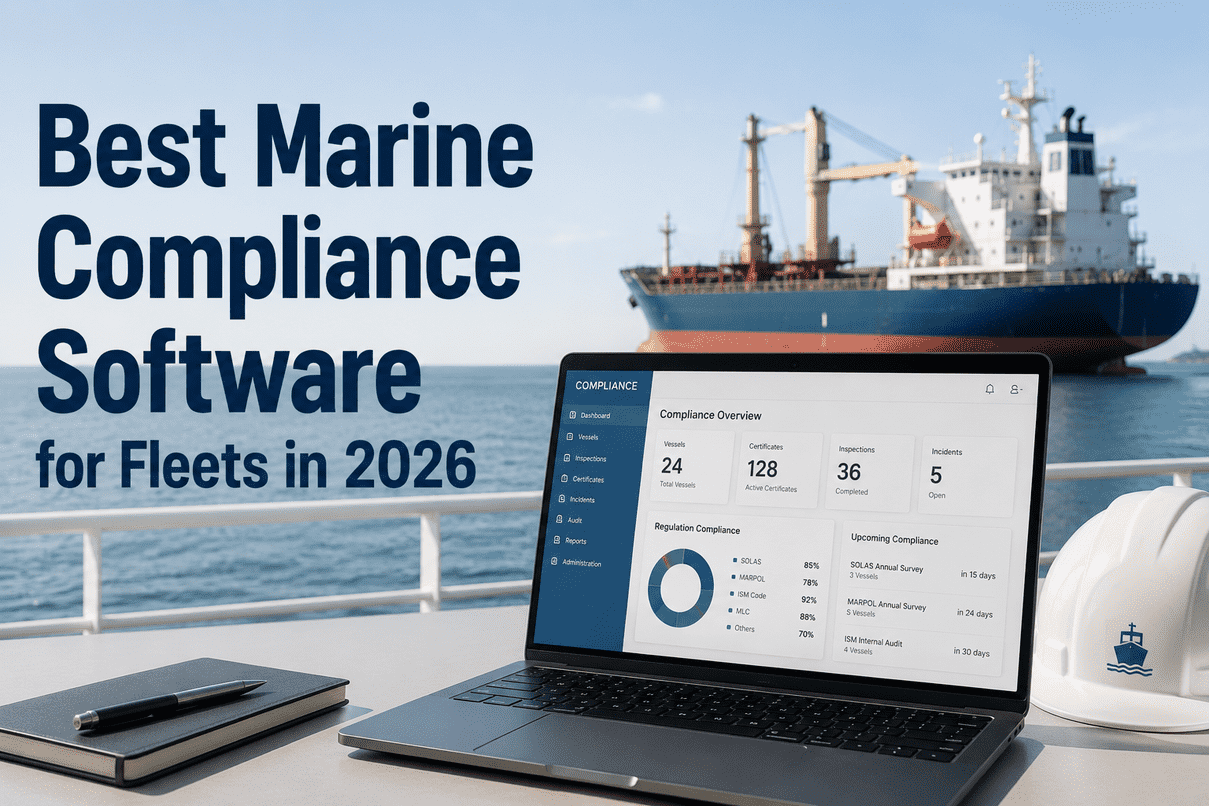
The practical answer to the breadth of the role is a single shore-side view of the entire fleet, replacing periodic reports with real-time status. These are the things a DPA dashboard surfaces at a glance.
Fleet-wide safety status
Inspection status, open findings and safety metrics across every vessel in one live picture, so the DPA manages by data rather than by chasing exports.
Overdue corrective actions
Every open non-conformity and its deadline visible, with the major-NC three-month closure window tracked, so nothing lapses unnoticed.
Audit and verification schedule
DOC, SMC, internal audit and management-review dates surfaced ahead of time, so the verification calendar is enforced rather than remembered.
Certificate expiry across the fleet
Tiered expiry alerts on every statutory and class certificate, so a lapse — a leading detention trigger — is caught long before an inspector finds it.
Non-conformity trends
Recurring finding types across sister ships made visible, so systemic weaknesses are identified and addressed rather than repeated vessel by vessel.
Communication and monitoring logs
A running record of vessel communication and oversight activity — the very evidence an auditor asks the DPA to produce.
The Oversight Becomes Its Own Evidence
The quiet power of running the role on a platform is that doing the job and evidencing the job become the same act. When the DPA reviews a vessel's findings, pushes an SMS update, or tracks a non-conformity to closure through the system, each action is captured automatically, building the documented trail of active monitoring that the Code requires and the auditor verifies.
This closes the gap that catches out paper-based DPAs. The oversight they perform may be genuine, but if it is conducted by phone calls, emails and memory, it cannot be readily produced as evidence, and an auditor treats what cannot be shown as not done. A platform inverts that: the acknowledgment of an updated procedure, the log of a communication with a master, the closure of a corrective action with its root-cause analysis attached, are all recorded as they happen, so the DPA's activity is demonstrable at any moment without a scramble. Role-based access ensures the DPA sees the whole fleet while each vessel and department sees its own scope, and the shore-side view stays authoritative. The result is that the single most probing question in an ISM audit — can the DPA show they are actually monitoring the fleet — is answered continuously, by the system, as a by-product of the work itself. To see that evidence trail build in real time, book a demo or start a free trial.
The Fleet-Visibility Payoff
Beyond satisfying the auditor, real-time fleet visibility changes how effectively the DPA can actually protect the fleet. The shift from periodic reports to live status is not merely faster; it is qualitatively different, because it lets the DPA act on risk before it becomes a finding rather than after.
When overdue corrective actions, approaching certificate expiries and recurring non-conformity patterns are all visible in one place, the DPA can intervene early — pushing a resource to a struggling vessel, catching a lapsing certificate weeks ahead, spotting a systemic weakness across sister ships before it produces a detention. That is the difference between managing safety reactively, from the rear-view mirror of last month's reports, and managing it proactively, from a live picture of where every vessel stands right now. It also lightens the sheer administrative load of the role, freeing the DPA from reconciling spreadsheets and chasing exports to focus on the judgement and intervention that only a person can provide. For a role defined by breadth and consequence, that combination — earlier intervention, lighter administration, and continuous audit-readiness — is what turns the software from a convenience into the core tool of the job. To put that fleet-wide view in front of your own DPA, book a demo or start a free trial.
Frequently Asked Questions
What does a DPA actually need software to do?
A DPA needs software that delivers real-time, fleet-wide visibility of the things the ISM Code holds them accountable for, and that captures their oversight as evidence. In practice that means a shore-side dashboard showing inspection status, open findings and safety metrics across every vessel; overdue corrective actions with the major-non-conformity three-month closure window tracked; the audit and verification schedule surfaced ahead of time; certificate expiry alerts across the fleet; non-conformity trends across sister ships; and communication and monitoring logs. Crucially, it should record the DPA's activity automatically, so the documented trail of active monitoring that auditors now verify is produced as a by-product of the work rather than assembled after the fact. The aim is to let the DPA manage the fleet by live data instead of periodic reports.
Why do auditors verify the DPA's own activity?
Because a DPA who exists only on paper is one of the clearest signals that a Safety Management System is not functioning effectively. The ISM Code requires the DPA to actively monitor safety and pollution-prevention performance across all vessels, so external auditors look for documented evidence of that monitoring — communication with vessels, records of oversight, non-conformities raised and tracked to closure. If a DPA is named but cannot show this activity, the auditor concludes the SMS is not being genuinely implemented. Because this is an ISM matter, a serious finding can affect the Document of Compliance and Safety Management Certificate, which cover the whole managed fleet. This is why the DPA's activity trail is primary audit evidence, and why software that captures it continuously is so valuable to the role.
How does a dashboard help with the three-month non-conformity window?
Major non-conformities must be closed within a three-month maximum, and a dashboard makes that deadline impossible to lose track of. Every open non-conformity is visible with its closure deadline, its owner and its current stage in the lifecycle from report through root-cause analysis to verified closure. The DPA can see at a glance which items are approaching their window and intervene before any breach the deadline, rather than discovering an overdue major non-conformity during an audit. The system also retains the full record of how each non-conformity was investigated and closed, with root-cause analysis attached, which is exactly the evidence an auditor expects to see. This turns non-conformity management from a manual tracking burden into a monitored, evidenced process.
Can the DPA see the whole fleet while vessels see only their own data?
Yes — role-based access is central to how these platforms serve a DPA. The Designated Person Ashore is given a fleet-wide view spanning every vessel, since their accountability is fleet-wide, while individual vessels and departments see the scope relevant to them. This keeps the shore-side oversight authoritative and complete while avoiding overwhelming shipboard users with data that is not theirs to manage. For the DPA it means a single, consistent picture of the entire fleet's compliance status, drawn from the same underlying data the vessels are working in, so there is no reconciliation between what the ship recorded and what the office sees. That single source of truth is part of what makes real-time oversight possible, and it is a marked improvement over stitching together separate vessel reports.
Does this replace the DPA's judgement?
No, and it is not meant to. The software handles the monitoring, surfacing and evidencing of fleet-wide compliance data, which removes the administrative burden of chasing exports and reconciling spreadsheets — but the judgement, the intervention and the independent authority to act when safety is at stake remain with the DPA. What the platform does is free the DPA from the mechanical parts of the role so they can focus on the parts only a person can do: deciding where to push resources, when to escalate a concern to senior management, and how to address a systemic weakness. By making risk visible earlier and more completely, it actually strengthens the DPA's judgement rather than substituting for it, giving them a live picture to act on instead of last month's reports. The person remains accountable; the software makes them more effective.
Give your DPA a real-time, fleet-wide view — and an audit-ready record of the oversight the role demands.