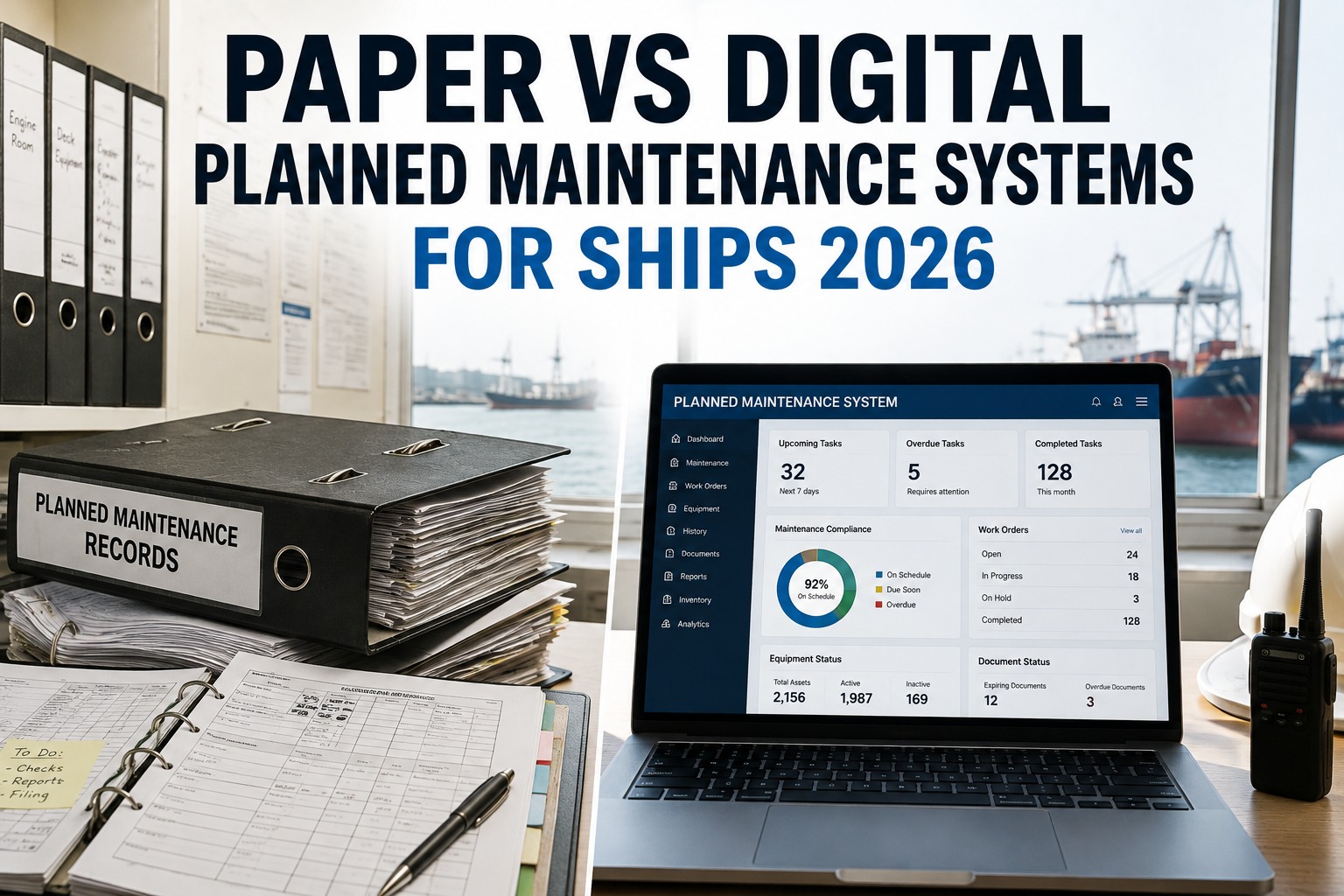
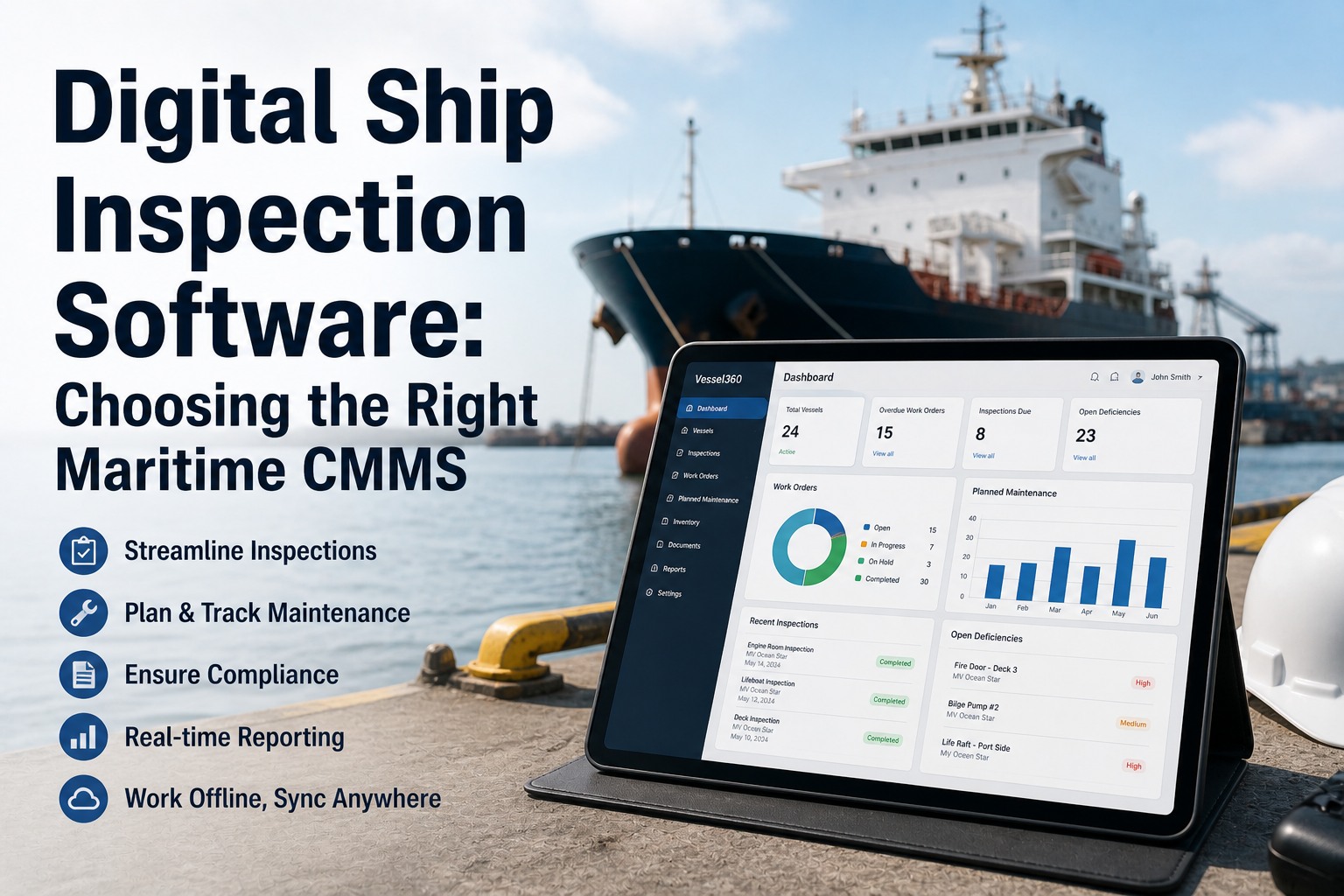
NS5 is one of the deepest installed bases in maritime software, and it did not get there by accident. Nautical Systems has been building for the sector since the mid-1980s, NS5 Enterprise arrived in 2011 as a ground-up redesign with fleet dashboards and KPI drill-down, and the maintenance, purchasing, HSQE, crewing and drydock modules cover territory that most newer platforms simply do not attempt. The brand has since moved on: NS5 was folded into NS Enterprise, NS Core arrived in 2015 for the workboat sector, and in 2024 ABS Wavesight launched NS-Web, taking the platform off the on-premise server and onto a browser. That progression is exactly why so many technical directors are running an evaluation right now. A version transition is the one moment when the switching cost of staying and the switching cost of leaving are roughly equal, and it forces a question that otherwise never gets asked: does a full marine ERP still match how this fleet actually operates, or is the fleet paying for chartering, crewing and finance breadth to solve a maintenance and inspection problem? This guide compares the routes open to an NS5 operator on capability, rollout speed, offline crew working and total cost. Start a free trial of Marine Inspection and load your own equipment register before the next renewal locks the decision for another three years.
How NS5 Became NS Enterprise, and Why It Matters Now
Understanding the product lineage is not a history exercise. Each step changed what an operator is buying, what the upgrade path costs, and which parts of the platform are actively developed. Book a Marine Inspection demo to see how the same maintenance and inspection workflows look on a platform designed after the smartphone rather than adapted to it.
Three Routes Open to an NS5 Fleet
There are only three real answers, and each carries a different risk. Naming them plainly is more useful than a feature grid, because the trade-off is commercial and operational rather than functional.
Follow the vendor path onto the browser modules. The domain logic, module structure and reporting you already configured carry forward, the shore server and its refresh cycle come off the books, and the class relationship stays intact for ABS-classed tonnage.
Defer. Reasonable when the current version does the job, the server has years left, and there is no live compliance or adoption problem forcing a decision this budget cycle.
Use the transition moment to test whether full marine ERP is still the right shape. Modern cloud PMS platforms deploy in weeks, publish per-vessel pricing, and are built mobile-first for crews closing jobs at the machine rather than at a desk in the ship's office.
Capability Comparison: Marine ERP Against Modern Cloud PMS
Both categories claim every feature, so compare on the lines where architecture forces a genuine difference. The final column is the question that exposes the answer inside a demo rather than a datasheet. Sign up for Marine Inspection and run these tests on your own vessel data instead of a vendor sandbox.
| Line | Marine ERP Suite Pattern | Modern Cloud PMS Pattern | Verify in the Demo |
|---|---|---|---|
| Functional scope | Maintenance, purchasing and inventory, HSQE, crewing and payroll, voyage, drydock, document and drawings control on one data model | Maintenance, inspection, defect management, spares and compliance evidence only | List the modules you would genuinely operate in year one and price only those |
| Crew working model | Mobile applications available for specific onboard functions; core configuration and reporting remain desktop workflows | Every core workflow completes on a phone or tablet, including full create, edit and submit offline | Put the device in airplane mode, close a job with photos, reconnect and watch the sync resolve |
| Deployment | On-premise, hosted or web modules depending on version and module; a version transition is a project | Multi-tenant cloud only, no server, no client install, no version pinned to a vessel | Ask which of your specific modules are web-native today and which still need the legacy client |
| Time to first value | Commonly 6 to 15 months across configuration, migration, integration and training | Roughly 6 to 12 weeks, and 6 to 10 weeks for five to eight vessels with reasonably complete records | Request a phased plan with named milestones, not an average timeline |
| Commercial model | Custom quotation by fleet, module and user; three-year terms typical; services quoted separately | Published per-vessel or per-user subscription with the module set fixed up front | Ask for year-one and year-three totals in writing, services and support included |
| Class and ISM evidence | Long-established compliance coverage including EU MRV, Subchapter M and IMO DCS, with deep class familiarity | Certificate windows, survey due dates and audit trails native; confirm acceptance for your society and flag | Generate the ISM Element 10 evidence pack live, not as a sample screenshot |
| Reporting access | Business intelligence module with configurable KPIs and management reporting once set up | Self-serve dashboards for overdue counts, backlog by vessel and completion rate out of the box | Ask a superintendent-level question live and time how long the answer takes |
| Class affiliation | Software supplied by an entity affiliated with a classification society, with newbuild programmes that bundle modules | Class-neutral by design, with no relationship between the software vendor and your survey authority | For mixed-class fleets, ask how non-ABS tonnage is handled on identical terms |
| Security posture | SOC 2 Type I, SOC 2 Type II and ISO 27001 certification on the web platform | Varies sharply by vendor; treat certification as a hard requirement, not a preference | Request current certificates and the most recent penetration test summary |
Total Cost: The Lines That Decide the Business Case
Licence price is the most requested and least decisive figure in a fleet software decision. Market analysis puts unlisted items at 20 to 40 percent of first-year total cost of ownership when they are not surfaced before signature, and professional services alone commonly add 20 to 30 percent in the enterprise tier. Schedule a demo to see per-vessel pricing applied to your fleet without a custom-quote cycle.
| Cost Line | Enterprise Tier Pattern | Cloud Subscription Pattern | Put This in Writing |
|---|---|---|---|
| Version transition | Migration to a new architecture is a scoped project with configuration, testing and training | Continuous release, no fleet action, no downtime window to schedule | What did the last major transition cost a comparable customer? |
| Implementation services | Frequently adds 20 to 30 percent to first-year spend | Bundled or a fixed onboarding fee | What is the fixed-fee ceiling for go-live across the whole fleet? |
| Data services | Machinery data gathering, cleansing and population offered as a paid professional service | Standard extract, cleanse, map and validate cycle, usually included | How many years of job history are included, and who owns the cleansing? |
| Infrastructure | Shore server, backup, disaster recovery and eventual hardware refresh where still on-premise | None, with hosting, backup and patching held by the vendor | What happens at the next server end-of-life date? |
| Module gating | Per-module licensing; capability you assumed included may sit one tier up | Defined module set at a published price point | Is API access included at our tier, or behind an upgrade? |
| Crew turnover | Per-user training repeated as crews rotate every few months | Role-based onboarding and in-product guidance for new joiners | What is the retraining cost for a full crew change? |
| Contract exposure | Three-year terms typical, with uplift at renegotiation and early termination provisions | Annual or monthly terms at published rates | What is the contractual cap on annual increases? |
Keep or Replace: Reading Your Own Signals
Most fleets already know the answer and have not written it down. Score yourself honestly against both columns, then let the weight fall where it falls rather than defending the incumbent or the challenger. Start a free trial and settle the offline and adoption questions with a real test rather than an assumption.
Evaluation Checklist Before You Sign Anything
Run this against every shortlisted platform including your incumbent at renewal. It is built around the points that separate a system crews use from one they work around. Book a walkthrough with Marine Inspection and work through it against your own vessel data.