A Port State Control inspection can arrive unannounced at any port call — and in the worst case, it can ground your vessel, blow your schedule, cost $20,000+ per day in off-hire, and leave a detention record that follows your ship across every MOU database worldwide. PSC is the mechanism through which over 100 coastal states verify that foreign-flagged ships entering their ports comply with SOLAS, MARPOL, STCW, MLC, ISPS, and other IMO/ILO conventions. PSC officers have the authority to board, inspect, raise deficiencies, and detain — regardless of your flag state, your classification society, or your departure schedule. The good news: PSC inspections are systematic, not arbitrary. Modern MOUs use risk-based targeting systems that prioritise older vessels, poor-performing flags, companies with detention histories, and ships with overdue inspections. Understanding what triggers an inspection, what officers check, and what constitutes a detainable deficiency gives Masters and fleet managers the ability to prepare effectively — turning PSC from a threat into a routine verification of standards you already maintain. This guide covers the inspection process from targeting to outcomes, the most common deficiency categories, detention criteria, regional MOU differences, and a practical pre-arrival checklist every Master should complete. Start a free trial of Marine Inspection to digitize pre-arrival checklists, deficiency tracking, and compliance documentation across your fleet.
How Ships Are Targeted for Inspection
PSC is not random. Modern MOUs use Ship Risk Profiles (SRP) calculated from multiple factors to decide which vessels to board. Understanding these factors lets you predict your inspection likelihood and prepare accordingly.
The Inspection Process: What Happens When the PSCO Boards
PSC inspections follow a structured escalation — from document review to physical walkthrough to potential detention. Knowing the sequence helps the Master manage the process professionally. Book a Marine Inspection demo to see how digital pre-arrival checklists prepare your vessel for every stage.
Top Detainable Deficiency Categories
Year after year, the same categories appear at the top of PSC detention statistics. These are the areas where inspection preparation has the highest return on investment.
| Rank | Deficiency Category | Convention | Common Findings | Prevention |
|---|---|---|---|---|
| 1 | ISM Code / Safety Management | SOLAS IX | SMS not implemented effectively, crew unfamiliar with procedures, non-conformities not closed, management review not conducted | Regular internal audits, crew drills per SMS, NCR close-out tracking |
| 2 | Fire Safety | SOLAS II-2 / FSS Code | Fire doors wedged open, fire dampers inoperable, detection system faults, extinguishers expired or missing, fire drills inadequate | Monthly fire door checks, weekly alarm tests, crew fire drill quality |
| 3 | Certificates & Documentation | All conventions | Expired certificates, missing endorsements, STCW certificates not matching positions, record books incomplete or unsigned | Certificate tracking system with 90-day expiry alerts |
| 4 | Life-Saving Appliances | SOLAS III / LSA Code | Lifeboat davit defects, EPIRB expired, immersion suits damaged, liferaft servicing overdue, abandon ship drill deficiencies | LSA maintenance per PMS, servicing schedule compliance |
| 5 | Navigation Safety | SOLAS V | ECDIS not updated, navigation lights defective, magnetic compass deviation unchecked, voyage plan incomplete | Weekly navigation equipment checks, chart/ECDIS update log |
| 6 | MARPOL / Pollution Prevention | MARPOL I-VI | Oil Record Book incomplete, OWS bypassed, Garbage Record Book gaps, fuel sulphur documentation missing | Daily ORB entries, OWS verification, BDN filing system |
| 7 | MLC / Crew Welfare | MLC 2006 | Hours of rest violations, missing SEAs, accommodation defects, complaint procedures not posted, expired medical certificates | Automated rest hour tracking, SEA before boarding |
| 8 | Structural Safety | SOLAS II-1 / Load Lines | Hull wastage, tank corrosion, watertight door defects, freeboard marks obscured, stability booklet not matching actual condition | Hull thickness monitoring, WT door testing programme |
Regional PSC Regimes
Each MOU has its own inspection priorities, risk profiling system, and CIC campaigns. Ships trading globally must prepare for all regimes.
| Regime | Coverage | Members | Risk System | 2026 Focus |
|---|---|---|---|---|
| Paris MOU | Europe & North Atlantic | 27 member states | New Inspection Regime (NIR) — SRP-based White/Grey/Black flag lists | CIC: Cargo Securing (Sep-Nov 2026) |
| Tokyo MOU | Asia-Pacific | 21 member states | Risk-based targeting similar to NIR | Joint CIC with Paris MOU: Cargo Securing |
| US Coast Guard | United States & territories | USCG (not MOU member) | QUALSHIP 21 — quality shipping for 21st century programme | BWMS compliance, USCG-type approval verification |
| Indian Ocean MOU | Indian Ocean region | 20 member states | Developing risk-based system | Building inspection capacity and harmonisation |
| Vina del Mar | Latin America | 15 member states | Regional targeting criteria | Environmental compliance focus |
| Mediterranean MOU | Mediterranean region | 10 member states | Developing systems aligned with Paris MOU | Med SOx ECA enforcement (from May 2025) |
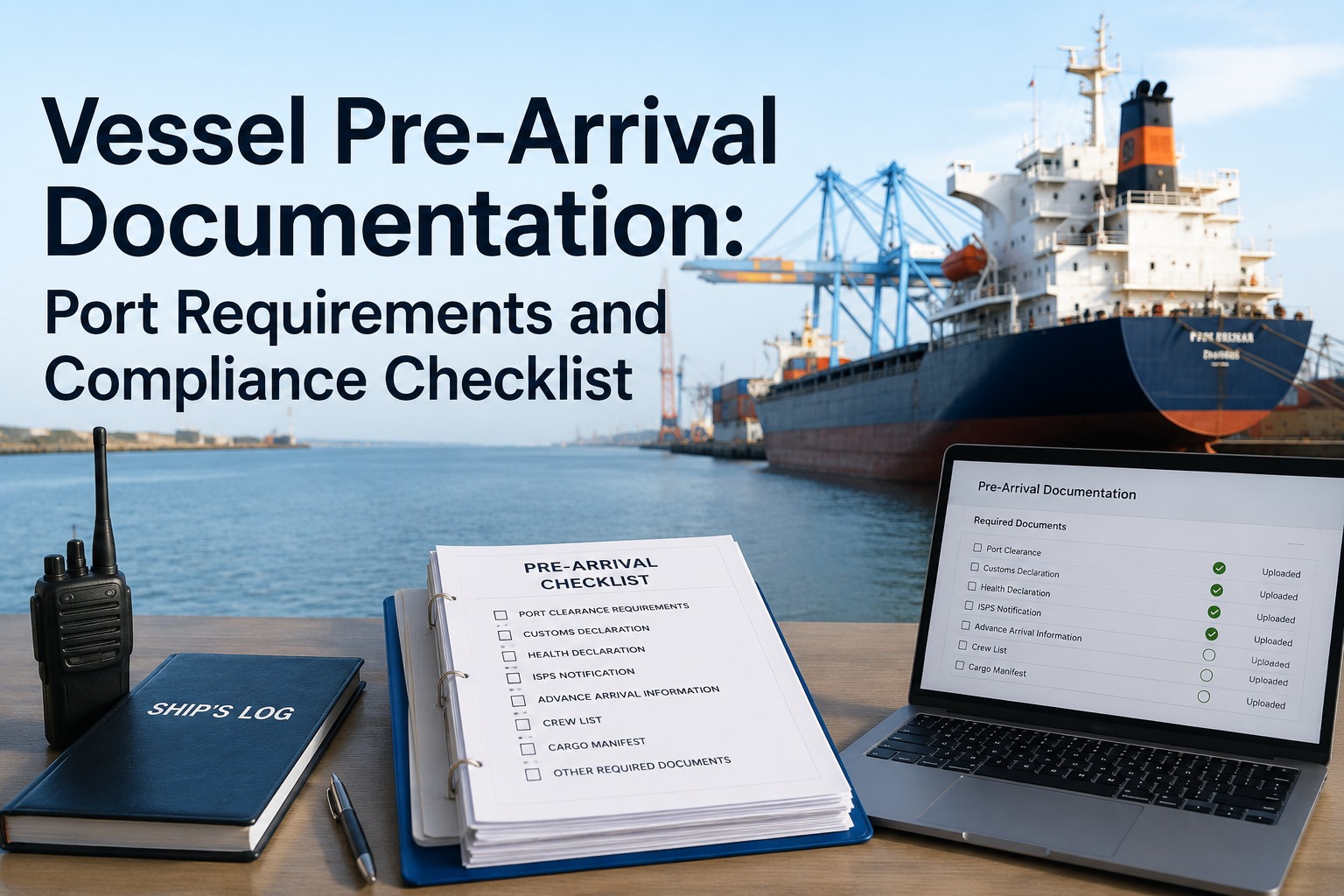
Pre-Arrival PSC Preparation Checklist
This is the Master's go-to checklist before every port call. Complete it 24-48 hours before arrival — every item maps to a real deficiency that PSC officers find and record. Sign up for Marine Inspection to run this checklist digitally with timestamped completion records and photo evidence.