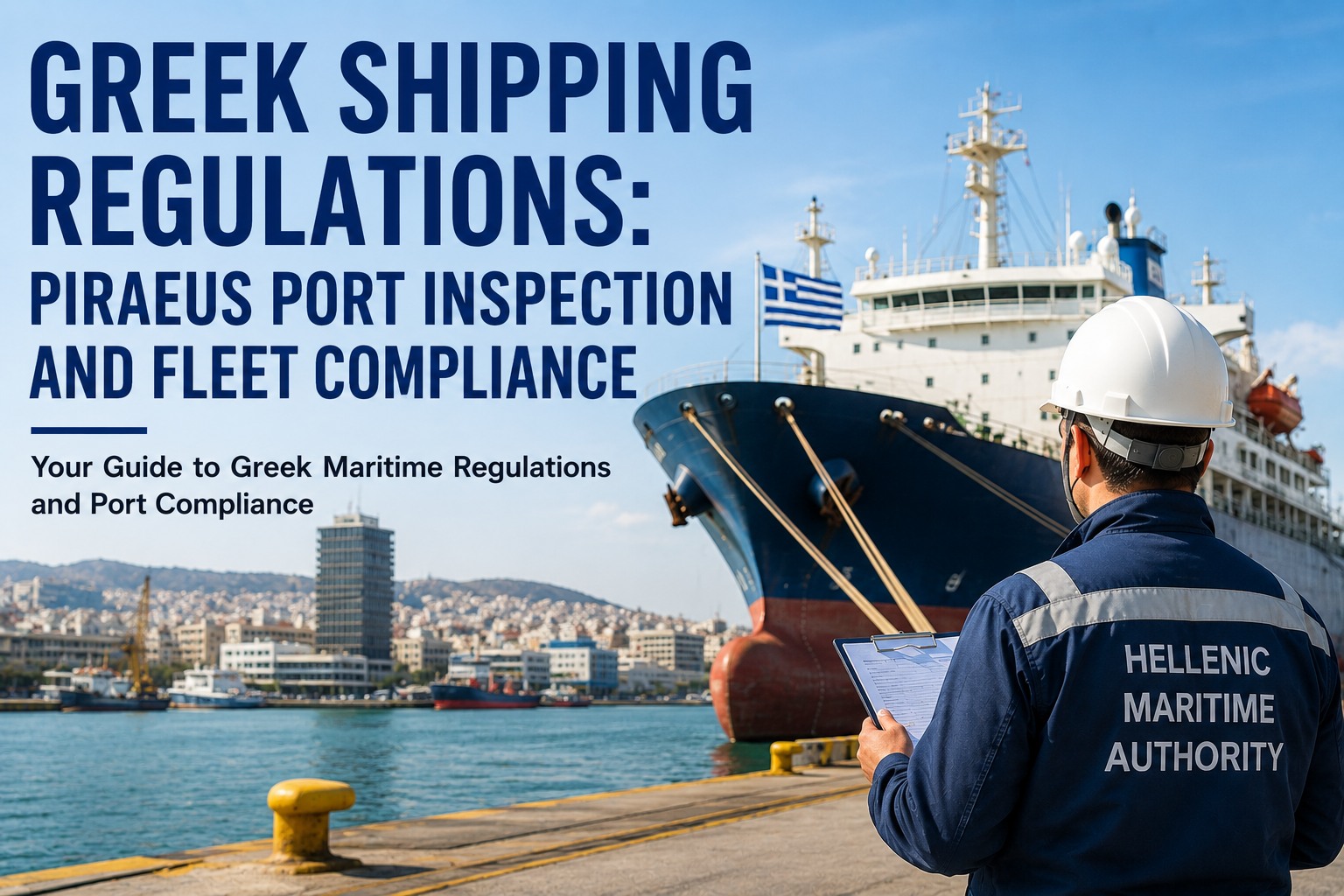
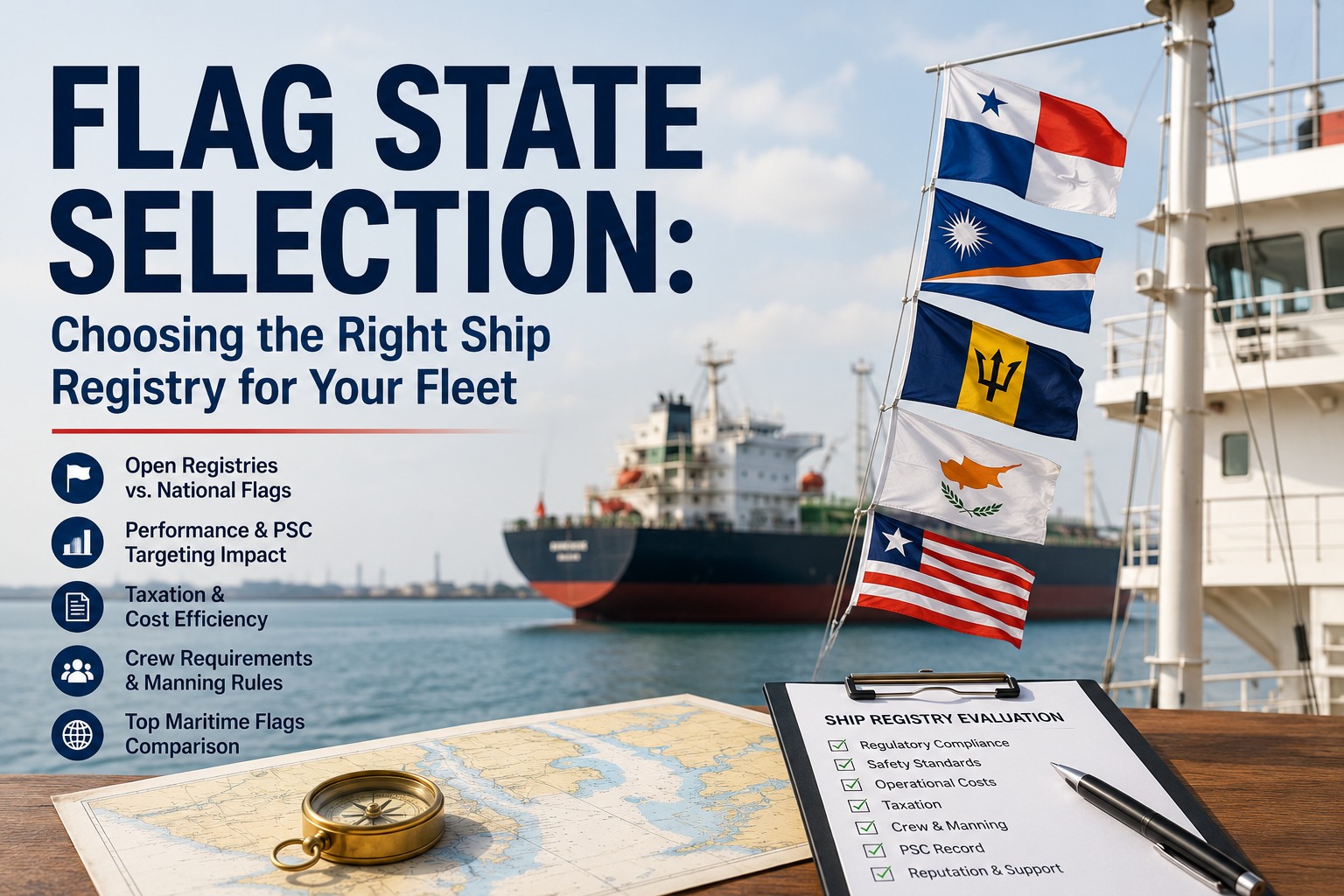
Greek shipping presents a paradox that shapes every compliance decision made in Piraeus. Greek owners control the largest privately held merchant fleet on earth — 4,388 vessels and more than 360 million deadweight tons at the 2026 count, an all-time high — yet only a fraction of those ships actually fly the Greek flag, roughly 463 vessels of about 45 million deadweight tons. The rest sail under Liberia, the Marshall Islands, Malta and others. That split is not an accident or a failure; it is a deliberate portfolio strategy in which the Greek flag plays a specific role rather than a universal one. Understanding why owners flag some tonnage at home and register the rest abroad — and what the Greek flag actually delivers when they do — is the practical question for anyone operating from Greece. The flag brings a constitutionally protected, EU-approved tonnage tax regime, white-list standing on both the Paris and Tokyo MOUs, and continued QUALSHIP 21 participation, in exchange for a Greek beneficial ownership and crewing footprint and a bureaucratic burden that owners weigh honestly. This guide covers the administration and its structure, current Greek flag performance data, the registry's role within a mixed-flag fleet, classification patterns in the Greek market, and what fleet compliance looks like from Piraeus. Start free trial or book a demo to manage certificates, surveys, and inspection records across a mixed-flag Greek fleet.
REGIONAL COMPLIANCE · GREECE
The World's Largest Fleet, and Only a Fraction Flies the Flag
Greek owners control 4,388 vessels. About 463 carry the Greek flag. That gap is a strategy, not a shortfall — and knowing what the flag delivers, and what it costs, is how Piraeus decides where each ship belongs.
The Administration and Its Structure
Greek maritime administration runs through a single ministry with a coast guard at its operational core, and the addresses are all in Piraeus.
Ministry of Maritime Affairs and Insular Policy
Formed in September 2015 and headquartered at the Port of Piraeus, the ministry oversees Greek maritime affairs with a substantial establishment — around 8,744 employees and an annual budget of roughly €652 million. Its child agencies include the Hellenic Coast Guard, the Hellenic Chamber of Shipping and the Institute of Maritime History.
Hellenic Coast Guard
The operational arm. The Greek flag is administered through the Coast Guard's Merchant Marine Directorate, while flag State ship inspection sits with the Ships Inspection General Directorate at Coast Guard headquarters on Grigoriou Lampraki Avenue in Piraeus.
Port State Control head office
Port state functions run through the Safety of Navigation Directorate's Ships' Inspections Management and Supervision Department, which serves as the Paris MOU port state control head office, based at Akti Vassiliadi in Piraeus.
Casualty investigation
Marine accident investigation is handled through the Safety of Navigation Directorate's Marine Accidents Department, alongside the Hellenic Bureau for Marine Casualties Investigation — a separate body with its own directorate in Piraeus.
Greece has ratified the full spread of the principal instruments: SOLAS with its 1978 and 1988 Protocols, all six MARPOL Annexes, STCW, the Ballast Water Management Convention and the Anti-fouling Convention. The framework a Greek-flagged ship operates under is therefore the full international regime, implemented domestically.
How the Greek Flag Actually Performs
Flag performance is measurable, and the Greek flag's recent numbers are strong across all three of the regimes that matter — a fact that undercuts the assumption that owners flag out purely for standards arbitrage.
Paris MOU
White List, 25th
The 2025 inspection results approved at the 59th Paris MOU Committee meeting kept Greece on the White List, ranked 25th among the strongest-performing flag States. Across 2023 to 2025, 544 inspections were carried out on Greek-flagged vessels, resulting in 15 detentions.
Tokyo MOU
Score of -1.12
The Tokyo MOU's 2025 flag State inspection results, published in early May 2026, again placed Greece among the high-performing administrations. Greek-flagged vessels underwent 635 inspections; a negative score is required to qualify for the high-performance list.
United States
QUALSHIP 21
In 2025, 141 port state control inspections were conducted on Greek-flagged ships by the US Coast Guard, with deficiencies found in 12 cases and no vessel detained for safety-related reasons — securing Greece's continued QUALSHIP 21 participation for 2025 to 2026.
i
Read those figures together and the picture is clear. Greece is assessed under the Paris MOU in Europe, the Tokyo MOU in Asia, and the US Coast Guard's QUALSHIP 21 programme in the United States — and holds strong standing in all three simultaneously. Fifteen detentions across 544 Paris MOU inspections over three years, and zero safety detentions across 141 USCG inspections in a single year, is not the profile of a permissive register. Whatever drives Greek owners to flag tonnage abroad, it is not the flag's inspection performance.
Why Only Part of the Fleet Flies the Flag
The honest answer involves both a genuine advantage and a genuine friction, and Greek owners weigh them ship by ship.
What draws tonnage home
Greece offers an EU-approved tonnage tax regime that is constitutionally protected and uniquely favourable for owners maintaining a Greek beneficial ownership and crewing footprint. EU flag status matters for certain trades, and Greek registration is often used for ships on long-term Greek-government or EU-trade contracts. The flag's dual white-list standing and QUALSHIP 21 participation add commercial credibility at every port.
What pushes tonnage out
The shift toward non-EU flags continues, driven substantially by bureaucratic pressures rather than standards. Many Greek owners use Liberia, the Marshall Islands or Malta for international tonnage while flagging a portion of the fleet at home — a deliberate split that keeps the domestic benefits where they apply and avoids the administrative load where they do not.
The names involved are the recognisable ones — Angelicoussis Shipping Group, Tsakos Energy Navigation, Star Bulk, Costamare, Diana Shipping, Euroseas and Capital Maritime all sit within this ecosystem. And the underlying fleet is in good shape: the Greek flag ranks fourth globally by deadweight, and the average age of the Greek flag fleet stands at 16.6 years by ship count, with 11 years by gross tonnage and 10.6 by deadweight — meaning the larger, newer tonnage carries the flag disproportionately.
Mixed flags, one standard
Run a Multi-Flag Fleet From a Single Compliance Picture
Greek owners routinely run Greek, Liberian, Marshall Islands and Maltese tonnage side by side — each with its own certificates, survey intervals and flag requirements. Marine Inspection holds certificate validity and survey due dates per vessel with expiry alerts regardless of flag, runs structured inspections against a common standard, and tracks defects to verified closure across the whole fleet.
Classification in the Greek Market
Greek owners are notably deliberate about class, and the market has clear preferences that a manager joining a Greek operation should know.
Preferred societies
Greek owners rely on top-tier classification societies to ensure safety and compliance, with ClassNK and Lloyd's Register remaining the preferred partners for the majority of the fleet — a pattern reflecting both newbuilding origin and long-standing relationships.
Class follows the ship, not the flag
A mixed-flag fleet does not imply mixed class. The society is generally fixed at construction and recorded on the ship's certificates, so a Greek operator may run one class relationship across tonnage registered under several flags.
Delegated statutory work
As in most flag States, statutory certification for Greek-flagged ships is substantially delegated to recognised organisations, which is why the class relationship carries so much of the practical compliance burden day to day.
EU dimension
Because Greece is an EU Member State, EU maritime instruments apply directly to Greek-flagged tonnage and to operations in Greek ports — an additional regulatory layer that non-EU flags in the same owner's fleet may not carry.
Compliance From Piraeus
For a Greek fleet operator, the practical compliance picture is defined by managing several flags, several trading regions and one set of ships from a single office.
01
Know each ship's flag obligations
Greek-flagged tonnage carries EU obligations and Greek administrative requirements that Liberian or Marshall Islands tonnage in the same fleet does not. Track requirements per vessel, not per fleet.
02
Protect the flag's standing
Greece's Paris and Tokyo white-list positions and QUALSHIP 21 participation rest on aggregate fleet performance. Detentions of Greek-flagged ships erode a standing every other Greek-flagged ship relies on.
03
Maintain the tonnage tax footprint
The tonnage tax advantage is tied to maintaining Greek beneficial ownership and crewing conditions. Changes to ownership structure or manning arrangements can affect eligibility, so they are a compliance matter, not only a commercial one.
04
Plan for the Eastern Mediterranean
Greece's position makes it central to Eastern Mediterranean, Black Sea and Adriatic trades, with major calls at Piraeus, Thessaloniki, Heraklion, Volos and Patras. Vessels in these trades meet Greek inspection frequently.
05
Keep the class relationship close
With statutory work delegated to ClassNK, Lloyd's Register or another society, the class relationship carries most of the day-to-day compliance load. Survey planning and outstanding conditions of class need active management.
06
Standardise the evidence
Different flags, one operating standard. A common inspection and record-keeping approach across the fleet means every vessel meets every authority with the same quality of evidence.
That last discipline is what makes a mixed-flag Greek fleet manageable rather than fragmented. The flags differ in their administrative requirements, the trading regions differ in their inspection regimes, and the class societies differ in their rule sets — but the underlying evidence each of them examines is identical: whether certificates are valid, whether surveys are current, whether deficiencies have been closed, and whether the maintenance record supports the condition claimed. An operation that maintains that evidence to one high standard across every vessel satisfies the Hellenic Coast Guard, a Paris MOU inspector in Rotterdam, a Tokyo MOU inspector in Singapore and a USCG officer in Houston with the same material. One that manages each flag separately multiplies its own work. Book a demo to see certificates, surveys, and inspection history across a mixed-flag fleet.
Frequently Asked Questions
How large is the Greek-controlled fleet?
At the 2026 annual survey it reached an all-time high of 4,388 vessels, up 167 year on year, with total deadweight of 360,564,729 — an increase of 6.4 million DWT. Of that, the Greek flag itself carries 463 ships totalling 44,944,717 DWT, representing 12.5% of the Greek-owned fleet's deadweight, and the Greek flag ranks fourth globally by DWT.
Book a demo.
Who administers the Greek flag?
The Ministry of Maritime Affairs and Insular Policy, formed in September 2015 and headquartered at the Port of Piraeus, administers the flag through the Hellenic Coast Guard's Merchant Marine Directorate. Flag State ship inspection sits with the Ships Inspection General Directorate at Coast Guard headquarters, while port state control runs through the Safety of Navigation Directorate as the Paris MOU port state control head office.
Book a demo.
How does the Greek flag perform in port state control?
Strongly, across all three major regimes. The 2025 Paris MOU results kept Greece on the White List at 25th place, with 544 inspections and 15 detentions over 2023 to 2025. The Tokyo MOU's 2025 results placed Greece among high-performing administrations with a score of -1.12 across 635 inspections. And 141 USCG inspections in 2025 produced deficiencies in 12 cases with no safety-related detentions, securing QUALSHIP 21 participation for 2025 to 2026.
Book a demo.
Why do Greek owners register ships under foreign flags?
Primarily to avoid administrative burden rather than standards. The shift toward non-EU flags is attributed largely to bureaucratic pressures, and many Greek owners use Liberia, the Marshall Islands or Malta for international tonnage while flagging a portion of the fleet at home. The Greek flag's own inspection performance is strong, so flagging out is not a standards decision.
Book a demo.
What is the Greek tonnage tax regime?
An EU-approved tonnage tax system that is constitutionally protected in Greece and uniquely favourable for owners who maintain a Greek beneficial ownership and crewing footprint. It is the principal fiscal reason to keep tonnage on the Greek flag, and because eligibility is tied to that ownership and crewing profile, changes to either can affect the benefit.
Book a demo.
Which classification societies do Greek owners use?
Greek owners rely on top-tier societies, with ClassNK and Lloyd's Register remaining the preferred partners for the majority of the fleet. Because class is generally fixed at construction and recorded on the ship's certificates, a Greek operator may maintain a single class relationship across tonnage registered under several different flags.
Book a demo.
What is the average age of the Greek flag fleet?
16.6 years measured by ship numbers, up slightly from 16.3 the previous year. Measured by gross tonnage the average is 11 years and by deadweight 10.6 years, compared with 10.7 and 10.3 respectively a year earlier — indicating that the larger and newer tonnage carries the Greek flag disproportionately.
Book a demo.
Which conventions has Greece ratified?
The principal instruments across the board — SOLAS together with its 1978 and 1988 Protocols, MARPOL Annexes I through VI, STCW, the Ballast Water Management Convention and the Anti-fouling Convention. A Greek-flagged ship therefore operates under the full international regime as implemented in Greek law, with EU maritime instruments applying additionally by virtue of EU membership.
Book a demo.
One standard across every flag you fly
Greek Flag or Not, the Evidence Is the Same.
Certificates valid, surveys current, deficiencies closed, maintenance history supporting the condition claimed — that is what the Hellenic Coast Guard, a Paris MOU inspector, a Tokyo MOU inspector and a USCG officer all examine. Marine Inspection holds it per vessel across every flag in the fleet, timestamped and retrievable. This guide is an overview, not legal or tax advice; for registration, tonnage tax or a specific compliance matter, take qualified Greek professional advice.