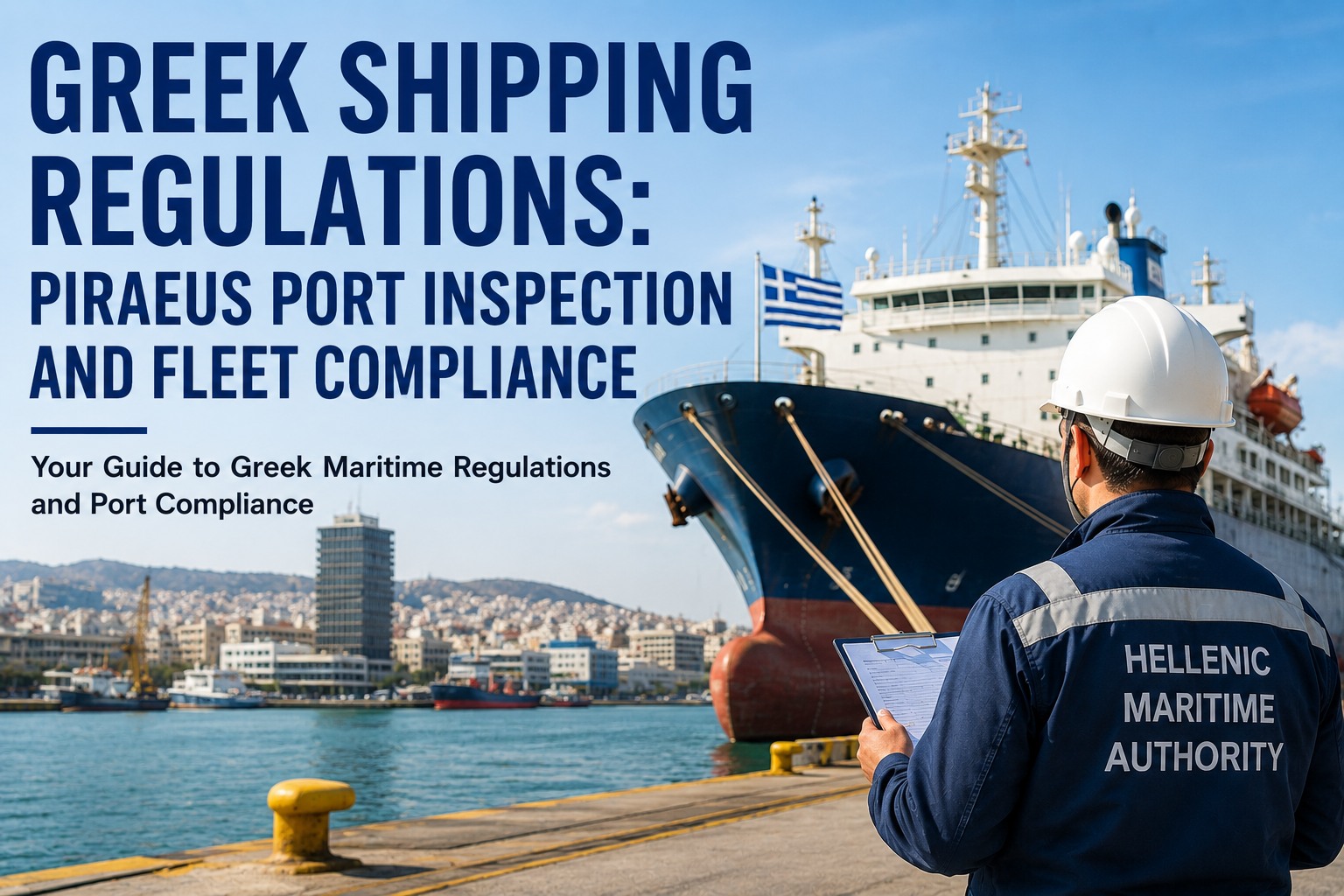
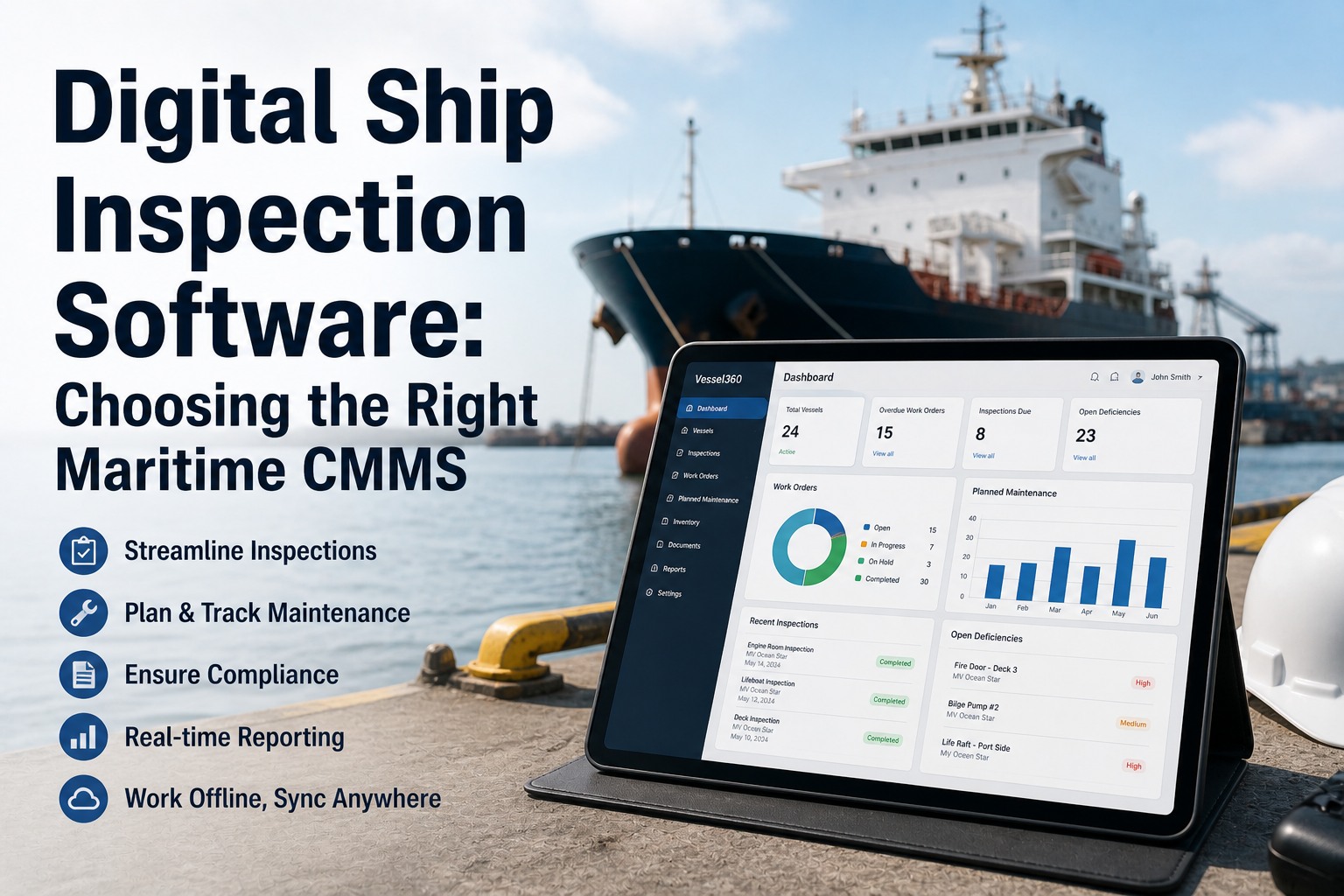
A ship's flag is the closest thing she has to a nationality, and choosing it is one of the few decisions an owner makes that touches everything at once — tax, crewing, financing, insurance, how often she is inspected, and which trades she can enter. It is also a decision the industry has been quietly re-pricing. The old calculus, in which owners chased the cheapest registry with the lightest touch, has been eroded from several directions at the same time: port state control regimes now publish performance rankings that determine inspection frequency, insurers and charterers read those same tables, and sanctions enforcement has made the permissive end of the market genuinely dangerous. In August 2025 Panama, the second-largest registry in the world, announced it would stop accepting tankers and bulk carriers over fifteen years old, after its own analysis found that vessels above that age accounted for more than 70% of its detentions between 2023 and mid-2025. When the flags themselves are culling tonnage to protect their standing, the message to owners is unmistakable: the registry is no longer a cost line, it is a risk position. This guide covers the three registry types, the current top flags and how they actually perform, the criteria that should drive selection, the PSC targeting consequence that costs real money, tax and crewing, sanctions and flag hopping, and the re-flagging process. Because a flag's performance is ultimately your fleet's inspection record, book a Marine Inspection demo to see certificate and inspection readiness managed across the fleet.
Commercial & operations · flag state selection
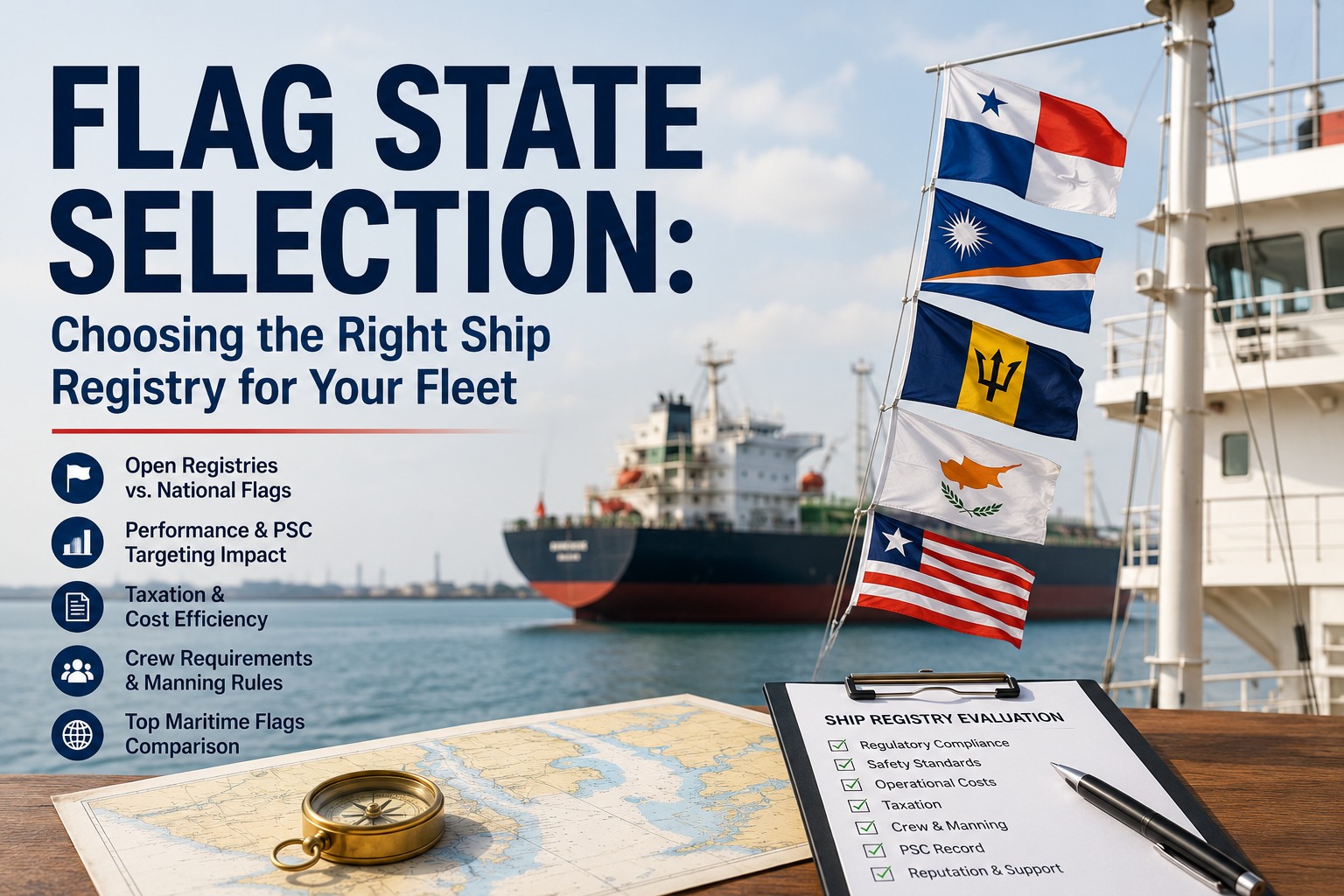
Flag State Selection: Choosing the Right Ship Registry for Your Fleet
A guide for owners and fleet managers — open, international and national registries, the current top flags and their PSC standing, the selection criteria that matter, tonnage tax and crewing, sanctions and flag hopping, and how re-flagging actually works.
~76%
Of global deadweight tonnage flies an open registry flag
Top 3
Liberia, Panama and Marshall Islands cover roughly half the world fleet
Top 10
Flags account for more than three-quarters of global carrying capacity
The Three Types of Registry
Every flag decision starts with which category of register you are even eligible for, because the categories differ far more than the fee schedules suggest. See fleet certificate tracking in a demo.
Open
Open registries
Accept registration from owners of any nationality. The dominant model — around 76% of global deadweight tonnage flies an open flag. The appeal is low registration cost, no ownership-nationality restriction, flexible crewing, and broad international acceptance. Panama, Liberia and the Marshall Islands are the giants; Malta and the Bahamas sit in the same broad family.
International
International and second registries
Sit between open and closed. They accept foreign ownership under defined conditions but apply stronger regulatory oversight and often deliver regional benefits an open flag cannot. Malta and Cyprus carry EU flag status — significant for vessels trading in European waters, giving cabotage rights and EU legal protections in commercial disputes. Fees are moderate but often offset by tonnage tax.
National
National and closed registries
Restrict registration to nationals or domestically incorporated entities, and apply the country's full legal and tax framework. Japan's registry, for example, requires Japanese ownership and crewing. The trade-off is stricter entry for stable legal frameworks, clear title documentation that matters in financing, and domestic trade rights.
The category shapes the whole relationship. An owner who qualifies for a national register often finds the legal certainty and cabotage access justify the stricter requirements; an owner who does not is choosing among open and international flags on entirely different criteria. Offshore or second registries are a hybrid worth knowing about — advantageous tax and flexible crewing, but with close links to an established maritime country and usually a requirement for some commercial presence there. Greece's model is instructive: it lets owners register the ship-owning company overseas while the ships stay on the Greek flag.
The Current Top Flags
The league table moved recently, and the movements are informative in themselves. These figures reflect the 2025 rankings, covering vessels above 500 gross tons and excluding fishing vessels.
The reassuring headline from the industry's own assessment is that quality and openness are not opposites. The ICS Flag State Performance Table for 2025/26 confirms continuing positive performance across the vast majority of flags, and specifically notes that open registries continue to perform well. The flags with no more than one potential negative indicator out of the 19 criteria ICS uses include the ten largest by tonnage — China, Greece, Hong Kong, Japan and Singapore — plus the five largest open registers: Bahamas, Liberia, Marshall Islands, Malta and Panama. The "flag of convenience means poor standards" shorthand is decades out of date at the top of the market. It remains entirely accurate at the bottom.
What PSC Standing Actually Costs You
This is the part owners most often underestimate, because it converts an abstract ranking into inspections, delays, and hire. See PSC readiness tracking in a demo.
1
The lists are performance rankings
Paris and Tokyo MoU white, grey and black lists rank registries on their safety records over a rolling three-year period — the 2025 ranking assesses 2022 to 2024. They are calculated from actual inspection and detention outcomes, not from policy statements.
2
Your flag sets your inspection frequency
A registry's standing directly affects how often your vessel is inspected and detained at foreign ports. White-list flags face fewer detentions; grey or black-list flags trigger increased inspection frequency, which delays commercial operations.
3
It is regional, not global
A flag can sit on one MoU's grey list and another's white list simultaneously — Panama is currently exactly that, grey under Paris and white under Tokyo. So the cost of a flag's standing depends on where your ships actually trade.
4
Insurers and charterers read the tables
Underwriters apply stricter scrutiny to certain open registry flags. A low-friction flag with predictable administration and well-understood class relationships rarely moves pricing — which is precisely why insurers are comfortable with it. A marginal flag introduces questions you then have to answer.
The honest nuance is that the flag is a filter, not a verdict. Scale means quality varies within any large registry, and insurers separate top-tier operators from marginal tonnage very quickly regardless of the flag on the stern. A good operator on a grey-list flag still gets inspected more often; a poor operator on a white-list flag still gets detained. The flag changes the baseline probability of attention — your own record determines what that attention finds.
Your flag sets the frequency — your records set the outcome
A Grey-List Flag Means More Inspections. Be Ready for Them.
Flag standing determines how often port state control comes aboard; what they find is entirely yours. Marine Inspection tracks certificates and survey due dates with expiry alerts, runs structured pre-arrival self-inspections against PSC focus areas, and closes out deficiencies with an audit trail — so more frequent inspections stop being more frequent detentions. Book a 30-minute demo, or start a free trial today.
The Selection Criteria That Matter
Comparing annual fees is where amateurs start and where the analysis should end, not begin. These are the factors that actually determine whether a flag fits a fleet.
Cost, honestly reckoned
Registration fees plus annual tonnage tax. Open registries typically charge the lowest annual fees; international registries charge moderate fees but often offset them through tonnage tax regimes. The cheapest headline fee is frequently not the lowest total cost.
PSC standing where you trade
White-list status on the MoU that governs your trading pattern. A Europe-heavy fleet cares about Paris; an Asia-Pacific fleet cares about Tokyo. Check both before committing, and check them against the actual routes.
Convention ratification
Whether the flag has ratified the conventions your operation depends on. The major open registries — Liberia, Panama, Marshall Islands, Bahamas, Malta — have all ratified MLC 2006 and STCW, which protects wages, rest hours and repatriation as a matter of law.
Administrative quality
Processing speed, worldwide service coverage, responsiveness, and whether claims stall because of registry issues. Liberia's growth was substantially driven by streamlined registration and being first to offer remote registration, inspection and delivery during the pandemic.
Crewing flexibility
Some flags require national crews; others allow international recruitment with flexible wage structures. Malta imposes no restrictions on crew nationality. A closed register's crewing rules can make an otherwise attractive flag unusable.
Trade access and restrictions
Cabotage rights, EU status, navigation restrictions, and whether the flag faces additional inspections or political restrictions in regions you serve. Some registries also restrict entry by vessel age, type or size.
Financing and title
Lenders care about clear title documentation and enforceable mortgage regimes. A registry with well-understood legal infrastructure lowers financing friction; an obscure one raises questions the bank will ask you to answer.
Registry stability and policy risk
Panama's age cap arrived with little warning and stranded tonnage. Registries under diplomatic pressure change their rules. A flag that may deregister your ship type in two years is not a cheap flag.
Weighting these against each other is the actual work. A modern container feeder trading Europe wants EU status and Paris white-list standing far more than it wants the lowest fee; an ageing bulker trading Asia-Pacific may find Panama's age cap decides the question for it; an owner with a financing structure that depends on a particular mortgage regime has fewer options than the league table suggests.
Tax and Crewing
Two commercial drivers deserve their own treatment, because they are usually where the money actually is.
Tonnage tax in principle
Many registries offer favourable schemes — tonnage tax systems or profit tax exemptions — under which tax is assessed on the vessel's tonnage rather than its actual profits, giving predictability and usually a much lower effective rate.
Malta as the worked example
Malta's regime applies to non-Maltese and even non-EU/EEA registered ships and to ship and yacht management companies; qualifying vessels are exempt from tax on their income, and there is no tax on profits or gains from the sale or transfer of a tonnage tax ship acquired and sold under the regime. It also has a network of double taxation and bilateral maritime agreements, and no exchange control for incorporating or operating a shipping company.
Flagging conditions attach
Tonnage tax regimes historically carried flagging links — the UK's rules, for instance, tested whether a proportion of a company's tonnage sat on a relevant EU/EEA register, though those particular flagging conditions were repealed with effect from April 2022. The lesson stands: tax regimes and flag choice interact, and the rules change.
Crew cost and nationality
Flags that permit international recruitment with flexible wage structures deliver a materially different crew cost base than those requiring national crews. This, more than tax, is the historical engine of the open registry model.
National support and flag discrimination
Some countries actively support their national fleets — favouring the national flag for government and major-industry cargoes, and reserving cabotage trades exclusively. Where an owner's government provides that support, a national flag may pay for itself; where it does not, owners register abroad.
Malta's own positioning makes the interlock explicit: it markets competitive registration fees and an attractive tonnage tax regime alongside its Paris MoU white-list status, on the express basis that white-listing increases the marketability of its vessels. That is the modern proposition — fiscal advantage plus credible standing, sold together, because owners will no longer buy the first without the second.
Sanctions, Flag Hopping, and the Bottom of the Market
The most significant recent shift in flag selection is happening at the disreputable end, and it has consequences for legitimate owners too.
The registries are being pressured, and responding
Fewer open registries now flag sanctioned or sanctions-evading tonnage — Barbados, the Cook Islands, Gabon, Palau and Panama among those that have amended or more strictly enforced policies to remove ships subject to international sanctions. This reflects sustained diplomatic pressure from the EU, US and UK for greater oversight of registries.
Flag hopping is now a signal, not a strategy
Many falsely flagged ships have switched between multiple open registries over several years. Flag hopping between open registries is increasingly scrutinised by port authorities — the pattern itself attracts attention, so the manoeuvre that once bought anonymity now buys inspection.
The risk is concentrating, not disappearing
As mainstream registries tighten, sanctioned tonnage is driven toward more permissive, higher-risk registries — many of them minor flags whose registries are run by private contractors on the government's behalf. Uninsured and effectively stateless ships create systemic risk to safety, crew welfare and the environment.
What it means for a legitimate owner
Choosing the cheapest flag without regard for enforcement capability leads to operational and financial setbacks. A flag whose register is populated with problem tonnage drags its performance table position, and yours with it — you inherit the neighbourhood's reputation whether or not you earned it.
This is the clearest illustration of why the old cost-first logic broke. Panama's decision to cull older tankers and bulkers was not altruism; it was a registry defending its standing because its standing is its product. Owners should read that as a market signal: registries now compete on credibility, and the ones that do not will be the ones left holding the tonnage nobody else wants.
Re-Flagging in Practice
Changing flag is possible and common, and the mechanics are less daunting than the decision. The considerations are mostly commercial and administrative rather than technical. See certificate transition tracking in a demo.
Deletion and entry
The vessel is deleted from the outgoing register and entered on the new one, with a deletion certificate proving clear title and no outstanding mortgages — which is why the financing structure usually drives the timing.
Statutory certification re-issued
The new flag issues the statutory certificates, and the recognised organisation arrangement may change with it. The certificate suite has to be rebuilt cleanly, and gaps in it are exactly what PSC finds first.
Class and RO relationships
Whether the new flag recognises your classification society, and how it delegates statutory work, affects both cost and how smoothly surveys proceed. Predictable class relationships are part of why some flags are described as low-friction.
Crew documentation
Flag endorsements for officers' certificates must be obtained for the new flag, and processing speed varies by registry and by where the application is made. A re-flag with an unplanned endorsement gap grounds officers.
The optics of the move
Re-flagging upward is unremarkable; a pattern of moves toward progressively more permissive flags is read by port authorities, insurers and charterers as exactly what it usually is.
The practical thread running through all of it is that a flag decision is really a compliance-posture decision. A white-list flag with a rigorous administration will hold you to its standards — that is what makes it worth having — and it will expect certificates current, surveys on schedule, deficiencies closed, and records produced when asked. A permissive flag asks less and delivers less, and the difference shows up as detentions in ports that do not care what your registry tolerates. Either way, what determines your outcome once PSC steps aboard is not the flag on the stern but whether the ship's certificates, survey status, and deficiency history are current and retrievable in minutes. The flag sets how often you are tested; your records decide whether you pass. Book a demo to see certificates, surveys, and inspection readiness across the fleet.
Frequently Asked Questions
What is the difference between an open, international and national registry?
Open registries accept vessels from owners of any nationality, with low fees and flexible crewing — around 76% of global deadweight tonnage flies one. National or closed registries restrict registration to nationals or domestically incorporated entities and apply the country's full legal and tax framework. International registries sit between, accepting foreign ownership under defined conditions with stronger oversight and often regional benefits such as EU status.
Which is the largest ship registry?
Liberia, which reclaimed the top spot from Panama in 2023 and had grown to nearly 300 million gross tons by late 2025, extending its lead over Panama to almost 45 million gt. Panama is second, the Marshall Islands third at just under 200 million gt, and Singapore fourth after overtaking Hong Kong. The top ten flags together control more than three-quarters of global carrying capacity.
How does flag choice affect port state control inspections?
Directly. Paris and Tokyo MoU white, grey and black lists rank registries on their safety records over a rolling three-year period, and a registry's standing determines how often your vessel is inspected and detained. White-list flags face fewer detentions; grey or black-list flags trigger increased inspection frequency and can delay commercial operations. Standing is regional — Panama is currently Paris grey but Tokyo white.
Are flags of convenience automatically low quality?
Not at the top of the market. The ICS Flag State Performance Table for 2025/26 found open registries continue to perform well, and the flags with no more than one potential negative indicator out of 19 criteria include the five largest open registers — Bahamas, Liberia, Marshall Islands, Malta and Panama — alongside the largest traditional flags. The reputational concern is real at the bottom of the market, among minor permissive registries.
What is tonnage tax?
A regime under which tax is assessed on a vessel's tonnage rather than actual profits, giving predictability and generally a much lower effective rate. Malta's regime, for example, applies to non-Maltese and non-EU registered ships, exempts qualifying vessels from tax on their income, and exempts gains on the sale of a tonnage tax ship. Regimes historically carried flagging conditions linking them to particular registers, and those rules change.
Why did Panama impose an age limit?
In August 2025 Panama announced it would no longer accept tankers and bulk carriers over 15 years old, after its Directorate of Merchant Marine found vessels above that age accounted for more than 70% of detentions between 2023 and mid-2025. It came amid a cull of shadow-fleet tonnage under US pressure, and its fleet shrank about 1.9% as a result — a registry protecting its performance standing.
Is flag hopping still a viable strategy?
No. Flag hopping between open registries is increasingly scrutinised by port authorities, and the pattern itself now attracts attention. Fewer mainstream registries will flag sanctioned tonnage — Barbados, the Cook Islands, Gabon, Palau and Panama among those tightening — pushing that tonnage toward permissive, high-risk minor registries where uninsured and effectively stateless ships create systemic risk.
Can a vessel change flag?
Yes, re-flagging is common. The vessel is deleted from the outgoing register and entered on the new one, requiring a deletion certificate showing clear title and no outstanding mortgages, re-issued statutory certification, confirmation of class and recognised organisation arrangements, and new flag endorsements for officers' certificates. The financing structure usually drives the timing.
Whatever flag you fly, the inspection is the same
Make Every Vessel Inspection-Ready, Under Any Flag
Track statutory certificates and survey due dates with expiry alerts across the fleet, run structured self-inspections before arrival, close out deficiencies with a verified audit trail, and produce the whole record the moment port state control asks — through a re-flag, a new trading pattern, or a registry policy change. Marine Inspection keeps the ship ready regardless of what the stern says. Book a tailored demo, or start a free trial today.