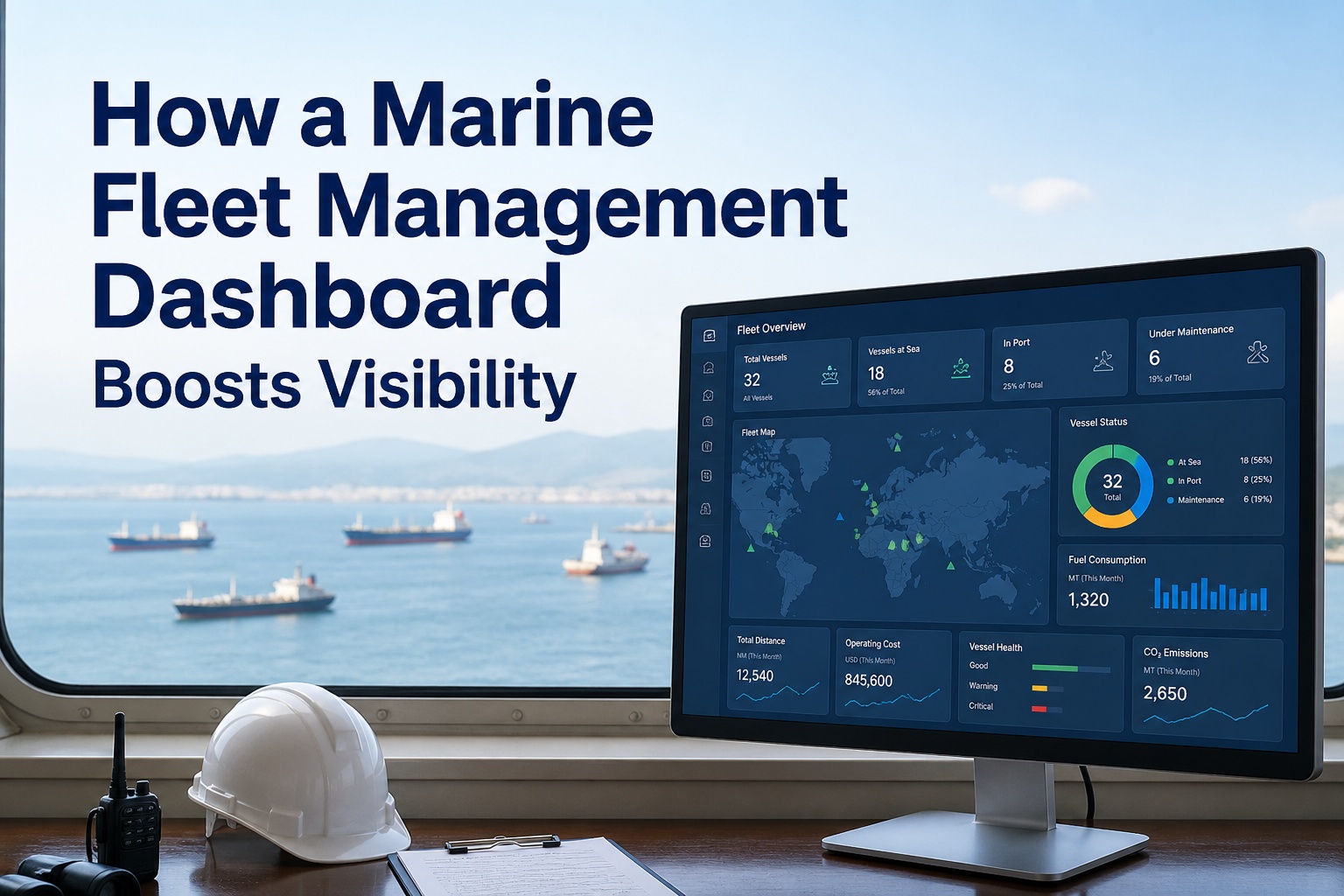
Fuel is the single largest operating cost on most commercial vessels, and it is also the easiest to lose track of — to short-delivery at the bunker barge, to unmonitored consumption at sea, and increasingly to the cost of getting emissions reporting wrong. In 2026 the stakes climbed sharply. Mass flow meters became mandatory for bunker deliveries at Rotterdam and Antwerp-Bruges on 1 January 2026, following Singapore's lead, specifically to eliminate the quantity disputes and the "cappuccino effect" that have cost shipowners for decades. At the same time, EU ETS compliance costs now bite on every tonne of fuel burned in European waters, and FuelEU Maritime adds intensity targets on top. Against that backdrop, fuel management software has shifted from a nice-to-have to a financial control — the best platforms trim ten to fifteen percent off bunker spend while producing the consumption and emissions data regulators now demand. This guide compares the best marine fuel management software for 2026 the way an operator actually decides: with deep dives on bunker tracking, fuel card integrations, theft and loss detection, and analytics, plus a clear map of which kind of platform fits which fleet. To see fuel tracking and bunker reconciliation on a live vessel, book a Marine Inspection demo.
2026 buyer's guide
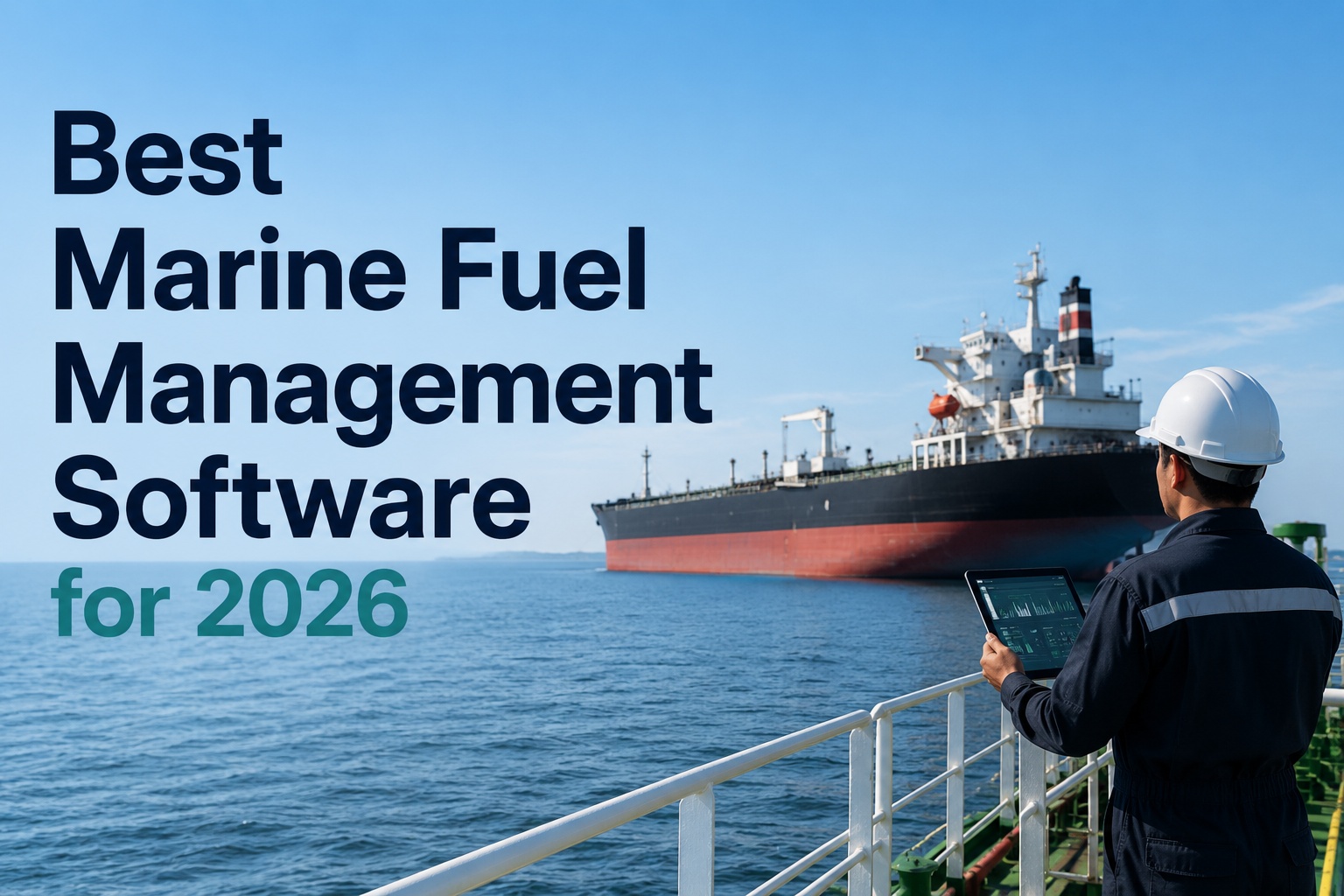
Best Marine Fuel Management Software for 2026
Fuel is your biggest cost and your tightest-regulated one. The right platform tracks every tonne from bunker to burn, catches short-delivery and loss, and produces the data EU ETS and FuelEU now demand.
10–15%bunker spend trimmed with monitoring
Jan 2026MFM mandate at Rotterdam & Antwerp
3 yrsBDNs must be kept onboard for PSC
Book a Demo
Why 2026 Changed the Fuel Game
Three forces converged this year to make fuel management software essential rather than optional. Each one turns a previously tolerable inefficiency into a measurable cost, and each is best handled by software that captures fuel data accurately at the source.
Metrology
Mass flow meter mandate
From 1 January 2026, bunker barges at Rotterdam and Antwerp-Bruges must deliver via Coriolis mass flow meters, measuring actual mass in real time and effectively eliminating quantity disputes and the cappuccino effect.
Carbon cost
EU ETS & FuelEU
Emissions allowances now apply to fuel burned in European waters, and FuelEU Maritime adds greenhouse-gas intensity targets — so every tonne of fuel carries a compliance cost that must be measured and reported.
Reporting
EU MRV & IMO DCS
Operators must report fuel consumption and emissions per vessel under EU MRV and the IMO Data Collection System, making accurate, auditable per-voyage fuel data a legal requirement, not just good practice.
The Bunker-to-Burn Fuel Lifecycle
Before comparing platforms, understand what fuel management software actually has to cover. Fuel is controlled across a lifecycle, and a tool strong at one stage but blind at another leaves money on the table. The best platforms cover every stage from delivery to emissions reporting. See the full lifecycle in a demo.
Bunker
Delivery & reconciliation
Record the bunker delivery note, compare mass flow meter and tank-sounding figures, and flag short-delivery before signing.
Store
Tank inventory & ROB
Track remaining-on-board fuel by grade and tank, reconciled against deliveries and consumption for a live, trustworthy figure.
Burn
Consumption monitoring
Measure use at each offtake point — main and auxiliary engines, generators, boilers — for accurate, per-consumer accounting.
Detect
Loss & theft detection
Flag anomalies — sudden drops, unexplained variances between supplied, received, and burned — that signal loss or malpractice.
Report
Emissions & compliance
Convert consumption to CO2, SOx, and NOx and produce EU MRV, IMO DCS, EU ETS, and FuelEU reports automatically.
Analyse
Efficiency analytics
Benchmark consumption across voyages and vessels to find the efficiency gains that trim bunker spend fleet-wide.
Deep Dive 1 — Bunker Tracking & Reconciliation
Bunkering is where the biggest single fuel losses happen, which makes bunker tracking the first capability to scrutinise. The chronic problem is short-delivery: suppliers introducing air (the cappuccino effect) or raising fuel temperature to inflate apparent volume, so the actual mass received is less than recorded. Strong software builds the defence into the delivery itself.
BDN capture
Record the bunker delivery note — quantity, sulphur content, density — the MARPOL-required document kept onboard three years for Port State Control.
Mass vs volume reconciliation
Compare mass flow meter readings against tank soundings, using BDN density, to catch the volume inflation that air and temperature cause.
Variance alerts
Flag significant differences between supplied and received figures during the operation, prompting a Letter of Protest before signing.
Document trail
Hold the BDN, bunker meter ticket, and protest records together as the evidence base for any quantity or quality dispute.
Deep Dive 2 — Fuel Card & Data Integrations
Fuel data is only valuable when it is captured automatically and reconciled in one place. The strongest platforms pull from every source — supplier documents, onboard meters, and card or account transactions — instead of relying on manual logs that drift. See data capture in a demo.
Bunker & fuel-account capture
Transactions from bunker suppliers and fuel accounts logged against the vessel and voyage automatically, eliminating manual re-entry.
Mass flow meter feeds
Integration with onboard Coriolis meters at each offtake point for accurate, real-time consumption per consumer.
Reconciliation in one ledger
Supplied, received, and burned figures brought together so discrepancies surface automatically rather than hiding across systems.
ERP & reporting links
Fuel cost flows into finance and compliance reporting, so spend and emissions data stay consistent across the organisation.
See it on your fleet
Track Every Tonne From Bunker to Burn
Marine Inspection captures bunker delivery notes, reconciles mass against tank soundings, monitors consumption per consumer, flags anomalies, and produces emissions reports — all in one platform linked to your fleet operations. Book a 30-minute demo to see fuel management on a vessel like yours, or start a free trial and connect your fleet today.
Deep Dive 3 — Theft & Loss Detection
Fuel loss is rarely a single dramatic event; it is a steady leak of small discrepancies that add up across a fleet. Detection works by reconciling three numbers that should always agree — fuel supplied, fuel received, and fuel burned — and flagging the gaps that signal short-delivery, leakage, or malpractice.
Where Fuel Goes Missing and How Software Catches It
The principle mirrors the best fleet practice on land, where anomaly detection has uncovered tens of thousands of dollars in annual fuel theft. At sea the numbers are far larger, and a platform that continuously reconciles supplied, received, and burned fuel is what turns an invisible leak into a flagged alert.
Deep Dive 4 — Consumption Analytics
Beyond catching losses, the real long-term saving comes from analytics that reveal how to burn less. By benchmarking consumption across voyages, vessels, and conditions, the best platforms find the efficiency gains that compound across a fleet.
Per-voyage benchmarking
Consumption compared across similar voyages to expose which routes, speeds, and conditions burn more than they should.
Per-consumer breakdown
Fuel split by main engine, auxiliaries, generators, and boilers, so inefficiency is traced to a specific system.
Emissions intensity
Consumption converted to CO2, SOx, and NOx and tracked against FuelEU intensity targets for compliance planning.
Fleet-wide dashboards
A shore-side view of every vessel's fuel performance, so the operator manages bunker spend as one fleet, not many ships.
The 2026 Marine Fuel Software Landscape
The market splits into recognisable types, and the right choice depends on whether you need deep metrology-grade bunker measurement, fleet-wide operational tracking, or both. Rather than crown one platform best, match the type to how your fleet runs. Scroll the table on mobile to compare.
Marine Fuel Management Platform Types
The Buyer's Scorecard
Bring these questions to every demo. The answers separate a marine-ready fuel platform from a road-fleet tool wearing a maritime label.
Does it reconcile mass against volume?
Catching the cappuccino effect needs mass flow data compared to tank soundings with BDN density.
Does it capture and retain the BDN?
MARPOL requires the BDN onboard for three years and PSC can inspect it — the platform should hold it.
Can it monitor per offtake point?
Accurate accounting needs consumption split across main engine, auxiliaries, generators, and boilers.
Does it reconcile supplied, received, burned?
Three-way reconciliation is what turns invisible fuel loss into a flagged anomaly.
Does it produce EU MRV, IMO DCS, ETS reports?
2026 compliance needs emissions reporting built in, not bolted on after the fact.
Does it work across ship and shore?
Offline capture at sea with a shore-side fleet dashboard is essential for real operations.
Where Marine Inspection Fits
Marine Inspection sits in the fleet-operations tier, tracking fuel alongside maintenance, inventory, and procurement in one platform rather than as an isolated tool. It captures bunker delivery notes and reconciles supplied against received quantities, monitors consumption, flags anomalies between supplied, received, and burned fuel, and produces the consumption and emissions data EU MRV and IMO DCS require — all working offline at sea and syncing to a shore-side fleet dashboard. For fleets that want fuel control inside the same system that runs their maintenance and spares, rather than a separate metering silo, it is built for exactly that. Sign up free to connect your fleet, or book a demo to see fuel tracking end to end.
Frequently Asked Questions
What is marine fuel management software?
It is software that tracks marine fuel across its lifecycle — bunker delivery and reconciliation, tank inventory and remaining-on-board, consumption monitoring per consumer, loss and theft detection, and emissions reporting. The best platforms trim bunker spend by ten to fifteen percent while producing the consumption and emissions data regulators such as EU MRV and IMO DCS require.
What changed for fuel management in 2026?
Mass flow meters became mandatory for bunker deliveries at Rotterdam and Antwerp-Bruges on 1 January 2026, following Singapore's 2017 precedent, to eliminate quantity disputes and the cappuccino effect. At the same time EU ETS compliance costs now apply to fuel burned in European waters and FuelEU Maritime adds intensity targets — making accurate fuel and emissions data a financial and legal necessity.
What is the cappuccino effect?
It is a deceptive bunkering practice where compressed air or gas is introduced into the fuel, creating bubbles that inflate the apparent volume so the vessel appears to receive more fuel than it actually does. The shortfall often only becomes apparent days or weeks later. Mass flow meters and mass-versus-volume reconciliation are the defences against it.
What is a Bunker Delivery Note (BDN)?
The BDN is the official receipt for a bunker delivery, required under MARPOL Annex VI to record the quantity delivered, sulphur content, and other characteristics, along with a supplier conformity declaration. It must be kept onboard for three years and Port State Control can inspect it to verify fuel compliance, so capturing and retaining it is a core fuel-software function.
How does software detect fuel theft or loss?
By reconciling three figures that should agree — fuel supplied, fuel received, and fuel burned — and flagging the gaps. Mass-versus-volume comparison catches the cappuccino effect and temperature inflation, supplied-versus-received variance catches short-delivery, and consumption benchmarking catches unexplained burn. Continuous reconciliation turns an invisible leak into a flagged alert.
Should I choose a metering system or a fleet platform?
It depends on priority. Dedicated onboard metering systems offer metrology-grade bunker measurement and fraud detection but focus narrowly on measurement. Fleet operations platforms track fuel alongside maintenance, voyage, and inventory in one system and rely on meter integration for measurement. Many fleets combine both — meters for accuracy, a fleet platform for control and reporting.
Built for marine fuel control
Turn Your Biggest Cost Into Your Tightest Control
Bunker delivery capture, mass-versus-volume reconciliation, per-consumer monitoring, supplied-received-burned anomaly detection, and EU MRV and IMO DCS reporting — offline-capable and linked to your maintenance, inventory, and procurement. Marine Inspection makes fuel a number you control, not one that leaks. Book a tailored walkthrough or start a free trial today.