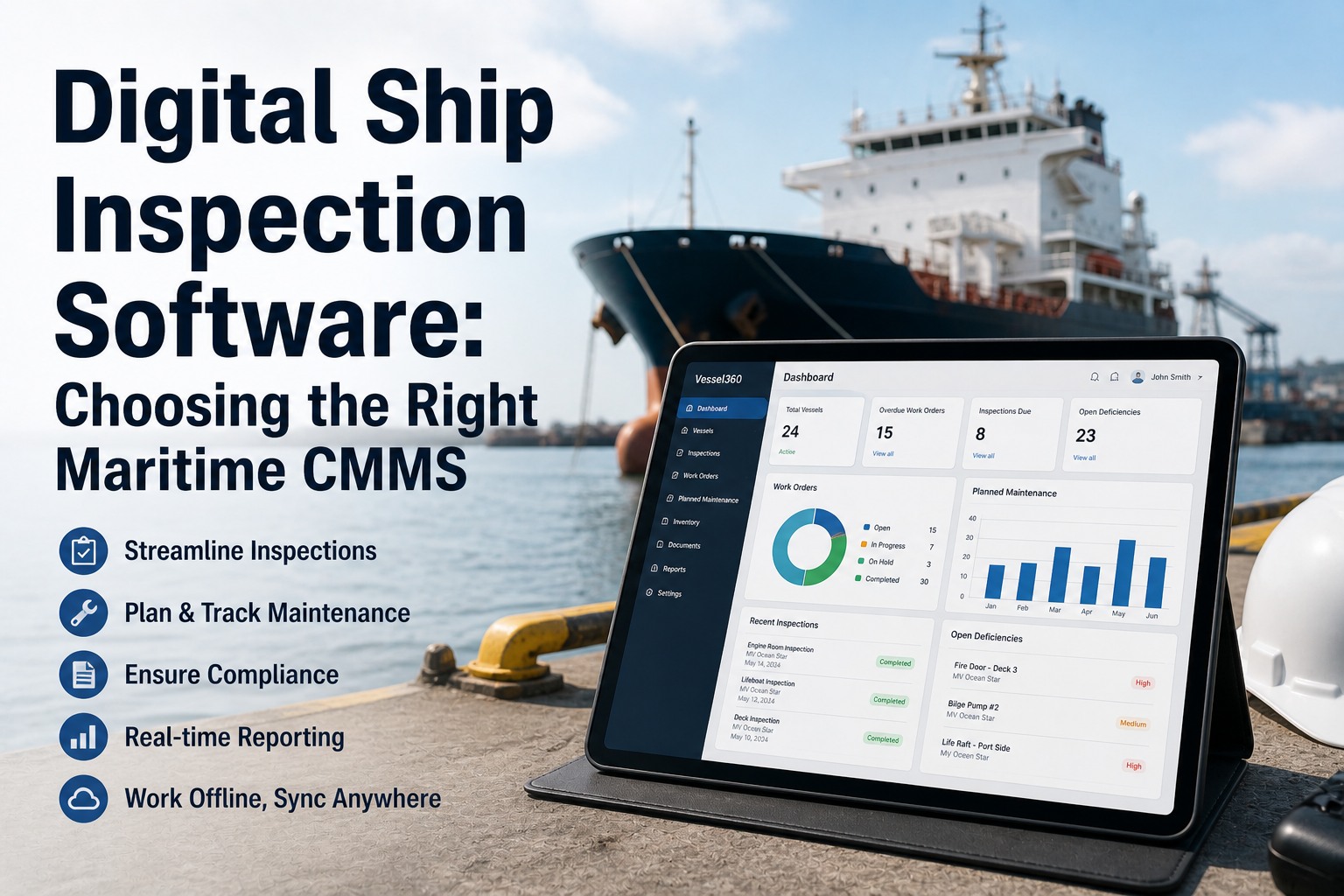
Choosing marine inspection software in 2026 is a different decision than it was three years ago, and the difference is why so many fleets are re-evaluating rather than renewing. Three forces have converged to raise the bar at once: the SIRE 2.0 inspection regime with its digitalised, photo-evidenced, question-driven format; the IMO framework for Port State Control inspections under A.1206(34); and a wave of regulatory alignment spanning cyber, emissions and crew welfare that inspection software is now expected to carry. Against that backdrop, the old approach of picking the platform with the longest feature list no longer works, because the feature list is not the problem — fit is. The best marine inspection software for one fleet is the wrong choice for another, and the winning selection is the one that matches a specific operation's vessels, inspection regimes, connectivity reality and commercial constraints. This guide is written for the fleet managers who own that decision. Rather than a ranked list, it is an evaluation framework: the forces that make 2026 a decision year, the criteria that actually determine fit, the questions to put to any vendor, and how to run the evaluation so the choice is defensible to an operating board. To test a mobile-first, offline-capable inspection platform directly against your own fleet and inspection types, start a free trial or book a demo.
REPORTS & SYSTEM · BUYER'S GUIDE 2026
Best Marine Inspection Software in 2026
A fleet manager's evaluation framework for choosing marine inspection software in 2026 — the forces raising the bar, the criteria that actually determine fit, the questions to ask every vendor, and how to run the evaluation so the decision holds up to a board.
Why 2026 is a decision year
SIRE 2.0
Digitalised, photo-evidenced, question-driven inspection
IMO A.1206(34)
Framework for modern Port State Control inspection
Regulatory convergence
Cyber, EU ETS, FuelEU and welfare rules landing together
Why 2026 Forces a Re-Evaluation
Fleet software decisions used to be renewal exercises. In 2026 they are re-evaluations, because several changes that did not exist in their current form three years ago now converge into a single decision that operating boards are unwilling to defer.
The SIRE 2.0 regime has moved tanker vetting to a digitalised, photo-evidenced, question-based model that paper and generic tools were never built to serve, demanding a photo repository, a structured question library and mobile capture at the point of inspection. The IMO framework under A.1206(34) sets the expectations for Port State Control inspection that software must help vessels meet and evidence. And a broader regulatory wave — cyber requirements, IACS unified requirements on cyber resilience, EU ETS allowance tracking, FuelEU intensity reporting and crew welfare monitoring — increasingly expects the inspection and compliance layer to carry the evidence. Each of these alone would justify a fresh look at a fleet's software; together they create a synchronised deadline. The consequence for the buyer is that the evaluation cannot be about matching last decade's feature checklist. It has to be about whether a platform is built for the 2026 reality of mobile-first, evidence-driven, continuously-compliant inspection — and whether it fits the specific fleet making the choice. To see how a platform built for the 2026 regime handles your inspection types, start a free trial or book a demo.
The Criteria That Actually Determine Fit
A useful evaluation runs on a defined set of criteria rather than a vendor's feature list, so different platforms can be compared on the same terms and the result is a fit decision for your fleet, not a universal ranking. These are the criteria that matter most in 2026.
01
Mobile-first, offline capability
Inspections happen in engine rooms, cargo holds and tanks with no signal, so the platform must let crew create, edit and submit inspections fully offline on a phone or tablet, syncing automatically on reconnection — genuinely offline-first, not an online app with a fragile offline mode.
02
SIRE 2.0 and question-library coverage
For tanker operators especially, the platform should carry the SIRE 2.0 structured question set and photo repository, so vetting inspections are run in the format the regime now demands rather than retrofitted onto a generic checklist.
03
PSC and regulatory alignment
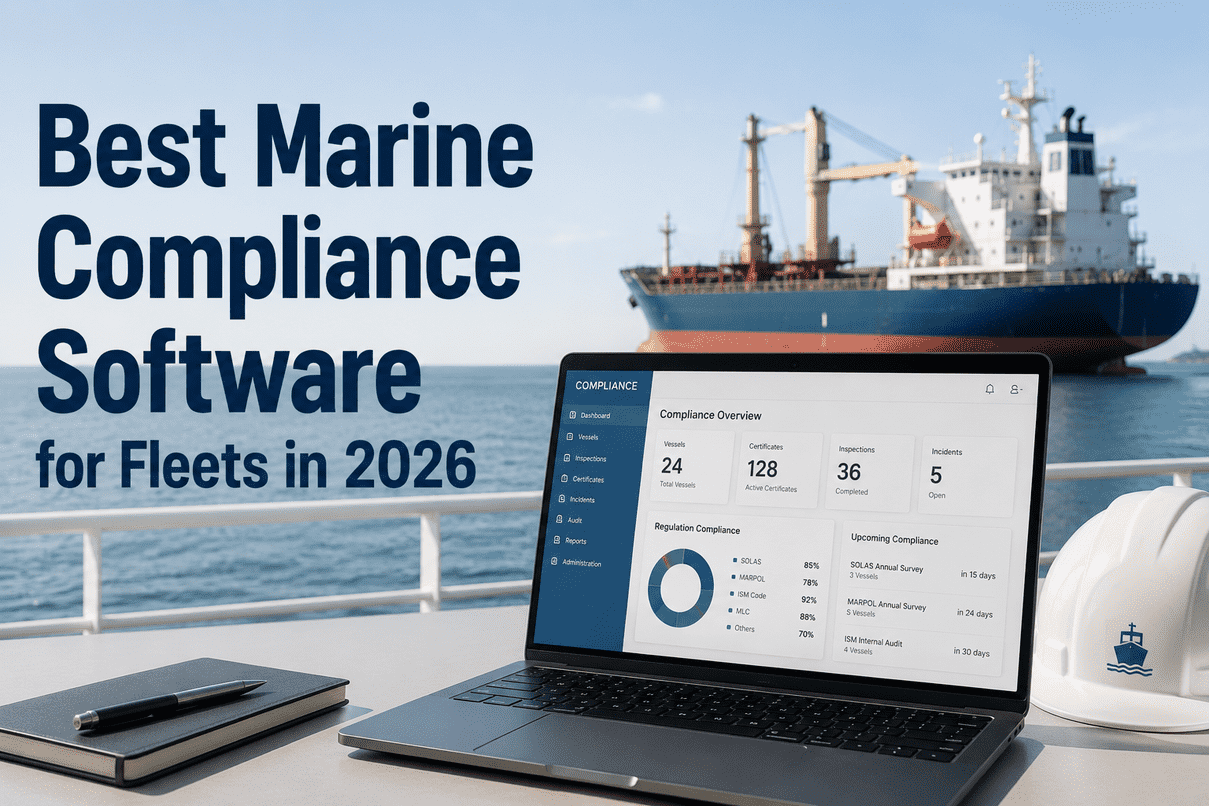
Coverage aligned to the IMO A.1206(34) Port State Control framework and the 2026 regulatory stack, so inspections and their evidence map to what inspectors and auditors actually check, and compliance is a by-product of daily operation rather than an audit-day scramble.
04
Photo and evidence capture
Rich, timestamped and geotagged photo and video evidence attached to findings at the point of inspection, because a pass-or-fail without evidence is no longer enough for modern vetting, PSC defence or a defensible internal record.
05
Findings-to-work-order workflow
A defect raised in an inspection should flow into a tracked corrective action or work order through to closure, so findings do not die in a report — closing the gap between finding a problem and fixing it, with the evidence carried along.
06
Certificate and due-date tracking
Per-item certificate and survey-date tracking with tiered expiry alerts, since lapsed certificates and overdue items are leading detention indicators, and tracking them by hand is where fleets quietly accumulate risk.
07
Fleet-wide reporting and visibility
One live picture across every vessel — inspection status, open findings, certificate health, trends across sister ships — so the office manages by data rather than by chasing exports, and can see risk before it becomes a finding.
08
Pricing transparency and deployment speed
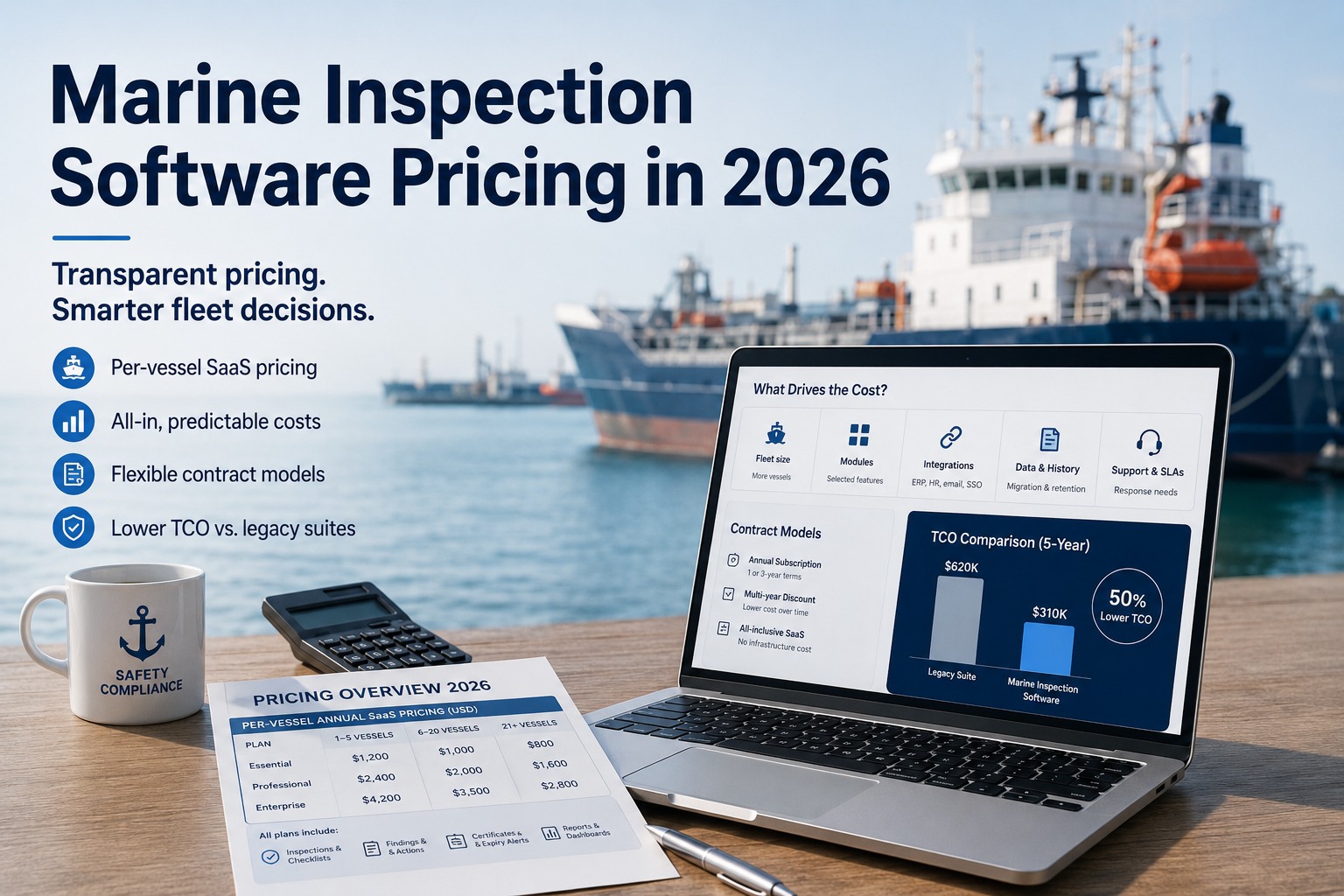
Clear, predictable pricing and a realistic deployment timeline — modern platforms target six to twelve weeks against the six-to-fifteen-month norm of legacy enterprise suites — because a platform that takes a year to deploy delays every other benefit on this list.
i
Weight the criteria to your fleet
The point of a criteria framework is that it produces a fit decision, not a universal winner. A tanker operator weights SIRE 2.0 coverage heavily; a mixed commercial fleet may prioritise mobile adoption and defect-to-work-order closure; a smaller operator may care most about pricing transparency and fast deployment. Score each platform against the criteria, weight the criteria by what your operation actually needs, and the right choice emerges for your fleet specifically. This is why a published ranking is less useful than a framework you apply yourself — the best marine inspection software is the one that fits your vessels, your inspection regimes and your commercial reality.
Score the platform against the criteria that matter to you
Mobile-first offline capture, SIRE 2.0 and PSC alignment, photo evidence, defect-to-work-order closure, certificate tracking, fleet reporting, transparent pricing and fast deployment. Run Marine Inspection against your own weighted criteria and see where it fits.
The Questions to Ask Every Vendor
Beyond the criteria, a handful of direct questions cut through demo polish to how a platform behaves in reality. Ask these of anyone on your shortlist.
Does true offline apply to every module, or just inspections?
Confirm offline create, edit and submit across maintenance, certificates and compliance too — not just the inspection form — and insist on testing it on real vessel hardware, not in the demo environment.
What is the realistic deployment timeline?
Ask for a credible path from signature to operational baseline. Buying decisions stall on deployment risk after too many eighteen-month rollouts; a modern platform should commit to weeks, not many months.
Is the pricing transparent and predictable?
Get the full commercial picture — what is included, what costs extra, how it scales with vessels and users — so total cost of ownership is clear before signing rather than discovered later.
How does it integrate with our existing stack?
Check how inspection data flows to your PMS, ERP, class portals and flag submissions without manual rekeying, since integration gaps are a common source of detention findings and audit non-conformities.
Are the AI claims real or rule-based alerts?
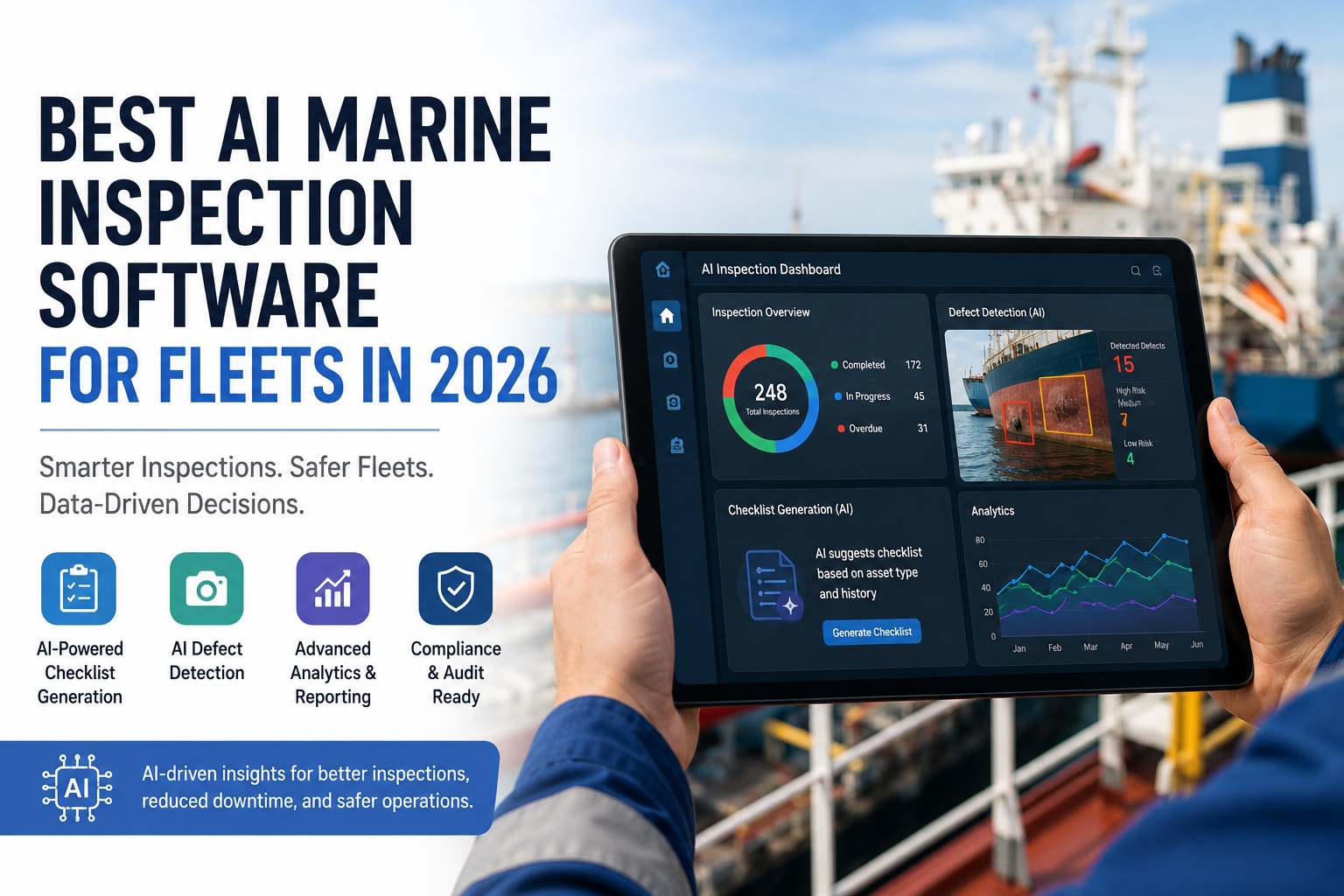
Many vendors market rule-based alerts as AI. Verify any AI capability against actual customer references rather than a demo, and be clear which features are live today versus on a roadmap.
Will the crew actually use it?
Adoption is the only metric that ultimately matters. Put the app in the hands of the crew who will use it daily, on their own devices and inspection types, because a platform the crew avoids delivers none of its promised value.
How to Run the Evaluation
A defensible selection follows a repeatable process rather than a demo and a gut call. This is the shape of an evaluation an operating board will accept.
1
Define and weight your criteria
Start from the eight criteria, then weight them for your fleet — SIRE 2.0 for tankers, adoption and defect closure for mixed fleets, pricing and speed for smaller operators — so the evaluation measures what your operation actually needs.
2
Shortlist and score against the criteria
Assess each candidate platform against the same weighted criteria to produce a like-for-like comparison, capturing honest strengths and limitations rather than marketing claims, so the shortlist rests on evidence.
3
Pilot on a real vessel
Run a live pilot on one vessel with real crew, real inspection types and the connection tested offline on actual hardware, so the platform is proven in your environment before any fleet-wide commitment.
4
Build the board-ready case
Bring it together as a scored comparison with total cost of ownership, a risk assessment and a phased rollout plan, producing a decision document defensible for operating-board approval rather than a preference.
Run this way, the evaluation answers the only question that matters — not which platform is best in the abstract, but which is best for your fleet, judged on criteria you weighted, proven on a vessel you operate, and justified in terms your board will approve. The 2026 forces of SIRE 2.0, the IMO Port State Control framework and converging regulation mean the decision cannot be deferred indefinitely, but they also mean the platforms built for this era are markedly more capable than the legacy suites many fleets still run. A mobile-first, offline-capable, evidence-driven platform that scores well against your weighted criteria, deploys in weeks and prices transparently is the profile of the best marine inspection software for most fleets in 2026 — and the framework above is how you confirm that fit for yours. To put a platform built for the 2026 inspection reality through this evaluation on your own vessels, start a free trial or book a demo.
Frequently Asked Questions
What is the best marine inspection software for 2026?
There is no single best platform for every fleet — the right choice depends on your vessels, inspection regimes, connectivity and commercial constraints, which is why an evaluation framework beats a universal ranking. That said, the profile of the best marine inspection software for most fleets in 2026 is consistent: mobile-first with genuine offline capability, SIRE 2.0 and Port State Control alignment, rich photo evidence capture, a findings-to-work-order workflow, certificate tracking, fleet-wide reporting, transparent pricing and deployment in weeks rather than months. Score the platforms against these criteria weighted for your operation, and the best fit for your fleet specifically emerges.
Why is 2026 a critical year for inspection software decisions?
Because three forces that did not exist in their current form three years ago now converge. SIRE 2.0 has moved tanker vetting to a digitalised, photo-evidenced, question-driven model; the IMO framework under A.1206(34) sets modern Port State Control inspection expectations; and a wave of regulation covering cyber, EU ETS, FuelEU and crew welfare increasingly expects the inspection layer to carry the evidence. Each alone justifies re-evaluating a fleet's software, and together they create a synchronised deadline operating boards are unwilling to defer. The result is that many fleets are re-evaluating rather than simply renewing, judged against the 2026 reality rather than a legacy feature list.
What criteria should I use to evaluate inspection software?
A robust set of eight: mobile-first offline capability; SIRE 2.0 and question-library coverage; Port State Control and regulatory alignment; photo and evidence capture; a findings-to-work-order workflow; certificate and due-date tracking; fleet-wide reporting and visibility; and pricing transparency with deployment speed. Score each candidate against the same criteria, then weight the criteria by what your fleet needs — a tanker operator weights SIRE 2.0 heavily, a mixed fleet weights adoption and defect closure, a smaller operator weights pricing and speed. This produces a fit decision for your operation rather than a one-size-fits-all ranking, which is the point of using a framework.
How important is offline capability really?
It is fundamental, because the inspections that matter most happen where there is no signal — engine rooms, cargo holds, ballast tanks. A platform must let crew create, edit and submit inspections fully offline and sync automatically when connectivity returns, and that offline capability should apply across all modules, not just the inspection form. The critical distinction is between genuinely offline-first design and an online app with a fragile offline mode that degrades when the signal drops. Always test offline behaviour on actual vessel hardware during evaluation, not in a vendor's demo environment where the connection is always perfect, because that is where the difference shows.
How long should deploying inspection software take?
Modern platforms target roughly six to twelve weeks from contract to operational baseline, against the six-to-fifteen-month timelines common with legacy enterprise suites that require heavy data migration, custom integration and lengthy configuration. Deployment speed matters more than buyers often assume, because a platform that takes a year to roll out delays every benefit it promises and carries real abandonment risk — buying decisions frequently stall on deployment risk after operators have seen too many long, troubled rollouts. Ask any vendor for a credible, phased path from signature to a live pilot vessel to fleet rollout, and treat a realistic short timeline as a genuine differentiator.
Should I trust vendor AI claims?
Treat them with healthy scepticism and verify. Many vendors market rule-based alerts — a threshold crossed, a date approaching — as artificial intelligence, when genuine AI capabilities such as anomaly detection, failure prediction and automated evidence assembly are a different thing. Ask which features are live and delivering value today versus which are on a roadmap, and verify any AI claim against actual customer references rather than a controlled demo. This matters because AI is a common area of overstatement, and a platform's real, working capabilities are what you are buying — not its marketing language. The same verify-in-reality principle applies to offline behaviour and deployment timelines.
Choose on Fit, Prove It on a Vessel
The best marine inspection software for 2026 is the one that fits your fleet — scored against weighted criteria, proven on a real vessel offline, and justified to your board. Marine Inspection is built for the 2026 reality: mobile-first offline capture, SIRE 2.0 and PSC alignment, photo evidence, defect-to-work-order closure, certificate tracking, fleet reporting, transparent pricing and deployment in weeks. Run it through your evaluation and see where it lands.