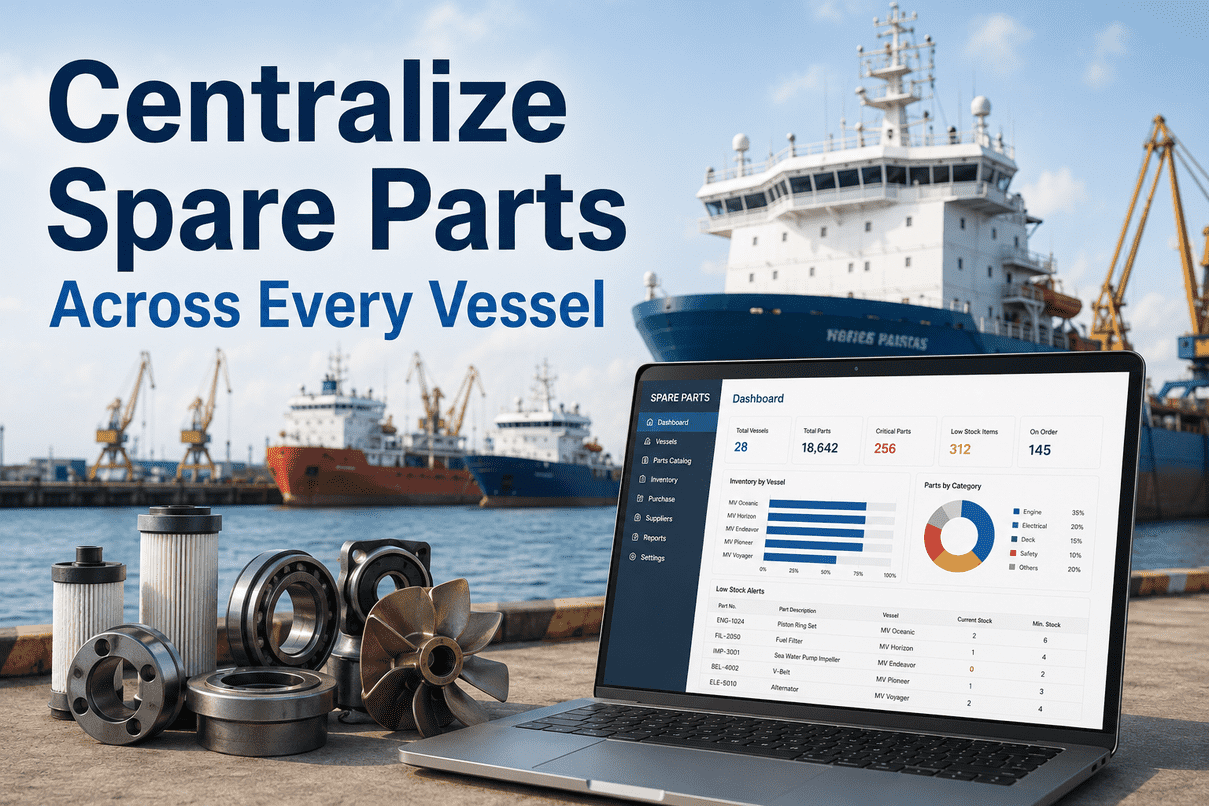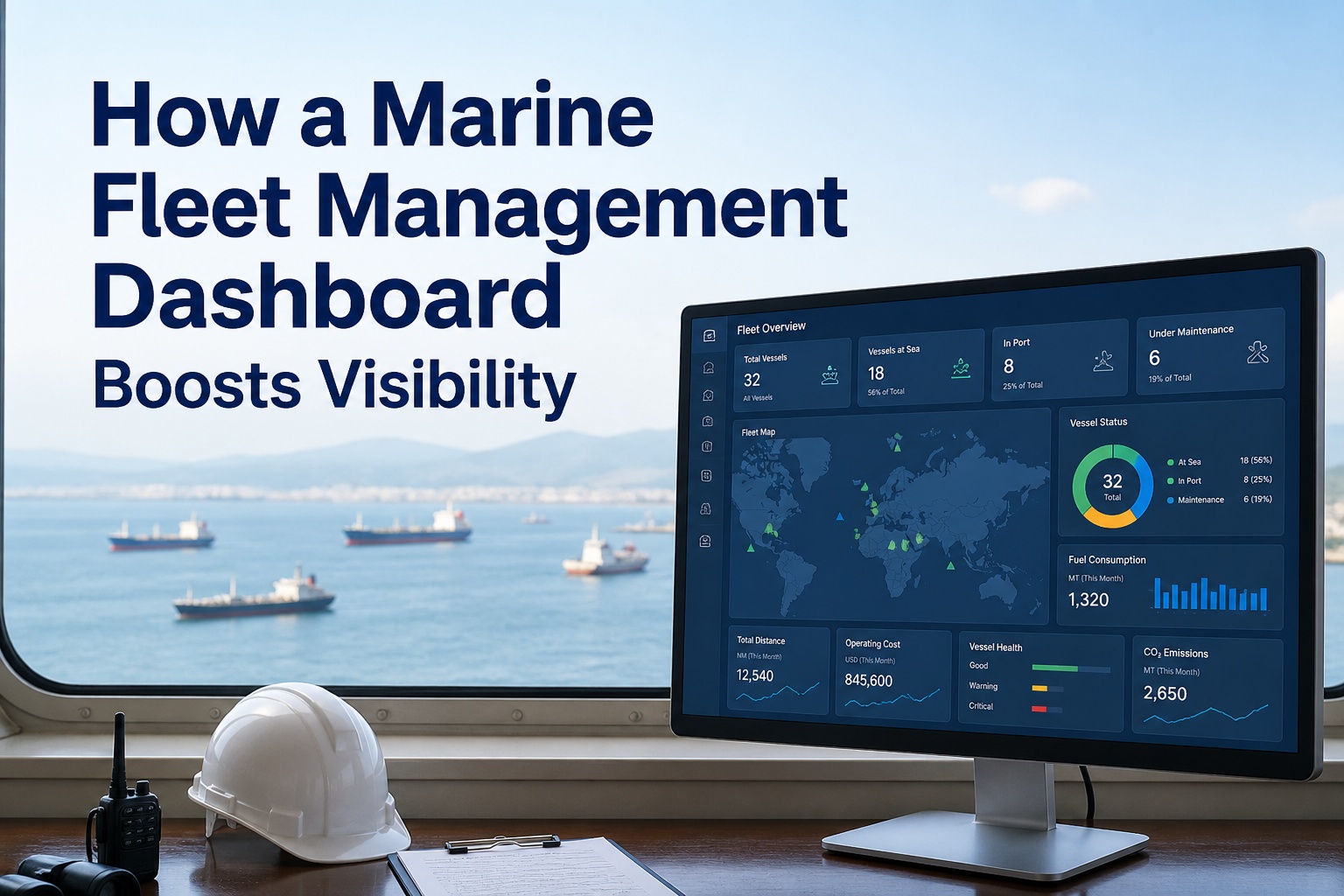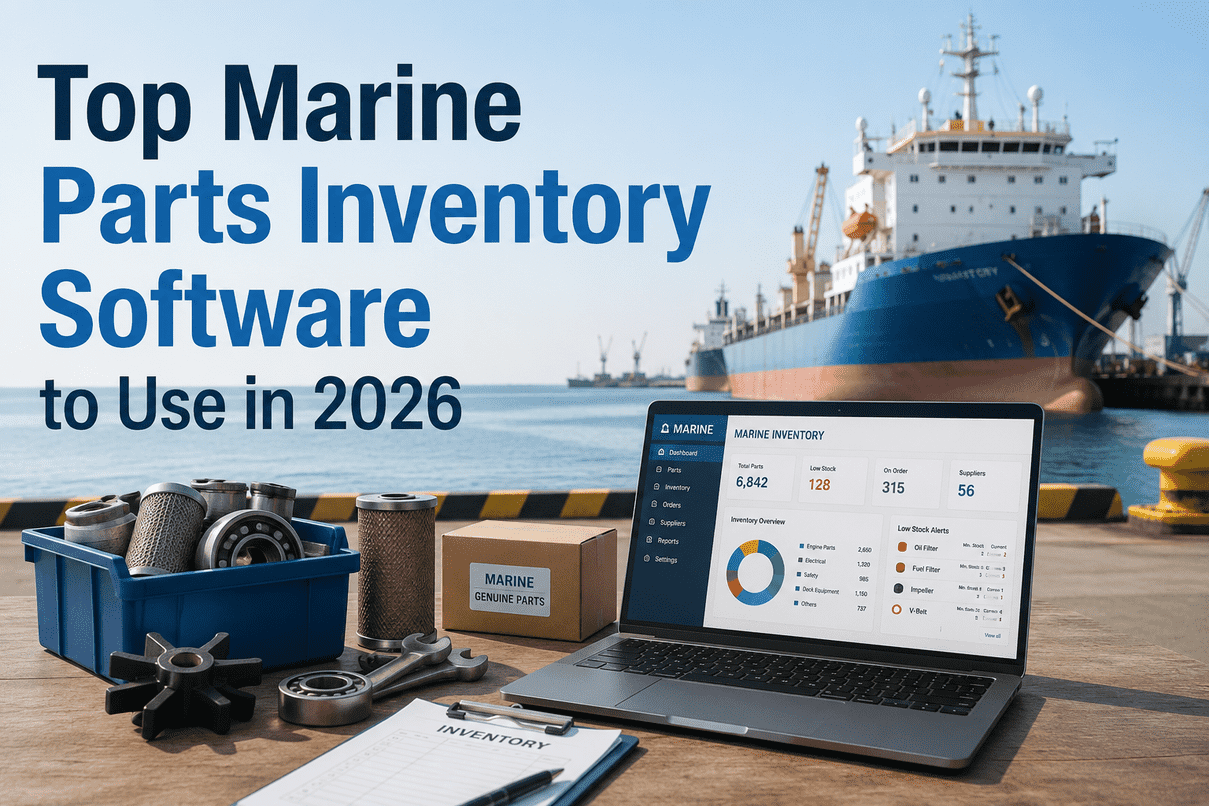
A single spare part missing at the wrong moment can ground a vessel earning twenty-five thousand dollars a day — and in 2026, the pressure on marine inventory has only intensified. Red Sea rerouting has added thousands of nautical miles and up to twelve days to Asia-Europe transits, stretching lead times and shrinking the margin for error on every reorder. New SOLAS lifting-appliance requirements took effect on 1 January 2026, MARPOL Annex VI now demands IMO-stamped emission-critical spares for engines above 130 kW, and from the same date ships may not store firefighting media containing PFOS or PFAS, forcing a fleet-wide audit of consumables. Against that backdrop, choosing the right parts inventory software is no longer a back-office decision — it is the difference between a vessel that sails on schedule and one stuck waiting on an air-freighted part at premium cost. This guide compares the top marine parts inventory software for 2026 across the capabilities that actually matter: real-time stock visibility, low-stock alerts, vendor catalogs, and automated reordering. The fastest way to judge any platform is to watch it run on your own spares list, so the most useful next step is to book a Marine Inspection demo.
The Four Capabilities That Define the Top Platforms
Across every serious 2026 review, the best parts inventory software shares the same core. These four capabilities are the baseline — score any candidate against them before anything else, because a gap here is where stockouts and overspending begin.
What Separates Marine Inventory From Generic Stock Software
Plenty of inventory tools track stock well on land. A marine platform must handle constraints a warehouse never faces — and those differences decide whether software survives contact with a real vessel. Scroll the table on mobile to see the full contrast.
| Capability | Generic Stock Software | Marine-Native Platform |
|---|---|---|
| Connectivity | Assumes constant internet | Offline at sea, syncs ship-to-shore |
| Stock locations | Single warehouse model | Vessel, fleet, warehouse, and off-vessel |
| Criticality | Flat part list | Critical / essential / consumable rules |
| Regulatory fields | None | IMO numbers, SOLAS spares, expiry dates |
| Work order link | Manual or absent | Auto-deducts parts on job completion |
| Off-vessel assets | Not tracked | Reconditioning status and location tracked |
Classify Before You Stock: The ABC / Criticality Method
The best inventory software does not treat every part equally, and neither should your stocking strategy. The industry-standard approach sorts spares by criticality so attention and capital go where they matter — higher minimums and more urgent alerts on the parts that can stop a vessel.
Software that lets you set different rules per category — higher minimums and faster alerts for Critical, light-touch handling for Consumables — is what turns this method from theory into daily practice. It is the single biggest lever against both stockouts and the dead stock that quietly inflates carrying cost.
The 2026 Marine Inventory Landscape
The market splits into recognisable tiers, and the right choice depends on whether you run vessels at sea, a marina or boatyard, or a large managed fleet. Rather than crown one platform best in the abstract, match the tier to how your operation actually runs. Scroll the table on mobile to compare.
| Tier | Strength | Trade-off | Best Fit |
|---|---|---|---|
| Enterprise ship management | Deep inventory, purchasing, technical modules | High cost, long rollout, heavy IT | Large managed fleets and shipping lines |
| Modular SaaS marine CMMS | Fast rollout, parts tied to work orders | Relies on integrations for deep ERP | Most commercial fleets and operators |
| Marina / dealer DMS | POS, retail, service-estimate integration | Built for shoreside, not vessels at sea | Marinas, boatyards, marine dealers |
| General CMMS with parts | Solid min/max, barcode, alerts | Lacks marine regulatory and offline depth | Shore facilities and fabrication shops |
The Buyer's Scorecard
Bring these questions to every demo. The answers separate a vessel-ready platform from a land tool wearing a marine label, and they map directly to where inventory fails in practice.
Where Marine Inspection Fits
Marine Inspection sits in the modular SaaS marine CMMS tier built for how most commercial fleets run. Its inventory system tracks real-time stock and monitors reorder points for each spare, generating automated alerts and purchase requisitions when stock hits minimum, with reorder points set on lead time, consumption rate, and criticality. It tracks every stock movement — issues, receipts, transfers, adjustments — organises parts by equipment, system, or criticality, supports mobile barcode scanning, and links consumption directly to work orders so stock deducts automatically when a job closes. Vendor profiles carry pricing history, performance ratings, and preferred-supplier lists for quote comparison. Sign up free to load your spares list, or book a demo to see the full reorder workflow.