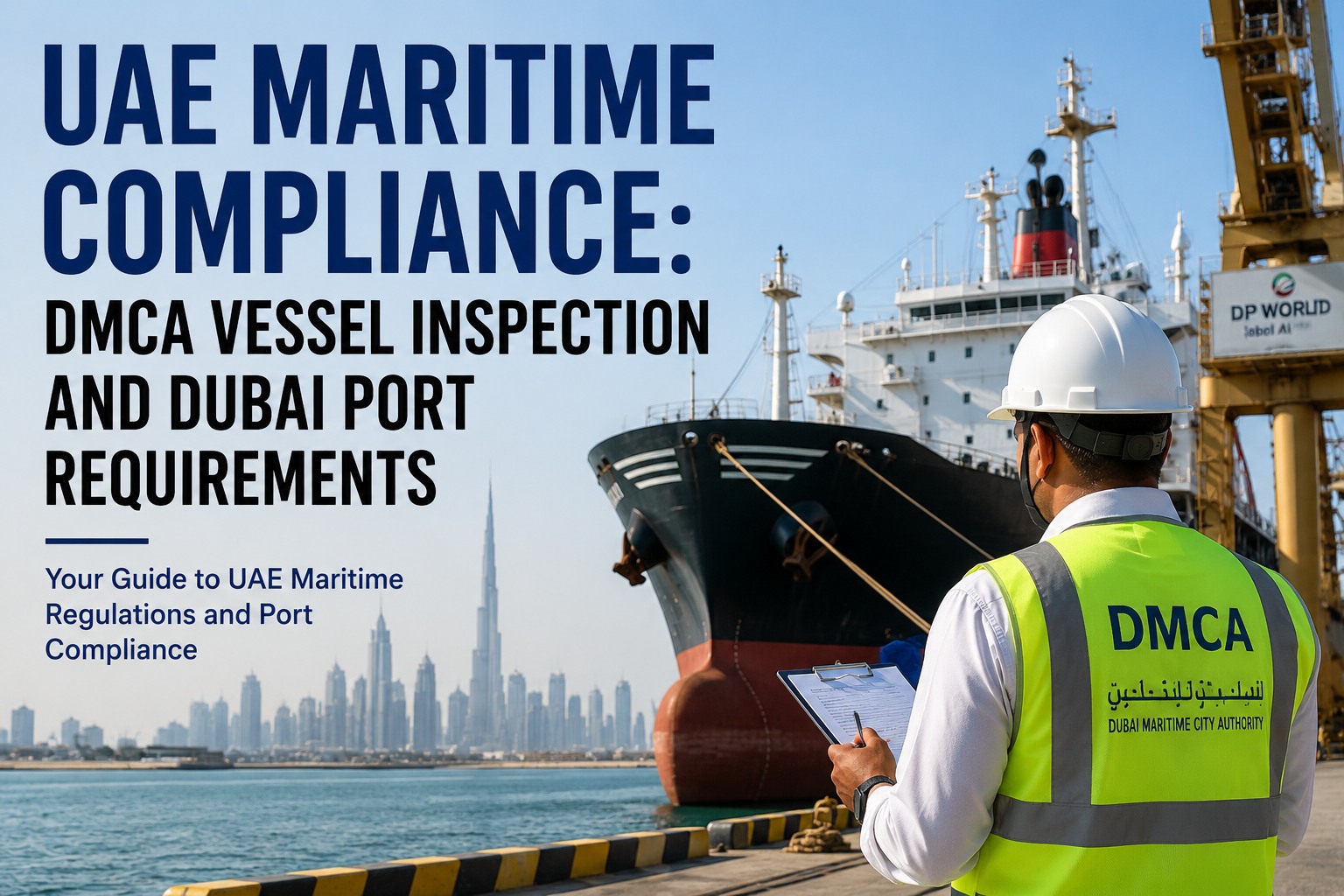
The UAE rewrote its maritime law, and most operators have not caught up. Federal Decree-Law No. 43 of 2023 came into force on 29 March 2024, replacing Federal Law No. 26 of 1981 — a statute that had governed UAE shipping for over four decades and had accumulated genuine confusion along the way. The new Maritime Law changes who registers ships, what can be registered, how vessels are arrested and released, and how limitation works. For anyone operating in or through the Emirates, that is not an academic development: it changes the registry you deal with, opens the flag to vessels that could not previously fly it, and materially alters what happens when a creditor arrests your ship in Dubai or Fujairah. Layered on top of the federal picture is a distinctive local structure — the Federal Transport Authority as the national registry, the Dubai Maritime City Authority governing vessels within the Emirate of Dubai, and TASNEEF as the Emirates Classification Society — plus one of the world's busiest bunkering and anchorage complexes off Fujairah and the largest man-made harbour at Jebel Ali. This guide covers the new Maritime Law's registration reforms, the FTA and DMCA division of authority, the arrest and security regime that changed most, and the operational compliance picture for vessels trading to UAE ports. Start free trial or book a demo to keep certificates, inspection findings, and vessel records current across Middle East operations.
REGIONAL COMPLIANCE · UAE
The UAE Rewrote Its Maritime Law. Has Your Operation Caught Up?
Federal Decree-Law No. 43 of 2023 replaced a 1981 statute in March 2024 — new registry, wider eligibility, and a substantially different arrest regime. If you trade to Jebel Ali or Fujairah, the ground moved.
In force
29 Mar 2024
Federal Decree-Law No. 43 of 2023 took effect, replacing Federal Law No. 26 of 1981
New registry
Article 7
The Ministry of Energy and Infrastructure establishes the Ship Register
Now registrable
2 new classes
Under-construction vessels and chartered vessels can fly the UAE flag
What the New Maritime Law Changed
The stated purpose of Federal Decree-Law No. 43 of 2023 is to modernise the legal framework for maritime activities, align UAE law with international standards, and strengthen the country's position as a regional shipping hub. Its scope is broad.
What it applies to
All seagoing watercraft, ships and maritime means engaged in freight forwarding and maritime navigation — including ships, floating structures and offshore platforms — so far as it does not conflict with international agreements the State has ratified.
What it excludes
Ships and marine vessels designated for military purposes, and government-owned vessels designated for non-commercial purposes, sit outside the Decree-Law.
What fills the gaps
Where the Decree-Law has no special provision, the Commercial Transactions Law applies to maritime navigation activities conducted as commercial business.
i
The registration authority itself changed. Under the repealed law, the Maritime Inspection Department at the Ministry of Transportation held jurisdiction over vessel registration. Under Article 7 of the new Maritime Law, the Ministry of Energy and Infrastructure establishes a "Ship Register" to record ships. That is a different ministry, a different process owner, and a practical matter for anyone with a registration, transfer or mortgage in progress — the counterparty on your file is not who it was.
Registration: Wider Eligibility, Clearer Criteria
The most commercially significant reform is to registration. The scope of eligibility expanded, letting more vessels fly the UAE flag than the old regime allowed.
PREVIOUSLY
Under the 1981 Commercial Maritime Law, a vessel could acquire the UAE flag only if owned by a natural or legal person of UAE nationality, and had to weigh at least 10 tonnes. Registration required selecting a port of registration — a particular Emirate — and jurisdiction sat with the Maritime Inspection Department.
UNDER THE NEW LAW
Eligibility widens. Under-construction vessels and chartered vessels may now be registered. Article 13 sets the criteria: the ship must normally be designated for navigation in the State's maritime zones, for coastal navigation between the State's ports, or on the high seas — and the majority of shares must be owned by persons holding UAE or GCC nationality, or by persons with a domicile, headquarters or ship management office in the State.
That last limb matters more than it first appears. Allowing ownership by entities with a domicile, headquarters or ship-management office in the State opens the register to internationally structured owners with a genuine UAE presence, rather than restricting it to nationality alone. Combined with the ability to register vessels still under construction — useful for financing — and chartered tonnage, the flag becomes a materially more flexible instrument than it was.
Registry changed. Records shouldn't scramble.
Keep Vessel Documentation Current Through Regulatory Change
When the registry, the ministry and the eligibility rules all move at once, what protects an operator is knowing exactly which certificates each vessel holds, when they expire, and what condition supports them. Marine Inspection tracks certificate validity and survey due dates per vessel with expiry alerts, and holds inspection and defect history retrievable across the fleet.
Federal and Emirate: FTA, DMCA and TASNEEF
The UAE's maritime administration operates on two levels, and knowing which applies to a given vessel is a recurring practical question.
Federal Transport Authority
National
The FTA — Land and Maritime — is the UAE's national regulating body for maritime affairs and has served as the national ship registry, with its powers set out in Cabinet Resolution No. 52 of 2006. Registration at federal level is handled through its online process.
Dubai Maritime City Authority
Emirate of Dubai
Established in 2007 and given its legal basis by Dubai Law No. 11 of 2010, the DMCA's regulatory and administrative authority is restricted to the Emirate of Dubai. Its Executive Regulations state plainly that no vessel may be used in the Emirate unless licensed and registered with the authority.
TASNEEF
Classification
The Emirates Classification Society, which conducts vessel inspections and surveys, with authorised service agents operating locally. Vessels falling under the GCC code face technical requirements that must be satisfied to complete UAE registration.
The Dubai layer is a licensing regime as much as a registry. The DMCA's Executive Regulations, promulgated by Dubai Executive Council Resolution No. 11 of 2013, categorise vessels into commercial vessels, pleasure vessels and traditional wooden vessels, each with its own requirements. Registration and licensing applications are submitted online through the DMCA's portal, and the licensing stage typically requires insurance documents and proof of berth or trailer registration alongside ownership evidence. For a commercial operator, that means a Dubai-based vessel carries both a registration obligation and a live licensing obligation, not one or the other.
Arrest, Security and Limitation
For operators and their insurers, the reforms to arrest and security are arguably the most consequential part of the new law, because they change what happens on the worst day.
P&I Club security accepted
The new law accepts P&I Club security to lift the arrest of a vessel — aligning the UAE with mainstream shipping jurisdictions and removing the need for cash or bank guarantees that previously tied up capital.
Sister-ship arrest
Arrest may be levied against the vessel to which the debt relates, or against another ship owned by the debtor at the time the precautionary arrest petition is submitted.
Shorter time bars
Time bars in collision and towage claims were amended and shortened — a change that cuts both ways and demands prompt claim handling rather than assuming the old periods still run.
Limitation and limitation funds
The ability to apply limitation of liability and to establish limitation funds through the courts is now provided for, a significant structural addition for shipowners facing large claims.
Alongside these, the law made procedural changes in litigation and in the registration of vessels, and clarified matters around liens, chartering and time bars that the 1981 statute had left contested. The overall direction is convergence with international practice, which for a foreign operator means the UAE now behaves more like the jurisdictions they already understand — but only if they are working from the current law rather than the received wisdom of the previous four decades.
Operating in UAE Waters
Beyond registration and law, the day-to-day compliance picture for vessels trading to the Emirates is shaped by the region's role as a bunkering, transhipment and energy hub.
Jebel Ali
Reported as the largest man-made harbour in the world and central to Dubai's position on international shipping routes. Dubai's strategic location near the Strait of Hormuz underpins a long-established maritime tradition and continuing investment in shipbuilding, repair, insurance, ownership and brokerage capability.
Fujairah anchorage
The east-coast anchorage complex is one of the world's principal bunkering locations, and merchant ship anchorage regulations govern conduct there. Vessels waiting at anchor remain subject to the applicable rules and to inspection — an anchorage is not a regulatory pause.
Energy terminal vetting
Tankers serving Abu Dhabi's energy terminals encounter commercial vetting regimes layered on top of statutory compliance. Vetting inspections assess operational standards well beyond the certificate minimum, and a poor inspection record restricts commercial access regardless of flag standing.
Local licensing
Vessels operating within Dubai require DMCA licensing in addition to registration, with the licence supported by insurance documentation and berth or trailer evidence. Operating without it is not an oversight the Executive Regulations contemplate.
The connective thread across the federal reforms, the emirate-level licensing, the classification requirements and the commercial vetting regimes is that each reads the vessel's documented condition and compliance history. A registry change or a new arrest regime alters the legal framework, but what an inspector, a vetting inspector, a port authority or a court ultimately examines is whether certificates are valid, surveys are current, deficiencies have been closed, and the records support the claim. Operators trading through the Emirates deal with more overlapping authorities than in most jurisdictions — federal, emirate, class, and commercial — and the efficient answer is one continuously maintained evidence base that satisfies all of them rather than four separate compliance efforts. Book a demo to see certificates, inspections, and defect history as one record.
Frequently Asked Questions
What is the current UAE maritime law?
Federal Decree-Law No. 43 of 2023 concerning the Maritime Law, which came into force on 29 March 2024 and replaced Federal Law No. 26 of 1981 (the Commercial Maritime Law). It modernises the framework for maritime activities, aligns UAE rules with international standards, and makes substantial changes to vessel registration, arrest, liens, chartering, time bars and limitation.
Book a demo.
Who runs the UAE ship register now?
Under Article 7 of the new Maritime Law, the Ministry of Energy and Infrastructure establishes a Ship Register to record ships. This replaces the previous arrangement, under which the Maritime Inspection Department at the Ministry of Transportation held jurisdiction over vessel registration. The Federal Transport Authority has served as the UAE's national maritime regulator and registry, with its powers set out in Cabinet Resolution No. 52 of 2006.
Book a demo.
Who can register a ship under the UAE flag?
Article 13 requires that the ship be normally designated for navigation in the State's maritime zones, for coastal navigation between its ports, or on the high seas, and that the majority of shares be owned by natural or legal persons holding UAE or GCC nationality — or by persons with a domicile, headquarters or ship management office in the State. The new law also permits registration of under-construction vessels and chartered vessels.
Book a demo.
What is the difference between the FTA and the DMCA?
The Federal Transport Authority is the UAE's national regulating body for maritime affairs, operating at federal level. The Dubai Maritime City Authority, established in 2007 with its legal basis in Dubai Law No. 11 of 2010, has regulatory and administrative authority restricted to the Emirate of Dubai — and its Executive Regulations provide that no vessel may be used in the Emirate unless licensed and registered with it.
Book a demo.
Does the UAE accept P&I Club security to release an arrested ship?
Yes. Acceptance of P&I Club security to lift vessel arrests is among the key changes in the new Maritime Law, aligning the UAE with other international shipping jurisdictions. The law also permits arrest of the vessel to which the debt relates or another ship owned by the debtor at the time the precautionary arrest petition is submitted, shortens time bars in collision and towage claims, and provides for limitation of liability and the establishment of limitation funds by the courts.
Book a demo.
What is TASNEEF?
The Emirates Classification Society, which carries out vessel inspections and surveys, working through authorised service agents locally. Vessels falling under the GCC code face specific technical requirements that must be completed as part of the UAE registration process, making classification input part of the registration path rather than a separate exercise.
Book a demo.
What vessel categories does the DMCA recognise?
The DMCA's Executive Regulations, issued under Dubai Executive Council Resolution No. 11 of 2013, categorise vessels as commercial vessels, pleasure vessels, and traditional wooden vessels, each with distinct requirements. Registration and licensing applications are submitted online through the DMCA portal, with licensing typically requiring insurance documents and proof of berth or trailer registration in addition to ownership evidence.
Book a demo.
Do anchorage regulations apply at Fujairah?
Yes. The Fujairah anchorage complex is one of the world's principal bunkering locations, and merchant ship anchorage regulations govern vessel conduct there. Waiting at anchor does not suspend regulatory obligations or immunity from inspection, so certificates, records and condition need to be in order throughout the stay, not only alongside.
Book a demo.
Four Authorities. One Evidence Base.
Federal registry, emirate licensing, classification survey and commercial vetting all examine the same underlying thing: valid certificates, current surveys, closed deficiencies, and records that support them. Marine Inspection keeps certificate validity and survey due dates per vessel with expiry alerts, runs structured inspections, and tracks defects to verified closure — retrievable for whichever authority is asking. This guide is an overview, not legal advice; for a specific registration, arrest or licensing matter, take qualified UAE legal counsel.