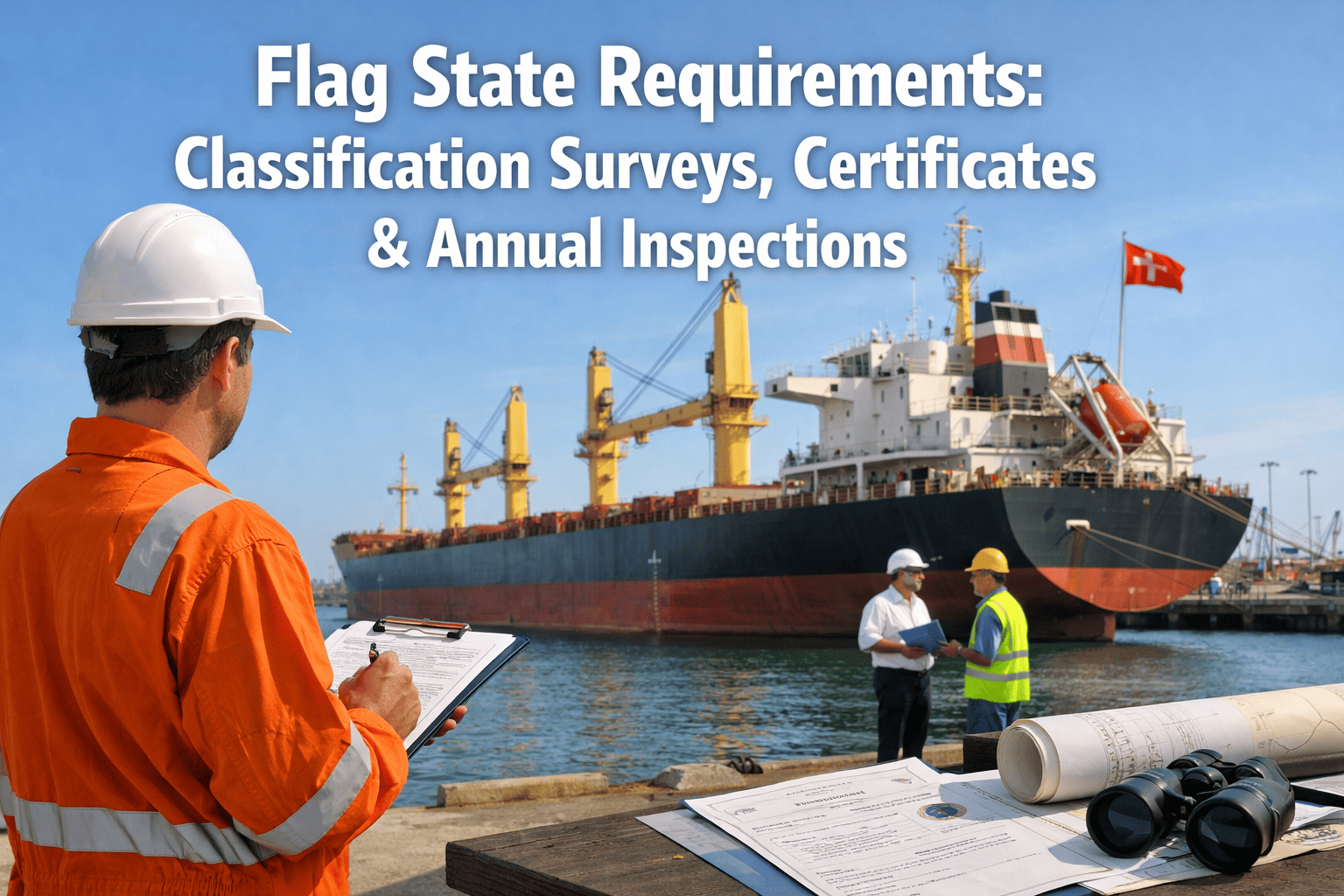
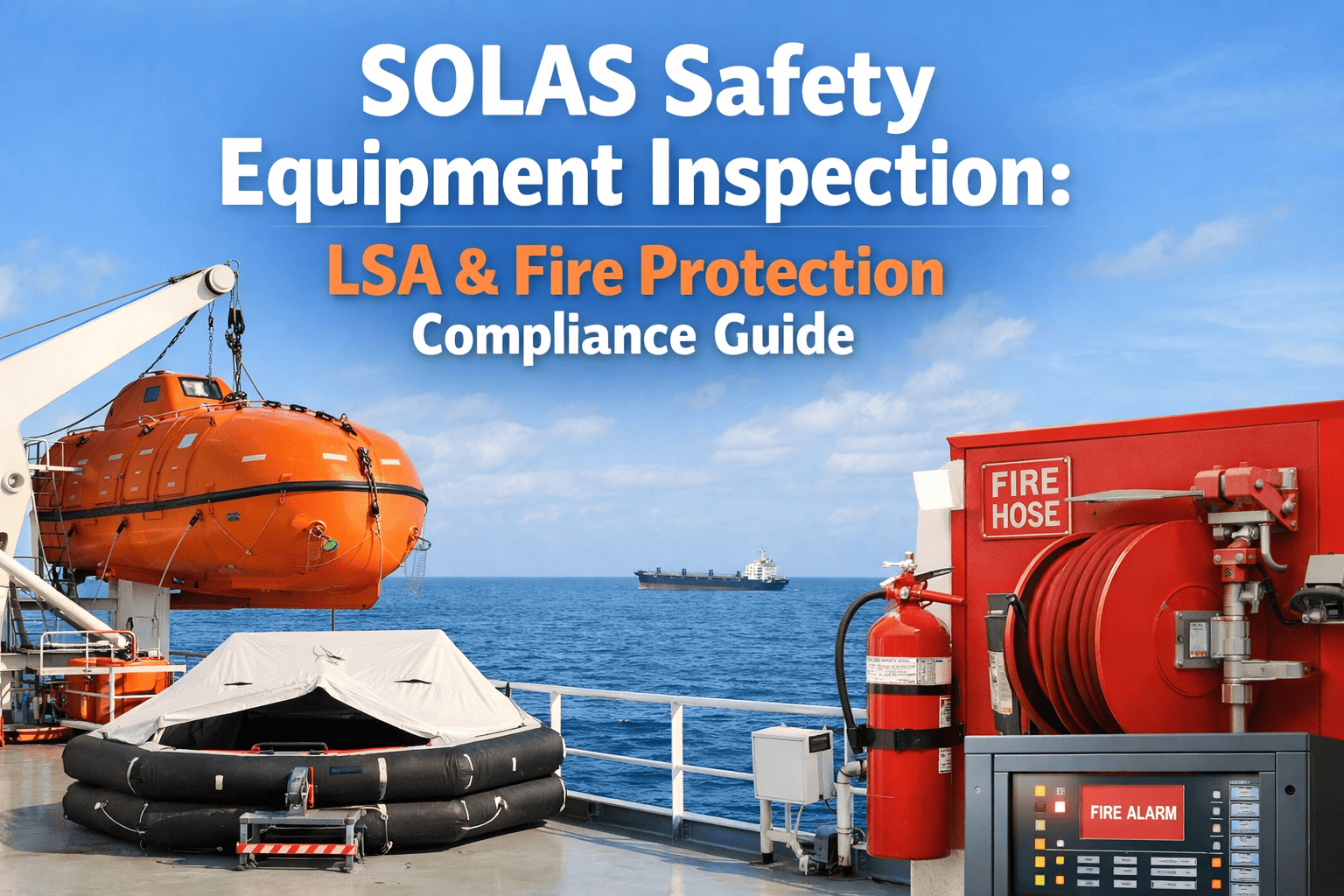
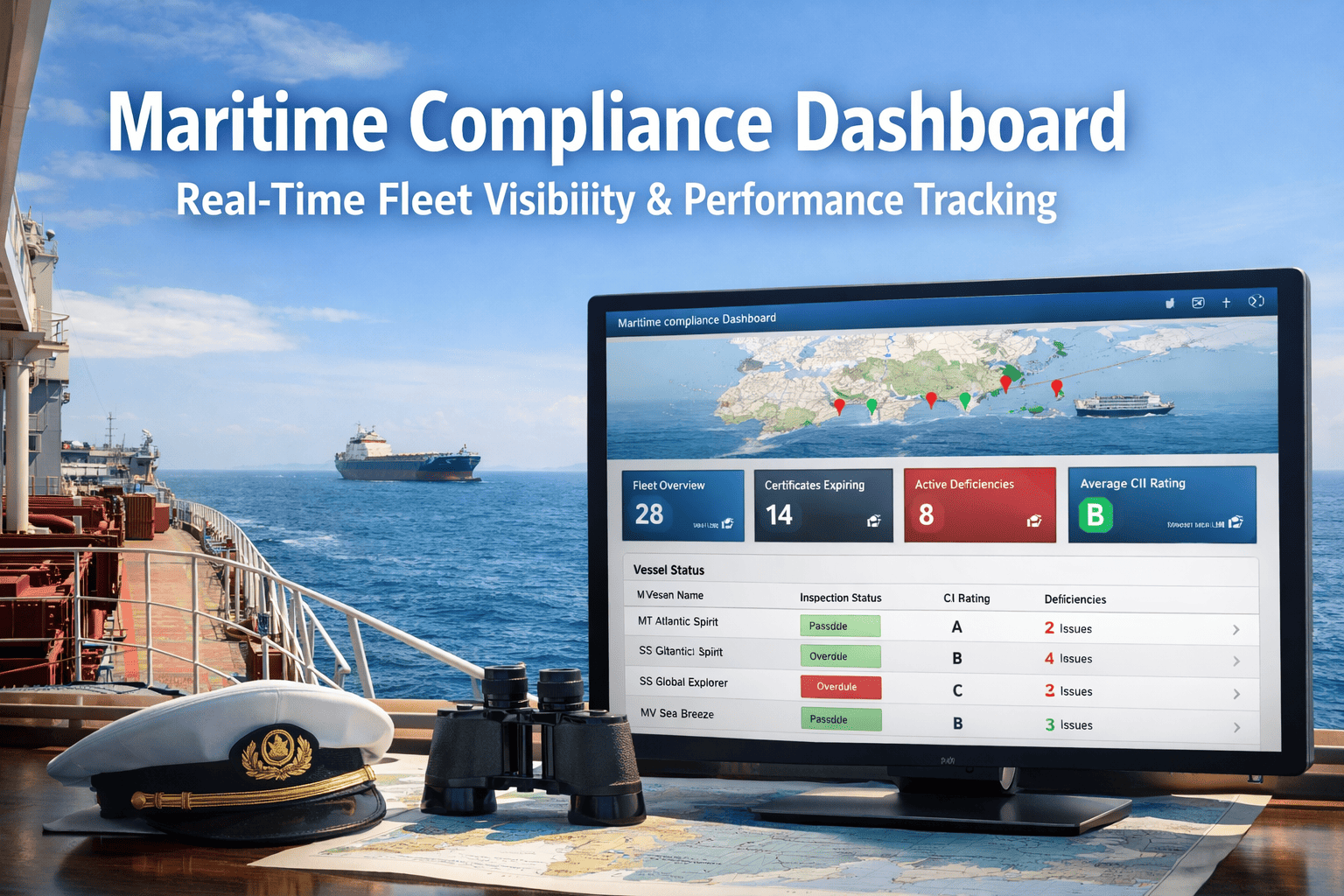
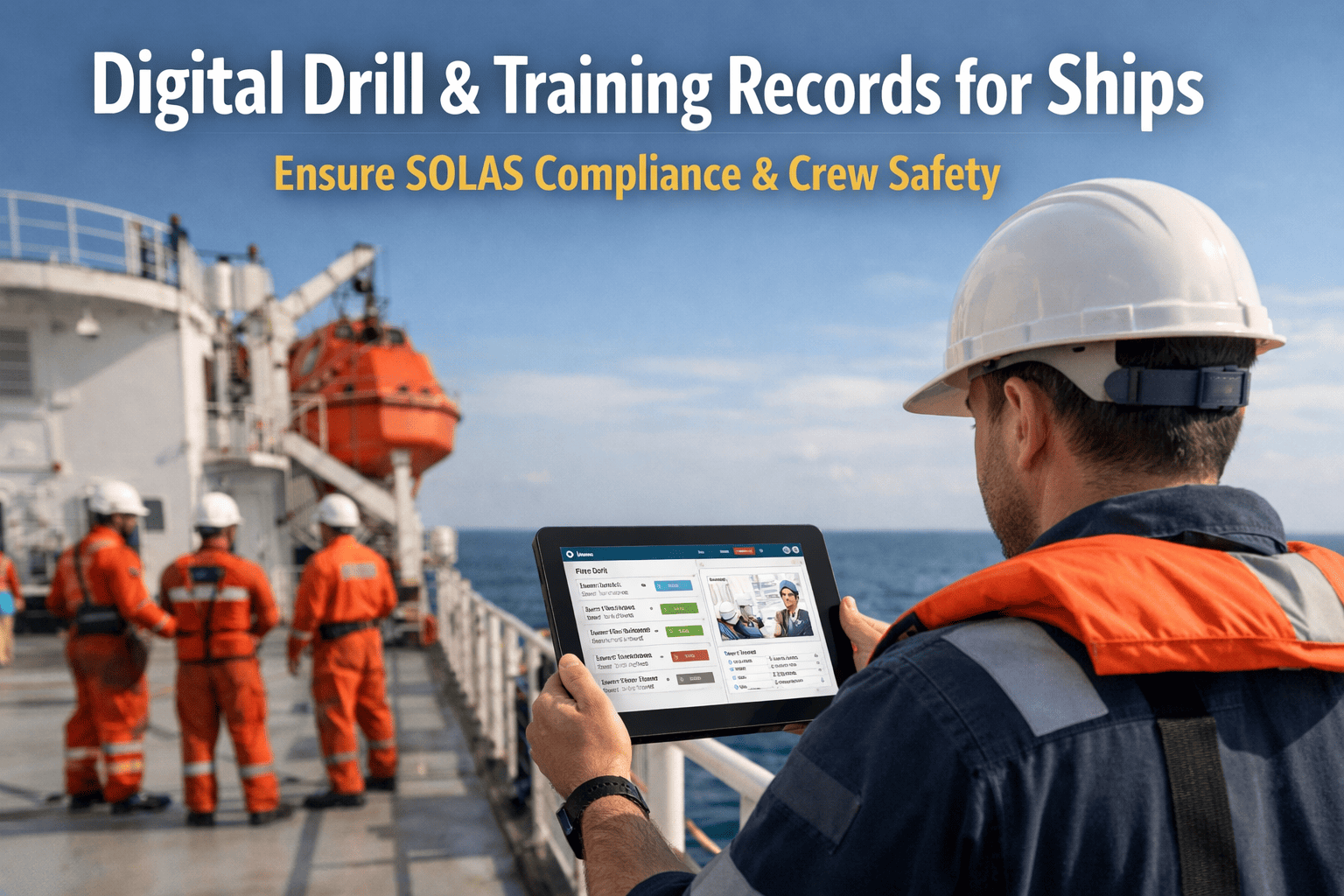
Every vessel trading internationally operates under a layered compliance framework: the flag state sets the rules, the classification society verifies compliance, and the certificates prove it. When a PSC officer boards your vessel, the first thing they check is whether these certificates are valid, correctly endorsed, and consistent with each other — one expired certificate, one overdue survey, or one mismatch between the IOPP supplement and the actual equipment onboard can escalate a routine inspection into a detailed examination or detention. The Harmonized System of Survey and Certification (HSSC) was created to align these overlapping requirements into a manageable 5-year cycle — but it only works if you plan ahead. This guide maps the complete flag state compliance framework: what the key certificates are, when surveys happen, how the HSSC cycle works, and how to keep everything synchronized so your fleet is always ready for inspection. Operators managing survey schedules and certificate renewals can sign up for Marine Inspection or schedule a demo to see how every certificate, survey date, and renewal deadline connects in one platform.
Flag State Compliance: Key Reference Numbers
5 Years
Standard Certificate Cycle
HSSC aligns all major certificates to 5-year validity
12 IACS
Major Class Societies
Covering ~90% of global cargo tonnage
≤36 months
Max Bottom Survey Interval
Between any two hull bottom inspections
RO
Recognized Organization
Class society authorized to act on behalf of flag state
How the System Works: Flag State → Class Society → Certificates
Understanding the relationship between flag states, classification societies, and certificates is the foundation of compliance management. Book a demo to see how Marine Inspection maps this framework for your fleet.
Role 1
The Flag State (Administration)
The country where the vessel is registered. Responsible under UNCLOS for exercising jurisdiction and control over vessels flying its flag. Sets national regulations, adopts international conventions (SOLAS, MARPOL, STCW, MLC), and is ultimately responsible for ensuring vessels comply. Most flag states delegate the technical work of surveys and certification to classification societies acting as Recognized Organizations (ROs).
Role 2
The Classification Society (RO)
When authorized by a flag state, a classification society becomes a Recognized Organization — conducting surveys, inspecting vessels, and issuing certificates on behalf of the flag administration. This covers both class certificates (structural, mechanical) and statutory certificates (SOLAS, MARPOL, Load Lines). Approximately 90% of global cargo tonnage is classed by the 12 member societies of IACS.
Role 3
The Certificates
Certificates are the documented proof that surveys have been completed and the vessel meets requirements. They must be valid, correctly endorsed, and physically present onboard. During PSC inspection, the PSCO reviews certificates first — and any deficiency in certificate validity, endorsement, or consistency with actual vessel conditions is "clear grounds" for a more detailed inspection.
The Essential Statutory Certificates
These are the certificates PSC officers verify during every inspection. Each is linked to a specific international convention and has its own survey and renewal cycle — coordinated through the HSSC.
Key Statutory Certificates & Their Basis
Certificate
Convention
Validity & Survey Cycle
Cargo Ship Safety Construction
SOLAS Ch. I
5 years · Annual + Renewal · Dry dock at 4th annual
Cargo Ship Safety Equipment
SOLAS
5 years · Annual + Periodical (2nd or 3rd anniversary)
Cargo Ship Safety Radio
SOLAS Ch. IV
5 years · Periodical at each anniversary
IOPP Certificate
MARPOL Annex I
5 years · Annual + Intermediate
IAPP Certificate
MARPOL Annex VI
5 years · Annual + Intermediate
International Load Line
Load Line Conv.
5 years · Annual
SMC / DOC
ISM Code
5 years · SMC intermediate · DOC annual
ISSC
ISPS Code
5 years · Intermediate (2nd–3rd)
MLC Certificate
MLC 2006
5 years · Intermediate
IBWMC
BWM Conv.
5 years · Annual + Intermediate
The Survey Types: What Happens When
Each survey type serves a different purpose in the 5-year cycle. Schedule a demo to see how Marine Inspection tracks every survey date.
Complete inspection before a ship enters service. Covers all items related to the certificate. The most comprehensive survey — structural, mechanical, safety, radio, pollution prevention. Must be completed before international trade.
Before first service · All items inspected · Certificate issued
Inspection of specified items at each certificate anniversary. Confirms systems remain satisfactory. Must be completed within a ±3-month window of the anniversary date. Failure to complete on time can invalidate the certificate.
Yearly · ±3 months of anniversary · Endorsement on certificate
More detailed than annual, held between 2nd and 3rd anniversary. Replaces one annual survey. Detailed examination of safety equipment, cargo systems, and pollution prevention. For IOPP: OWS, sludge systems, MARPOL compliance in detail.
Between 2nd–3rd anniversary · Replaces one annual survey
Most thorough periodic survey — comprehensive re-inspection of all certificate items. Issues a new 5-year certificate. For CSSC, may commence at 4th annual and progress through the final year. Typically includes dry docking.
Before certificate expires · New 5-year certificate issued
The HSSC: Keeping Everything Synchronized
Before the HSSC, each convention had its own survey schedule — creating overlapping inspections with different certificate expiry dates. The HSSC aligns all major statutory certificates to a single 5-year cycle with annual, intermediate, and renewal surveys coordinated to minimize downtime.
The practical benefit: When fully implemented, your SOLAS, MARPOL, Load Line, ISM, and ISPS certificates all expire on the same date, with annual surveys falling at the same anniversary window. This means one planned survey period covers multiple certificates — fewer port calls, less off-hire time, and easier planning. Over 150 countries have adopted the HSSC. Book a demo to see how Marine Inspection synchronizes all certificates in one timeline.
Never Miss a Survey Date or Certificate Renewal
Marine Inspection tracks every statutory and class certificate across your fleet — with automated alerts for survey windows, anniversary dates, endorsement deadlines, and dry dock scheduling.
Class Surveys: Beyond Statutory Requirements
In addition to statutory surveys, your classification society conducts class surveys to maintain your vessel's classification — required for insurance, charter, and port entry.
Class Survey Schedule (5-Year Cycle)
Annual Class Survey — General condition of hull, machinery, and equipment. Confirms the vessel remains in class. Typically coordinated with statutory annual surveys.
Intermediate Hull Survey — More detailed hull examination between 2nd and 3rd anniversary. Close-up inspection and thickness measurement of selected structural areas.
Special Survey (every 5 years) — Most comprehensive class survey. Thorough structural inspection including close-up examination, thickness gauging, and testing. Usually requires dry docking.
Bottom Survey (Dry Dock) — Minimum 2 inspections in any 5-year period. Maximum interval between any two: 36 months. One must coincide with renewal survey. Some flags offer Extended Dry Dock Programs (up to 7.5 years).
Tail Shaft & Boiler Surveys — Propeller shaft inspection and boiler internal examination at intervals defined by class rules. Overdue surveys can result in conditions of class restricting operation.
What Happens When Surveys Are Overdue
Immediate Impact
Certificate Becomes Invalid
If an annual, intermediate, or renewal survey is not completed within its required window, the associated certificate may become invalid. An invalid certificate means the vessel is not authorized to trade internationally. PSCOs treat overdue survey endorsements as detainable deficiencies.
Escalation
Class Suspended or Withdrawn
Classification societies suspend class for overdue surveys. Suspension invalidates insurance cover, prevents charter approval, and triggers PSC detention. If suspension exceeds 6 months without resolution, class may be permanently withdrawn — requiring full re-classification to regain status.
Commercial Impact
Insurance, Charter & Port Entry Affected
Marine insurers require valid classification and statutory certificates as a condition of cover. Charterers require valid documentation before fixing. Some ports and canals require current survey records. Any lapse creates immediate commercial consequences — the vessel effectively cannot trade.
PSC Consequence
Elevated Risk Profile & Detention
Certificate deficiencies elevate the vessel's risk profile, increasing future inspection frequency and scope. An expired or invalid certificate is clear grounds for detention. The vessel cannot sail until rectified — typically requiring an emergency survey by the classification society at the current port.
Survey Preparation Checklist
Use this before any scheduled survey. Schedule a demo or sign up to manage survey readiness across your fleet.
Pre-Survey Readiness Checklist
1
Confirm survey scope — Identify which certificates are due. Cross-reference statutory and class requirements.
2
Close previous findings — All conditions of class, recommendations, and deficiencies from prior surveys resolved.
3
PMS up to date — All critical equipment maintenance current. No overdue items. Evidence available for review.
4
Safety equipment serviced — Fire extinguishers, LSA, EPIRBs, liferafts within service dates. Certificates available.
5
Documents organized — All certificates, previous survey reports, drawings, and stability information accessible.
6
Spaces prepared — Tanks cleaned, spaces ventilated, access arranged, scaffolding in place for close-up surveys.
7
Crew briefed — Officers know survey scope, can demonstrate equipment, and explain maintenance records.
8
Internal pre-survey — Walk through with the survey scope in mind. Fix issues before the surveyor finds them.
9
Dry dock planned — For renewal/special surveys. Book yard time well in advance — availability is limited.
Every Certificate. Every Survey. Every Deadline. One Platform.
Marine Inspection tracks statutory certificates, class surveys, conditions of class, dry dock scheduling, and survey preparation — giving you fleet-wide visibility so no deadline is ever missed.
Frequently Asked Questions
What is the difference between a flag state survey and a class survey?
Flag state (statutory) surveys verify compliance with international conventions — SOLAS, MARPOL, Load Lines, MLC — and lead to statutory certificates. Class surveys verify compliance with the classification society's technical rules for structure, machinery, and engineering — leading to class certificates. In practice, most flag states delegate statutory surveys to classification societies as Recognized Organizations, so both types are often conducted by the same surveyor during the same visit.
What happens if a survey window is missed?
If an annual survey is not completed within the ±3-month window of the anniversary date, the certificate may become invalid — the vessel cannot trade. For class surveys, overdue inspections trigger class suspension, invalidating insurance and charter approvals. Resolution typically requires an emergency survey at the current port, which is more expensive and disruptive than the scheduled survey would have been.
How often must the hull bottom be inspected?
Minimum two inspections in any 5-year period. One must coincide with the CSSC renewal survey. Maximum interval between any two bottom inspections: 36 months. Bottom inspections normally require dry docking, though some flag states offer in-water survey programs or Extended Dry Dock Programs (up to 7.5 years for qualifying vessels).
What is the HSSC and why does it matter?
The Harmonized System of Survey and Certification aligns survey requirements from SOLAS, MARPOL, and Load Lines into a single 5-year cycle. All certificates expire on the same date with annual surveys at the same window. This reduces downtime, simplifies planning, and lowers costs. Over 150 countries have adopted the HSSC. When managing a multi-flag fleet, confirm HSSC implementation with your classification society for each flag.
Can a certificate be extended if it expires while at sea?
Yes, in limited circumstances. Most conventions allow the flag state or RO to grant an extension — typically up to 3 months — solely to allow the vessel to reach a port for renewal survey. The vessel cannot leave that port without the new certificate. The new certificate dates from the original expiry date, not the extension — so no validity is "gained."