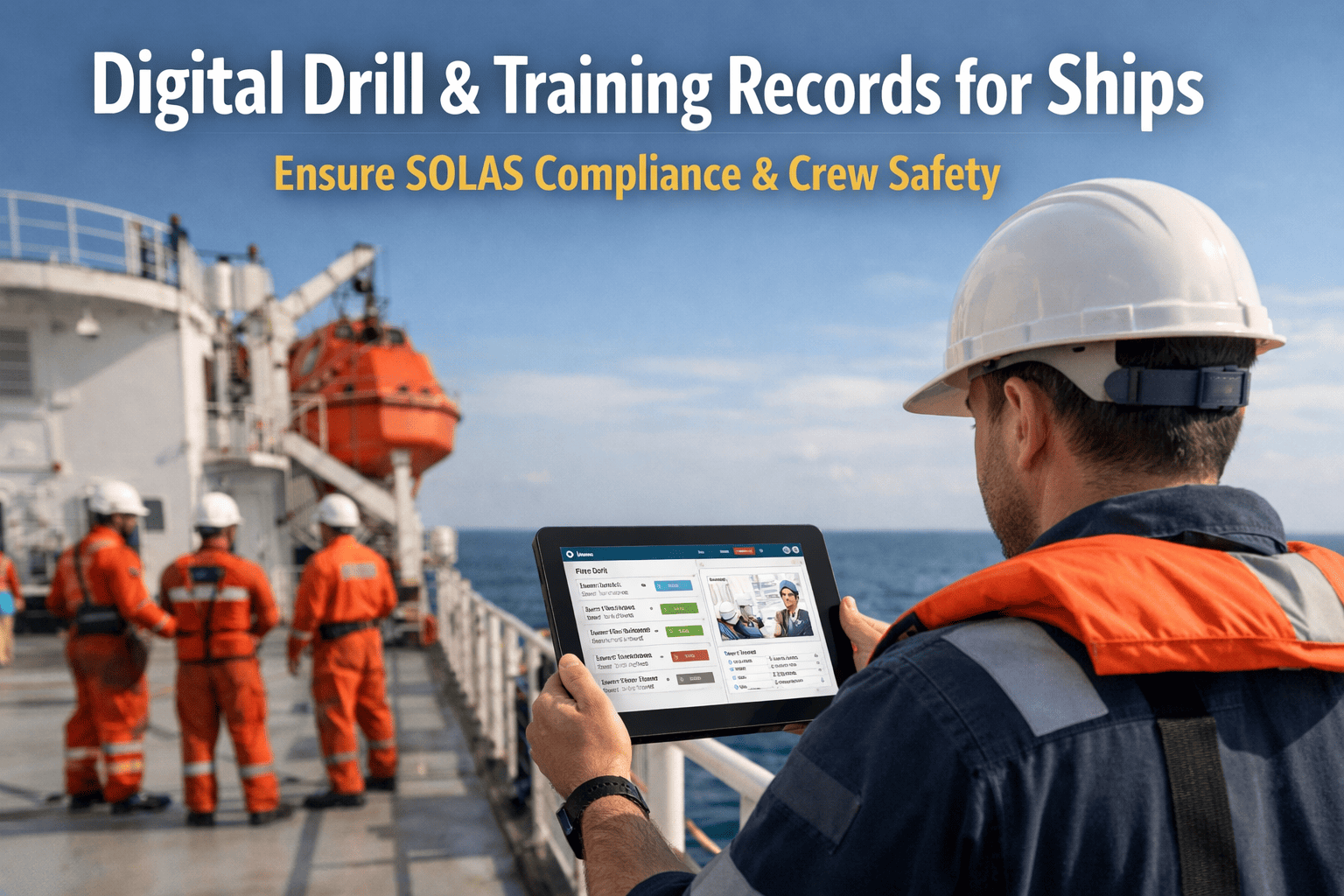
Every second counts at sea. When Port State Control officers board your vessel, the first thing they ask for isn't a handshake — it's your drill logs and crew training records. If you're still hunting through binders and spreadsheets, you've already lost the inspection before it started. Digital drill and training records aren't just a convenience upgrade — they're quickly becoming the standard that separates audit-ready ships from detained ones. Ship operators looking to close that gap can sign up for Marine Inspection's free trial and have their first drill schedule running before the next inspection cycle.
SOLAS Compliance At a Glance
SOLAS Ch. III
Mandates monthly emergency drills for all crew
100% Audit-Ready
Digital records retrievable in seconds during PSC inspections
90 / 60 / 30
Days — automated cert expiry alerts before deadline
Jan 2026
Next SOLAS update entry into force — are you ready?
Why Paper Drill Logs Are a Liability, Not a Safety Net
SOLAS Chapter III Regulation 19 is unambiguous: crews must conduct monthly emergency drills, and every drill must be documented. The same applies to STCW certification records, muster station assignments, fire team competency, and abandon-ship procedures. The regulation doesn't care how you store this information — but Port State Control absolutely does.
Paper logs get wet, torn, misfiled, or simply lost in crew changeovers. When a PSC officer asks to see six months of fire drill records in the middle of an inspection, "we have them somewhere" is not an answer that keeps your vessel operational. If that scenario sounds familiar, it takes less than five minutes to create a free account and start digitizing your drill records today.
What PSC Inspectors Actually Look For
Drill Frequency
Monthly records with crew attendance — gaps trigger immediate deficiency notices
STCW Cert Validity
Every crew member's certificates must be current and onboard — no exceptions
Competency Evidence
Training logs proving crew can operate safety equipment, not just that they attended
Emergency Assignments
Muster lists, fire roles, and abandon-ship duties — updated after each crew change
Familiarization Records
New crew must receive and sign off on familiarization training within the first 24 hours
Equipment Test Logs
Weekly lifeboat engine tests, monthly fire pump checks, quarterly launching drills
The SOLAS Drill Schedule — What's Actually Required
Most ship operators know drills are required. Far fewer know the exact frequency mandated by SOLAS — and the gaps are exactly where PSC deficiencies accumulate. Here's the complete drill and inspection schedule that every vessel on an international voyage must follow. Marine Inspection auto-builds this entire schedule for your vessel the moment you sign up — no manual setup required.
Abandon Ship / Lifeboat Drill
Monthly
Reg. III/19
Crew attendance, equipment deployed, time to muster
Fire Drill
Monthly
Reg. III/19
Fire team roles, equipment used, response time
Lifeboat Engine Test
Weekly
Reg. III/20
Engine runtime, fuel level, mechanical condition
Rescue Boat Launching
Quarterly
Reg. III/19
Launch time, crew involved, equipment condition
Man Overboard Drill
Monthly
Reg. III/19, V/26
Response time, rescue equipment deployed, crew roles
EPIRB / SART Self-Test
Monthly
Reg. IV/GMDSS
Test result, battery expiry, HRU release date
Emergency Fire Pump
Weekly
Reg. II-2
Pressure reading, runtime, observations
New Crew Familiarization
Within 24 hrs of joining
STCW / Reg. III/19
Topics covered, crew signature, officer confirmation
Paper vs. Digital: What the Difference Actually Costs You
Paper-Based Records
Hunt through binders during live PSC inspection
Cert expiries discovered after the fact
Crew changeover causes documentation gaps
Missing signatures invalidate drill records
No visibility from shore — DPA flying blind
Water, fire, or loss destroys compliance history
Vessel detention risk when records are incomplete
Digital Records (Marine Inspection)
All records retrieved in seconds from any device
Auto-alerts 90, 60 & 30 days before cert expiry
Crew profiles transfer instantly at handover
Digital sign-offs with timestamps — tamper-proof
Real-time fleet visibility for shore-based DPAs
Cloud-stored — survives anything that happens onboard
Audit-ready documentation that passes first time
What Crew Competency Tracking Actually Means
SOLAS doesn't just require drills to happen — it requires crew to demonstrate competency. There's a meaningful difference between a drill log that says "fire drill conducted, 14 crew attended" and one that records who operated the SCBA, who led the fire team, and how long it took to reach the affected compartment. The first satisfies the checkbox. The second builds a real safety culture — and protects you when an incident review asks what your crew was actually capable of. Marine Inspection structures all four competency layers for you from day one — schedule a 20-minute demo to see exactly how crew competency tracking works in practice.
The 4 Layers of Crew Competency Documentation
01
Certification
STCW CoC, medical fitness, specialized endorsements — tracked with expiry dates and renewal reminders
↓
02
Familiarization
Ship-specific safety orientation within first 24 hrs of joining — signed off and date-stamped
↓
03
Drill Participation
Individual attendance and role records for every drill — not just "crew present" but "who did what"
↓
04
Performance Assessment
Notes on response quality, areas for improvement, and follow-up actions — the evidence of a real safety culture
How Marine Inspection Handles It All
Marine Inspection's vessel management platform was built around exactly these requirements. From the moment a new crew member signs on, to the quarterly rescue boat launch, to the annual STCW renewal — every record lives in one place, structured for instant retrieval and automatic compliance tracking.
Getting Started Takes Less Than 10 Minutes
1
Create your free account — no credit card needed. Add your vessel details, flag state, and vessel type in under 5 minutes.
2
Build your crew roster — upload STCW certificates, assign muster roles, and log familiarization records for each crew member from a single screen.
3
Activate your drill schedule — the system auto-populates your SOLAS-compliant drill calendar (monthly, weekly, quarterly) with built-in reminders and sign-off workflows.
4
Go audit-ready — every record is cloud-stored, timestamped, and retrievable by both onboard officers and shore-based DPAs the moment your next PSC inspection begins. Prefer a walkthrough first?
Book a guided 20-minute demo and let our team configure your vessel's setup live.
Automated Drill Scheduling
Set your drill calendar once. The system sends reminders, tracks completion, and flags overdue drills before they become PSC deficiencies.
STCW Certificate Tracking
Every crew member's certifications stored with issue dates, expiry dates, and auto-alerts at 90, 60, and 30 days before renewal deadlines.
Digital Sign-Off & Attendance
Crew sign drill participation digitally — timestamped, role-specific, and immediately stored. No missing signatures discovered during inspections.
Cloud-Based Retrieval
Shore-based DPAs and onboard officers access the same records in real time. PSC inspection? Pull any document in seconds from any device.
Photo Documentation
Attach photos to drill records — equipment deployed, conditions on the day, and any deficiencies found. Visual evidence PSC inspectors respect.
Fleet-Wide Compliance Dashboard
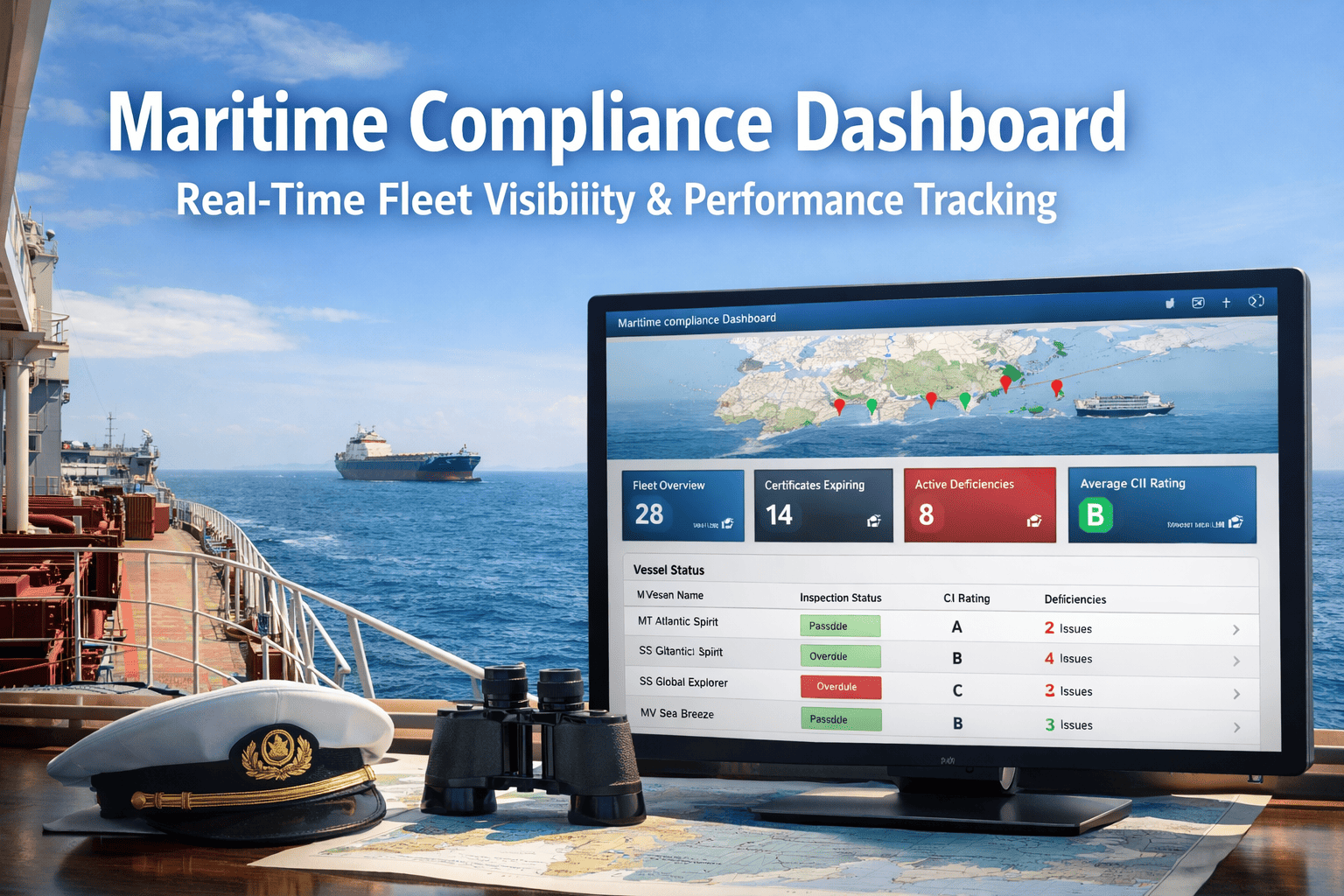
DPAs see every vessel's compliance status at a glance. Overdue drills, expiring certs, and gaps are visible before inspectors find them.
Ready to Go Audit-Ready?
Replace Your Drill Binders with a System That Works
Marine Inspection gives you automated drill scheduling, STCW tracking, digital sign-offs, and cloud retrieval — everything PSC inspectors want to see, organized and ready in seconds.
Frequently Asked Questions
What SOLAS regulation covers drill records?
SOLAS Chapter III Regulation 19 mandates monthly emergency drills including abandon ship and fire drills. SOLAS Chapter IV governs GMDSS equipment testing. All drill records must be maintained onboard and produced during Port State Control inspections. The 2024 SOLAS Consolidated Edition remains the current reference, with the next update entering force January 2026.
Are digital drill records accepted by Port State Control?
Yes. PSC inspectors require that records be accurate, complete, and retrievable — the format (paper or digital) is secondary to accessibility and integrity. Digital systems that provide timestamped, signed records are generally regarded as more reliable than paper logs by inspection authorities.
What happens if drill records are incomplete during a PSC inspection?
Incomplete or missing drill records are a common grounds for PSC deficiency notices. Depending on severity, this can result in required rectification before departure, increased inspection frequency, or vessel detention. Paris MoU reports consistently cite drill frequency and record-keeping as top deficiency categories.
How does STCW relate to SOLAS drill requirements?
SOLAS and STCW work together. SOLAS mandates what drills must happen and how often; STCW sets the competency standards crew must demonstrate. Both are verified during PSC inspections. A crew member can hold a valid STCW certificate but still fail if they haven't participated in the required onboard drills — and vice versa.
Does Marine Inspection cover multi-vessel fleets?
Yes. The platform is designed for fleet-wide management, giving Designated Persons Ashore (DPAs) a centralized dashboard showing compliance status across every vessel. Drill schedules, crew certifications, and deficiency tracking are all visible fleet-wide in real time. Fleet managers can
schedule a fleet demo to see the full multi-vessel dashboard in action — no commitment required.