A ship can carry a fully qualified crew and still be detained, because competency and the proof of competency are two different things. In 2023 the Paris MoU recorded over ten thousand deficiencies and more than five hundred vessel detentions, with documentation failures among the leading causes — vessels held not for lacking capable seafarers, but for lacking the paperwork that demonstrates it. That gap is what crew competency management exists to close. It is the discipline of knowing, for every seafarer in the pool, which certificates their rank and vessel demand, whether each is valid, when each expires, whether the flag state has endorsed it, and what training must be booked before it lapses. Get it right and a port state inspection is a formality. Get it wrong and you face denied renewals, crew-change delays, failed vetting inspections, and detentions. The task has also become more demanding: digital certificates are now legally recognised and QR-verifiable at the gangway, the 2026 STCW amendments added a new mandatory competence, and oil-major vetting regimes want an officer matrix on demand. This guide covers how to build a training matrix, the certificate architecture beneath it, the revalidation mechanics that trip crews up, endorsement management across flags, and the tracking system that turns all of it from a spreadsheet into a control. To manage crew certification, expiry alerts, and the competency matrix across a fleet, book a Marine Inspection demo.
Crew & training · competency management
Crew Competency Management: STCW Training Matrix & Certification Tracking
A practical guide for crew managers and training officers — building the training matrix, tracking certificates and endorsements, managing revalidation before it lapses, and running gap analysis across the crew pool.
1Define the matrix
2Capture certificates
3Analyse the gaps
4Alert before expiry
5Prove it on demand
The Certificate Architecture Beneath the Matrix
Before a matrix can be built, the certificate types must be understood, because they differ in who issues them, how they are renewed, and what happens when they lapse. STCW creates a three-tier structure. See certificate tracking in a demo.
CoC
Certificate of Competency
A rank-specific licence — Master, Chief Officer, OOW, Chief Engineer, Second Engineer — issued only by the flag state administration, based on verified sea service, examinations, and approved training. Typically valid five years.
CoP
Certificate of Proficiency
A task-specific qualification: basic safety training, advanced firefighting, survival craft proficiency, tanker endorsements, security duties. May be issued by approved training centres on behalf of the administration.
Evidence
Documentary evidence
Documentation other than a CoC or CoP confirming competence — security awareness training, safety familiarisation, onboard training records, records of assessment signed off by a qualified assessor.
Sitting across all three is the Endorsement of Recognition. Under STCW Regulation I/10, a seafarer holding a certificate issued by one country but serving on a vessel flagged to another needs the second flag state to issue an EoR confirming it recognises the first country's certificate. For a multinational crew pool this is a matrix in its own right, and it is where cross-flag deployments quietly fail. Related to it is the IMO White List of countries demonstrating full STCW compliance; certificates from non-White-List states may not be accepted for flag state endorsement at all.
Building the Training Matrix
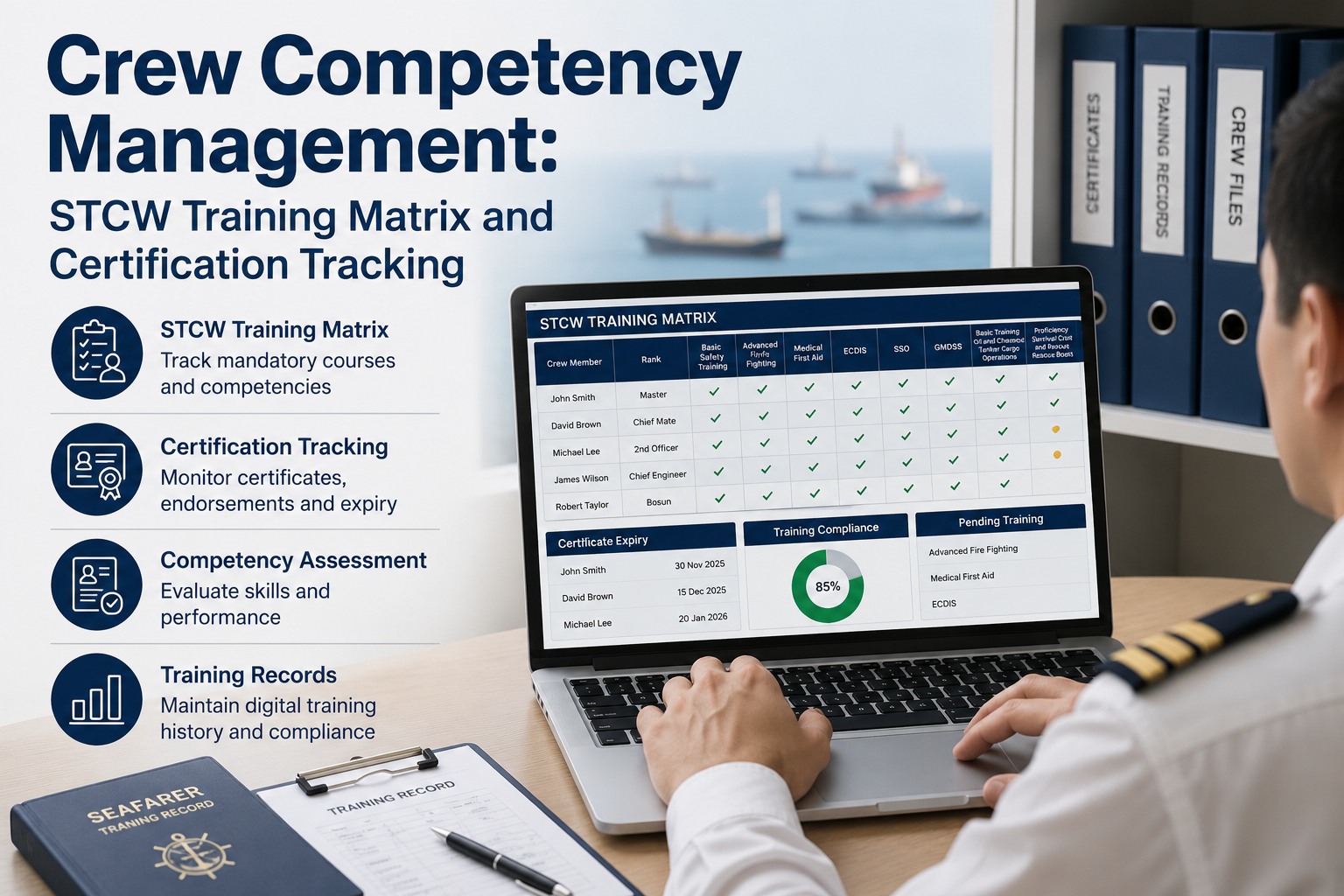
A training matrix maps required competences against ranks and vessel types. It answers, for any berth, exactly what a seafarer must hold before joining. The columns are the certificates; the rows are the positions; and the vessel type, trade area, and equipment fitted determine which cells are mandatory.
1
Start from the vessel
Manning must match the flag state's Minimum Safe Manning Document, and certificates must match the ship. An engine CoC must carry a propulsion power endorsement at or above the vessel's rating; a deck CoC needs the right tonnage and trade-area endorsement.
2
Add the universal baseline
Basic Safety Training under STCW VI/1 applies to every seafarer with safety or pollution-prevention duties: Personal Survival Techniques, Fire Prevention and Firefighting, Elementary First Aid, and Personal Safety and Social Responsibilities.
3
Layer rank-specific requirements
Watchkeeping officers on GMDSS vessels need a GMDSS operator certificate; navigation officers need radar and ARPA; masters and designated security officers need SSO training; muster-list medical responders need Medical First Aid.
4
Apply vessel-type endorsements
Tankers require basic and advanced oil, chemical, or liquefied-gas endorsements under STCW V/1-1 and V/1-2. Passenger vessels require crowd management and crisis management under V/2. High-voltage training applies where systems exceed 1,000 volts.
5
Include familiarisation and records
Ship-specific familiarisation, onboard training records, and records of assessment complete the picture. These are documentary evidence, and inspectors ask for them.
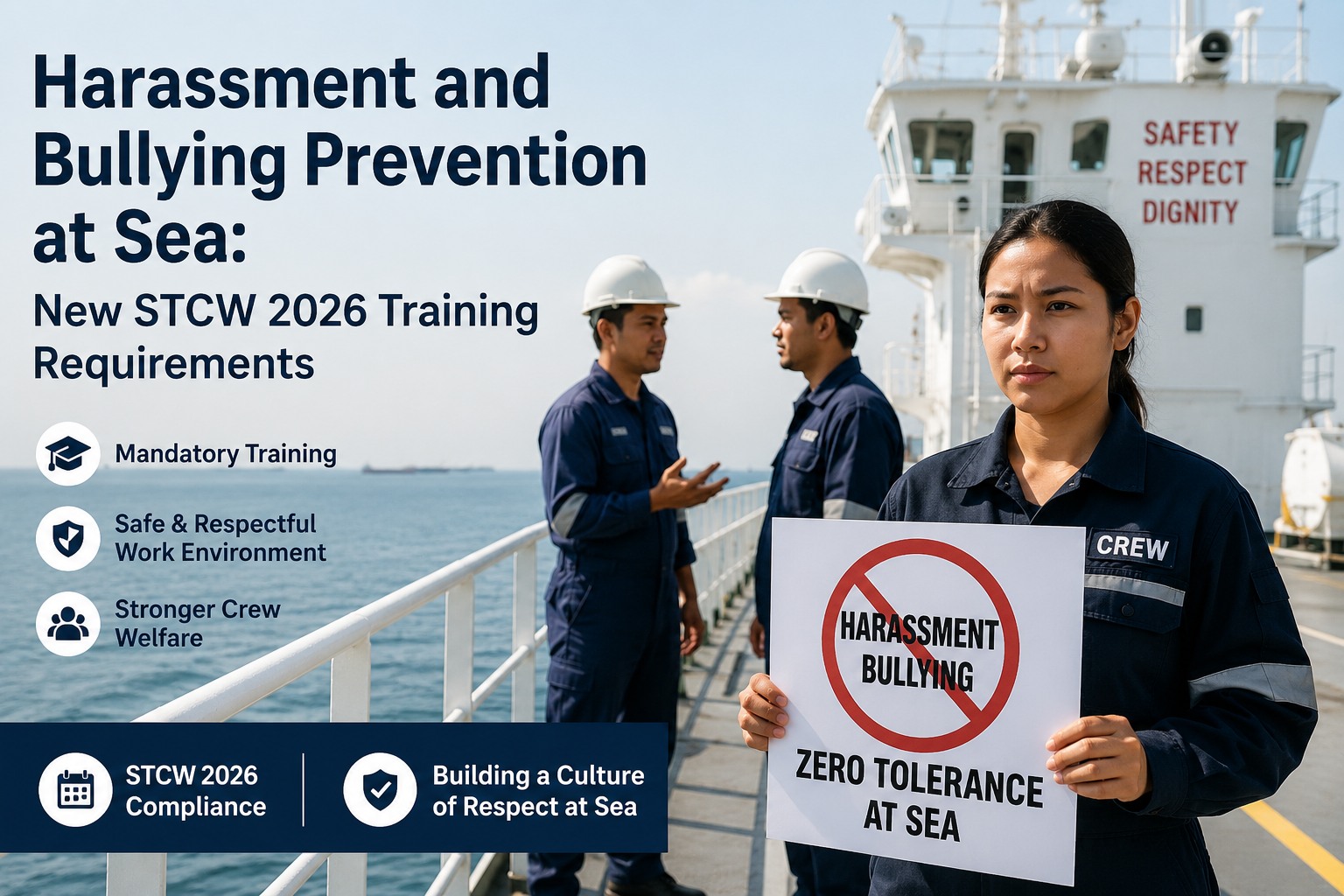
The matrix is not static. It changes when a vessel changes flag, when equipment is installed, when a seafarer is promoted, and when the convention is amended — as it was on 1 January 2026, when Resolution MSC.560(108) added harassment-prevention competence to PSSR for every certificate issued or revalidated after that date.
Before the certificate lapses, not after
Turn the Matrix Into an Alert, Not a Spreadsheet
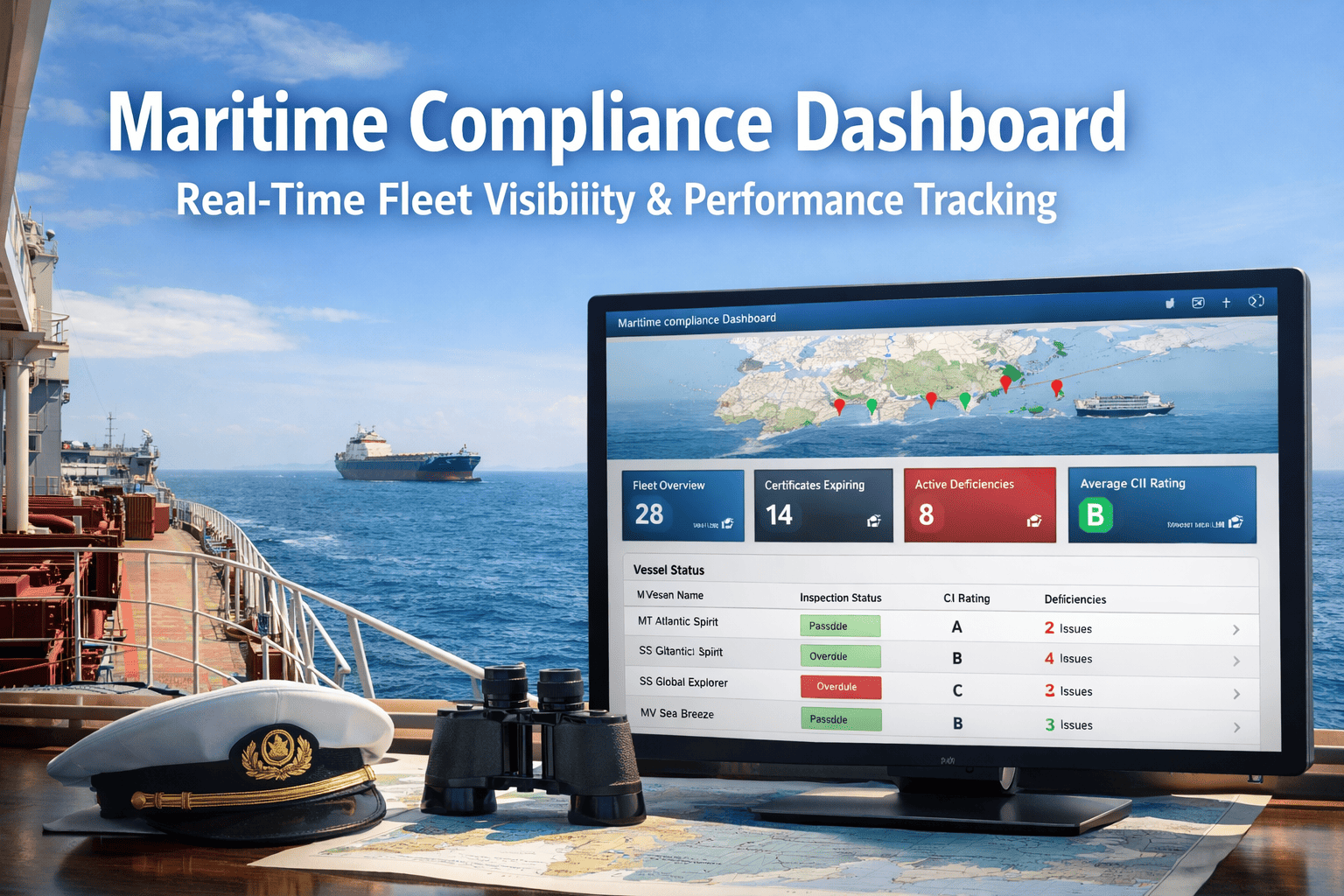
A matrix in a spreadsheet tells you what should be true. A tracking system tells you what is true today, and what expires in ninety days. Marine Inspection maintains the competency matrix per rank and vessel, tracks CoC, CoP, endorsement and medical validity per seafarer, and raises staged alerts well before expiry — so revalidation is booked in time and nobody joins uncertified. Book a 30-minute demo to see certification tracking, or start a free trial today.
Revalidation: the Mechanics That Trip Crews Up
Most certification failures are not about competence. They are about a seafarer arriving at renewal without the sea service to take the short route, or discovering that their route closed entirely. The rules reward planning. Scroll the table on mobile.
Revalidation, Refresher, and the Expiry Cliff
The underlying logic is skills fade. The Manila Amendments introduced five-yearly refresher training for safety-critical functions precisely because proficiency in emergency response declines when it is not practised. Note also that requirements attach separately: advanced firefighting and proficiency in survival craft each carry their own refresher or revalidation obligation, distinct from Basic Training renewal. A seafarer holding multiple endorsements must satisfy each. Implementation varies by administration, so the crew manager's matrix must be flag-aware, not generic.
Where Certificates Fail: the Common Gaps
Experience across inspection regimes points to a recurring set of failures, and every one of them is a tracking problem before it is a training problem. See gap analysis in a demo.
Engine-side refreshers
Engineering officers commonly miss fire prevention and firefighting revalidation, and Medical First Aid is often overlooked in the engine department despite being required for muster-list medical responders.
Endorsement mismatch
A CoC valid in itself but carrying the wrong tonnage, trade area, or propulsion-power endorsement for the vessel actually being served on. The certificate is real; the match is not.
Missing Endorsement of Recognition
A seafarer certificated by one flag serving under another without the receiving flag's EoR under Regulation I/10 — a routine failure on multinational crews.
Silent expiry during a contract
A certificate valid at sign-on that expires mid-voyage, discovered at a port call rather than at planning. Rolling expiry across a crew pool is invisible without systematic tracking.
Unapproved training providers
Certificates from training centres not on the flag state's approved list can be rejected by port state control, flag states, and employers alike — the training happened, the certificate does not count.
Medical certificate lapse
A valid certificate of medical fitness is a prerequisite for revalidation in many administrations, so a lapsed medical can block a CoC renewal entirely.
One nuance is worth knowing precisely, because it separates a deficiency from a detention. If a vessel arrives in port with an expired certificate and no evidence of pending revalidation, it is treated as a deficiency. Where the operator can show revalidation is genuinely in progress — application submitted, training booked, sea service submitted to the authority — most regimes will issue a requirement to complete rather than detain. Documentation of intent has real defensive value, and it only exists if someone started the process early.
The Digital Certificate Shift
The paperwork itself is changing. Since January 2025, electronic seafarer certificates carry the same legal weight as paper, and the implications for crew managers are substantial. See digital records in a demo.
The instruments
IMO guidelines on electronic certificates for seafarers (MSC.1/Circ.1665) alongside Resolutions MSC.540(107) and MSC.541(107), which amended Part A of the STCW Code to permit electronic formats for certificates and endorsements.
What changed
Electronic documents no longer require official seals, photographs, or signatures in the paper sense; terms such as "front" and "overleaf" no longer apply. Digital certificates must carry the same information, be protected against alteration, and be verifiable.
Verification at the gangway
Unique certificate identifiers and QR codes let port state control officers verify authenticity instantly against official databases, cutting the delays that arise while credentials are checked.
The fraud problem it answers
Fraudulent certificates have been repeatedly detected across flag states, with 145 reports recorded in 2021 to 2022 alone. Instant verification is the direct response.
The administrative dividend
Administrations adopting electronic certificates report cutting processing time by up to 75%, while digital issuance platforms log every issuance, renewal, endorsement, and verification as an audit trail.
Adoption is uneven — some administrations have moved decisively, others remain paper-based — so a crew manager must handle both. That is precisely the argument for a single system of record: the certificate may be paper from one flag and digital from another, but the expiry date, the endorsement status, and the alert must live in one place.
Competency Beyond the Certificate
Certificates prove a seafarer once met a standard. Vetting regimes and modern safety management want evidence that competence is current, assessed, and managed. This is where the matrix earns its keep beyond compliance.
Onboard assessment
Records of assessment, signed off by a qualified assessor, document that a seafarer has demonstrated specific competences in practice — not merely completed a course ashore.
Vetting expectations
Tanker vetting under TMSA and SIRE places explicit weight on officer competency matrices and on electronic reporting of training activity — the matrix becomes an inspection artefact.
Gap analysis
Comparing the matrix against the actual crew pool reveals which berths cannot be filled compliantly, which training must be booked, and where a promotion is blocked by a missing endorsement.
Succession and promotion
Tracking sea service alongside certification shows who is on course to qualify for the next rank, and what training and time they still need to get there.
Audit readiness
A single training record eliminates manual aggregation from multiple sources before an audit, and demonstrates continuous management rather than pre-inspection scramble.
Rest hours alongside
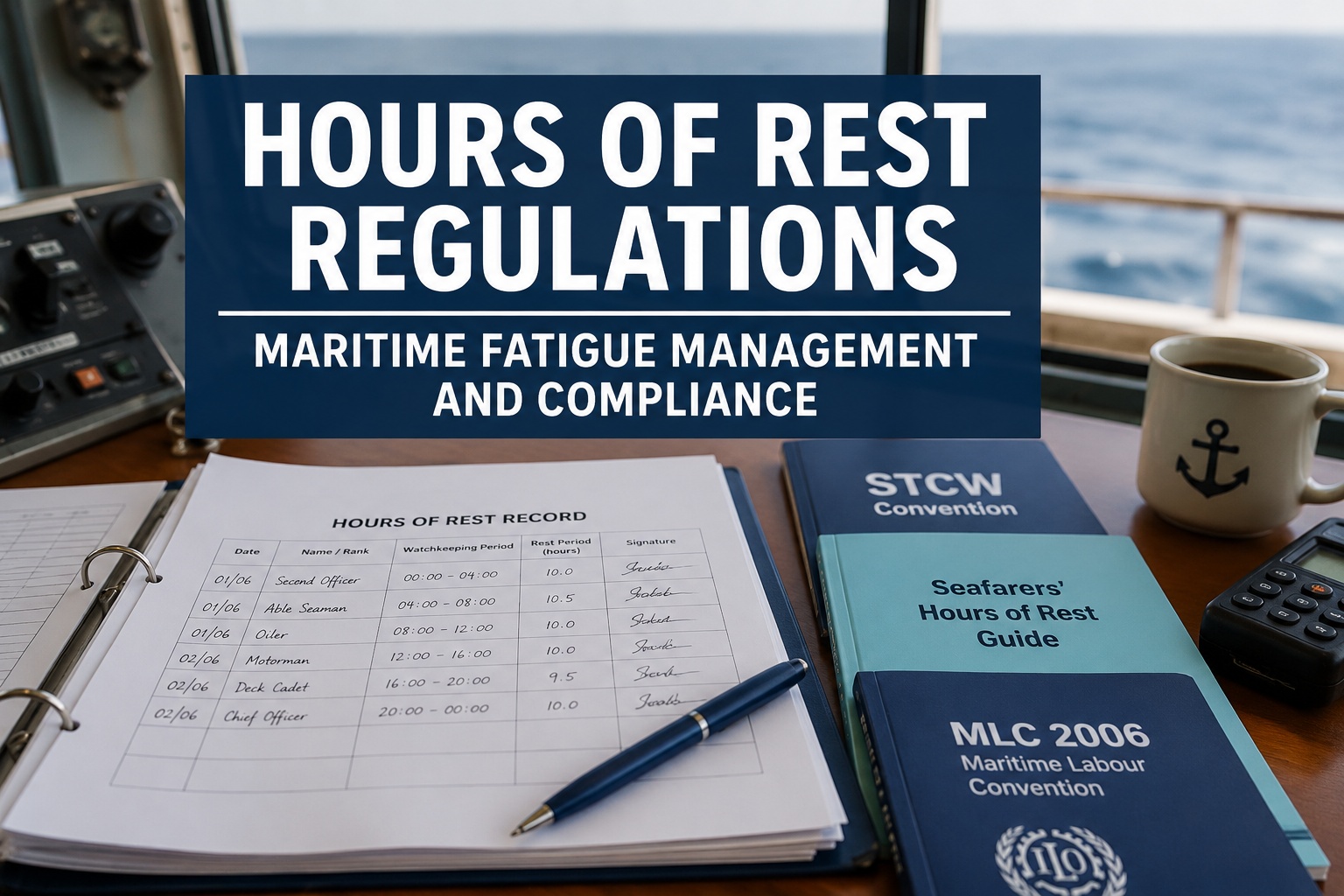
Watchkeeping compliance under STCW Chapter VIII is checked by PSC alongside certificates. Competency and rest-hour records together make up the human-element picture.
Running the System: a Crew Manager's Workflow
Turning all of this into routine practice is what separates a compliant fleet from a lucky one. The workflow is cyclical, and each stage produces the evidence the next one needs.
Define per vessel
Build the matrix from the Minimum Safe Manning Document, vessel type, equipment fitted, and trade area. Re-derive it whenever the ship changes flag or fits new systems.
Capture centrally
Hold every CoC, CoP, endorsement, EoR, medical certificate, and training record against the seafarer, whether the original is paper or digital.
Alert in stages
Staged alerts — typically at ninety, sixty, and thirty days — ensure revalidation is initiated while the short route is still available and before a berth is jeopardised.
Analyse the gap
Run the matrix against the pool. Identify uncoverable berths, upcoming lapses, and seafarers who will fall below qualifying sea service before renewal.
Book and record
Schedule the correct course — revalidation or refresher, according to sea service — with an approved provider, and record completion against the seafarer.
Produce on demand
Assemble crew certification evidence rapidly for PSC, vetting inspections, and audits, including the officer matrix where vetting regimes require it.
The strategic point is that crew competency management is a data problem wearing a training uniform. The training is usually available; the sea service is usually there; the seafarer is usually competent. What fails is the visibility — knowing, across dozens of vessels and hundreds of seafarers with certificates issued by a dozen administrations on rolling five-year cycles, exactly what expires next and who cannot legally join. Fleets that solve the visibility problem find that the compliance problem largely solves itself. Book a demo to see competency management on your fleet.
Frequently Asked Questions
What is a crew competency matrix?
A training matrix maps required certificates and competences against ranks and vessel types, so that for any berth it is clear exactly what a seafarer must hold before joining. It is derived from the Minimum Safe Manning Document, the vessel type and equipment, the trade area, and the rank-specific requirements of the STCW Convention.
What is the difference between a CoC, a CoP, and documentary evidence?
A Certificate of Competency is a rank-specific licence issued only by the flag state administration, based on sea service, examinations, and approved training. A Certificate of Proficiency is a task-specific qualification such as basic safety training or a tanker endorsement, which approved training centres may issue on the administration's behalf. Documentary evidence covers other proof of competence, including onboard training records and records of assessment.
What is the difference between revalidation and refresher training?
Revalidation is the shortened, assessment-driven route available to seafarers with around 360 days — roughly twelve months — of qualifying sea service in the previous five years. Refresher training is the longer route, re-drilling full competencies with theory and assessment, required where sea service falls short or the seafarer has been away from shipboard operations for an extended period.
What happens if an STCW certificate expires?
The flag state will not renew the credential and the seafarer cannot sail in that capacity. If a certificate has been expired beyond five years, refresher and revalidation are generally unavailable and the original courses must be retaken. A vessel arriving with an expired certificate and no evidence of pending revalidation faces a deficiency; where revalidation is demonstrably in progress, most regimes issue a requirement to complete instead.
What is an Endorsement of Recognition?
Under STCW Regulation I/10, where a seafarer holds a certificate issued by one country but serves on a vessel flagged to another, the second flag state must issue an Endorsement of Recognition confirming it accepts the first country's certificate. Certificates from countries not on the IMO White List may not be accepted for flag state endorsement at all.
Are digital STCW certificates valid?
Yes. IMO guidelines on electronic certificates (MSC.1/Circ.1665) together with Resolutions MSC.540(107) and MSC.541(107) gave electronic certificates the same legal standing as paper from January 2025. They must carry the same information, be protected against alteration, and be verifiable — typically through unique identifiers and QR codes that let port state control confirm authenticity instantly.
Which certificate gaps most often cause deficiencies?
Missed engine-department refreshers, particularly firefighting and Medical First Aid; certificates carrying the wrong tonnage, trade area, or propulsion-power endorsement for the vessel; missing Endorsements of Recognition on multinational crews; certificates that expire silently mid-contract; training from providers not on the flag state's approved list; and lapsed medical certificates blocking a CoC renewal.
Built for crew certification compliance
Know What Expires Next, Across Every Vessel
Maintain the competency matrix per rank and vessel, track CoC, CoP, endorsement, EoR, and medical validity per seafarer, run gap analysis across the pool, receive staged alerts before expiry, and assemble crew certification evidence on demand for PSC, vetting, and audits. Marine Inspection turns crew competency from a spreadsheet into a control. Book a tailored walkthrough or start a free trial today.