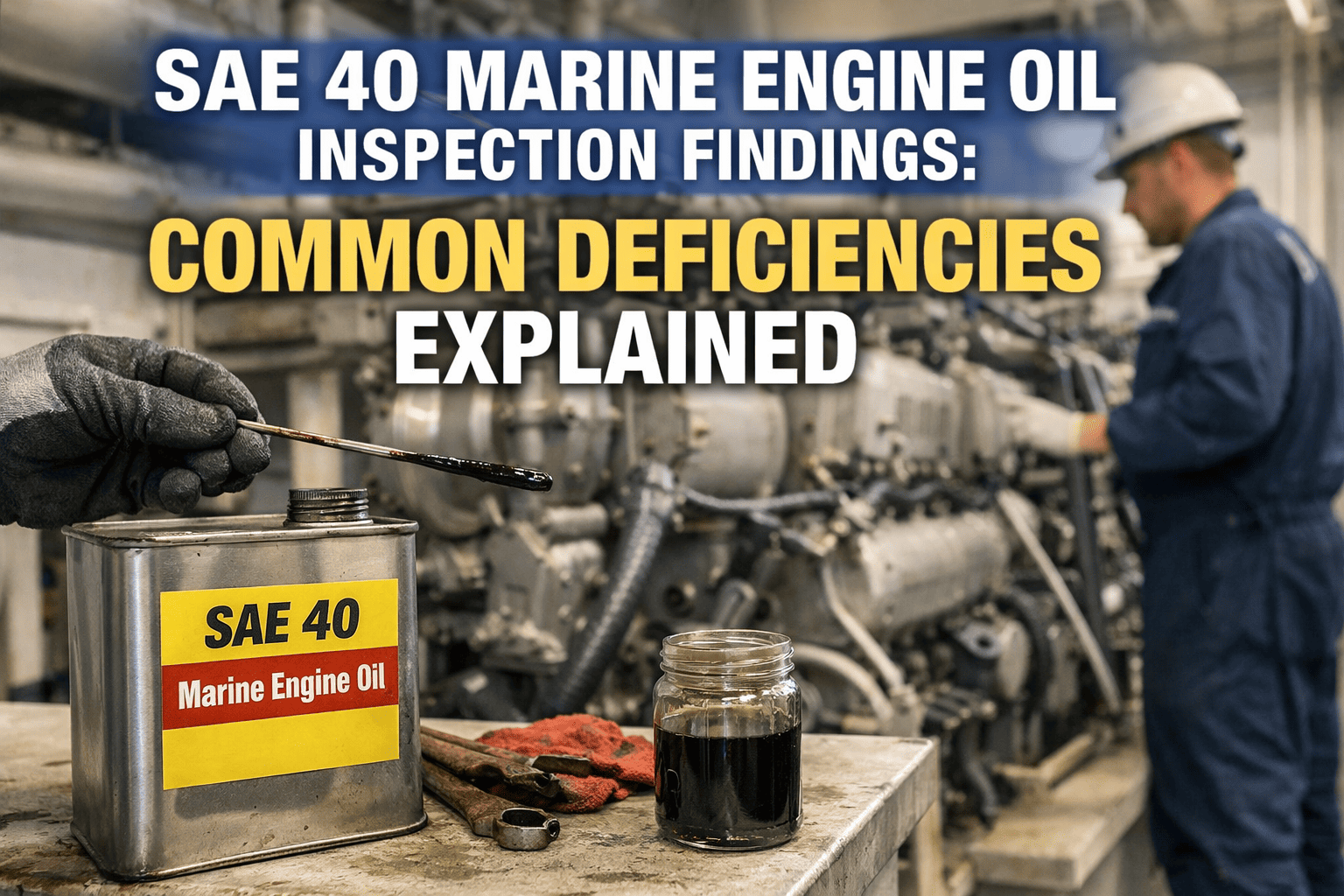
SAE 40 is the workhorse viscosity grade for marine trunk piston engine oils — used in the medium-speed four-stroke diesel engines that power generators, propulsion on smaller vessels, and auxiliary machinery across the global fleet. It's also one of the most closely scrutinized areas during engine inspections and class surveys, because oil condition directly reveals how well the engine is being maintained. When inspectors pull an oil sample or review analysis reports, they're reading the engine's health history in real time. Degraded oil doesn't just signal a lubrication problem — it signals potential bearing damage, liner wear, piston fouling, and combustion issues that could take the engine offline. This guide explains what inspectors look for in SAE 40 marine engine oil, the most common deficiencies found, and how to keep your oil — and your engine — within acceptable limits. Engineers looking to track oil analysis results and maintenance actions digitally can sign up for Marine Inspection or schedule a demo to see how it all connects.
SAE 40 Marine Engine Oil: Key Inspection Parameters
SAE 40
Viscosity Grade
12.5–16.3 cSt at 100°C (SAE J300 standard)
BN 12–40
Typical New Oil Range
Varies by fuel sulphur: BN 12–20 (VLSFO) · BN 30–40 (HFO)
50% Drop
BN Warning Limit
50% depletion from new oil value = investigate
±25%
Viscosity Change Limit
Beyond ±25% from new oil = condemning territory
Where SAE 40 Oil Is Used in Marine Engines
SAE 40 trunk piston engine oils (TPEOs) serve a dual purpose that makes their condition critically important — they lubricate the crankcase and the combustion space in medium-speed engines where the crankcase is not separated from the cylinder area.
Primary Application
4-Stroke Medium-Speed Trunk Piston Engines
Main propulsion engines on smaller vessels and auxiliary/generator engines on most ships. The same oil lubricates bearings, pistons, rings, and cylinder liners — meaning the oil is directly exposed to combustion by-products, fuel contamination, and extreme heat. SAE 40 grade (with BN matched to fuel sulphur) is standard for engines running on distillates, VLSFO, or HFO.
Also Used In
2-Stroke Crosshead Engine System Oil
In crosshead engines, SAE 40 serves as the crankcase system oil (not the cylinder oil, which is SAE 50). The crankcase is separated from the combustion space by the piston rod gland, so the system oil is less exposed to combustion acids — but contamination through gland leakage still occurs. System oil BN for crosshead engines is typically lower (BN 5–8).
What Inspectors Check: The Oil Condition Assessment
During class surveys, SIRE inspections, and internal audits, the condition of the engine oil is assessed through laboratory analysis reports, onboard test results, and physical inspection. Here are the parameters inspectors focus on — and what each reveals. Book a demo to see how Marine Inspection logs and tracks every oil analysis result .
SAE 40 Oil Analysis: Key Parameters & What They Reveal
V
Viscosity (cSt at 100°C) — Must stay within SAE 40 range. Increase = oxidation, soot, insolubles. Decrease = fuel dilution. Beyond ±25% from new oil is a condemning limit.
BN
Base Number (mg KOH/g) — Acid neutralization reserve. Drops as oil combats sulphuric acid from fuel combustion. 50% depletion from new oil value triggers investigation.
WC
Water Content (%) — Must be below 0.2%. Above 0.5% is critical. Sources: cooling system leaks, condensation, piston rod gland leaks. Water destroys bearing surfaces and promotes corrosion.
Fe
Iron (ppm) — Wear metal from liners, rings, and gears. Rising trends indicate accelerating wear. Sudden spikes demand immediate investigation — potential bearing or liner failure in progress.
Ins
Insolubles (%) — Soot, carbon, oxidation products, and wear debris suspended in the oil. High insolubles overwhelm the oil's dispersancy, cause deposits, and accelerate abrasive wear.
AS
Aluminium + Silicon (ppm) — Catalytic fines from fuel. In trunk piston engines, cat-fines in the crankcase oil indicate fuel contamination and inadequate fuel treatment — a serious wear risk.
FP
Flash Point (°C) — Drop indicates fuel dilution of the crankcase oil. Fuel leaking past piston rings or from injectors reduces the oil's viscosity and creates a fire/explosion risk in the crankcase.
Na
Sodium (ppm) — Indicator of seawater or coolant ingress. Combined with vanadium, causes severe high-temperature corrosion. Even small increases above baseline warrant investigation.
Ox
Oxidation (Abs/cm) — Measured by infrared spectroscopy. High oxidation indicates the oil is thermally degraded — losing its ability to protect engine surfaces. Caused by extended drain intervals or overheating.
The 7 Most Common SAE 40 Oil Deficiencies
These are the findings that appear most frequently in inspection reports, class surveys, and oil analysis flags — each one represents a real risk to engine reliability if left unaddressed.
Deficiency 1 — BN Depletion Below Safe Limits
What it means: The oil can no longer neutralize acids from fuel combustion. Corrosive wear accelerates on liners, rings, and bearing surfaces. Causes: High-sulphur fuel without matching BN oil, excessive oil drain intervals, low make-up oil rate, or fuel changeover without switching oil. Action: Increase make-up rate, consider oil change, or switch to higher BN formulation matching current fuel sulphur.
Deficiency 2 — Viscosity Out of Range
What it means: The oil film may be too thin (viscosity decrease) or too thick (viscosity increase) for proper bearing and liner protection. Viscosity increase: Oxidation, soot overloading, insolubles, asphaltene precipitation from incompatible fuels. Viscosity decrease: Fuel dilution from leaking injectors or poor combustion. Action: Beyond ±25% from new oil viscosity is condemning — investigate root cause and likely change the oil charge.
Deficiency 3 — Water Contamination
What it means: Water in the crankcase destroys bearing surfaces, promotes corrosion, emulsifies the oil, and accelerates BN depletion. Causes: Leaking cooling water through liner seals or heat exchangers, condensation from temperature cycling, or piston rod gland leakage (crosshead engines). Action: Find and fix the source. Run the oil purifier/separator continuously to remove water. Above 0.5% water is critical — engine should not operate until resolved.
Deficiency 4 — Elevated Wear Metals (Iron, Lead, Copper, Tin)
What it means: Each metal traces to specific components — iron from liners and gears, lead and tin from bearings, copper from bearing overlays and cooler tubes, chromium from piston rings. Trending is critical: A stable level within limits is normal; a rising trend indicates accelerating wear from corrosion, contamination, or lubrication failure. Action: Compare against maker's limits. Investigate the source based on which metals are elevated. Sudden spikes require immediate engine inspection.
Deficiency 5 — Fuel Dilution (Low Flash Point)
What it means: Fuel is leaking into the crankcase oil — reducing viscosity, diluting additives, and creating a crankcase explosion risk. Causes: Worn or stuck fuel injectors, poor combustion, over-fuelling, or injector needle seat leakage. Flash point dropping below the warning limit indicates significant contamination. Action: Check and overhaul injectors. Monitor flash point trend. If flash point drops critically, change the oil charge to restore protection.
Deficiency 6 — Cat-Fine Contamination
What it means: Hard aluminium and silicon particles from fuel refining have entered the crankcase — either through combustion or fuel system leakage. Cat-fines cause abrasive wear to liners, rings, bearings, and fuel injection equipment. Action: Improve fuel treatment (separator throughput, settling time, temperature). In trunk piston engines, cat-fines in the crankcase oil are a red flag for fuel treatment deficiency — address the fuel system, not just the oil.
Deficiency 7 — Inadequate Oil Analysis Programme
What it means: No regular oil sampling, no trending, no action on lab recommendations, or results not available for inspector review. This is a management system deficiency — inspectors treat the absence of oil analysis as evidence that the operator is not monitoring engine condition. Action: Establish a scheduled sampling programme (typically every 500–1,000 hours for trunk piston engines), retain results onboard, trend key parameters, and document every corrective action taken in response to abnormal results.
Track Every Oil Sample, Every Trend, Every Action
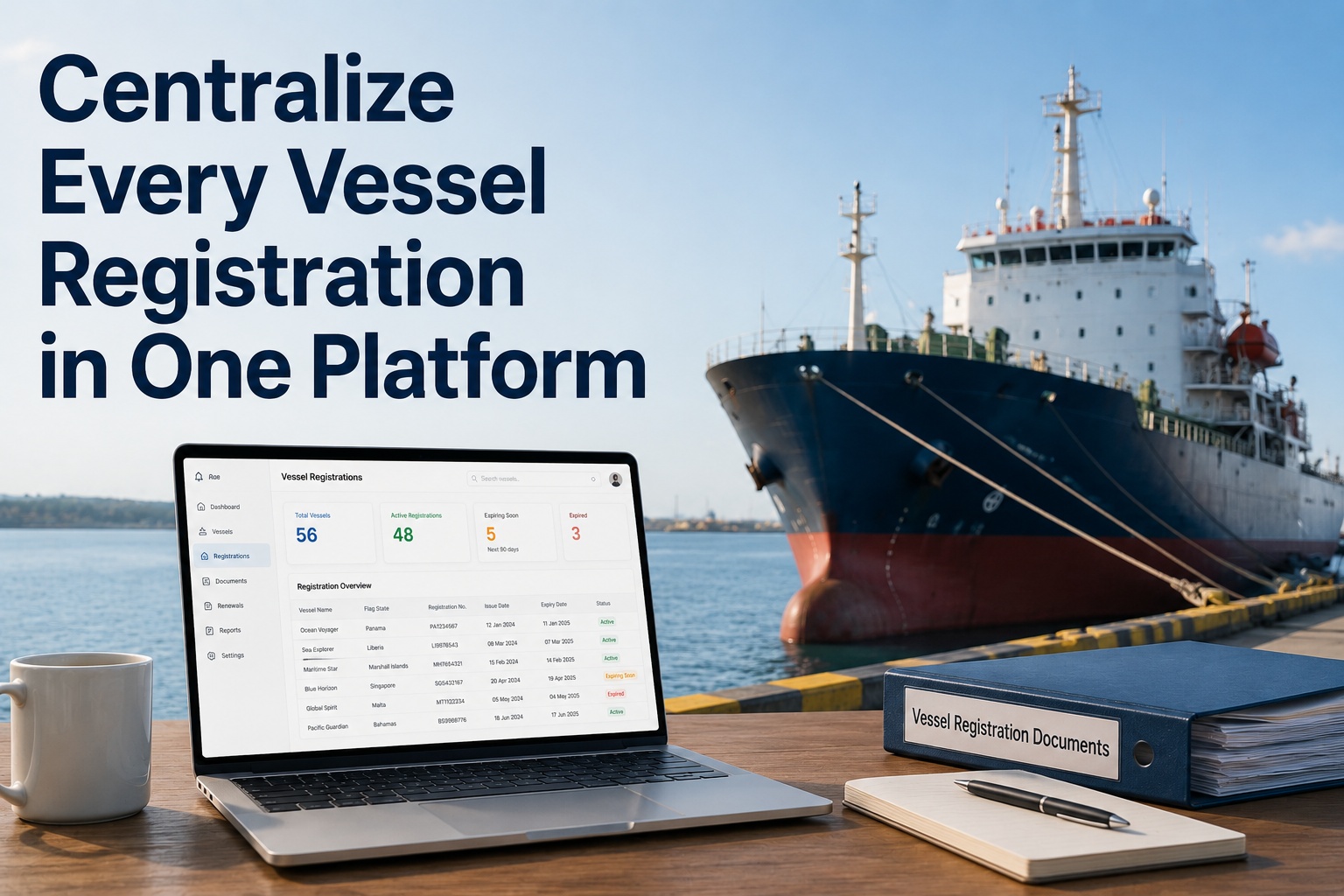
Marine Inspection logs oil analysis results, trends parameters over time, flags when limits are approached, and links corrective actions to each finding — giving you the documented evidence inspectors look for.
BN Selection: Matching SAE 40 Oil to Your Fuel
Choosing the correct Base Number for your SAE 40 trunk piston engine oil is the single most important lubrication decision — and one that must change when fuel type changes. Schedule a demo to see how Marine Inspection tracks fuel-oil matching across your fleet.
SAE 40 TPEO: BN Selection by Fuel Sulphur
Fuel Type
Sulphur Range
Recommended SAE 40 BN
MGO / MDO
<0.10% S (ECA fuel)
BN 12–15 — low alkalinity matches low acid production
VLSFO
≤0.50% S (global cap)
BN 15–20 — balanced protection for low-sulphur operation
HFO / HSFO
1.0–3.5% S (with scrubber)
BN 30–40 — high alkalinity to neutralize high acid load
Fuel Change
Switching between fuel types
Monitor BN closely after switch — may need oil adjustment or change
Since the 2020 global sulphur cap, operators switching from HFO to VLSFO have encountered a new problem: using too high a BN oil with low-sulphur fuel. When the BN is excessive relative to the acid produced, alkaline deposits build up on piston crowns and ring lands — causing bore polishing, ring sticking, and accelerated wear. The solution is matching the oil BN to the fuel sulphur, not defaulting to the highest BN available. Book a demo to see how Marine Inspection helps engineers match oil to fuel across fuel changeovers.
Oil Analysis Sampling Best Practice
The value of oil analysis depends entirely on consistent, representative sampling. Here's how to get it right.
Every 500–1,000 running hours for trunk piston engines (per maker's recommendation). Always sample at the same point in the oil circuit — typically from the engine oil outlet before the purifier — for comparable results. Trending only works with consistent sampling conditions.
Consistency enables trending — trending enables prediction
Sample while the engine is at normal operating temperature and load. Oil at rest settles — contaminants and wear metals separate. A sample from a warm, circulating system gives the true picture of what the oil is carrying through the engine.
Hot, circulating oil = representative sample
When the lab flags a parameter outside limits, document the corrective action taken — increased purifier operation, injector overhaul, oil top-up, or full oil change. Inspectors review not just the analysis results but whether the operator acted on abnormal findings. Results without follow-up actions are a deficiency.
Analysis + action = compliance · Analysis alone ≠ compliance
Keep all oil analysis reports accessible onboard for at least 3 years. Organize chronologically so inspectors can see trends. Highlight any out-of-limit results with the documented corrective action taken. This is the evidence trail that demonstrates proactive engine management.
3 years onboard · Organized · Corrective actions documented
Build the Oil Analysis History Your Engine Deserves
Marine Inspection logs every oil sample result, trends parameters visually, flags approaching limits, and links each finding to documented corrective actions — turning oil analysis from a filing exercise into a predictive maintenance tool.
Frequently Asked Questions
What BN should SAE 40 oil have for VLSFO?
For trunk piston engines running on VLSFO (≤0.50% sulphur), SAE 40 oils with BN 15–20 are typically recommended. Using too high a BN (e.g., BN 30–40 designed for HFO) with low-sulphur fuel causes alkaline deposit buildup on piston crowns and ring lands — leading to bore polishing and ring sticking. Always match the oil BN to the actual fuel sulphur content, and monitor BN levels in used oil analysis after any fuel changeover.
How often should SAE 40 marine engine oil be analysed?
Every 500–1,000 running hours for trunk piston engines, per engine maker's recommendations. Sample at consistent intervals, from the same sampling point, while the engine is running at normal load and temperature. Additional samples should be taken after any abnormal event (fuel changeover, coolant leak, excessive soot) or when approaching drain interval limits. Trending over time is more valuable than individual results.
When should SAE 40 engine oil be changed?
Trunk piston engine oils with adequate centrifuge purification and make-up oil addition can run for very long periods — potentially years — without a full oil change, provided analysis results remain within limits. The trigger for oil change is when analysis shows parameters beyond condemning limits: viscosity change exceeding ±25%, BN depleted below 50% of new oil value, water above 0.5%, or flash point critically low. Follow engine maker's specific condemning limits for your engine type.
What does rising iron content in the oil mean?
Iron (Fe) in used oil comes primarily from cylinder liners, piston rings, and gears. A stable level within the maker's limits is normal operational wear. A rising trend indicates accelerating wear — possibly from corrosion (low BN), abrasion (cat-fines), or lubrication breakdown (wrong viscosity, water contamination). A sudden spike demands immediate investigation and potentially opening the engine for inspection. Always track iron trending over multiple samples, not single results.
What inspection finding results from not having an oil analysis programme?
The absence of a regular oil analysis programme is itself a deficiency — it indicates the operator is not monitoring engine condition as part of their planned maintenance system. Inspectors and class surveyors treat missing oil analysis records as evidence of inadequate maintenance management. This can be flagged as an ISM deficiency (failure of the safety management system to monitor critical equipment) during PSC inspections, particularly in the Paris MOU region where ISM enforcement is stringent.