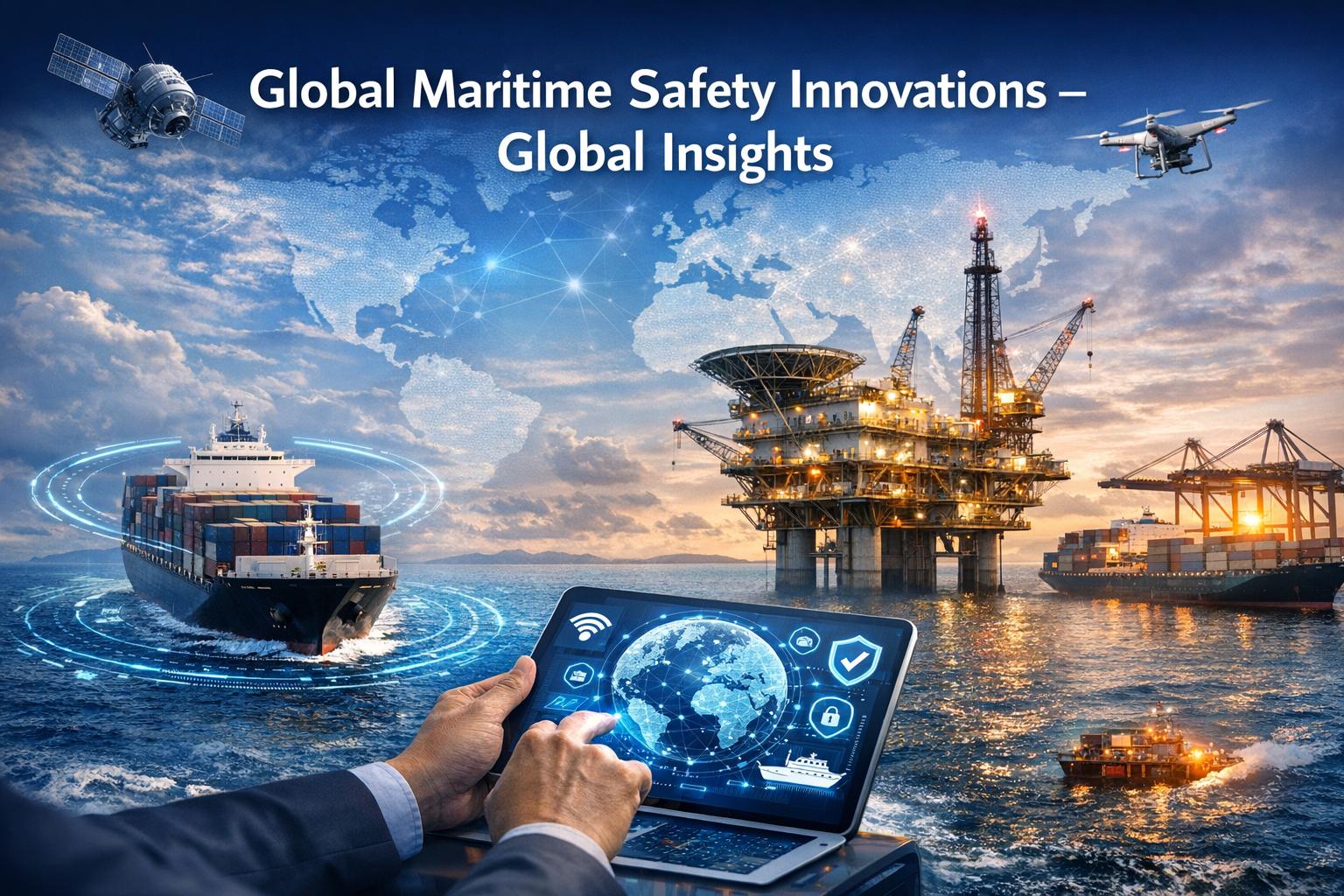
Singapore's Tuas Port, the world's largest automated terminal, processes a container every 24 seconds using AI-powered cranes and autonomous vehicles—zero human operators needed on the terminal floor. Rotterdam's fully automated APM Terminals moves 2.3 million TEU annually with 70% fewer personnel. As 2026 approaches, port automation isn't emerging technology—it's the baseline for competitive operations. Ports investing now gain 40% efficiency improvements and $180M+ annual cost reductions, while those delaying face obsolescence in an industry where speed determines survival.
The container shipping industry moves 800 million TEU globally each year. Port efficiency directly impacts supply chain velocity, shipping costs, and economic competitiveness. This guide explores the automation trends reshaping port operations for 2026 and beyond—from autonomous cranes to predictive AI, blockchain integration to digital twin terminals—and what they mean for port operators, shipping lines, and logistics providers navigating the future of global trade.
Latest Trends in Port Automation for 2026
Port automation is accelerating faster than any other maritime sector. What separates 2026 from previous years is the convergence of multiple technologies creating fully integrated, AI-optimized terminals that fundamentally change how cargo moves from ship to shore to final destination.
Fully Automated Container Terminals
Leading EdgeAutomated Stacking Cranes (ASCs), Ship-to-Shore (STS) cranes, and Automated Guided Vehicles (AGVs) operate 24/7 without human intervention. Remote operation centers monitor entire terminals from climate-controlled facilities, handling exceptions only.
Global Leaders: Singapore Tuas Port (fully automated), Rotterdam APM Terminals, Qingdao Port, Hamburg CTA, Los Angeles TraPac terminal demonstrate 40% productivity gains over conventional operations.
Autonomous Vehicle Ecosystems
EmergingAutomated trucks, AGVs, and autonomous shuttle carriers move containers within terminals and between port zones. Fleet management AI coordinates hundreds of vehicles, optimizing routes and preventing conflicts in real-time.
Deployment Scale: Hamburg Port operates 100+ autonomous vehicles, Rotterdam 200+ AGVs, Singapore Tuas planning 1,000+ autonomous units by 2027, demonstrating viability at massive scale.
IoT Sensor Networks & Digital Twins
MainstreamComprehensive sensor coverage tracks every container, piece of equipment, and vehicle in real-time. Digital twin simulations test operational changes virtually before implementation, optimizing layouts and workflows without risk.
Application: Port of Rotterdam's digital twin simulates 42,000 ship calls annually, optimizing berth allocation and reducing planning cycles from weeks to hours while testing expansion scenarios risk-free.
Blockchain & Integrated Data Ecosystems
CriticalBlockchain-based platforms connect ports, shipping lines, customs, trucking companies, and cargo owners in unified ecosystems. Real-time data sharing eliminates delays from paper documentation, manual verification, and information silos.
Implementation: Singapore TradeNet, Rotterdam's Portbase, and TradeLens (Maersk/IBM) process millions of shipments annually with 80% faster customs clearance and near-zero documentation errors.
Green Port Technologies
InnovativeElectrification, shore power, renewable energy, and emission-free equipment transform ports from pollution sources to sustainability leaders. Automation enables electric crane operations, battery-powered AGVs, and optimized energy management.
Leadership: Los Angeles/Long Beach ports mandate zero-emission equipment by 2030. Rotterdam achieves carbon neutrality through wind power, shore power, and automated electric cranes reducing emissions 70%.
How Technology Shapes the Future of Port Operations
Understanding trends is valuable—implementing them strategically is transformative. Here's how leading ports translate automation into measurable competitive advantages that reshape global trade flows.
Predictive Analytics Eliminating Congestion
The Challenge: Port congestion costs global economy $2.3 billion weekly through vessel delays, missed connections, and supply chain disruptions. Traditional reactive management can't handle variable vessel arrivals, weather impacts, and equipment failures.
The Technology: AI platforms analyze historical patterns, current operations, weather forecasts, vessel schedules, and equipment status to predict congestion 72+ hours ahead. Dynamic berth allocation and proactive resource deployment prevent bottlenecks before they form.
Measured Results: 60% reduction in average waiting time | 35% improvement in berth utilization | $85M annual efficiency gains at major terminals | 90% prediction accuracy
Implementation Path: Deploy port community systems integrating all stakeholders, layer AI analytics on unified data streams, establish dynamic pricing encouraging off-peak arrivals.
Automated Equipment Maximizing Productivity
The Challenge: Manual crane operations limit productivity to 25-30 moves/hour. Human operators need breaks, shift changes cause delays, and consistency varies. Labor costs represent 60-70% of terminal operating expenses.
The Technology: Automated STS cranes achieve 40-45 moves/hour consistently, operate 24/7 without breaks, and execute precisely planned sequences. Remote operation centers handle exceptions from climate-controlled environments, improving operator safety and comfort.
Measured Results: 40% higher productivity per crane | 70% lower labor costs | 99.8% operation accuracy | Zero operator injuries in automated zones
Implementation Path: Start with ASCs (simpler automation), then STS cranes, finally AGVs. Retrofit existing equipment where possible ($15M-$30M/crane vs. $50M-$80M new). Train existing staff for remote operations roles.
Digital Integration Accelerating Documentation
The Challenge: Paper-based documentation causes 40% of vessel delays. Bills of lading, customs declarations, cargo manifests, and certificates require manual processing, verification, and physical exchange creating bottlenecks.
The Technology: Blockchain platforms create shared, immutable records accessible to all parties. Smart contracts automate customs clearance, payment release, and cargo transfer once conditions met. API integration eliminates duplicate data entry.
Measured Results: 80% faster documentation processing | 95% error reduction | $40M annual administrative savings | 24-hour customs clearance vs. 3-5 days
Implementation Path: Join existing platforms (TradeLens, Singapore TradeNet) rather than building custom. Digital vessel operations platforms integrate with port systems enabling automated data exchange.
Autonomous Vehicles Enabling Continuous Operations
The Challenge: Terminal tractors and trucks create safety risks, require constant driver availability, and limit operating hours. Union agreements, fatigue regulations, and shift changes constrain 24/7 operations.
The Technology: AGVs and autonomous trucks navigate terminals using GPS, LIDAR, and computer vision. Fleet management AI coordinates hundreds of vehicles optimizing routes, preventing conflicts, and enabling true 24/7 operations without human operators.
Measured Results: 24/7 continuous operations | 85% improvement in fuel efficiency | Zero accidents in automated zones | 50% reduction in vehicle fleet size needed
Implementation Path: Designate automated zones, deploy AGV infrastructure (guidance systems, charging stations), phase in vehicles gradually, maintain human-operated areas during transition (3-5 years).
Digital Twins Optimizing Planning & Expansion
The Challenge: Terminal layout changes, capacity expansions, and operational modifications carry massive risk. Physical testing is impossible, mistakes cost millions, and sub-optimal decisions persist for decades.
The Technology: Digital twin simulations replicate entire terminals virtually. Test equipment configurations, workflow changes, and expansion scenarios risk-free. Optimize before implementing, train operators on virtual systems, validate investments with data-driven confidence.
Measured Results: 50% faster planning cycles | 90% accuracy in capacity predictions | $200M saved on optimized expansion vs. traditional approach | Risk-free testing
Implementation Path: Deploy comprehensive IoT sensors, create baseline digital model, validate against actual operations, then use for planning, training, and optimization. Initial investment $5M-$15M delivers ongoing value.
Global Port Automation Leaders: What They're Doing Right
Learning from successful implementations accelerates your automation journey. These ports demonstrate best practices worth replicating regardless of size or location.
Singapore Tuas Port
World's Largest Automated TerminalInnovation Highlights: Fully automated STS cranes, 1,000+ AGVs, AI-powered operations center, zero terminal workers, real-time yard optimization, integrated digital ecosystem connecting all stakeholders.
Results: 40% higher productivity than conventional terminals, 50% reduction in land use per TEU, 70% lower operating costs, setting new global benchmark for efficiency.
Key Lesson: Comprehensive automation from day one more cost-effective than incremental retrofits. Greenfield sites offer unmatched opportunity for optimal design.
Port of Rotterdam
Europe's Digital Port PioneerInnovation Highlights: Digital twin covering entire 42km port area, Portbase data platform connecting 3,000+ companies, automated APM Terminals, shore power for all vessels, renewable energy infrastructure.
Results: 35% reduction in vessel waiting time, carbon-neutral operations achieved, 42,000 ship calls optimized annually through digital twin, $180M efficiency gains.
Key Lesson: Data ecosystem integration delivers value exceeding physical automation. Connecting all stakeholders multiplies individual technology benefits.
Los Angeles / Long Beach
North America's Automation HubInnovation Highlights: TraPac fully automated terminal, Port Optimizer AI reducing congestion 60%, mandatory zero-emission equipment mandates, shore power infrastructure, truck appointment systems.
Results: Vessel turnaround reduced from 72 to 47 hours, $127M in annual delay costs eliminated, 70% emission reduction achieved ahead of targets.
Key Lesson: AI optimization delivers immediate value while physical automation phases in. Environmental mandates accelerate technology adoption creating competitive advantage.
Ready to Compete in the Automated Port Era?
While ports automate, vessel operators need digital capabilities matching their sophistication. Our platform provides the integration, automation, and data management that automated ports expect from visiting vessels.
Real-Time Port Integration
Automated berth booking, live ETA updates, digital documentation exchange with major port systems worldwide
Performance Analytics
Track turnaround times, identify efficiency bottlenecks, compare performance across ports, optimize operations
Blockchain Integration
Connect to TradeLens, Singapore TradeNet, and other digital ecosystems eliminating manual documentation
✓ No credit card required • Full port integration features • Cancel anytime
Investment Roadmap: Costs & Returns
Port automation requires substantial capital but delivers compelling returns. Understanding investment scales and payback periods helps justify projects and secure financing.
Terminal Operating System (TOS) Upgrade
Includes: Modern TOS platform, AI optimization modules, integration with existing equipment, training, data migration, customization for specific operations
Typical ROI:
• 25-35% productivity improvement ($40M-$85M annual value)
- 3-5 year payback period
- Foundation for further automation
- Highest ROI automation investment
Automated Stacking Cranes (ASCs)
Includes: Rail-mounted gantry cranes, automation systems, yard infrastructure, control systems, installation, commissioning, operator training
Typical ROI:
• 40% higher productivity vs. manual
- 60-70% labor cost reduction per crane
- 5-8 year payback period
- 99.8% accuracy vs. 95% manual
Automated Ship-to-Shore (STS) Cranes
Includes: Fully automated crane, remote operation systems, safety systems, installation, commissioning, integration with TOS, training programs
Typical ROI:
• 40-45 moves/hour vs. 25-30 manual
- 24/7 operations without breaks
- 7-12 year payback period
- Retrofit option: $15M-$30M (better ROI)
AGV Fleet & Infrastructure
Includes: AGVs, guidance systems, charging infrastructure, fleet management software, maintenance facilities, spare parts inventory
Typical ROI:
• 50% reduction in vehicle fleet size needed
- 85% fuel efficiency improvement
- 6-10 year payback period
- Zero accidents in automated zones
Digital Twin & IoT Infrastructure
Includes: Comprehensive sensor network, digital twin platform, simulation software, data integration, ongoing modeling support
Typical ROI:
• 50% faster planning and optimization
- $200M saved on expansion decisions
- 3-5 year payback period
- Enables data-driven decision making
Comprehensive Terminal Automation (Greenfield)
Includes: All automated equipment (STS, ASCs, AGVs), complete digital infrastructure, remote operations center, utilities, civil works for new terminal
Typical ROI:
• 40% higher productivity vs. conventional
- 70% lower operating costs long-term
- 12-18 year payback period
- Example: Singapore Tuas Port
Frequently Asked Questions
What's the fastest ROI port automation investment?
Terminal Operating System (TOS) upgrades deliver fastest payback (3-5 years) through immediate productivity gains, better equipment utilization, and optimized yard planning. Start here before physical automation. Modern TOS with AI optimization provides foundation for future automation while delivering standalone value.
Can smaller ports justify automation investments?
Yes, through phased implementation and selective automation. Start with TOS upgrade and yard optimization (immediate ROI), add automated yard cranes (ASCs) in high-density areas, implement truck appointment systems reducing gate congestion. Many 1-2M TEU terminals achieve 25-30% efficiency gains with $25M-$75M selective automation vs. $800M+ comprehensive approach.
How do vessel operators benefit from port automation?
Automated ports process vessels 35% faster, provide accurate berthing windows eliminating waiting time, enable just-in-time arrivals saving fuel, and require digital integration for optimal scheduling. Digital vessel operations platforms connect to automated port systems maximizing these benefits through real-time coordination and automated documentation exchange.
What happens to port workers when terminals automate?
Automation reduces manual labor 60-70% but creates new roles: remote crane operators (climate-controlled offices), AI system supervisors, data analysts, maintenance technicians, automation engineers. Leading ports retrain existing workforce for these positions. Singapore, Rotterdam, and Los Angeles demonstrate successful transitions with comprehensive retraining programs and gradual implementation timelines (5-10 years).
How long does full terminal automation take?
Greenfield terminals: 4-6 years from design to full operations (Singapore Tuas, Hamburg CTA). Brownfield conversions: 8-12 years phased implementation maintaining operations during upgrades (Rotterdam APM, Long Beach TraPac). Quick wins possible in 12-18 months through TOS upgrades and yard optimization before equipment automation.
Are automated terminals more reliable than conventional operations?
Yes—automated equipment operates 24/7 without breaks, achieves 99.8% accuracy vs. 95% manual, eliminates human error causing 75% of incidents, and performs consistently regardless of weather/time/conditions. However, system failures can halt entire terminals making redundancy and maintenance critical. Well-designed automated terminals achieve 99.5%+ uptime.
What role does 5G play in port automation?
5G enables real-time remote control of cranes and vehicles through ultra-low latency (1-5ms vs. 50ms 4G), supports hundreds of simultaneous device connections, provides reliable coverage eliminating dead zones, and enables future AR/VR applications. Qingdao Port's 5G implementation proves concept at scale. Expect 5G adoption accelerating as costs decline and coverage expands.
How do blockchain and port automation integrate?
Blockchain complements physical automation by digitizing documentation and payment flows. TradeLens, Singapore TradeNet, and similar platforms connect ports, shipping lines, customs, and cargo owners in unified ecosystems. Result: 80% faster documentation processing, 95% error reduction, automated customs clearance, and elimination of delays from paper-based processes that physical automation alone can't address.
Navigate the Automated Port Future
As global ports automate, ensure your fleet has the digital capabilities to maximize efficiency
Port Integration
Connect to 150+ port systems worldwide with automated data exchange
Faster Turnaround
35% reduction in port time through optimized scheduling and digital workflows
Digital Documentation
Automated exchange with blockchain platforms eliminating manual processes
Cost Savings
$125K annual efficiency gains per vessel through optimized port operations
Integrated with Singapore, Rotterdam, Los Angeles, Hamburg, and 150+ ports worldwide