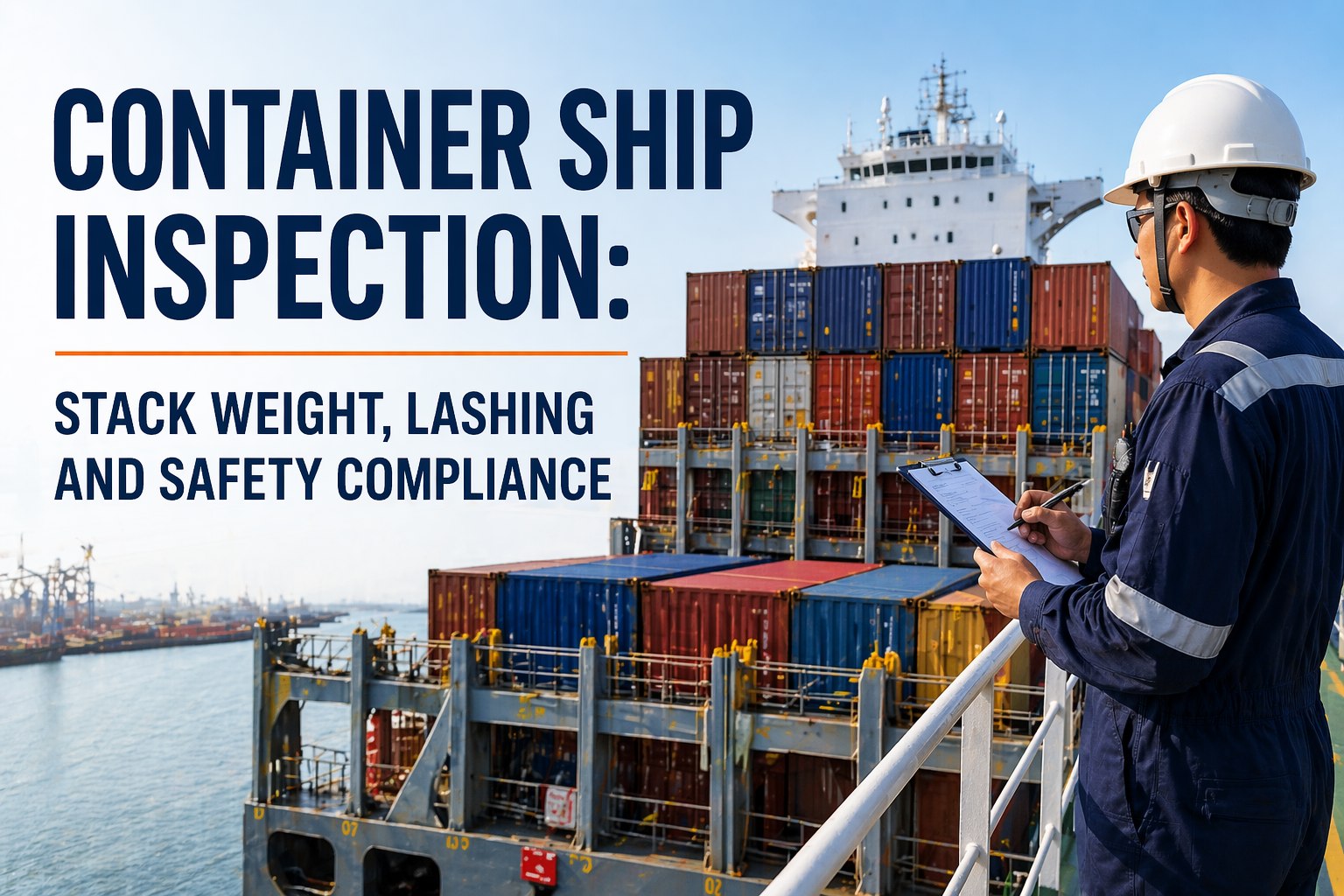
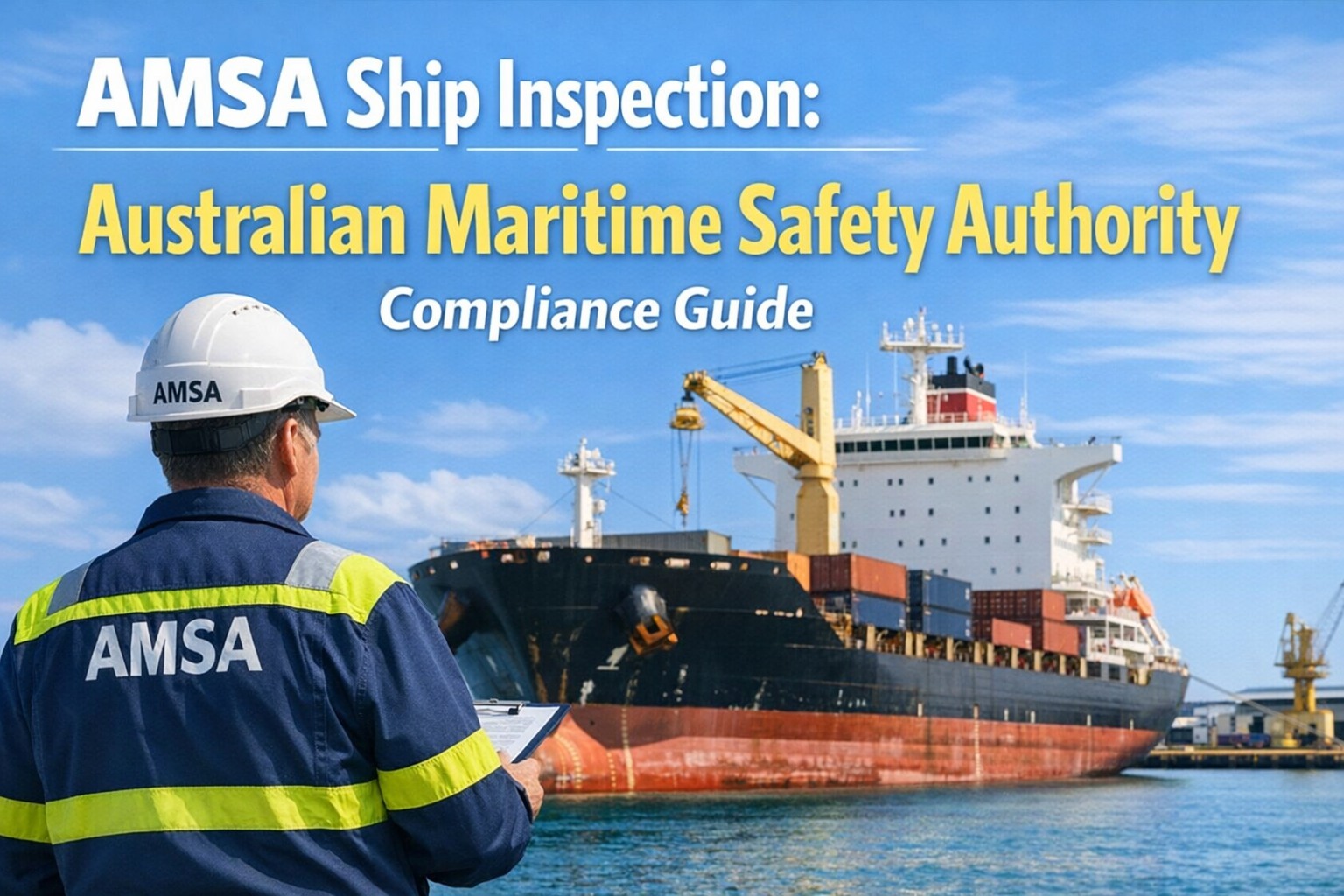
Container Ship Inspection: Stack Weight, Lashing and Safety Compliance
Container ships now exceed 24,000 TEU capacity with container stacks reaching 10 tiers high — and the physics of securing thousands of steel boxes against North Atlantic storm forces means that every twist lock, lashing rod, and cell guide is a structural link in a chain where the weakest element determines whether cargo arrives or ends up on the ocean floor. The World Shipping Council's June 2024 Containers Lost at Sea Report recorded 221 containers lost in 2023 — the lowest annual number since tracking began in 2008 (previously 661) — but the WSC emphasised that every container lost at sea represents ongoing risk requiring constant vigilance. From 1 January 2026, new SOLAS Chapter V amendments make container loss reporting mandatory: masters must immediately report containers lost overboard or sighted adrift, including container type, dimensions, dangerous goods status, wind/current conditions, and estimated drift — with a final verified message required after inspection. The same date introduces mandatory electronic inclinometers for new container ships and bulk carriers of 3,000 GT and above, with data potentially linked to the VDR. The Verified Gross Mass (VGM) requirement under SOLAS Chapter VI Regulation 2 remains the foundation of safe stowage — containers without verified weight documentation cannot be loaded, period. The Cargo Securing Manual (CSM) defines lashing calculations, stack weight limits, and securing arrangements for every container position, while the CSS Code (Code of Safe Practice for Cargo Stowage and Securing) and MSC.1/Circ.1498 provide the overarching framework. IACS Unified Requirements URC 6 (Lashing Containers) and URC 7 (Approval of Container Securing Systems) set the technical standards that classification societies enforce. Marine Inspection provides the digital platform that tracks lashing inspections, VGM compliance, reefer monitoring, and cargo securing documentation across your container fleet — book a demo to see how.
221
Containers lost at sea in 2023 (WSC) — lowest since 2008
24K+
TEU capacity on ultra-large container ships
10
Maximum container stack height on deck
Jan 2026
Mandatory container loss reporting (SOLAS V)
VGM
No loading without verified gross mass — no exceptions
Container Securing: The Complete Inspection Checklist
Container Ship Lashing & Securing — Inspection Areas
Inspection Area
What to Check
Why It Matters
Regulatory Basis
Common Deficiencies
Twist Locks (Manual/Auto)
Engagement verified (locked indicator visible). No corrosion, cracking, or deformation. Spring mechanism functional. Correct type for position.
Primary vertical connection between containers. A single failed twist lock can unlock an entire stack column.
CSM, IACS URC 6
Corroded locks not replaced. Auto-locks not engaging due to debris. Wrong lock type used for position.
Lashing Rods & Turnbuckles
Correct size for stack position. Properly tensioned (not over/under). No visible damage, bending, or thread stripping. Turnbuckle pins secured.
Transfer racking forces from container stack to ship structure. Under-tensioned = stack movement; over-tensioned = rod failure.
CSM Chapter 4, CSS Code
Insufficient lashing for upper tiers. Turnbuckles not re-tensioned after initial settling. Missing lashing entirely on end bays.
Lashing Bridges
Structural condition. Walkway surfaces non-slip. Handrails intact. Lashing eye plates not corroded or cracked. Access ladder condition.
Intermediate lashing points for mid-height containers. Structural failure of bridge = loss of all lashing attached to it.
CSM Chapter 5 (CSAP)
Corrosion at lashing eye connections. Non-slip surfaces worn. Inadequate lighting for night lashing checks.
Cell Guides (Below Deck)
Guide rails aligned and undamaged. No excessive wear or deformation. Container slides freely without jamming. Drainage clear.
Guide containers into correct position in hold. Misaligned guides cause loading damage and prevent proper twist lock engagement.
Classification rules
Bent guides from impact not repaired. Excessive clearance from wear allowing container movement. Drainage blocked causing corrosion.
Hatch Covers (Container Ships)
Weathertightness. Structural adequacy for stack weight above. Securing devices functional. Stack weight limits posted and not exceeded.
Hatch covers on container ships are load-bearing structures — they support the full weight of on-deck container stacks.
Foundation sockets/cone seats in deck. Lashing bridges. Deck fittings. All attachment points structurally sound and not corroded through.
All container securing forces ultimately transfer to the ship's deck structure. Corroded or failed deck fittings = unsecured stack.
CSM, Class structural requirements
Corrosion in socket wells. Foundation bolts loosened. Weld cracks at deck fitting connections not detected.
DG Container Segregation
IMDG Code segregation requirements met in stowage plan. Labels/placards visible. Emergency equipment accessible. DG manifest matches actual stowage.
Incompatible dangerous goods in adjacent positions can react catastrophically. Fire or toxic release at sea with no shore support.
IMDG Code, SOLAS VII
Segregation violated in actual stowage vs plan. Missing placards. DG manifest not updated after last-minute changes.
ICS proposal to revise MSC.1/Circ.1353/Rev.2 recommends supplementary software for CSM lashing calculations — endorsed by IACS (URC 6 & URC 7), currently under IMO assessment. Next-generation lashing software already in use by leading operators.
VGM: The Weight That Determines Everything
Before SOLAS mandated Verified Gross Mass in July 2016, misdeclared container weights caused stack collapses, vessel capsizes, and deaths. The rule is absolute: no VGM documentation = no loading. The shipper bears full responsibility for accurate weight declaration.
Method 1
Weigh the Packed Container
Entire loaded container weighed on certified weighbridge after packing. Most accurate method. Weight includes cargo, dunnage, bracing, packing materials, and container tare weight. Requires calibrated, certified scales.
Method 2
Weigh Cargo Components
Weigh all cargo items, dunnage, and securing materials individually. Add container tare weight from CSC plate. Calculate total VGM. Requires certified weighing equipment and documented process approved by competent authority.
Master's Role
No VGM = No Loading
Master must not accept containers without reliable VGM. If VGM not provided, terminal and master may arrange independent weighing at shipper's cost. VGM must be transmitted electronically to carrier and terminal with sufficient advance notice for stowage planning.
Reefer Container Monitoring
Power Connection: Correct voltage (380V/440V) verified. Cable condition. Plug/socket engagement confirmed. Circuit breaker functional. Each reefer position must provide rated power continuously.
Temperature Setting: Set point matches shipper's instructions. Supply and return air temperatures monitored. Defrost cycle programmed. Pre-trip inspection (PTI) results documented before loading.
Alarm Systems: High/low temperature alarms set and functional. Automated monitoring system alerts for deviations. Manual checks conducted minimum twice daily even with automated systems.
Atmosphere Control: Controlled atmosphere (CA) units verified if required for cargo (fresh produce, meat). O2/CO2 levels within specification. Ventilation settings per cargo requirements.
Stowage Position: Reefer containers only in powered positions. Adequate airflow around condenser unit. Not blocked by adjacent containers. Access for maintenance during voyage.
Documentation: Temperature logs maintained throughout voyage. Reefer technician daily rounds recorded. Alarm events documented with response. Pre-trip inspection certificates on file.
2026 Container Regulations: What Changed
SOLAS V — JAN 2026
Mandatory Container Loss Reporting
Masters must immediately report containers lost overboard or sighted adrift. Report includes: number lost, container type (reefer/standard), dimensions, dangerous goods status, wind/current/sea state, estimated drift. Final verified message required after inspection. Data stored in IMO GISIS system.
SOLAS V — JAN 2026
Electronic Inclinometers
New container ships and bulk carriers 3,000 GT and above must carry electronic inclinometers. Data potentially linked to VDR. Provides objective evidence of vessel motion during heavy weather — critical for investigating container loss incidents and parametric rolling events.
SOLAS II-1 — JAN 2026
Lifting Appliance Requirements
All lifting appliances installed on or after January 2026 must be surveyed and tested by classification society. Moves from ILO to SOLAS safety regime. Structured maintenance records required. Affects container ship cranes and cargo gear.
IMDG 42-24 — JAN 2026
IMDG Code Amendments
Amendments 42-24 apply new and revised requirements for ships carrying dangerous goods in packaged form. Updated classifications, packaging standards, and documentation requirements affect container ship DG operations.
How Marine Inspection Manages Container Fleet Compliance
Lashing Inspection Records
Twist lock, lashing rod, turnbuckle, and lashing bridge inspections documented per voyage. Deficient equipment flagged for replacement. Inventory of securing equipment tracked per vessel.
CSM & Cargo Documentation
Cargo Securing Manual version control. Stack weight limit tracking per hatch/bay. VGM compliance verification. DG manifests and segregation records. Stowage plan documentation.
Reefer Monitoring Records
Temperature logs, alarm events, PTI certificates, power connection checks, technician rounds — documented per reefer container per voyage. Cargo damage prevention evidence.
Structural & Equipment PM
Cell guide condition, hatch cover testing, deck fitting inspection, lashing bridge structural checks, crane maintenance — all tracked with service intervals and deficiency follow-up.
Container Loss Reporting
2026 SOLAS V mandatory reporting workflow: initial report, container details, DG status, weather conditions, estimated drift, final verified message. Audit-ready documentation for flag state and IMO GISIS.
Every Twist Lock. Every Lashing Rod. Every Reefer Alarm. Tracked.
Marine Inspection delivers the container fleet compliance platform: lashing inspections, VGM documentation, reefer monitoring, DG segregation records, structural maintenance, and 2026 container loss reporting — one system that makes PSC readiness continuous, not last-minute.
What is VGM and why can't containers be loaded without it?
Verified Gross Mass is the total weight of a packed container including all cargo, dunnage, bracing, and the container's own tare weight, verified using certified weighing equipment. SOLAS Chapter VI Regulation 2 (mandatory since July 2016) requires shippers to provide VGM before any container can be loaded onto a vessel. The rule was mandated after numerous incidents of misdeclared container weights caused stack collapses, vessel instability, and capsizes. Two methods are permitted: Method 1 (weigh the entire packed container on a certified scale) and Method 2 (weigh all cargo items and materials individually, add container tare weight). VGM must be transmitted electronically to the carrier and terminal with sufficient advance notice for safe stowage planning. If VGM is not provided, the container cannot be loaded — the master and terminal may arrange independent weighing at the shipper's cost. No exceptions apply regardless of shipper relationship or commercial pressure.
02
What are the 2026 mandatory container loss reporting requirements?
SOLAS Chapter V amendments effective 1 January 2026 require mandatory immediate reporting when containers are lost overboard or sighted adrift at sea. The initial report must include: vessel position, number of containers lost or observed, container type (standard, reefer, tank), dimensions, whether dangerous goods are involved, cargo description, wind and current conditions, estimated drift, and sea state. A final verified message confirming accurate container numbers must follow the initial report after the vessel completes its inspection. All data is stored in the IMO's GISIS (Global Integrated Shipping Information System) repository, potentially becoming a tool for identifying patterns and enforcing accountability. This replaces the previous voluntary reporting framework. Additionally, new container ships and bulk carriers of 3,000 GT and above must carry electronic inclinometers from the same date, with data potentially linked to the VDR — providing objective evidence of vessel motion during heavy weather events.
03
What is the Cargo Securing Manual and what does it contain?
The Cargo Securing Manual (CSM) is a vessel-specific, class-approved document required under SOLAS Chapter VI and the CSS Code that defines how cargo (including containers) must be secured for every position on the vessel. For container ships, the CSM contains: Chapter 1 (General information — vessel particulars, securing equipment inventory), Chapter 2 (Securing devices and equipment specifications — twist locks, lashing rods, turnbuckles, stacking cones with SWL ratings), Chapter 3 (Stowage and securing instructions — maximum stack weights per position, lashing requirements per tier, wind and sea force assumptions), Chapter 4 (Container securing calculations — forces, accelerations, lashing geometry), and Chapter 5 (Cargo Safe Access Plan/CSAP — walkways, handrails, lighting for safe access during lashing operations). The CSM must be specific to the vessel — not a generic document. Stack weight limits in the CSM must not be exceeded, and all securing must follow the CSM's requirements for the specific position and tier. The ICS proposal to supplement CSM calculations with computer software (endorsed by IACS URC 6 and URC 7) is under IMO assessment.
04
How should reefer containers be monitored during a voyage?
Reefer containers require continuous monitoring throughout the voyage: power connections must be verified immediately after loading (correct voltage, cable condition, circuit breaker functional), temperature set points must match shipper's instructions with supply and return air temperatures monitored, alarm systems (high/low temperature) must be set and functional, and pre-trip inspection (PTI) certificates must be on file confirming the refrigeration unit was tested before loading. Even with automated monitoring systems, manual reefer technician rounds should be conducted at least twice daily to verify readings and check for physical issues (frost build-up, condensation, unusual noise). Temperature logs must be maintained throughout the voyage for every reefer container — these records are critical evidence in cargo damage claims. For controlled atmosphere (CA) reefers carrying fresh produce or meat, O2/CO2 levels must be verified within specification. Modern container ships may carry 1,000+ reefer containers — systematic monitoring with digital tracking prevents the cargo damage claims that cost the industry billions annually.
05
What lashing checks should be performed before departure?
Pre-departure lashing verification is the chief officer's responsibility, jointly with deck crew and stevedores. Checks must cover: all twist locks engaged and locked (visual confirmation of lock indicator for automatic types, physical verification for manual types), lashing rods of correct size and rating for each stack position per CSM, turnbuckles properly tensioned — not over-tightened (causes rod failure) or under-tensioned (allows stack movement), all lashing completed for every container position including end bays and upper tiers, out-of-gauge cargo secured with additional lashing per CSM, stack weights verified within hatch cover and cell guide design limits, lashing bridge structural condition confirmed, and all securing equipment (rods, turnbuckles, twist locks) in serviceable condition with no visible damage, corrosion, or deformation. After initial sailing in moderate weather, lashing should be re-checked and re-tensioned as settling occurs — particularly on the first day at sea. Any deficient securing equipment must be replaced before departure — it is not acceptable to sail with known lashing deficiencies.
Book Your Live Demo
Container Compliance Is a Per-Voyage Discipline. Marine Inspection Makes It Systematic.
Lashing inspections, VGM verification, reefer monitoring, DG segregation, structural maintenance, and 2026 container loss reporting — the complete platform for container ship operators who need PSC readiness every sailing, not just during inspections.