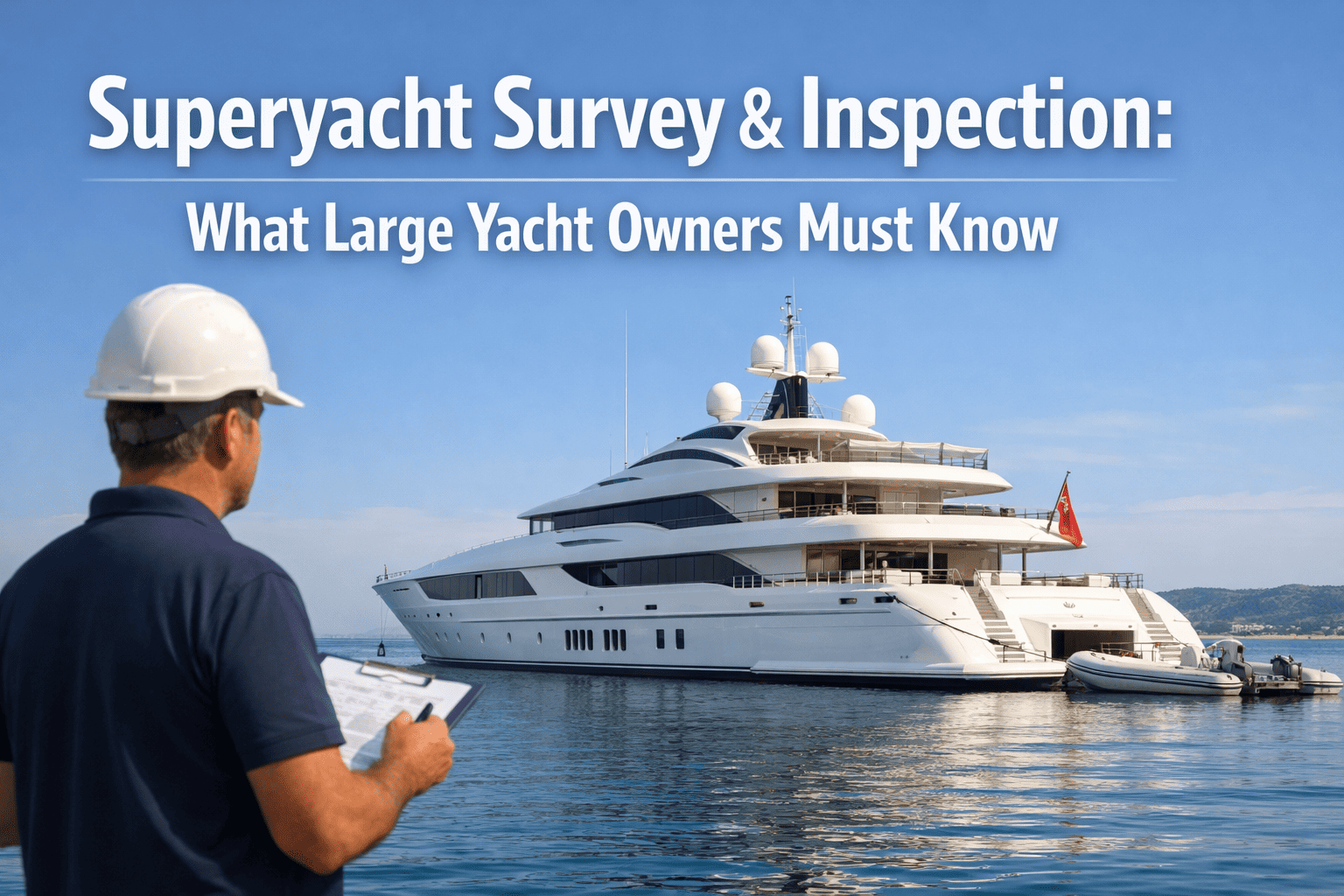
A superyacht isn't just a boat — it's a multi-million-dollar asset class with the regulatory complexity of a small commercial ship and the maintenance demands of a five-star floating hotel. When the global superyacht fleet now exceeds 6,000 vessels over 30 metres, a further 5,000 over 24 metres, and weekly charter rates on flagship vessels reach $500,000, the survey process is what stands between your investment and a seven-figure surprise. Whether you're about to sign a letter of intent on a 40-metre motor yacht, renewing insurance on a classic sailing yacht, or managing the annual condition cycle of a commercial-coded Red Ensign Group superyacht, this guide walks through every type of survey, every defect category surveyors watch for, and every regulatory layer from MCA LY3 heritage to today's REG Yacht Code. Start a free trial of Marine Inspection to digitize pre-purchase surveys, condition reports, and ongoing maintenance records across your fleet.
The Superyacht Market in 2026 — Why Surveys Have Never Mattered More
6,000+
Operating Superyachts >30m
5,000+ motor yachts and ~900 sailing yachts active globally
$21.6B
2025 Superyacht Market
Forecast to reach $45B+ by 2032 on 9.8% CAGR
1,150
Global Order Book 2026
Collectively valued at ~$41B — high refit demand
~45%
Market From Charter Demand
Commercial-coded yachts under REG Yacht Code Part A
Why Yacht Surveys Are Different From Any Other Marine Inspection
A yacht survey sits in a strange place. The vessel is often commercial-registered under a code of practice (MCA, REG, Malta, Marshall Islands, Cayman) yet built to yacht aesthetic standards that would be refused on a cargo ship. Surveys can cost $5,000–$25,000 and take days on a 40-metre yacht. Insurance renewal hinges on them. Banks require them. Brokers demand them. And for buyers, a single missed osmosis finding or an undocumented engine hour can shift purchase negotiations by hundreds of thousands of dollars. Getting the right survey type — and the right surveyor for your specific yacht — is the decision that protects every dollar of your investment. Book a Marine Inspection demo to see how yacht managers centralize surveys, condition reports, and maintenance records in one platform.
The Four Types of Yacht Survey — And When You Actually Need Each
Marine surveyors offer four core survey products, and using the wrong one for your situation wastes money or leaves gaps. Here's what each covers, who typically requires it, and how deep it goes.
MOST COMPREHENSIVE
Pre-Purchase / Condition & Valuation (C&V)
Deep-dive inspection before buying a yacht or as a full scheduled condition survey. The "gold standard" — all systems tested, out-of-water hull inspection, sea trial, written valuation.
LIGHTER SCOPE
Insurance Survey (Condition)
Focused on whether the yacht is safe to insure — structural integrity, systems functionality, safety gear currency. Typically out-of-water hull exam with moisture meter and tap-testing, plus essential system checks.
VALUATION ONLY
Appraisal / Valuation Survey
"As seen / walk-through" market valuation — no intrusive testing, no haul-out required, can be in-water. Used for finance, estate, divorce, donation or pre-listing positioning.
INCIDENT-DRIVEN
Damage Survey
Post-incident inspection to determine cause, extent, and repair scope. Performed for insurance claim adjusters, owners and legal proceedings following grounding, collision, fire, flooding or weather damage.
The Pre-Purchase Survey: A Three-Phase Deep Dive
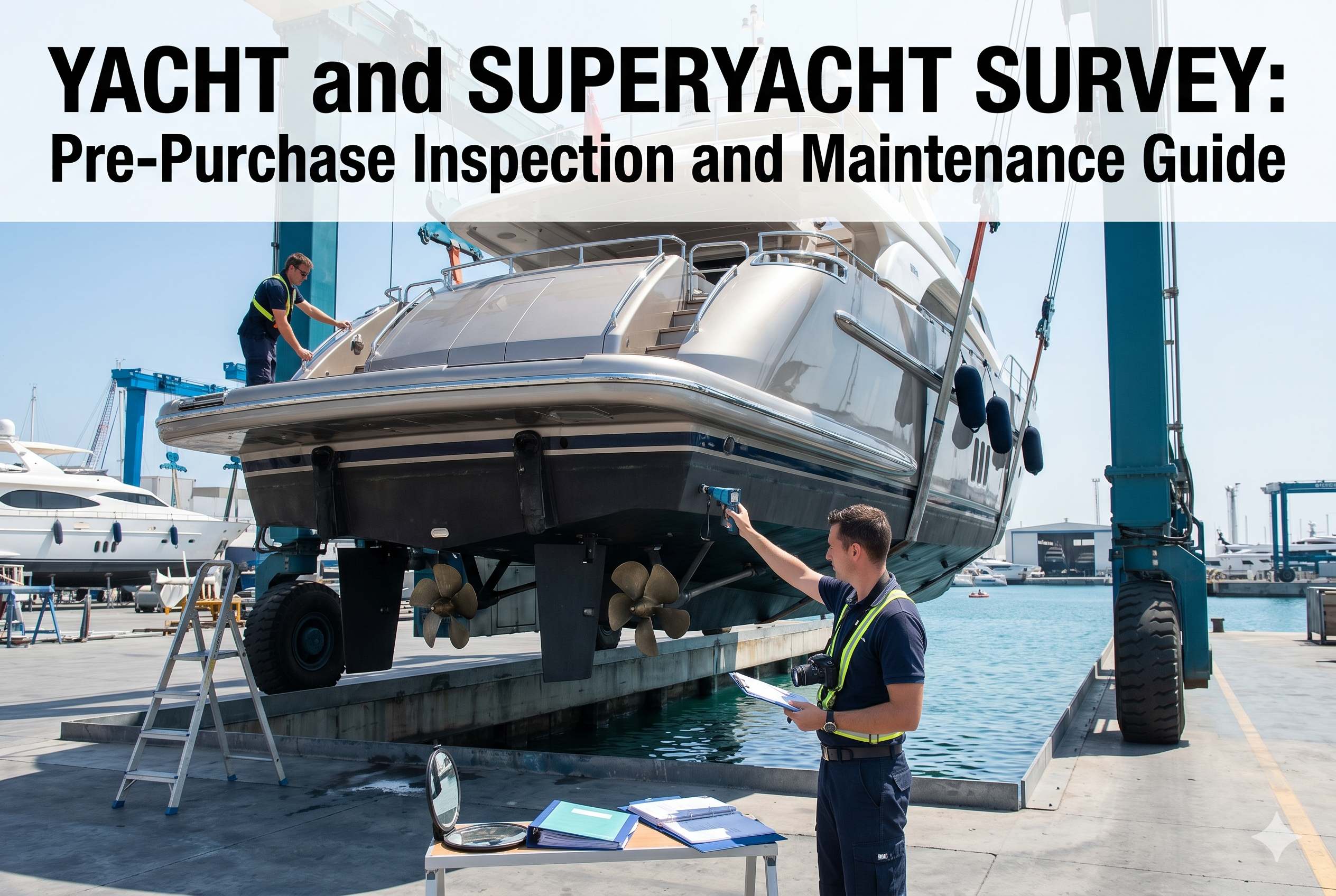
A proper pre-purchase survey follows a fixed sequence that no serious surveyor will shortcut. Each phase reveals different categories of defects — haul-out exposes structural and osmosis issues, in-water testing reveals systems functionality, and the sea trial stress-tests performance under real loads. Missing any phase means missing the specific findings that phase is designed to uncover. Sign up for Marine Inspection to digitize every survey photo, moisture reading and sea-trial observation.
PHASE 1
Out-of-Water Hull & Structure
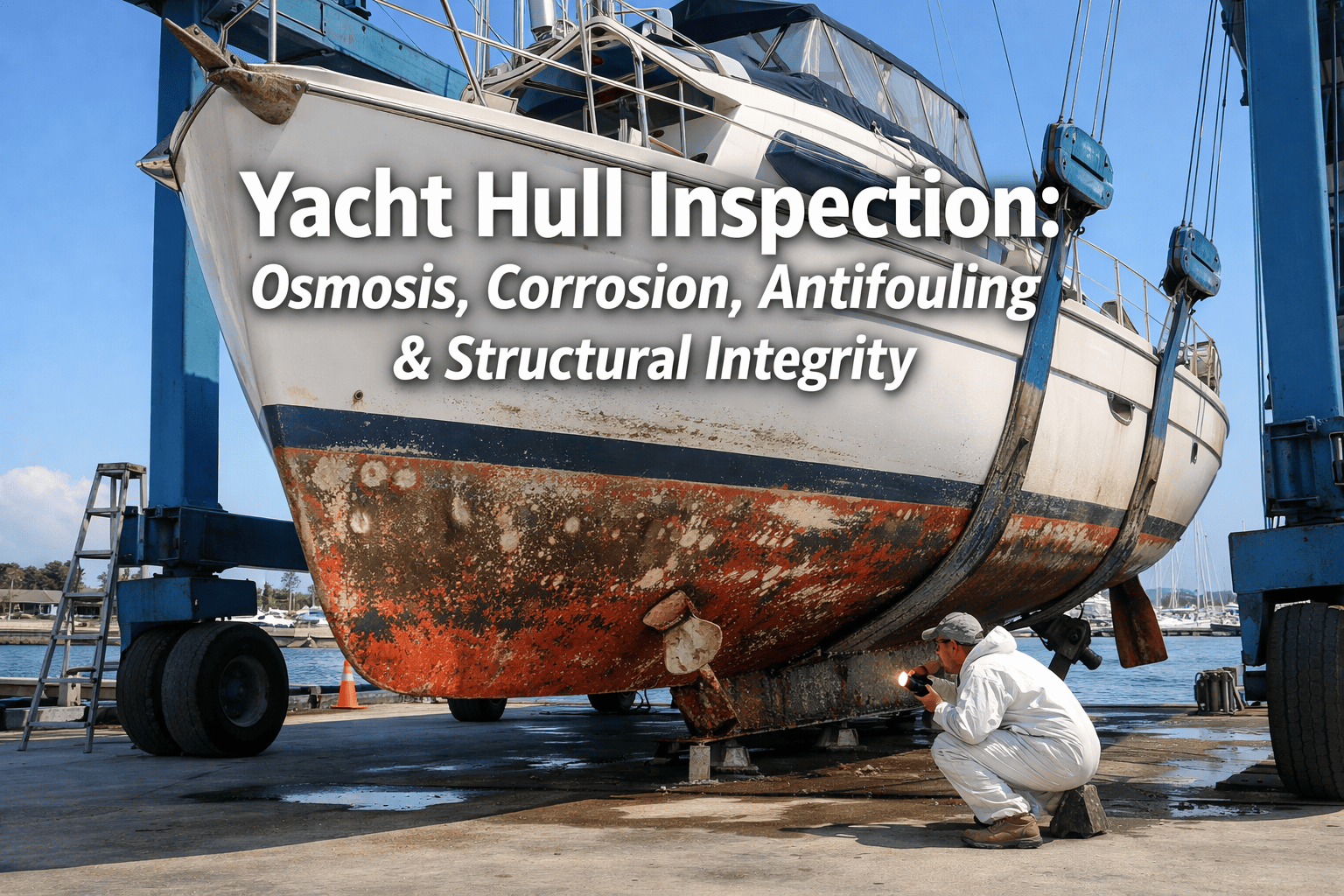
Yacht hauled out on a travel lift or slipway. Surveyor examines everything normally submerged — the items most buyers never see before committing to purchase.
Hull below waterline: visual inspection for blisters, cracks, impact damage, repair evidence
Moisture meter readings across gelcoat and laminate (GRP hulls) — osmosis detection
Tap / percussion testing to identify delamination or voids
Small patches of antifouling removed for direct moisture readings
Keel condition, keel-hull joint, keel bolts (sailing yachts)
Rudder bearings, stock alignment, play measurement, blade condition
Stern gear — P-bracket, shaft, cutless bearing, propeller condition
Skin fittings, seacocks, through-hulls, sacrificial anodes
Steel yachts: ultrasonic thickness measurement of plating
PHASE 2
Afloat / In-Water Systems Check
Yacht back in the water, all systems powered and tested. This is where accommodation condition, electrical, plumbing, nav equipment and safety gear are assessed.
Topsides above waterline, rubbing strakes, deck fittings
Deck and superstructure — cracks, leaks at windows / hatches / fittings
Internal structure — bulkheads, frames, stringers, signs of rot or water ingress
Electrical systems — AC / DC distribution, battery banks, shore power, bonding
Plumbing — heads, black/grey water, fresh water, watermaker, fuel lines
Navigation electronics — GPS, radar, AIS, autopilot, VHF, ECDIS
Safety equipment — PFDs, flares, EPIRBs, extinguishers, bilge alarms
Galley and HVAC — appliances, refrigeration, air conditioning
Documentation — registration, previous surveys, service records, warranty files
PHASE 3
Sea Trial — Under Real Load
Yacht operated through its full performance envelope with the surveyor aboard. The only phase that reveals issues that appear only under running loads, heel angle or at speed.
Engine start, warm-up, idle — oil pressure, temperature, exhaust smoke colour
Full throttle acceleration, top speed, cruise RPM vs manufacturer spec
Steering, rudder response, autopilot function under way
Sailing yachts: rigging tension under load, sail handling, winches
Vibration at different RPM — misalignment / prop damage indicators
Noise, exhaust leaks, hot spots, unexplained alarm triggers
Stabilizers, bow thrusters, stern thrusters function tested
Engine compression test / oil analysis (often separate marine engineer)
Borescope inspection of engine internals on higher-value yachts
Run Every Phase of Every Survey Paper-Free
Moisture readings logged on mobile, photos tagged by hull position, sea-trial data captured live, full valuation report assembled automatically — cross-device, cross-yacht, cross-broker.
The REG Yacht Code: What Replaced MCA LY3 and Why It Still Matters
If your yacht flies a Red Ensign flag (UK, Cayman Islands, Bermuda, Isle of Man, Gibraltar, British Virgin Islands etc.) — which collectively register most of the world's largest yachts — the controlling regulation is now the Red Ensign Group Yacht Code (REG-YC), published 2017 and most recently updated January 2024. It replaced the iconic MCA Large Commercial Yacht Code (LY1, LY2, LY3) and the separate Passenger Yacht Code, combining them into a unified structure. "LY3" is still common shorthand in the industry — but in practice REG Part A or Part B is what surveyors and flag states now apply. Book a demo to track REG certification workflow.
UNDER 24 M
MGN 280
Small Commercial Vessel Code
Commercial-use yachts under 24 m load-line length. MCA Small Commercial Vessel Code sets lighter but still structured safety, construction, crew and equipment standards appropriate to smaller vessels.
24M+ / ≤12 PAX
REG Part A
Large Commercial Yacht (previously LY3)
24 m+ load-line length, commercial use, no cargo, no more than 12 passengers. The classic "LY3" profile. Blends direct SOLAS / Load Line / STCW requirements with yacht-appropriate equivalences. Most commercial superyachts operate here.
13–36 PAX
REG Part B
Passenger Yacht Code (PYC)
Private pleasure yachts of any size carrying 13–36 passengers, with no cargo. Noticeably stricter than Part A on fire protection, escape routes, life-saving appliances and materials — reflecting the higher passenger count.
>36 PAX
SOLAS
Full Passenger Ship Compliance
Above 36 passengers the yacht code regime ends. Full SOLAS passenger ship requirements kick in — Safe Return to Port, SOLAS III muster, all passenger ship chapters apply. Very few yachts operate here; most cruise ships do.
Inspection trigger most yachts hit: passenger count. Moving from 12 to 13 passengers crosses the Part A to Part B boundary, escalating structural, fire and LSA requirements. Plan early — design changes to support more guests typically require flag state and class re-approval.
Hull Defects: The Findings That Can Kill a Deal
Across thousands of yacht pre-purchase surveys, a handful of defect categories repeatedly dominate the findings section. Osmosis, structural cracks, rot, corrosion and previous repair evidence are where deals collapse, prices drop by six figures, or buyers walk away entirely. Understanding how each progresses — and how surveyors detect it — is central to reading a survey report intelligently.
How Yacht Hull Defects Progress — And What Surveyors Catch at Each Stage
STAGE 1
Cosmetic
Osmosis: small isolated blisters, surface gelcoat only. Moisture meter <25%.
Corrosion: surface oxidation on steel deck fittings, no structural concern.
Paint: UV fading, minor chips, impact marks above waterline.
Typical remediation: $2k–$15k
STAGE 2
Moderate
Osmosis: widespread blistering, moisture readings 25–35%, gelcoat peel recommended.
Structural cracks: stress cracks at high-load points — chainplate areas, engine bed mounts.
Rot: localized wet areas in core material, delamination discoverable by tap-testing.
Typical remediation: $15k–$80k
STAGE 3
Structural
Osmosis: laminate-deep, hull peel + long drying + re-lamination required. Moisture >35%.
Cracks: propagating through laminate, requiring structural repair and engineering sign-off.
Rot: core saturation across large panels, potential replacement of bulkheads / decking.
Typical remediation: $80k–$500k+
The Superyacht Systems Inspection Matrix
A modern 40-metre+ superyacht carries more complex systems than most commercial vessels: two to four main engines, generators, stabilizers, desalination, zero-speed thrusters, integrated bridge systems, VSAT, IPTV, hydraulic platforms, tenders, jet-skis, dive compressors, helicopter facilities on the largest yachts. Surveyors don't approach this randomly — they work through eight functional domains, each with its own inspection discipline.
Hull & Structure
GRP laminate integrity, wood planking, aluminum plating thickness, steel corrosion mapping, keel attachment, deck core condition, watertight integrity.
Propulsion
Main engines (hour meter, oil analysis, borescope), gearboxes, shaft alignment, propellers, controls, stabilizers, bow / stern thrusters, zero-speed systems.
Electrical
Gensets, AC / DC distribution, battery banks, shore power, bonding, electrolysis protection, UPS, lighting, smart controls, lightning protection.
HVAC & Climate
Chilled-water plant, fan-coil units, humidity control, galley extraction, freezer rooms, wine storage. Increasingly critical on superyachts as guest expectations rise.
Navigation & Bridge
Integrated bridge system, radar, ECDIS, GPS, AIS, autopilot, gyro, wind instruments, depth, log. Redundancy verification critical on REG Part A commercial yachts.
Communications
VSAT, 4G / 5G, WiFi infrastructure, VHF / MF-HF, GMDSS, EPIRB, SSAS. Redundant ship-to-shore distress paths required under REG Code Section 16.
Safety & LSA
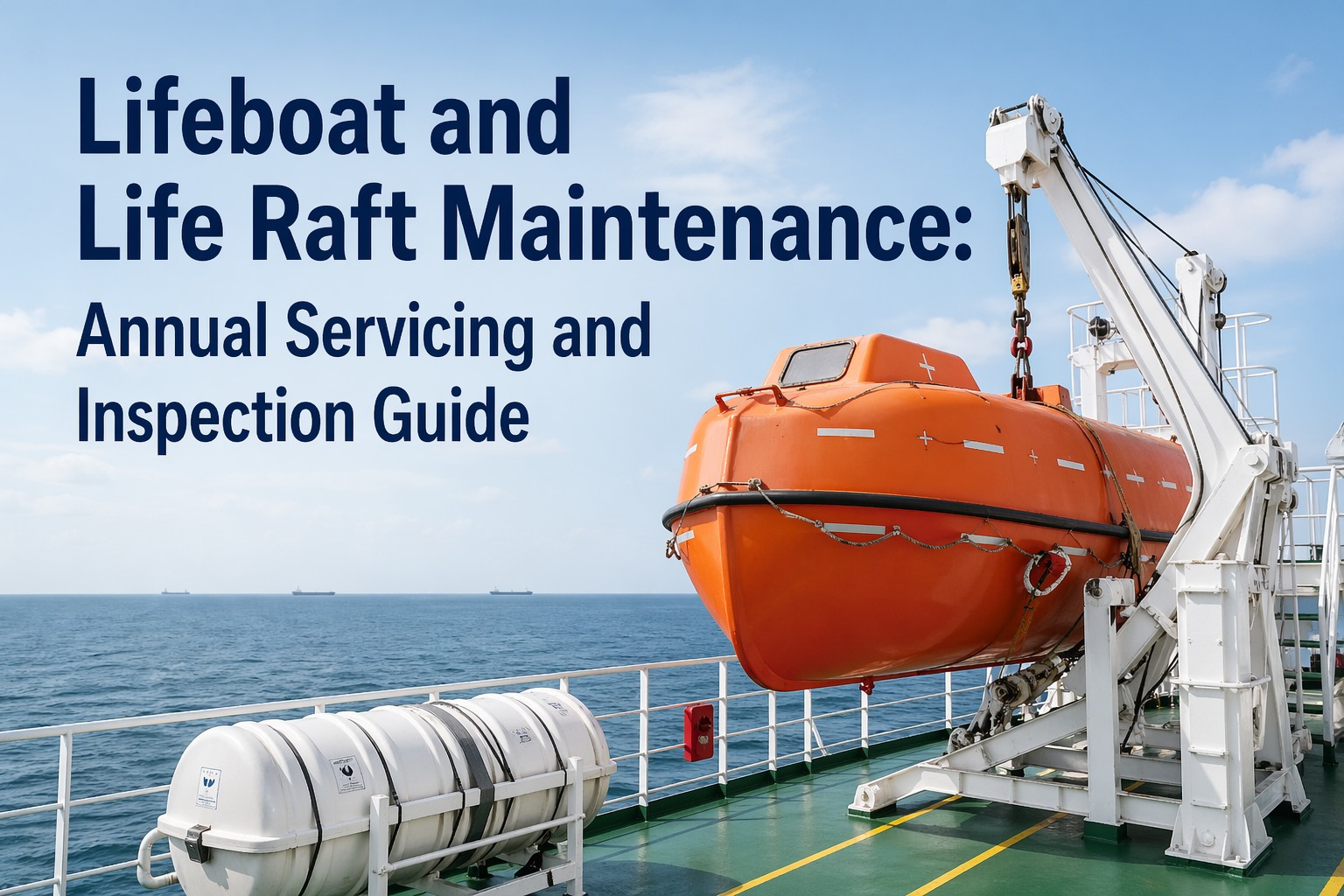
Liferafts, lifejackets, immersion suits, EPIRB, SART, fire detection and suppression, galley B-15 fire boundaries, escape routes, muster arrangements.
Tender & Toys
Tender garage door hydraulics, davits and cranes, jet-skis, sea-bobs, diving equipment, dive compressor, swim platforms, helicopter deck (if fitted).
Flag & Registration: Where the World's Yachts Actually Fly
The flag your yacht flies determines which code applies, which surveyor list you draw from, which insurance terms you'll get and how easily you can charter. It's one of the highest-impact decisions in yacht ownership — and the market is concentrated in a handful of jurisdictions.
Superyacht Flag Registration Split (>30m)
—
Others (Oman, Saudi Arabia, UAE, misc)
~10%
The Annual Superyacht Maintenance Cycle
Professional superyacht management runs on a 12-month cycle, typically anchored around a winter yard period (northern hemisphere) or summer yard period (southern hemisphere). Every major system has its scheduled touchpoint. Maintenance records generated across the year feed directly into the next insurance renewal, class survey and pre-charter condition report. Sign up to run your yacht's maintenance calendar digitally.
Winter Yard Period
Hull peel + re-paint if due, antifouling, anode renewal, shaft seal service, propeller inspection, rudder bearing check, major engine services, topside polishing
Pre-Season
Safety equipment service (liferafts, EPIRBs, fire extinguishers, flares), rigging inspection (sailing yachts), tender and toy service, HVAC full service, watermaker overhaul
Spring Start-Up
Sea trials after yard period, sensor recalibration, bridge system check, engine performance verification, stabilizer function test, charter readiness inspection
Summer Season
Charter operations, daily running checks, weekly systems walk-arounds, interim services by hours / calendar, passage planning, turnaround cleaning between charters
Season-End
Oil sampling, engine hour reconciliation, generator services, winterization prep (if applicable), major defects list, yard specification compilation
Annual Surveys
Class society annual, flag state annual, MLC inspection, load line annual, radio survey as due — scheduled during yard period for efficiency
The Real Cost of Skipping — or Skimping on — a Yacht Survey
It's tempting on a private sale to trust the seller's paperwork, skip the haul-out fee, or ask a broker's preferred surveyor to "just take a look." Don't. Here's what actually happens when yacht buyers cut corners on survey.
$80K+
Osmosis re-laminate on 40m GRP yacht
Hidden by antifouling, only caught via moisture meter on haul-out — missed if you skip Phase 1
6–figure
Engine overhaul after oil-analysis findings
Engine wear can be invisible without oil sample, borescope, and full sea-trial load testing
Policy void
Insurance denial on older vessel
Most underwriters require pre-purchase or condition survey on yachts >20 years — no survey, no cover
$500K
Core replacement on concealed rot
Advanced rot in balsa-cored decks or bulkheads typically caught only by tap-testing and experienced eye
How Digital Inspection Software Changes Yacht Survey & Maintenance
The yacht market runs on trust and documentation — and the two increasingly depend on each other. A digital inspection platform replaces the old PDF-reports-in-Dropbox model with a single source of truth: every survey photo geo-tagged to hull position, every maintenance item traceable, every class or flag certificate current on one dashboard. Book a Marine Inspection demo to see yacht-specific workflows in action.
Pre-Purchase Survey Digitization
Every moisture reading, tap test, photo, and defect recorded on mobile with timestamps. Surveyor's written report auto-assembled, shareable with buyer, seller, broker, bank and insurer in one secure link.
Condition Survey Scheduling
Insurance renewal surveys, class intermediate surveys, MLC inspections — all mapped to the yacht's service calendar with automatic alerts at 90 / 60 / 30 days.
Maintenance History & Engine Hours
Every service logged against each system — main engines, gensets, stabilizers, tenders — with running hours and next-service intervals. Directly exportable for the next pre-purchase survey.
Charter-Readiness Inspections
Turnaround inspections between charters — guest cabins, tenders, safety gear, AV systems, crew certifications — all captured in a repeatable digital checklist owner and captain both sign off.
Flag & Class Documentation
REG Yacht Code compliance, MCA survey records, class society certificates, MLC documentation, crew certifications — centralized, searchable, shareable to port authorities or charterers on demand.
Defect Tracking to Close-Out
Every survey finding becomes a dated corrective action with photo evidence on close. The audit trail insurers, flag states and next buyers all ask for — assembled in seconds, not days.
Run Yacht Operations Like a Professional Management Company
Pre-purchase surveys, annual conditions, insurance renewals, class surveys, charter-ready checks — Marine Inspection replaces a filing cabinet and five drives with one audit-ready platform.
Pre-Purchase Survey Readiness Checklist
Use this to pressure-test a yacht before you commission the surveyor — or to make sure your surveyor is covering everything worth covering. It's structured around what deal-breakers appear first.
Pre-Purchase Yacht Survey Quick-Check
Phase 1 — Haul-Out (Essential)
Full haul-out on travel lift, yacht jacked-up with clear access to entire underside
Moisture meter readings taken at multiple hull locations (not just random spots)
Small antifouling patches removed for direct moisture measurement
Systematic tap / percussion testing for delamination
Keel, rudder, stern gear, skin fittings, anodes all photo-documented
Phase 2 — In-Water Systems
All AC and DC electrical systems energized and tested
Plumbing — heads, fresh water, grey / black water, watermaker — run under pressure
Navigation electronics powered, confirmed functioning on actual signals
Safety equipment: liferafts, EPIRBs, extinguishers — dates and weights verified
Documentation check — registration, title, service records, prior surveys reviewed
Phase 3 — Sea Trial
Engine(s) taken to rated power at manufacturer spec RPM
Top speed verified — compared to design specification and prior trials
Steering, autopilot, stabilizers, thrusters all exercised
Vibration / alignment behaviour across full RPM range observed
Engine surveyor / mechanic conducting parallel mechanical inspection (ideal)
Surveyor Credentials
SAMS (US), NAMS (US), YDSA (UK), IIMS (intl) or SCMS accreditation
Specific experience with the build type, material (GRP / wood / steel / aluminum)
Chosen and paid by the buyer — not the seller or broker
Professional indemnity insurance current
Sample previous reports reviewed for clarity and depth
Frequently Asked Questions
How much does a yacht pre-purchase survey cost in 2026?
Typical fees are £15–£25 per foot in the UK and around $18–$25 per foot in the US, though size, age, construction type and complexity all affect price. A pre-purchase survey on a 40-metre GRP motor yacht can run $5,000–$12,000 before engine-surveyor fees and the yard haul-out costs. Sea-trial costs are usually extra (often £90/hour in the UK). These fees are trivial against the potential cost of missed defects — osmosis or rot findings alone routinely justify 10× the survey fee in price adjustments.
Is LY3 still valid, or has the REG Yacht Code replaced it?
The Red Ensign Group Yacht Code took effect on 1 January 2019 and is the current controlling text for Red Ensign-flagged yachts. The term "LY3" remains widely used as shorthand because REG Part A retains the same scope: 24 m+ load-line length, commercial use, no cargo, up to 12 passengers. REG Part B (formerly the Passenger Yacht Code) applies for 13–36 passengers. The REG Code was last updated January 2024. If you're building, refitting, or re-registering today, your compliance pathway is REG — even if everyone in the room still says "LY3."
Do I need a separate insurance survey if I just had a pre-purchase survey?
Usually no. A full pre-purchase condition and valuation survey is almost always accepted by insurers and lenders as satisfying their requirements for underwriting and financing. Confirm in advance with your specific insurer, but requesting a duplicate survey within weeks of a pre-purchase report is uncommon. Older yachts (typically 20+ years) may require periodic condition surveys every 3–5 years to maintain cover.
What's the difference between SAMS and NAMS surveyors in the US?
Both are US marine surveyor accreditation bodies that maintain professional standards and require credentialling, continuing education, and adherence to codes of practice. The Society of Accredited Marine Surveyors (SAMS) and National Association of Marine Surveyors (NAMS) are the two major US bodies; both are respected by insurers and lenders. In the UK, look for YDSA (Yacht Designers and Surveyors Association), IIMS (International Institute of Marine Surveying) or SCMS (Society of Consulting Marine Engineers and Ship Surveyors). Marine surveying is not a licensed profession, so accreditation matters.
Should I use the broker's "preferred" surveyor?
Generally no. Even the most professional surveyor has a working relationship with the broker recommending them — and relationships tend toward repeat business. You (the buyer) should choose and pay your own accredited surveyor so the loyalty and impartiality runs to you. If a seller offers to pay for the survey with "their" surveyor, be especially cautious.
Do surveyors check engines on yachts?
Some do, some don't. Many yacht surveyors do a general machinery check but defer intrusive engine inspection — compression test, oil sampling, borescope, etc. — to a marine engine specialist, often from the engine manufacturer's network. For yachts with complex twin / triple engine installations or high-value propulsion, always budget for a parallel engine survey. Avoid using the engineer who serviced the engine last — independence matters.
Can one digital platform really handle all survey and maintenance workflows?
Yes — Marine Inspection is specifically designed for this. Pre-purchase survey templates, insurance condition checklists, REG Code compliance tracking, engine hours, maintenance history, crew certifications, charter-ready inspections and defect close-out workflows all run on one platform. Captains capture evidence on mobile, shore teams compile reports, and owners or managers see fleet-wide compliance status in a single dashboard.
Protect Every Dollar of Your Yacht Investment
From pre-purchase inspection to REG Code compliance, from annual conditions to charter-ready handovers — Marine Inspection is the audit-ready platform built for modern yacht ownership.