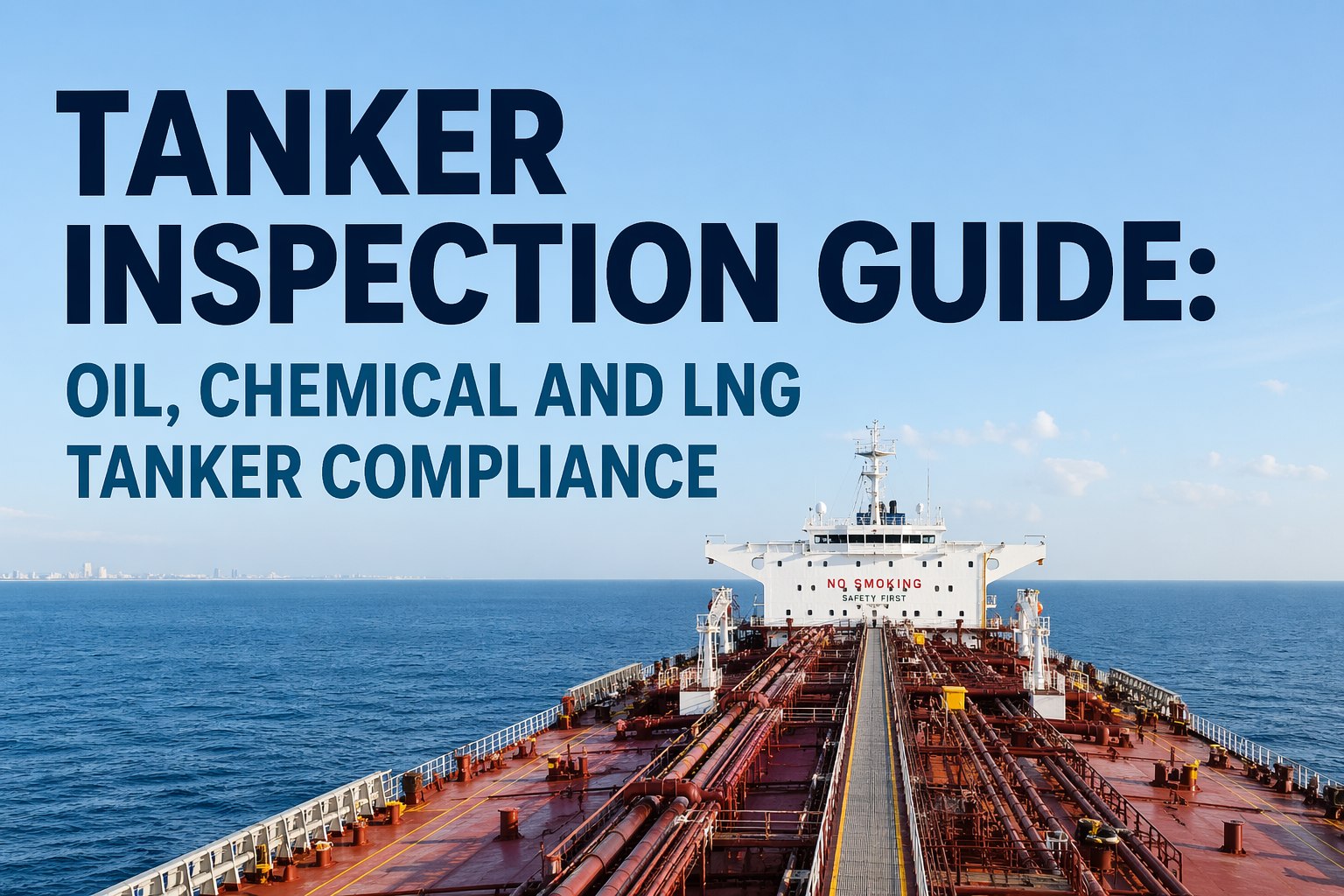
Tanker inspection is where commercial viability meets safety compliance — a single negative observation on a SIRE 2.0 report can cost a vessel its charter, while a failed CDI inspection can exclude a chemical tanker from an entire trade route. Since SIRE 2.0 permanently replaced VIQ7 as OCIMF's tanker vetting standard on 2 September 2024, the inspection paradigm has fundamentally changed: inspections are now algorithm-driven from a Compiled Vessel Inspection Questionnaire (CVIQ) tailored to each vessel's specific risk profile, digitally recorded on certified tablets, and evaluate crew competency alongside hardware and procedures through mandatory Performance Influencing Factor (PIF) assessment. No two SIRE 2.0 inspections are identical — approximately 100 tailored questions are drawn from a comprehensive library covering 12 chapters, and every negative observation must be linked to at least one PIF, making human factors a documented part of every deficiency. The SIRE database now holds over 180,000 inspection reports on more than 8,000 vessels, and major oil companies require recent reports (within 6 months) before chartering. For chemical tankers, CDI (Chemical Distribution Institute) inspections apply similar rigour under the IBC Code framework. For LNG and LPG carriers, the IGC Code governs cargo system design, operation, and inspection with additional SIGTTO guidance. OCIMF's TMSA 3 programme provides the shore-side management framework — with a strong TMSA score now a prerequisite for securing charters with oil majors. The commercial reality is stark: poor vetting results lead to charter rejection, increased insurance premiums, enhanced PSC scrutiny, and lasting reputational damage. Marine Inspection already hosts a comprehensive OCIMF SIRE vessel inspection checklist and tanker compliance platform — book a demo to see how digital preparation transforms your vetting outcomes.

Three Tanker Types, Three Inspection Regimes
Oil Tankers
SOLAS | MARPOL Annex I | ISGOTT 6th Ed

Inspection: SIRE 2.0 (OCIMF). Algorithm-driven, ~100 questions per inspection, human factors assessment mandatory.

Key systems: Inert gas system (O2 <8% in tanks), crude oil washing (COW), cargo tank coating, P/V valves, cargo monitoring, ballast segregation.

Critical items: IG plant efficiency, tank atmosphere monitoring, COW effectiveness, OWS 15ppm compliance, ODME calibration, SBT arrangements.

Chemical Tankers
IBC Code | SIRE 2.0 | CDI (CEFIC/CCSA)

Inspection: SIRE 2.0 + CDI inspections. CDI focuses on chemical-specific cargo handling, tank cleaning, and compatibility.

Key systems: Cargo segregation (piping, pumping, venting), tank coatings (stainless, zinc silicate, epoxy, phenolic), cargo heating/cooling, vapour return.

Critical items: Cargo compatibility, tank cleaning verification (wall wash tests), P&A manual compliance, material safety data sheets, chemical exposure protection.

LNG / LPG Carriers
IGC Code | SIRE 2.0 | SIGTTO Guidelines

Inspection: SIRE 2.0 Chapter 8.5 (LNG) / 8.6 (Gas common). IGC Code compliance verified. SIGTTO guidelines referenced.

Key systems: Cargo containment (membrane/Moss), reliquefaction/boil-off management, gas detection, ESD systems, cargo compressors, nitrogen supply.

Critical items: MARVS compliance, cargo tank pressure/temperature monitoring, gas detection calibration, ESD testing, SEQ condition, cold-zone procedures.

SIRE 2.0: The Complete Inspection Framework

SIRE 2.0 Inspection Chapters & Focus Areas
Chapter Focus Area What Inspectors Verify Common Negative Observations Preparation Priority
Ch. 1General InformationCertificates valid, HVPQ/PIQ data current, crew documentation, alcohol/drug policy compliance.Expired certificates, outdated PIQ data (triggers wrong CVIQ questions), inadequate A&D testing records.Update HVPQ/PIQ before every inspection — pre-populated data drives question selection.
Ch. 2Certification & DocumentationStatutory certificates, class certificates, ISM DOC/SMC, ISPS SSC, MLC, CLC, BWM Certificate.Missing endorsements, expired intermediate surveys, class conditions not actioned.Certificate tracking system with expiry alerts. All endorsements current.
Ch. 3Crew ManagementManning levels, STCW certificates, rest hours compliance, familiarisation records, language proficiency.Rest hour violations, incomplete familiarisation, officers unable to demonstrate procedure knowledge.Crew competency documented per role. Rest hour records auditable. Language barriers identified.
Ch. 4Navigation & CommunicationsBridge equipment condition, passage planning, ECDIS compliance, GMDSS, AIS, VDR, BNWAS.Outdated ENCs, ECDIS alarms not set, radar performance degradation, VDR annual test overdue.Weekly ENC updates. Navigation equipment PM schedule maintained. VDR test current.
Ch. 5Safety ManagementISM SMS implementation, emergency procedures, drills, near-miss reporting, risk assessments, PTW.Generic risk assessments, pre-written drill reports, poor near-miss reporting volume, PTW not followed.Genuine safety culture evidence: varied drill scenarios, specific risk assessments, active near-miss system.
Ch. 6Pollution PreventionSOPEP, Oil Record Book, OWS/ODME, garbage management, ballast water management, IHM.ORB entries inconsistent with sounding logs, OWS 15ppm alarm bypassed, BWMS not operational.ORB entries match sounding records. ODME calibration current. BWMS compliant.
Ch. 7Structural ConditionHull integrity, deck condition, corrosion, coating condition, watertight integrity, structural surveys.Coating breakdown in ballast tanks, deck corrosion, wastage beyond class limits, coating failure in cargo tanks.Planned dry dock programme. Enhanced survey findings actioned. Photo evidence maintained.
Ch. 8Cargo & Ballast SystemsCargo operations, IG system, COW, tank cleaning, cargo monitoring, P/V valves, vapour systems — specific sub-chapters per tanker type.IG O2 >5% at plant, cargo tank not inerted, COW records incomplete, P/V valve frozen, high-level alarm defective.IG plant tested and efficient. All cargo alarms functional. Tank atmosphere records current.
Ch. 9MooringMooring equipment condition, OCIMF MEG4 compliance, snap-back zones marked, SWL marked, synthetic tail condition.Snap-back zones not marked/faded, mooring line condition poor, winch brake holding test not recorded.MEG4 mooring assessment completed. All lines within service life. Brake tests documented.
Ch. 10Engine & SteeringEngine room condition, steering gear testing, emergency generator, fire detection, bilge systems.Oil leaks on engines/auxiliary systems, steering gear test not at correct interval, ER cleanliness poor.Engine room housekeeping programme. Steering gear tested per SOLAS V/26. All leaks addressed.
Ch. 11General AppearanceDeck condition, accommodation, galley, stores, hospital, garbage management, pest control.Deck corrosion unaddressed, poor accommodation standards, galley hygiene issues.Regular maintenance rounds. Crew welfare standards maintained. Ongoing painting programme.
Ch. 12Ice OperationsIce class notation, winterisation procedures, ice navigation equipment, crew ice competency.Winterisation incomplete, ice class equipment not functional, crew unfamiliar with ice procedures.Applicable only to ice-class vessels. Seasonal preparation documented.
SIRE 2.0 replaced VIQ7 on 2 September 2024. Inspections are algorithm-driven from CVIQ — no two inspections are identical. Every negative observation requires PIF linkage documenting human factors.

SIRE 2.0 Rating System: What Each Response Means

Best Practice
Performance exceeds standard requirements. Proactive safety management, exceptional crew competency, or equipment above industry norms. Requires PIF tagging. The highest achievable rating.
Satisfactory
Meets established requirements across hardware, procedures, and crew competency. The baseline target for every question. No PIF tagging or observations generated.
Largely Satisfactory
Performance fell slightly short. No formal negative finding, but signals improvement needed. Repeated "Largely" ratings across a report create a pattern vetters notice and question.
Negative Observation
Formal negative finding with codified SOC, NOC, free-text detail, and mandatory PIF linkage. Directly impacts vetting profile. Requires documented corrective action.

CDI for Chemical Tankers: Beyond SIRE

Cargo Compatibility: Verified against IBC Code Chapter 17/18 cargo list. Previous cargo/next cargo compatibility matrix. Tank coating suitability for specific chemicals. Inhibitor requirements for reactive cargoes.
Tank Cleaning Verification: Wall wash testing for cleanliness verification. Visual inspection under white light. Chloride testing for sensitive cargoes. Cleaning procedure per P&A Manual requirements.
Cargo Segregation: Independent piping, pumping, and venting for incompatible cargoes. No cross-contamination risk. Valve isolation verified. Cofferdam arrangement per IBC Code.
Chemical Exposure Protection: MSDS available for all cargoes. Emergency procedures specific to cargo hazards. Chemical-resistant PPE. Decontamination showers. Eye wash stations tested weekly.
Heating/Cooling Systems: Cargo temperature monitoring and control. Heating medium compatibility with cargo. Relief valve settings verified. Temperature alarms functional and calibrated.
P&A Manual Compliance: Procedures and Arrangements manual specific to vessel. Covers tank cleaning procedures, cargo compatibility, ventilation requirements. Must be approved by flag state/class.

How Marine Inspection Delivers Vetting-Ready Tankers

SIRE 2.0 Preparation Platform
CVIQ question coverage tracking across inspections. Photo evidence repositories maintained continuously. Crew competency documentation per SIRE chapter. Negative observation → corrective action workflow.
Certificate & Survey Tracking
Every statutory and class certificate tracked with expiry alerts. HVPQ/PIQ data currency verified. Survey due dates monitored. Endorsement status tracked. Always audit-ready.
Cargo System Maintenance
IG plant testing records, P/V valve service, cargo pump overhaul, tank coating condition, COW records, ODME calibration, cargo alarm testing — all tracked per equipment item.
Crew Competency Records
STCW certificates, tanker endorsements (oil/chemical/gas), ECDIS type-specific training, GMDSS operator certificates, familiarisation records, rest hour compliance — per crew member.
Drill & Safety Records
Emergency drill scheduling, varied scenario documentation, crew participation tracking, near-miss reporting, safety meeting records — the safety culture evidence SIRE 2.0 inspectors actively assess.
Mooring & Structural
MEG4 mooring assessment tracking, line replacement schedules, brake test records, enhanced survey findings, coating condition documentation, structural thickness measurement records.
180K+
SIRE reports in OCIMF database
8,000+
Vessels with active inspection records
~100
Tailored questions per SIRE 2.0 inspection
6 mo
Max report age for major charterers
A Single Negative Observation Can Cost You the Charter
Marine Inspection's tanker compliance platform tracks SIRE 2.0 preparation, certificate validity, cargo system maintenance, crew competency, and safety culture documentation — the complete system that ensures your vessel is vetting-ready every day, not just on inspection day.

Conclusion

Tanker inspection is the discipline where safety compliance and commercial survival are inseparable — SIRE 2.0 (permanently replacing VIQ7 since September 2024) has transformed vetting from a standardised checklist exercise into an algorithm-driven, human-factors-focused assessment that evaluates crew competency alongside hardware and procedures. With approximately 100 tailored questions per inspection, mandatory PIF linkage for negative observations, and a 4-tier rating system (Best Practice, Satisfactory, Largely Satisfactory, Negative Observation), operators can no longer rely on last-minute preparation. The three tanker types — oil (SOLAS, MARPOL, ISGOTT), chemical (IBC Code, CDI), and LNG/LPG (IGC Code, SIGTTO) — each have specific inspection regimes with distinct cargo system requirements. TMSA 3 provides the shore-side management framework, and a strong TMSA score is now a prerequisite for securing charters with oil majors. The 12 SIRE 2.0 chapters cover every aspect of vessel operations from certificates through cargo systems to ice operations. CDI adds chemical-specific scrutiny on compatibility, tank cleaning verification, and cargo segregation. The commercial consequences of poor vetting are immediate and lasting — charter rejection, increased insurance, PSC targeting, and reputational damage. Marine Inspection delivers the digital platform that makes tanker vetting preparation a continuous digital workflow — book a live demo today.
Frequently Asked Questions

FAQ 01
What is SIRE 2.0 and how does it differ from VIQ7?
SIRE 2.0 permanently replaced VIQ7 as OCIMF's tanker vetting standard on 2 September 2024. The key differences: VIQ7 used standardised checklists with Yes/No responses — SIRE 2.0 uses algorithm-driven Compiled Vessel Inspection Questionnaires (CVIQ) tailored to each vessel's risk profile, cargo type, and trade. VIQ7 primarily assessed hardware — SIRE 2.0 mandates human factors assessment through Performance Influencing Factors (PIFs) linked to every negative observation. VIQ7 was paper-based — SIRE 2.0 is conducted on certified tablets with digital recording and structured observations. VIQ7 generated identical questionnaires — SIRE 2.0 draws approximately 100 tailored questions per inspection from a comprehensive library, meaning no two inspections are identical. The 4-tier rating system (Best Practice, Satisfactory, Largely Satisfactory, Negative Observation) replaces the binary Yes/No format, providing more nuanced assessment.
FAQ 02
What is the difference between SIRE and CDI inspections?
SIRE (Ship Inspection Report Programme) is managed by OCIMF and covers oil tankers, chemical tankers, and gas carriers. It assesses overall vessel safety, operational standards, and compliance across 12 inspection chapters. CDI (Chemical Distribution Institute) inspections are specifically designed for chemical tankers and focus on chemical-specific cargo handling requirements: cargo compatibility verification against IBC Code Chapter 17/18, tank cleaning procedures and verification (wall wash tests, visual inspection), cargo segregation (independent piping, pumping, and venting), P&A Manual compliance, chemical exposure protection, and MSDS availability. A chemical tanker typically undergoes both SIRE 2.0 inspections (for overall vessel assessment) and CDI inspections (for chemical-specific cargo handling). The CDI inspection is particularly important for vessels carrying high-hazard Category X and Y chemicals where contamination can cause environmental damage or product quality issues.
FAQ 03
What are the IGC Code requirements for LNG/LPG carriers?
The International Code for the Construction and Equipment of Ships Carrying Liquefied Gases in Bulk (IGC Code) governs LNG and LPG carrier design, construction, equipment, and operation. Key inspection requirements: cargo containment system integrity (membrane or independent tank types), Maximum Allowable Relief Valve Setting (MARVS) compliance, Emergency Shutdown (ESD) system testing at regular intervals, gas detection system calibration (fixed and portable), cargo compressor and motor room gas-tightness, nitrogen supply system for inerting and purging, boil-off gas management (reliquefaction or gas combustion unit), cold-zone procedures and equipment, Safety Equipment Quarters (SEQ) condition with at least two complete sets on board, and cargo handling procedures per SIGTTO guidelines. SIRE 2.0 Chapter 8.5 covers LNG-specific questions and Chapter 8.6 covers gas-common requirements. Officers must be familiar with the IGC Code, SIGTTO guidelines, and carriage requirements for specific cargoes including reference temperature and cargo compatibility.
FAQ 04
How should a tanker prepare for SIRE 2.0 inspection?
Preparation must be continuous, not last-minute. Before inspection: update HVPQ and PIQ data (pre-populated data drives which conditional questions the algorithm selects — outdated data generates wrong questions), verify all certificates are valid with endorsements current, organise all records (checklists, test reports, drill records, rest hour documentation) for ready access, conduct internal pre-inspection walkthrough covering all 12 SIRE chapters, verify all cargo system equipment is functional and tested (IG plant, P/V valves, cargo alarms, COW system), ensure crew can demonstrate procedure knowledge (not just recite — SIRE 2.0 assesses understanding and application). Photo evidence should be maintained every 6 months showing equipment condition, mooring arrangements, snap-back zone markings, and deck/accommodation standards. Post-inspection: every negative observation should be converted into an auditable corrective action immediately, with root cause analysis and PIF-aligned response.
FAQ 05
What are the consequences of poor SIRE inspection results?
The commercial and operational consequences are severe and immediate: charter rejection (major oil companies will not charter vessels with unresolved negative observations or recent poor SIRE history — reports are valid for 12 months in the database but most charterers require reports less than 6 months old), increased insurance premiums (P&I and H&M underwriters review vetting records when assessing risk), enhanced PSC scrutiny (PSC authorities can access SIRE reports for targeted inspections, and patterns of deficiency increase boarding probability), industry reputation damage (vetting history follows a vessel and operator — patterns of poor performance affect future charter availability across the market), TMSA score impact (vessel-level SIRE performance reflects on company-level TMSA assessment), and operational disruption (vessels may be delayed or rejected at terminals pending corrective actions for serious negative observations). The investment in continuous SIRE 2.0 preparation is significantly less than the cost of a single charter rejection.
Book Your Live Demo
Make Your Tanker Fleet Vetting-Ready Every Day — Not Just on Inspection Day
Marine Inspection delivers the complete tanker compliance platform: SIRE 2.0 preparation, CVIQ question coverage tracking, certificate management, cargo system maintenance, crew competency, and safety culture documentation — one system that connects every element of tanker vetting into continuous readiness.
SIRE 2.0
Live since Sep 2024
~100
Questions per inspection
12
SIRE inspection chapters
Zero
Negative observations — the goal