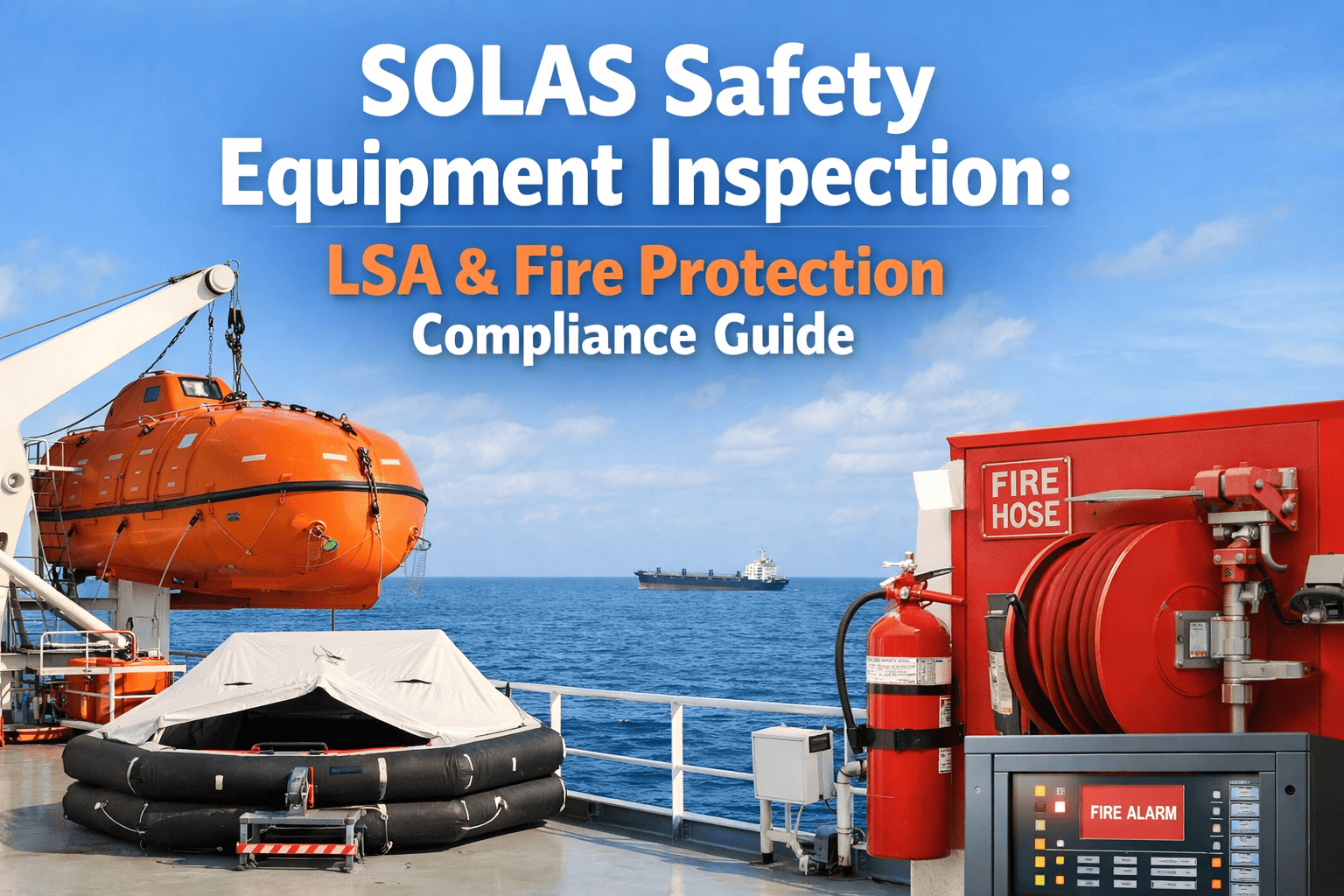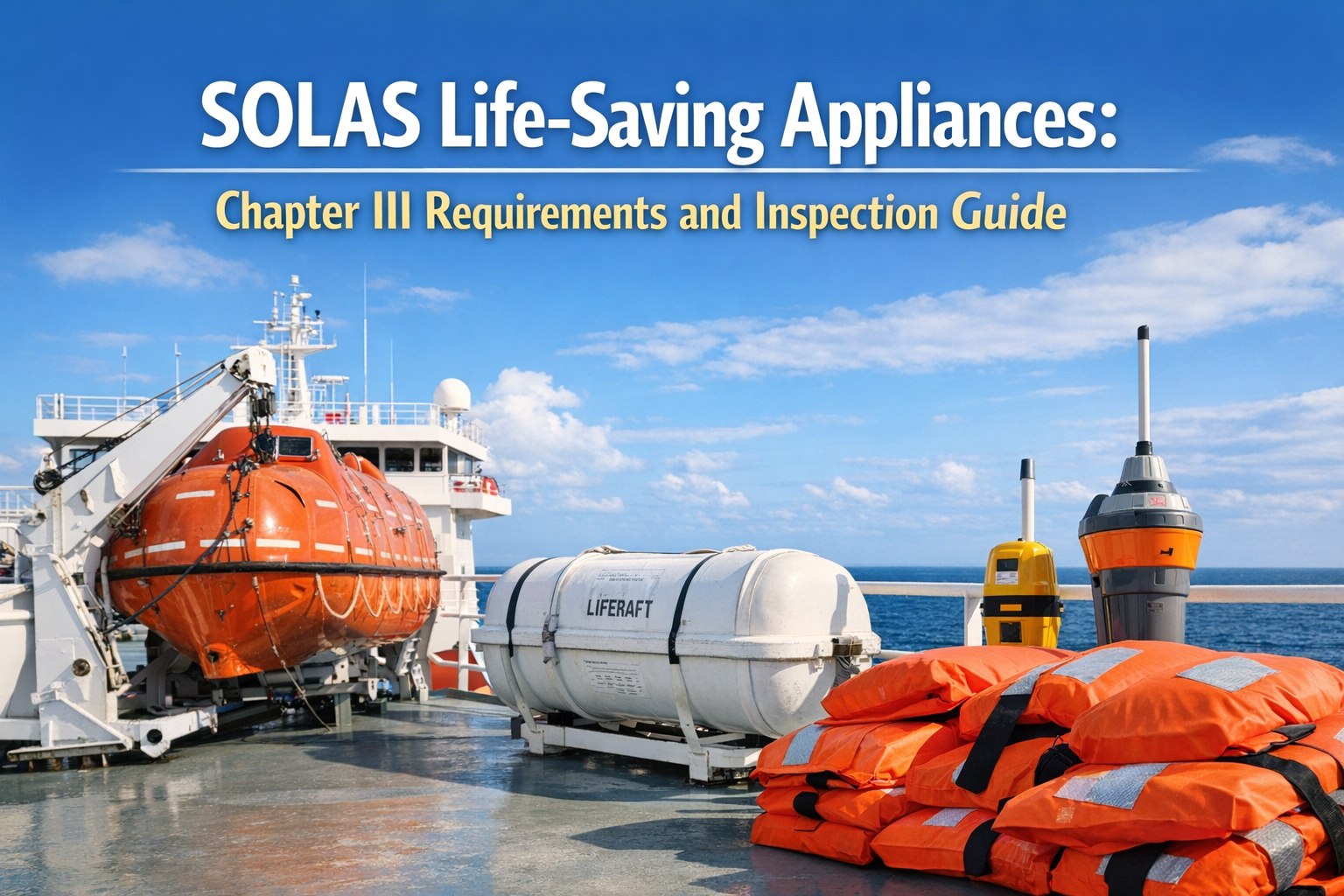
When a ship must be abandoned, the equipment governed by SOLAS Chapter III is the only thing standing between crew and open ocean. Lifeboats, life rafts, life jackets, EPIRBs, SARTs, immersion suits, rescue boats, pyrotechnics — every piece must deploy instantly, perform flawlessly, and sustain life until rescue arrives. This is why Port State Control officers treat LSA deficiencies with zero tolerance: an on-load release hook that hasn't been tested, a life raft with an expired hydrostatic release unit, an EPIRB with a dead battery — any one of these triggers a serious deficiency notice and can detain your vessel. SOLAS Chapter III contains 37 regulations across three parts, supported by the mandatory LSA Code that provides detailed technical specifications. The 2026 amendments have added new requirements for enclosed lifeboat ventilation systems, personal life-saving appliance standards, and lifeboat fitting updates. This guide covers every equipment category, every inspection frequency, every common PSC failure point, and a practical compliance checklist for safety officers and marine surveyors. Start a free trial of Marine Inspection to digitize your LSA inspections with photo evidence and automated scheduling.

SOLAS Chapter III: Life-Saving Appliances at a Glance
37
Regulations
Across 3 parts — General, Passenger Ships, Cargo Ships
LSA Code
Mandatory Technical Standard
Detailed specs for every piece of LSA equipment
5
Inspection Frequencies
Weekly, monthly, quarterly, annual, 5-yearly cycles
#2
PSC Deficiency Rank
LSA is consistently among the top detention triggers

Equipment Categories Under SOLAS Chapter III

SOLAS Chapter III organizes life-saving appliances into distinct categories, each with specific carriage requirements, technical standards, and maintenance obligations. The LSA Code (adopted under Resolution MSC.48(66) and amended through MSC.535(107), MSC.554(108), MSC.559(108)) provides the detailed specifications.

Lifeboats
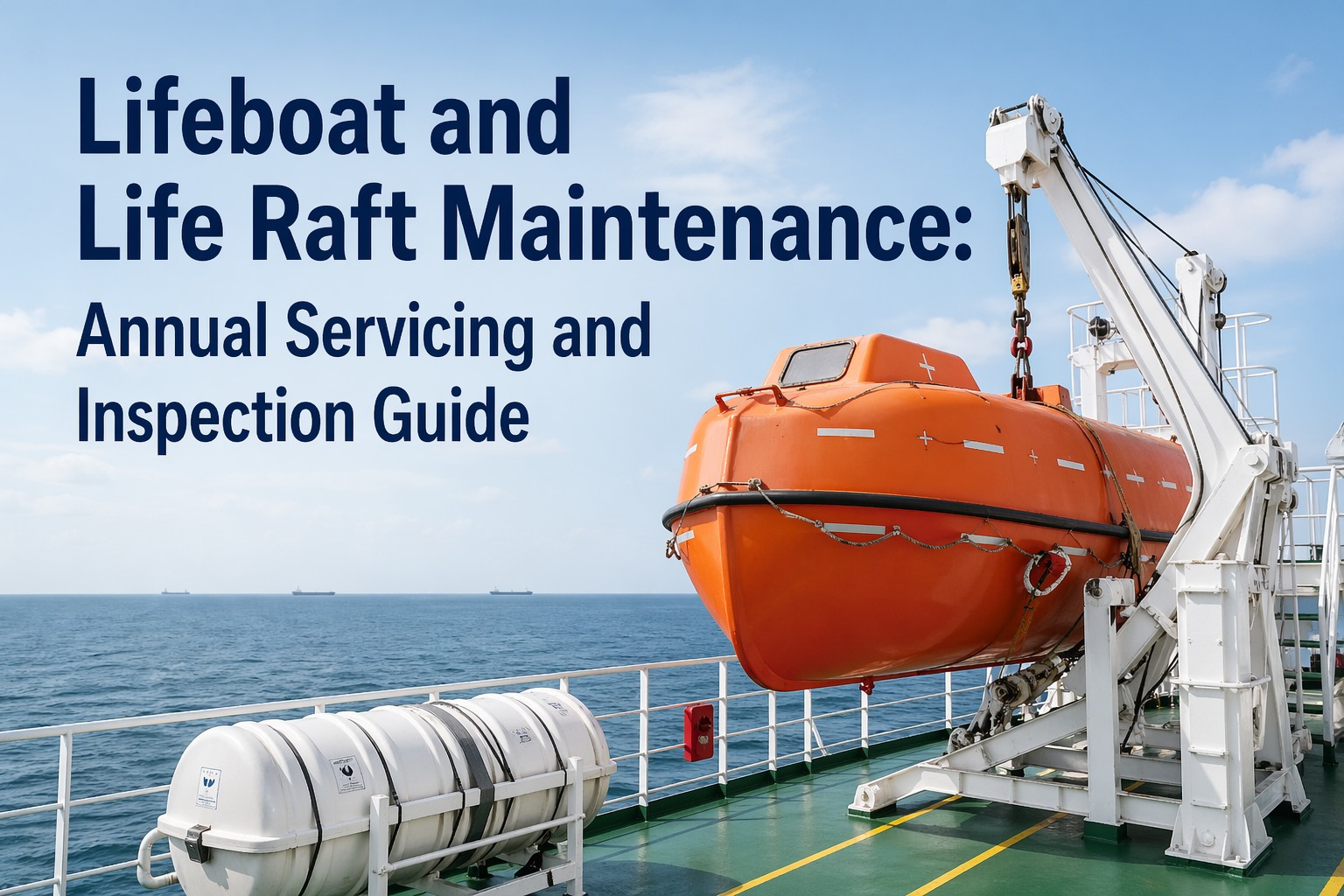
Totally enclosed, partially enclosed, or free-fall types. Must accommodate full crew complement. Engine must start within 2 minutes in all temperatures. Equipment inventory per SOLAS includes rations, water, first aid, compass, sea anchor, bailer, and signalling equipment. Annual thorough examination by competent person required.
Inflatable Life Rafts
SOLAS A-pack (ocean) or B-pack (coastal) equipment levels. Must be serviced at approved stations at intervals not exceeding 12 months. Hydrostatic Release Unit (HRU) must be within validity — an expired HRU with a valid raft service is still non-compliant for PSC. Container condition and stowage position critical.
Life Jackets
One for every person onboard, plus extras at watch stations, engine room, and muster stations. Must bear approval marking and be fitted with whistle, light, and retro-reflective tape. Inflatable types require annual servicing. Children's sizes required on passenger ships.
Lifebuoys
Minimum number based on vessel length. At least one on each side fitted with self-igniting light and self-activating smoke signal. At least one fitted with buoyant lifeline (30m minimum). Not permanently secured — must be capable of being rapidly cast loose. Retro-reflective tape required.
EPIRB (Emergency Position Indicating Radio Beacon)
406 MHz satellite EPIRB with GPS — transmits vessel identity and position to Cospas-Sarsat. Float-free mounting with HRU. Monthly self-test required. Annual performance test by qualified technician. Battery replacement per manufacturer schedule (typically every 5 years). Registration must be current.
SART (Search and Rescue Transponder)
Responds to X-band (9 GHz) radar signals creating 12-dot pattern on rescuer's radar screen. Minimum 2 carried on cargo ships. Monthly self-test. Battery expiry must be tracked. Test against ship's own radar — concentric circles on 12 NM range confirm operation.
Immersion Suits
Required for every person onboard on cargo ships. Must be donned within 2 minutes without assistance. Provides thermal protection in cold water. Fitted with whistle, light, and retro-reflective tape. Annual inspection for integrity — check seams, zippers, gloves, and inflatable supports.
Pyrotechnics & Visual Signals
Rocket parachute flares (min. 12 on bridge), hand flares, and buoyant smoke signals in survival craft. All must be within expiry date — expired pyrotechnics are an immediate PSC deficiency. Must be stored in accessible, clearly marked locations. Proper disposal procedures for expired items.

Inspection & Maintenance Schedule

SOLAS Regulation III/20 is clear: all life-saving appliances must be in working order and ready for immediate use at all times. This translates into a structured inspection regime across five frequencies. Missing any interval is a documented PSC deficiency. Book a Marine Inspection demo to see how automated scheduling ensures you never miss an inspection deadline.

Table 1: SOLAS Chapter III Inspection & Maintenance Frequencies
Frequency Equipment What Must Be Done SOLAS Reference
Weekly Lifeboats & rescue boats Visual inspection for readiness. Check hooks, attachment, on-load release gear reset. Run engines for min. 3 minutes. Reg. III/20.6
Weekly All survival craft Visual check of stowage, davits, launching appliances. Verify all covers, gripes, and securing arrangements. Reg. III/20.6
Monthly Lifeboats (non-free-fall) Turn out from stowed position without crew. Inspect all equipment per inventory checklist. Reg. III/20.7
Monthly EPIRB Self-test using internal test circuit. Check casing, antenna, lanyard condition. Log result in GMDSS logbook. Reg. IV/15.9
Monthly SART Self-test per manufacturer instructions. Check battery expiry. Verify safety clip in place. Reg. IV/15.9
Monthly All LSA equipment Full inspection using SOLAS maintenance manual checklists. Report condition in official logbook. Reg. III/20.7
Quarterly Davit-launched liferaft Training deployment every 4 months with crew participation. Document date and participants. Reg. III/19.4.3
Annual Lifeboats & launching appliances Thorough examination: structure, equipment, engine, propulsion, bailing. Dynamic winch brake test. Release gear check. Ventilation system check (2026). MSC.402(96), MSC.559(108)
Annual EPIRB Performance test by qualified technician with beacon tester. HRU expiry verified. Certificate issued. Reg. IV/15.9
Annual Inflatable life rafts Servicing at approved service station. HRU renewed if approaching expiry. Container inspected. Reg. III/20.8
Annual Inflatable life jackets Servicing per manufacturer procedures. Inflator mechanism and CO2 cartridge checked. LSA Code
Annual Wire ropes in launching appliances Inspection with special regard for areas passing through sheaves. Document condition. Reg. III/20.4
5-Yearly Wire rope falls Renewal when necessary due to deterioration, or at max 5-year intervals. Reg. III/20.4
5-Yearly On-load release gear Load test at 1.1x total mass of lifeboat with full complement. Overhaul by trained personnel. Reg. III/20.11
2026 LSA CODE AMENDMENTS
Three amendments entered force January 1, 2026. MSC.535(107) introduces ventilation requirements for totally enclosed lifeboats (applies to lifeboats installed on/after January 1, 2029). MSC.554(108) updates personal life-saving appliances, lifeboat fittings, and launching appliance standards (applies to equipment installed on/after January 1, 2026). MSC.559(108) adds ventilation system checks to the annual lifeboat examination requirements.

Top PSC Failure Points: Where Ships Get Detained

These are the LSA items that generate the most PSC deficiencies and detentions globally. Knowing where others fail helps you focus your own inspections. Sign up for Marine Inspection to track all of these against scheduled inspection dates automatically.

Critical
On-Load Release Hooks
Not tested, stiff, corroded, or improperly reset. These are direct life-safety items — PSC treats untested hooks as grounds for serious deficiency or detention.
Critical
Expired HRU on Life Rafts
A life raft with valid service but an expired Hydrostatic Release Unit = non-compliant. PSC checks both independently. Most commonly missed item.
High
EPIRB Battery Expiry
Expired battery or missing annual performance test certificate. Inspectors verify both the battery date and the test certificate separately.
High
Davit Wire Falls Beyond Renewal Date
Falls not renewed within 5 years or showing visible deterioration. Wire rope condition at sheave points is specifically checked.
Medium
Expired Pyrotechnics
Rocket parachute flares, hand flares, or smoke signals past expiry date. Easy to check, easy to fix — yet consistently found during inspections.
Medium
Lifeboat Engine Failure to Start
Engine won't start within 2 minutes during weekly test. Usually caused by fuel issues, dead batteries, or lack of regular running. Weekly 3-minute runs prevent this.
Never Miss an LSA Inspection Deadline Again
Marine Inspection tracks every lifeboat, life raft, EPIRB, and SART with automated alerts for weekly checks, monthly tests, annual servicing, and HRU/battery expiry dates — with photo evidence and corrective action workflows built in.

Abandon Ship Drills & Training Requirements

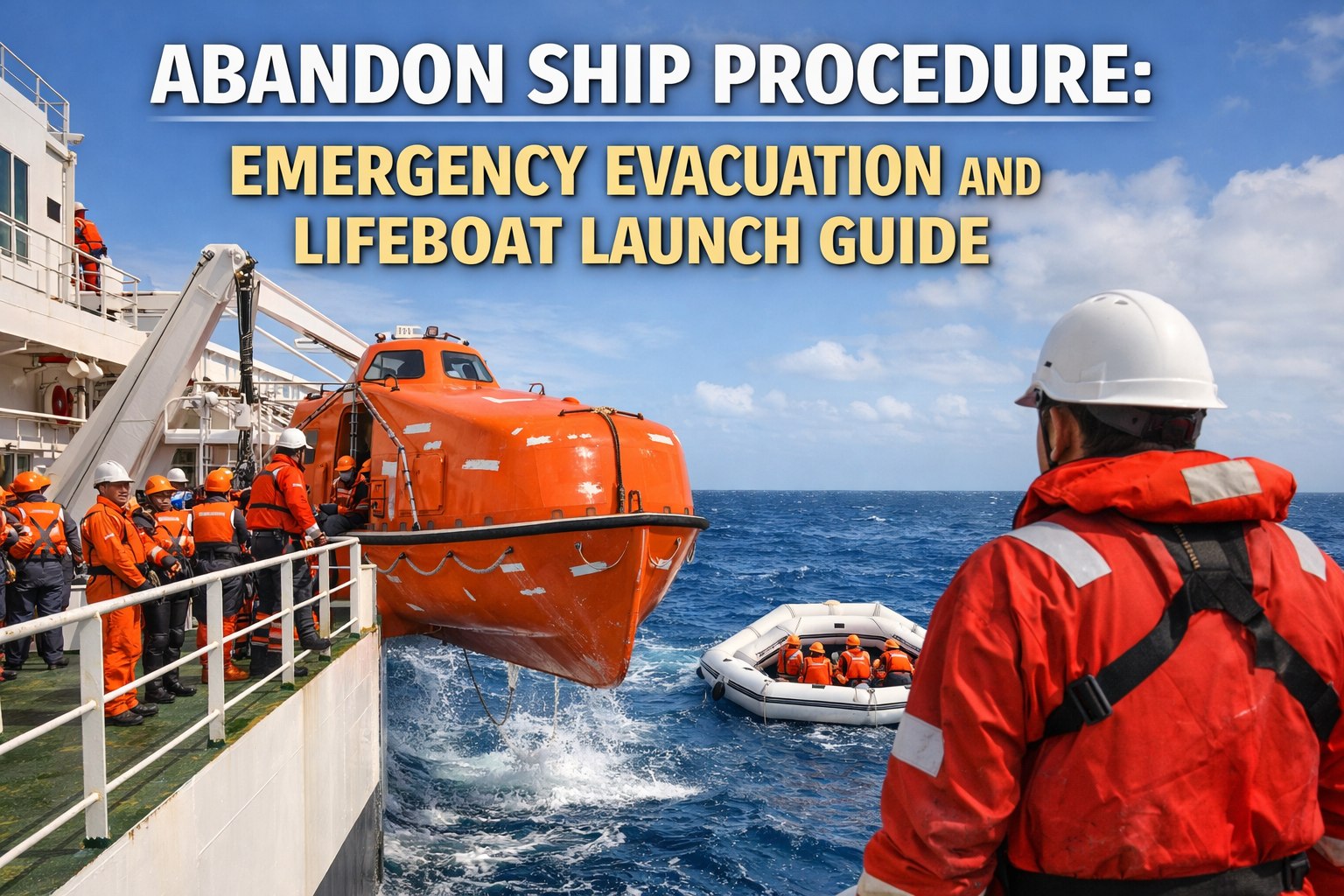
SOLAS Regulation III/19 mandates regular drills to ensure crew can deploy LSA equipment effectively under emergency conditions. Drill records are among the first documents PSC officers request.

Table 2: SOLAS Chapter III Drill & Training Requirements
Drill Type Frequency Key Requirements Documentation
Abandon Ship Drill Monthly (each crew member) Muster at stations, don life jackets, board survival craft (simulated or actual). Cargo ships must launch within 10 min; passenger ships within 30 min. Date, scenario, participants, deficiencies, corrective actions
Passenger Muster Drill Before or immediately on departure All passengers to muster stations. Crew demonstrates life jacket donning, survival craft location, and alarm signals. Drill record with time, compliance notes
Lifeboat Launch (non-free-fall) Monthly — turn out from stowed position Swung out without crew. Quarterly with crew aboard and maneuvered in water (3-month rotation across all lifeboats). Logbook entry with lifeboat ID and results
Free-Fall Lifeboat Every 6 months — simulated launch Crew enter, strap in, simulate release sequence. Actual free-fall launch at intervals per flag state (typically during survey). Drill record with crew list, observations
Davit-Launched Life Raft Every 4 months Training deployment with crew participation. Document handling, inflation procedures, and boarding. Date, participants, equipment condition
Rescue Boat Drill Monthly Launch, maneuver in water, recover person. Engine test. Equipment check against inventory. Logbook entry with crew and timing
Immersion Suit Donning Monthly (as part of abandon ship) Each crew member demonstrates donning within 2 minutes unassisted. Check suit integrity. Noted in drill record

LSA Compliance Checklist

Use this before PSC arrivals, internal audits, and surveys. These items cover the highest-deficiency areas from global PSC data. Schedule a Marine Inspection demo to run these checklists digitally with photo evidence on any mobile device.

SOLAS Chapter III — Pre-Inspection Quick-Check
Survival Craft
Lifeboats — structure intact, engine starts within 2 min, equipment inventory complete
Life rafts — service date current, HRU within validity, container undamaged
On-load release hooks — tested, free-moving, properly reset, no corrosion
Davit wire falls — within 5-year renewal, no visible deterioration at sheave points
Personal LSA
Life jackets — one per person + extras at watch stations, lights and whistles attached
Immersion suits — one per person (cargo ships), annual integrity check complete
Lifebuoys — correct quantity, self-igniting lights and smoke signals functional
Pyrotechnics — all within expiry date, accessible, properly stored
Distress & Signalling
EPIRB — monthly self-test logged, annual performance certificate current, battery/HRU valid
SART — monthly self-test logged, battery within expiry, safety clip in place
Survival craft VHF radios — tested monthly, battery expiry checked
Line-throwing appliance — in date, accessible, crew knows location
Drills & Documentation
Abandon ship drill — conducted within last month, record includes all required details
Muster list — posted at muster stations, current with actual crew complement
Training manual — available onboard, referenced during crew familiarization
All LSA maintenance records — complete, accessible for PSC review, signed by Master

Frequently Asked Questions

What does SOLAS Chapter III cover?
SOLAS Chapter III covers all life-saving appliances and arrangements — lifeboats, life rafts, rescue boats, life jackets, lifebuoys, immersion suits, EPIRBs, SARTs, pyrotechnics, line-throwing appliances, launching appliances, and marine evacuation systems. It also mandates abandon ship drills, muster procedures, and maintenance requirements. The LSA Code provides the detailed technical standards for each equipment type.
How often must lifeboats be inspected under SOLAS?
Weekly: visual inspection and engine run (min 3 minutes). Monthly: turn out from stowed position and equipment inventory check. Annually: thorough examination by competent person covering structure, engine, release gear, and ventilation (2026 requirement). Every 5 years: wire rope falls renewal and on-load release gear load test at 1.1x full capacity.
How often should EPIRBs and SARTs be tested?
EPIRBs: monthly self-test using internal test circuit (logged in GMDSS logbook) and annual performance test by qualified technician with beacon tester and certificate. SARTs: monthly self-test per manufacturer instructions. Both require battery expiry tracking and HRU verification. Registration must be current with the appropriate Rescue Coordination Centre.
What are the 2026 amendments to the LSA Code?
Three resolutions: MSC.535(107) adds ventilation requirements for totally enclosed lifeboats (applicable from January 1, 2029 for new installations). MSC.554(108) updates personal life-saving appliance standards, lifeboat fittings, and launching appliances (applicable to equipment installed from January 1, 2026). MSC.559(108) adds ventilation system checks to the annual lifeboat thorough examination.
What LSA items cause the most PSC detentions?
The top failure points are: untested or corroded on-load release hooks, expired HRU on life rafts (even with valid raft service), EPIRB battery expiry or missing annual test certificates, davit wire falls beyond 5-year renewal date, expired pyrotechnics, and lifeboat engines that won't start. Digital inspection tracking with photo evidence is the most effective way to prevent these deficiencies.
Your Crew's Safety Depends on LSA Readiness
Every lifeboat test, every raft service date, every EPIRB battery expiry, every drill record — Marine Inspection tracks it all with automated alerts, photo documentation, and corrective action workflows. Turn compliance into confidence.